
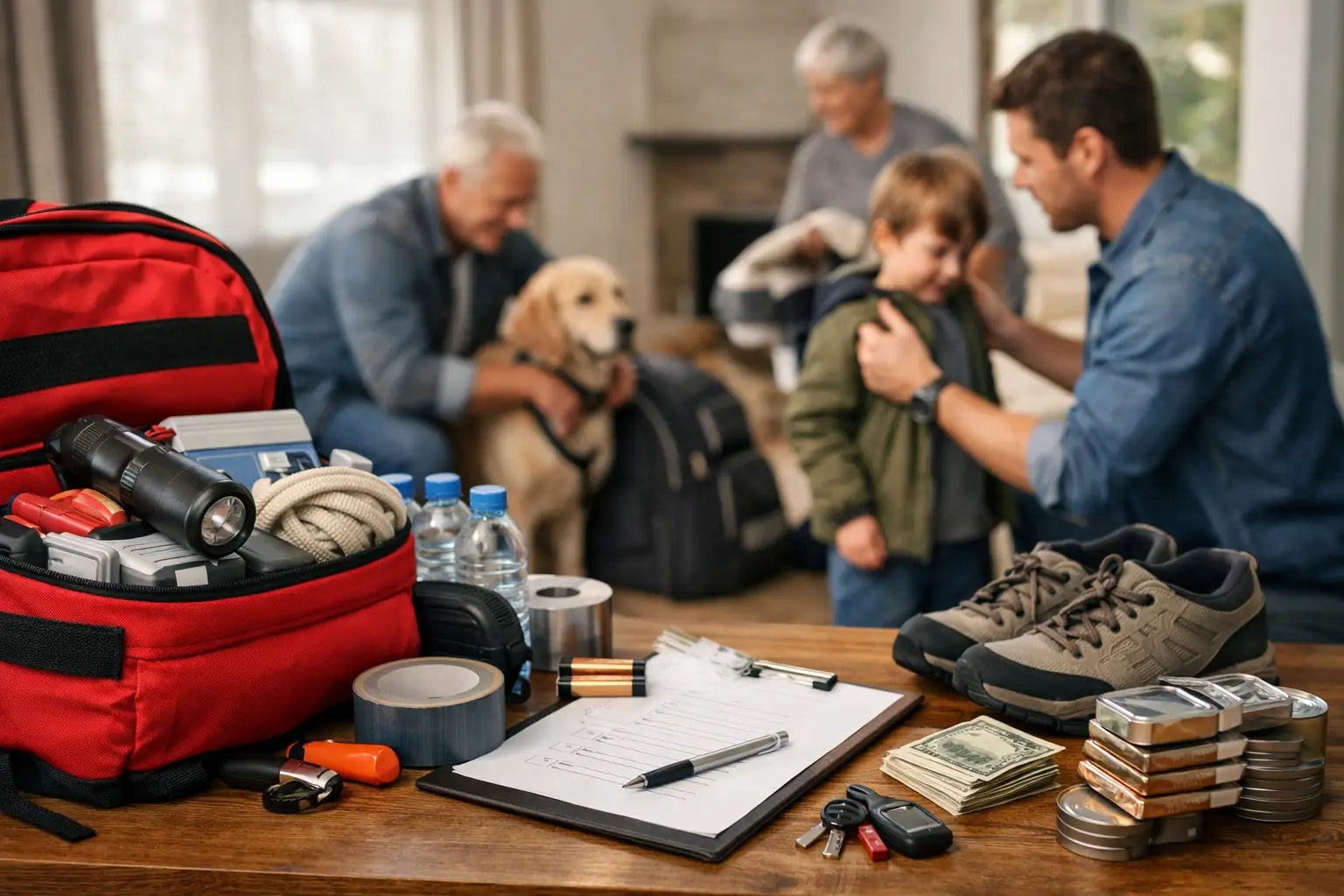
A county alert says a wildfire is moving closer. A hurricane track shifts overnight. Floodwater reaches the end of the street. In those moments, an emergency evacuation checklist gives your family something better than a rushed search through closets: a clear order of operations.
The goal is not to pack for every possible disaster. It is to leave safely, with the people, information, medicine, and basic supplies your family needs to function for the first several days. A good plan also accounts for the fact that an evacuation may happen while you are at work, your children are at school, or the power is already out.
Build Your Emergency Evacuation Checklist in Layers
Start with the things that cannot be easily replaced. Then add the supplies that make an unfamiliar hotel room, shelter, or relative's home more manageable. This is one area where simple beats impressive. A heavy bag full of gear is less useful than a manageable evacuation bag that actually leaves with you.
Keep the following items together in a portable folder or waterproof pouch:
- Photo IDs, passports, insurance cards, vehicle registration, and copies of key household documents
- Printed contact information for family, doctors, schools, insurance providers, and an out-of-area contact
- Cash in small bills, a spare house key, and a written list of account or policy numbers
- Prescription medications, glasses, hearing-aid batteries, mobility aids, and essential medical supplies
- Phone chargers, charging cables, a power bank, and a car charger
- A map of your area, because cell service and navigation apps can fail during widespread emergencies
Pack One Evacuation Bag Per Person
Each family member should have a bag sized for what they can carry. For adults, a backpack or small duffel works well. For children, keep the bag lighter and include comfort items they can manage themselves. The bag should be ready before an evacuation order, not assembled as smoke rises or wind picks up.
Pack three days of practical basics: water, ready-to-eat food, a change of clothes, rain gear or a warm layer, toiletries, a flashlight, batteries, a whistle, basic first-aid supplies, masks appropriate to the hazard, and a small radio. Add work gloves and sturdy closed-toe shoes if your local risks include storms, earthquakes, or wildfire.
Food should need little or no preparation. A power outage, a long traffic line, or a shelter stay may leave you without a reliable way to cook. Shelf-stable meals, protein bars, nut butter, crackers, and foods your children will actually eat are sensible choices. Rotate them a few times a year so the bag stays familiar and current.
Water deserves special attention. Carry what you reasonably can, but recognize the trade-off: water is heavy. A few bottles per person plus a compact water filter or purification option can be more realistic than trying to load your vehicle with a week's supply. If you have more time to leave, add stored water jugs from home.
Make the Plan Before You Need to Leave
Supplies matter, but a family evacuation plan prevents the most common problem: people assuming someone else knows what to do. Decide now where you will go, how you will communicate, and who is responsible for each task.
Choose two meeting places. One should be close to home for a fast-moving event such as a house fire. The other should be outside your neighborhood or town, where your family can reconnect if roads are closed or cell service is unreliable. Pick an out-of-area contact who can receive updates from everyone and relay information between family members.
Plan at least two evacuation routes. Your usual route may be blocked by flooding, fallen trees, fire activity, or traffic. Drive the alternate route once or twice. Notice fuel stations, bridges, construction zones, and places where reception drops. For hurricanes and regional wildfires, identify a destination beyond the likely impact area rather than simply driving until the roads become crowded.
If your children are school-age, ask the school how reunification works after an emergency. Know who is authorized to pick them up. Keep those names and phone numbers updated. Adult children and aging parents also need a clear plan. A quick group text is helpful, but a written plan is more dependable when networks are strained.
Assign Jobs Without Making the Exit Slower
A calm household leaves faster when everyone has a role. One adult can handle documents, medications, and the evacuation bags. Another can load pets, check that children are in the vehicle, and turn off appliances if there is time. Older children can bring their own bags, shoes, chargers, and a comfort item.
Do not turn the checklist into a reason to delay. If officials tell you to leave now, leave now. Property can be repaired or replaced. If there is time before a voluntary evacuation becomes mandatory, take a few additional steps: photograph each room for insurance records, move outdoor furniture inside, unplug electronics, close windows, and lock the house.
For gas and utilities, follow local official guidance. Do not shut off gas unless authorities or your utility instruct you to do so, because turning it back on may require a professional. In a flood-prone area, moving valuable items and chemicals above expected water levels can be worthwhile if it does not put anyone at risk.
Do Not Forget Pets, Babies, and Medical Needs
Families often discover too late that a generic checklist does not cover their real lives. Build your plan around the people and animals who depend on you.
For pets, keep carriers, leashes, food, water bowls, medications, vaccination records, and recent photos near the exit. Call potential hotels or relatives ahead of time to confirm pet policies. Shelters may have limited animal accommodations, so knowing your options before an emergency reduces painful decisions.
For babies and young children, include diapers, wipes, formula or feeding supplies, familiar snacks, medications, and one small comfort item. For older adults or anyone with ongoing health needs, maintain an updated medication list, care instructions, backup medical equipment supplies, and the contact information for their providers. If an item requires electricity, such as a CPAP machine or refrigerated medication, plan for portable power and discuss emergency options with the provider well before storm season.
Prepare Your Vehicle for the Evacuation
Your vehicle is part of the plan, not just transportation. Keep the fuel tank above half full during periods of elevated risk. Gas stations may lose power, run short on fuel, or be overwhelmed by traffic. Charge your phones and power banks when warnings begin, and keep a basic car kit with jumper cables, a tire inflator, first-aid supplies, water, blankets, and a flashlight.
Before leaving, load the car in a consistent order: people and pets first, then medications and documents, then evacuation bags, water, and extra supplies if space allows. Keep the driver's area clear. You may need quick access to your phone, map, glasses, and printed directions.
Listen to local emergency management, law enforcement, fire officials, and weather alerts. Social media can be useful for situational awareness, but official instructions should guide your route and departure timing. Never drive through floodwater, and do not return to an evacuated area until authorities say it is safe.
Practice the Checklist When Nothing Is Wrong
A plan stored in a drawer is only half finished. Once or twice a year, run a low-pressure practice. Ask everyone to get their bags and meet at the vehicle. Time it. You will quickly find missing shoes, expired snacks, empty power banks, bags that are too heavy, and children who need clearer instructions.
Review the checklist at the start of hurricane season, wildfire season, or winter storm season in your region. Replace expired medications and food, update documents, refresh contact information, and adjust supplies as your family changes. A new pet, a new prescription, or a child growing out of diapers changes the plan.
Preparedness does not need to happen all at once. Start with documents, medications, water, and a way to communicate. Then build outward as your budget allows. The best evacuation plan is the one your family understands well enough to use calmly when the clock is moving fast.