
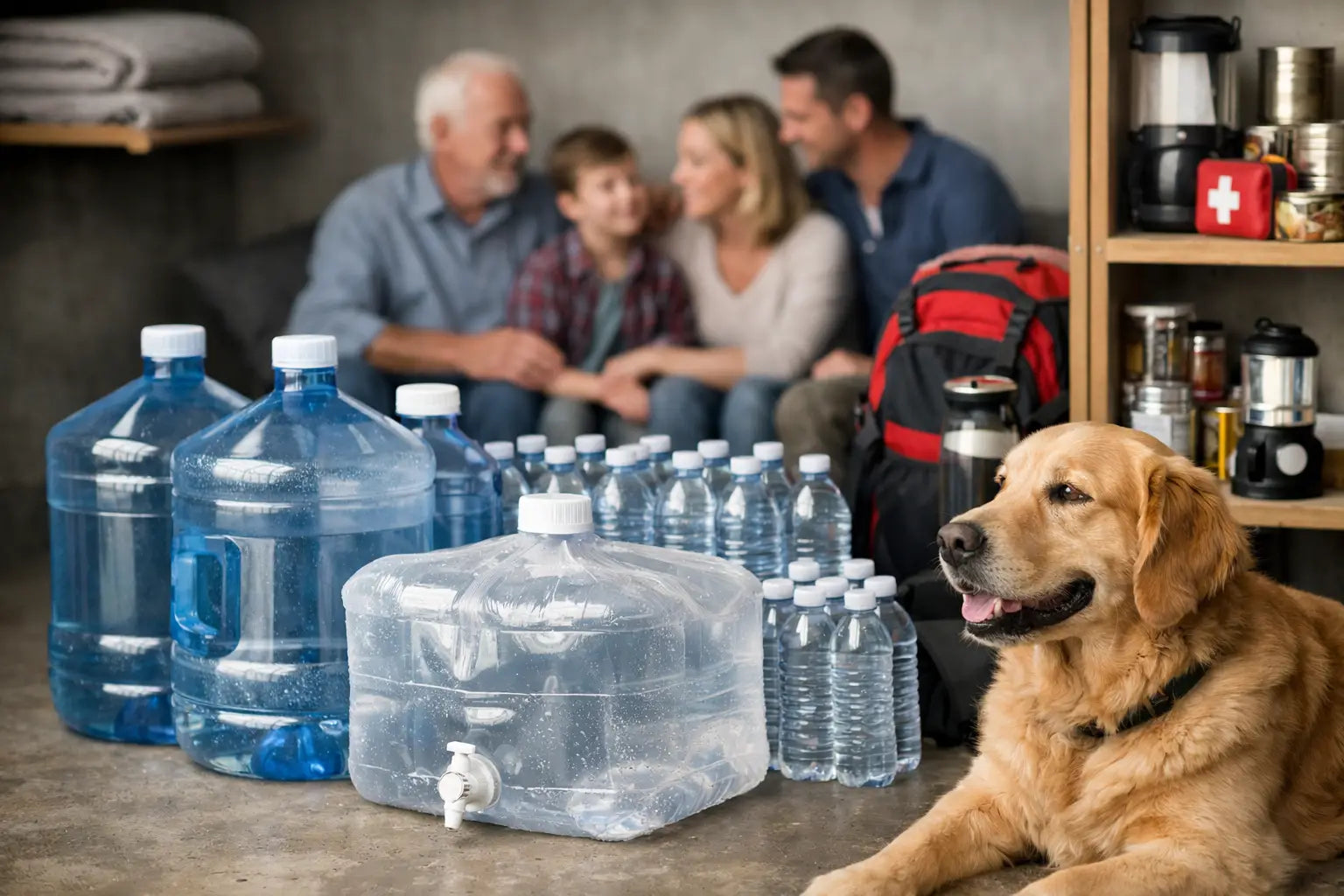
A case of bottled water disappears faster than most families expect. A few bottles cover a hot afternoon, but they do not cover drinking, simple meals, brushing teeth, medications, pets, or a three-day power outage. When you ask how much water to store for emergencies, the clearest starting point is one gallon per person per day - then adjust that number for the people, pets, climate, and risks in your home.
That is not a dramatic number. It is a practical one. Water is the first preparedness category to handle because an emergency can interrupt a municipal supply, make tap water unsafe, close stores, or leave you unable to travel. A sensible supply gives your family breathing room while conditions settle and local services catch up.
How Much Water to Store for Emergencies
Plan for at least one gallon per person per day for 14 days. Half a gallon is intended for drinking, and the other half covers basic cooking and limited hygiene. That means a family of four should aim for 56 gallons as a solid two-week goal.
For a three-day minimum, that same family needs 12 gallons. For one week, it needs 28 gallons. These numbers make the project easier to see in stages rather than as one enormous purchase.
| Household size | 3 days | 7 days | 14 days |
|---|---:|---:|---:|
| 1 person | 3 gallons | 7 gallons | 14 gallons |
| 2 people | 6 gallons | 14 gallons | 28 gallons |
| 4 people | 12 gallons | 28 gallons | 56 gallons |
| 6 people | 18 gallons | 42 gallons | 84 gallons |
The one-gallon rule is a baseline, not a ceiling. Store more if anyone in your household is pregnant or nursing, takes medication that requires extra fluids, works outdoors, is elderly, or is very young. High heat, wildfire smoke, dry climates, and physical cleanup after a storm also raise water needs. In parts of Florida, Texas, the Southwest, and California, extra drinking water is often the wiser choice.
Do not forget pets and visitors
Pets count as family members in the water plan. A rough daily allowance is about one ounce of water per pound of body weight for a dog, with more needed during hot weather or heavy activity. Cats often need less, but they still need dependable clean water. If your 50-pound dog drinks around 50 ounces a day, add at least three gallons for a two-week supply, plus a little margin.
Also think about the people who may show up at your door. Grandchildren visiting for a weekend, an aging parent nearby, or a neighbor who relies on you can change the math. You do not have to build a warehouse overnight. Simply know who your stored water is meant to support.
Separate Drinking Water From Utility Water
Not every gallon needs to be premium drinking water stored in a portable container. Your family needs clean water to drink and cook, but it may also need water to flush toilets, wash hands, clean a wound, or handle basic cleanup.
Start by storing your drinking supply in food-grade containers or commercially bottled water. Then add utility water separately as space allows. A filled bathtub can help during a short outage, but only if the water was collected before a supply problem begins and the tub is clean. It should not be your only plan.
For homeowners with room in a garage, basement, pantry, or protected shed, larger water containers can make a two-week goal much more manageable. Smaller containers are easier to move, though. A 5-gallon container weighs more than 40 pounds when full. That may be too heavy for a grandparent, a teenager, or anyone with back or shoulder limitations.
A mixed setup works well for most families: several smaller containers for portability, a few cases of bottled water for immediate use, and one or more larger containers for reserve capacity. The right system is the one your household can safely lift, access, and rotate.
Where to Store Emergency Water Safely
Water lasts best when it is stored cool, dark, and away from chemicals. A climate-controlled closet, interior storage room, or basement is generally better than a hot garage, especially in areas with long summers. Avoid direct sunlight. Heat and light can weaken plastic over time and affect water quality.
Keep containers off bare concrete when possible. A shelf, pallet, or even a sturdy piece of wood provides a simple barrier. Do not store water beside gasoline, paint, pesticides, or household cleaners. Plastic can absorb odors and vapors, even when the cap is tightly closed.
Label every container with the fill date and whether it is intended for drinking or utility use. This small habit prevents confusion when the power is out and everyone is tired.
How often should you rotate it?
Commercially bottled water often has a manufacturer date or best-by date. Follow the label, inspect bottles periodically, and use older cases in normal household life before replacing them. If the bottle is swollen, leaking, cloudy, or has an unusual smell, discard it.
Water you fill yourself in properly cleaned, food-grade containers should be rotated about every six months. Put a reminder on your calendar when daylight saving time changes, before hurricane season, or at the start of winter. Rotation is not wasted water. Use it for cooking, watering plants, or washing the car, then refill the container.
Build Your Supply in Realistic Steps
A 56-gallon target can sound like a lot, especially when you are also thinking about emergency food, batteries, first aid, and backup power. Start with the next disruption, not every possible disaster at once.
First, get three days of water for everyone in the home. Next, build to seven days. Then work toward 14 days by adding one case or container during regular shopping trips. This approach keeps preparedness inside a normal household budget and gives you a useful supply from the beginning.
If you live in an area with frequent hurricanes, wildfires, winter storms, or earthquake risk, consider keeping a portion of your water ready to load into the car. A few sealed bottles in an evacuation bag or vehicle kit can make an unexpected evacuation less stressful. Just do not leave them in a hot car for months at a time.
Storage Is Only Half the Plan
Stored water can run out, spill, freeze, or become inaccessible after a disaster. That is why a family water plan should include more than containers. Keep a reliable water filter and a method to disinfect water when needed. These tools can extend your options if you can collect water from a safe source, but they do not replace stored drinking water.
Filtering and purification are not the same thing. A filter can remove many particles and microorganisms, depending on its rating. Chemical treatment or boiling may be needed to address organisms a filter does not remove. Neither approach reliably makes every contaminated source safe, particularly water exposed to chemicals, fuel, saltwater, or industrial runoff.
Before an emergency, learn how your chosen filter works, what it removes, how many gallons it can treat, and whether you need replacement parts. Keep unscented household bleach only if you understand the correct emergency disinfection method and can verify the product is appropriate. Never guess with water treatment instructions.
If local officials issue a boil-water advisory, follow it. If they tell residents not to drink the water, do not assume boiling fixes the problem. Different advisories mean different risks.
Use Water Carefully When the Tap Stops
When an outage begins, fill clean containers from the tap while the water is still running and safe. Then protect your stored drinking water. Use opened bottles first, measure water for cooking rather than pouring freely, and save dishwater or collected rainwater for toilet flushing when appropriate.
Do not ration drinking water dangerously, especially for children, older adults, or anyone in the heat. Reduce waste before you reduce hydration. Simple meals that need little water, disposable plates for a short disruption, and hand sanitizer for limited use can stretch your supply without compromising health.
A water plan is one of the kindest things you can build for your family. Start with enough for three days, write the number your household needs on a label, and add to it steadily. The next time the lights go out or the shelves empty, that quiet preparation will feel like exactly what it is: care in a container.