
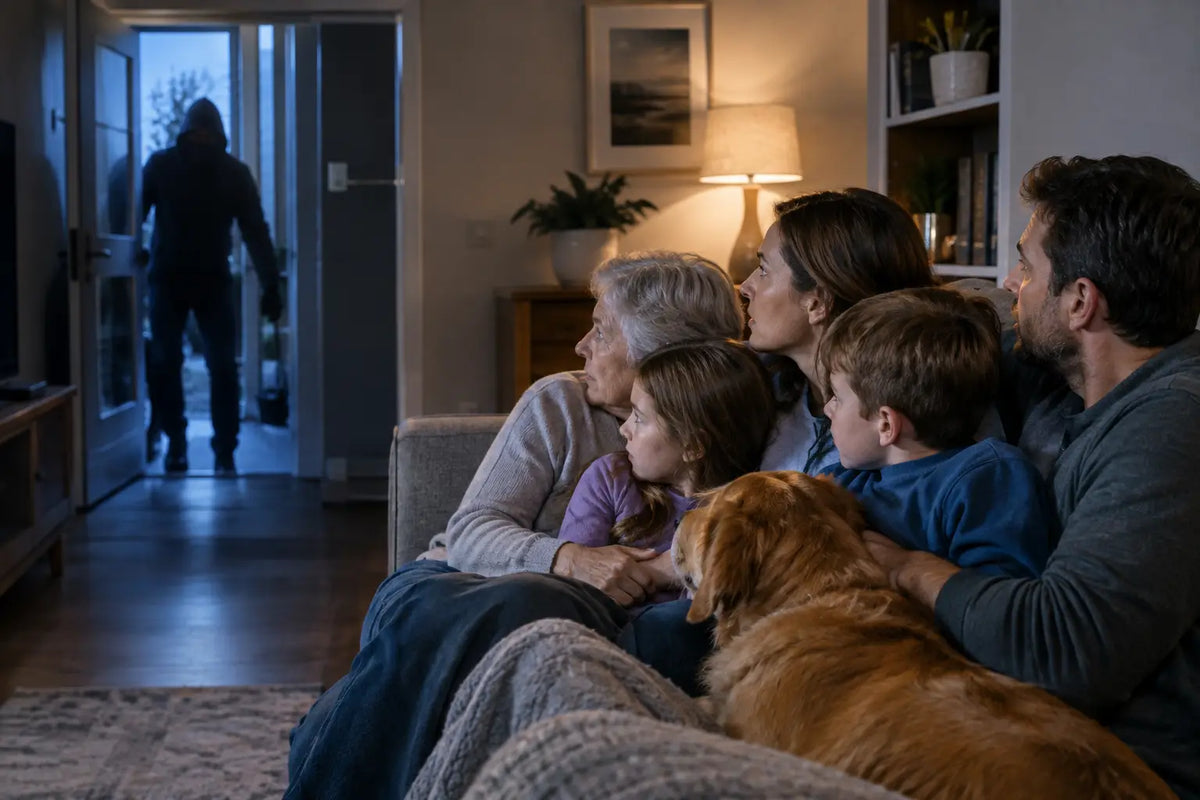
A strange sound downstairs at 2 a.m. is not the time to invent a plan. If you are asking what happens in a home invasion emergency for your family to think about safety, start with this: your goal is not to investigate, confront, or protect belongings. Your goal is to get your family away from danger, call 911, and stay together until help arrives.
Most families will never face an intruder in the house. That is good news. Preparing for the possibility is still worthwhile because the same habits that help here - clear communication, charged phones, working locks, and a simple plan - also help during storms, fires, and other emergencies.
What Happens in a Home Invasion Emergency
A home invasion is different from discovering a broken window after you return from work. It generally means an intruder enters or attempts to enter while someone is home. The situation can be frightening and unpredictable, which is why a family plan should be built around avoiding contact rather than trying to figure out the intruder's intentions.
The first moments may be confusing. Someone may hear glass break, a door force open, footsteps, an alarm, or a voice that does not belong in the house. You may not know whether it is an intruder, a confused neighbor, or a family member arriving unexpectedly. Treat an immediate, unexplained entry as a reason to move to safety and call 911.
Do not go downstairs to check. Do not search rooms. Do not try to corner someone inside your home. Even if you own a firearm or have taken self-defense training, the safest default for most households is distance, a locked barrier, and a prompt call to law enforcement. Property can be replaced. People cannot.
If there is a clear, safe exit that moves your family away from the intruder, leave and go to a trusted neighbor's house or another safe location. If leaving would require moving toward the person or through an unknown part of the home, stay put instead. Lock yourselves in a room if possible.
Build a Simple Family Safety Plan
A useful plan needs to be simple enough for a sleepy child, a visiting grandparent, or a babysitter to follow. Complicated instructions tend to disappear under stress. Decide in advance where family members should go, how they will call for help, and what they should say.
Choose a safe room. In many homes, this is a bedroom on the second floor with a solid door and lock. It should not be treated as a fortress. It is simply a place that gives your family time and separation while you contact 911. A room with a window may offer an alternate escape route, but do not plan on climbing out unless staying inside is clearly more dangerous.
Keep a charged phone available. If you charge your phone outside the bedroom, consider keeping an old charged phone, a basic backup phone, or a power bank nearby. Any working phone can call 911, even without an active cellular plan in many circumstances. Make sure children understand that a phone is for calling emergency services, not for recording, posting, or texting friends during the event.
Your family should know a short script: “Someone is in our house. We are at [address]. We are locked in [room].” Teach older children to give the house number, street name, and any useful details they can safely observe. Then stay on the line unless the dispatcher tells you otherwise.
A family code word can help if household members are separated. Choose something ordinary but not obvious, and use it to mean, “Go to the safe room now,” or “Leave the house and go to our meeting place.” Do not make it scary. The point is quick recognition, not secrecy for its own sake.
Give Children Clear, Age-Appropriate Instructions
Children do not need every frightening detail. They do need calm, direct instructions. Tell younger children that if they hear the code word, an alarm, or a parent say “safe room,” they should go there quickly, stay quiet, and wait with the family.
For school-age children, practice the basics: leave toys and devices behind, do not hide alone unless they cannot reach the safe room safely, and never open the door for someone claiming to be police unless a parent or dispatcher confirms it. Real responding officers may announce themselves, but families should wait for clear confirmation before opening a locked door.
Teenagers may be tempted to investigate, especially if they think a younger sibling is elsewhere in the home. Discuss this honestly beforehand. Their job is to get to safety, report what they know, and avoid creating a second person in danger. If someone is separated, tell the dispatcher immediately rather than sending a family member to search.
Practice once or twice a year, briefly and without drama. A 60-second walkthrough is enough: hear the cue, go to the room, lock the door, and pretend to make the call. Do not turn it into a frightening game or repeatedly rehearse worst-case scenarios.
Make the House Harder to Enter
Preparedness begins well before an emergency. Good home security does not guarantee prevention, but it can discourage opportunistic entry and give your family more warning.
Start with the basics: lock exterior doors and windows, repair weak frames, and use longer screws in door strike plates where appropriate. Keep shrubs trimmed around entry points so doors and windows are visible from the street or neighbors' homes. Outdoor lighting and visible cameras can also make a home less appealing to someone looking for an easy target.
An alarm system can provide valuable early warning, especially at night. The right choice depends on your home, budget, pets, internet reliability, and comfort with monitoring services. A simple door and window alarm may be enough for one household, while another may value professionally monitored alarms, cameras, and battery backup.
Avoid announcing travel plans publicly. Ask a trusted neighbor to collect packages and keep an eye on the property when you are gone. These are ordinary homeowner habits, not paranoia.
What to Keep in the Safe Room
You do not need to fill a closet with tactical gear. A few practical items can make a stressful situation more manageable, and they also serve during a power outage or severe weather event.
Keep a flashlight, charged phone or power bank, basic first-aid supplies, prescription medications needed overnight, and a printed card with your address and emergency contacts. A loud personal alarm may be useful if someone needs to draw attention, though quiet communication is usually better when you are safely behind a locked door.
If young children sleep in separate rooms, their location matters more than supplies. Arrange sleeping spaces and routines with a realistic plan in mind. It may be safer for one parent to gather a child only when that room is nearby and the path is clear. There is no single answer for every floor plan, which is why walking through your own home is so helpful.
When Police Arrive
Stay where you are until the dispatcher or responding officers give you directions. If you must leave the safe room, keep your hands visible and empty. Follow instructions exactly, even if they feel abrupt. Officers arriving at an active call do not yet know who is inside or what has happened.
Once everyone is safe, avoid touching doors, windows, or items that may be evidence. Write down what you remember while it is fresh: sounds, descriptions, direction of travel, vehicles, and the timeline. Then give your family room to settle. Children and adults may have trouble sleeping or feel jumpy afterward. That response is normal, and professional support can help if fear lingers.
A home invasion plan should leave your family feeling more capable, not more afraid. Take one useful step this week: choose your safe room, check its lock, and make sure everyone knows your address. That small conversation is a practical way to care for the people under your roof.