
Table of Contents
- Why Toddler Evacuation Needs Its Own Plan
- Toddler Emergency Go-Bag Checklist: What to Pack
- How to Talk to Toddlers About Emergencies
- Emergency Communication Plan for Families
- Sensory-Friendly Evacuation Strategies for Toddlers
- Vehicle-Specific Evacuation Protocols With a Toddler
- Pet-Inclusive Evacuation Planning
- Frequently Asked Questions
Last Updated: September 17, 2026
Why Toddler Evacuation Needs Its Own Plan
Emergency evacuation tips for families with toddlers begin with a family emergency plan that works for adults but can fall apart the moment a toddler is involved. Emergency evacuation tips for families with toddlers start with one hard truth: a two-year-old cannot follow verbal instructions under stress, cannot move quickly on their own, and will likely resist being rushed. The families who evacuate calmly rehearsed with their child's actual behavior in mind, not an idealized version of it.
Toddler Emergency Go-Bag Checklist: What to Pack
A toddler emergency go-bag checklist should cover three days of survival basics plus comfort items that keep a small child calm. Pack it once, store it by the door, and check it every season. What separates a working bag from a failing one is specificity: exact counts, a rotation schedule, and a separate infant branch for children under twelve months.
Essential Supplies for Infants and Toddlers
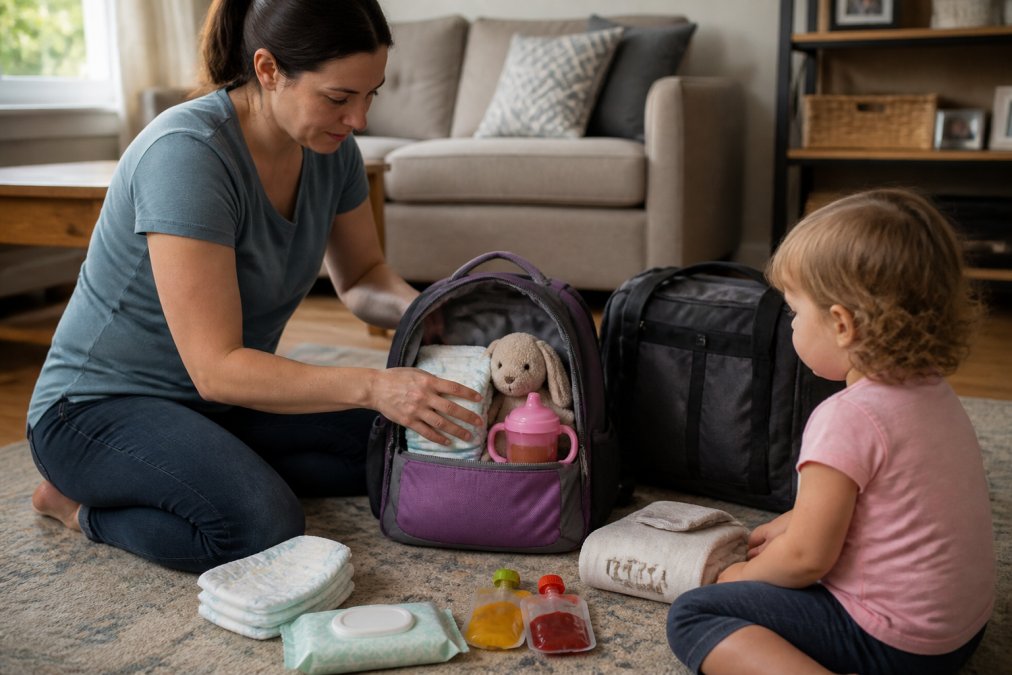
Build the bag around the child's daily needs, then add a buffer, packing for one day is a common mistake when evacuations often stretch into several. Use these counts for a 72-hour bag, then adjust for your child's size and habits.
- Diapers or pull-ups: plan on 6-8 per day for a toddler, so 18-24 for three days, plus a full pack of wipes and a foldable changing mat
- Formula or breastmilk: if your child is on formula, pack enough pre-measured powder or ready-to-feed bottles for three days of normal feeding, plus a spare bottle and a manual breast pump if nursing
- Toddler food: shelf-stable pouches, teething crackers, and single-serve oatmeal cups, aim for 6-9 items, since toddlers eat small amounts often rather than three full meals
- Water: at least one gallon per person per day for drinking and sanitation, plus a small child's cup or straw bottle your toddler already recognizes
- Clothing: two full changes of weather-appropriate clothes, one light jacket, one pair of closed-toe shoes that fit, and two extra pairs of socks (wet socks cause more meltdowns than hunger)
- Sleep: a small blanket or sleep sack, since unfamiliar shelter cots are cold and frightening
- First aid: children's acetaminophen or ibuprofen (check the weight-based dose on the package), a digital thermometer, adhesive bandages, and a week of any prescription medication in its original labeled bottle
- Documents: copies of the birth certificate, insurance card, immunization record, and a written medication list with dosages
- Hygiene: travel toothbrush, toddler toothpaste, and a small pack of unscented wipes for face and hands
Infant-Specific Additions
If your household includes a baby under twelve months, add a rear-facing carrier or wrap to keep both hands free, a portable changing pad, diaper cream, a nasal aspirator, and a bulb syringe. Pack ready-to-feed formula rather than powder, mixing requires clean water you may not have. Bring a spare pacifier in a sealed bag; losing the only one at hour two is a predictable crisis.
Comfort Items That Reduce Meltdowns
Comfort items are not optional. A familiar blanket or stuffed animal can mean the difference between a cooperative toddler and a full meltdown in a shelter. Pack a family photo, a favorite board book, and a quiet toy that needs no batteries, they weigh almost nothing and do more for cooperation than any instruction in the moment.
Seasonal Rotation and Expiration Checks
A go-bag untouched for a year holds expired formula, outgrown diapers, and clothes that no longer fit. Set two calendar reminders a year, spring and fall, and do a full swap: check expiration dates on formula, food pouches, and medications; replace outgrown items; re-test flashlight batteries and the spare phone charger. This twenty-minute habit separates a real bag from a decorative one.
How to Talk to Toddlers About Emergencies
Talking to toddlers about emergencies works best through short, calm, concrete language and play, not detailed explanations. A two- or three-year-old cannot process abstract risk, but can learn simple actions and associate them with safety.
A few approaches that work in practice:
- Use pretend play to rehearse. "Let's practice our fast walk to the car" turns preparation into a game.
- Name the helpers. Tell your child that firefighters, neighbors, and family are there to keep them safe.
- Avoid scary details. Skip talk of destruction or danger; focus on what the family does together.
- Read picture books about storms, fires, or helpers to build familiarity without fear.
Emergency Communication Plan for Families
An emergency communication plan for families does three jobs: where everyone goes, how to reach each other, and who to contact if the household separates. Write it down, share it with every adult, and keep a copy in each go-bag. With a toddler, assume the child cannot recite a phone number, describe where they live, or answer a stranger's questions.
Safe Meeting Places and Emergency Contacts
Choose two meeting places: one right outside the home (a specific tree or mailbox) and one outside the neighborhood (a library or relative's house). For a toddler, the first should be reachable on foot while holding your hand, the end of the driveway, not across the street.
| Plan Element | What to Decide | Where to Keep It |
|---|---|---|
| Indoor meeting spot | A room or spot outside the home | Practiced monthly |
| Neighborhood meeting spot | A nearby landmark | On the contact card |
| Out-of-area contact | One relative or friend | In every go-bag |
| Child ID card | Name, parents' names, contacts | In the toddler's bag |
The Toddler ID Card and What Goes On It
A toddler cannot carry a wallet, so the ID has to live on the child. Make a small laminated card and attach it to the back of the car seat, inside the go-bag, and on a breakaway lanyard or shoe tag if tolerated. Include the child's full name, date of birth, parents' names and phone numbers, the out-of-area contact, medical conditions or allergies, and the pediatrician's name, plus a passport-sized photo.
Reunification: Who Picks Up Your Child
Decide in advance who is authorized to pick up your toddler if you cannot reach them. Name two people, one nearby, one farther away, and give them a written authorization letter, a copy of your ID, and the child's ID card. Tell the daycare or preschool and update the list every six months. In a real evacuation, the most common failure is not a missing child but a child stuck at a pickup point because no one on site has authority to release them.
What Your Toddler Can Actually Learn
A two- or three-year-old cannot memorize a phone number, but can learn three things: their first and last name, a parent's name, and the phrase "I need help finding my mommy" or "I need help finding my daddy." Practice in the car, at bath time, and during pretend play, never under stress. A toddler who can say their own name gives a first responder a real starting point.
Sensory-Friendly Evacuation Strategies for Toddlers
Sensory-friendly evacuation strategies matter because sirens, flashing lights, crowded shelters, and unfamiliar smells can overwhelm a toddler faster than the emergency itself. Most standard checklists ignore this entirely.
Vehicle-Specific Evacuation Protocols With a Toddler
Vehicle-specific evacuation protocols depend on your car type and how your child's seat is installed, one of the most overlooked parts of family readiness.
Pet-Inclusive Evacuation Planning
Pet-inclusive evacuation planning is the gap most family guides skip, and it matters because many emergency shelters do not accept animals. If you have a dog or cat, decide in advance whether you will evacuate to a pet-friendly location or arrange a temporary foster.
Post-Evacuation Emotional Recovery
Post-evacuation emotional recovery is where toddler readiness continues after the danger passes. Young children often show stress through regression, clinginess, or disrupted sleep in the days and weeks after an evacuation.
American Academy of Pediatrics guidance on children and disasters
Frequently Asked Questions
What should be in a toddler's emergency go-bag?
Pack three days of diapers and wipes, formula or shelf-stable milk, non-perishable snacks, a change of clothes, a small first aid kit, any medications with dosing instructions, a comfort item like a stuffed animal, and copies of emergency documents. Add a portable charger, a flashlight, and a lightweight blanket. Store the bag near your main exit so you can grab it during a toddler evacuation without searching.
How can I keep my toddler calm during an evacuation?
Keep your own voice slow and steady, since toddlers read adult tone before words. Bring a comfort item, use a carrier or stroller to reduce sensory overload, and narrate simple steps out loud. Singing a familiar song or counting together gives your child something predictable to focus on. Practice short emergency drills at home so the car seat, the go-bag, and the routine already feel normal.
How do you create an emergency communication plan for families with toddlers?
Choose one out-of-area contact everyone calls or texts, since local lines often jam during natural disasters. Write key numbers on a card inside the go-bag in case phones die. Agree on two safe meeting places: one near your home and one outside your neighborhood. Share the plan with a neighbor or caregiver who might evacuate your toddler if you are away.
What are the 5 P's of evacuation?
The 5 P's are People, Pets, Prescriptions, Papers, and Pictures. For families with toddlers, People comes first, which means assigning one adult to each child so nobody gets left behind. Pets need carriers and leashes staged by the door. Prescriptions, emergency documents, and irreplaceable photos go in a waterproof pouch inside your go-bag. Running through the 5 P's takes under a minute and prevents the most common evacuation mistakes.