
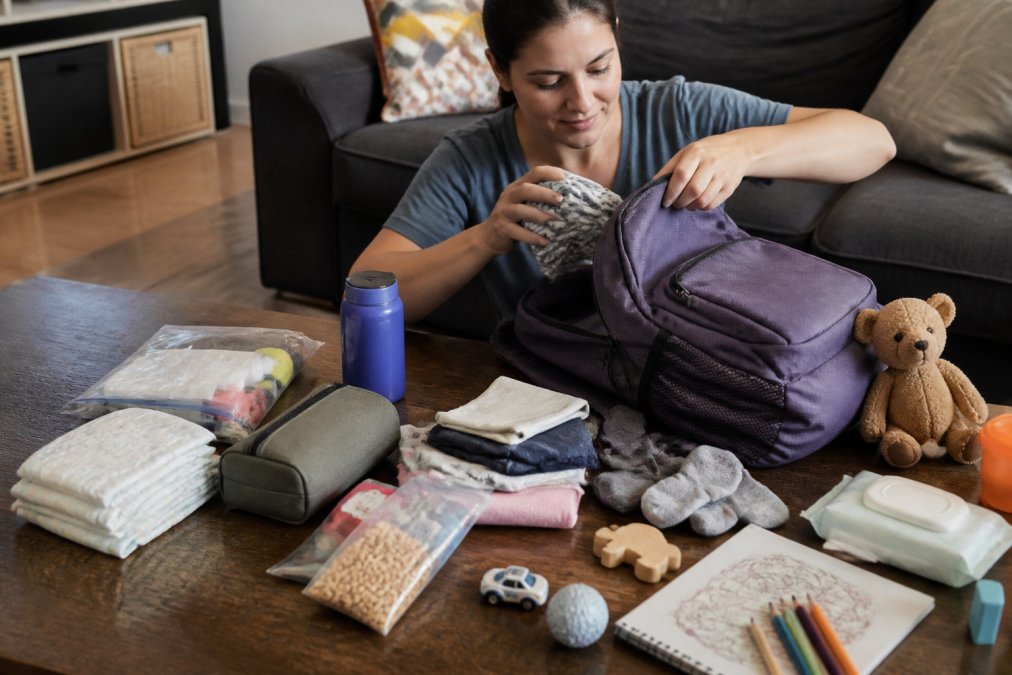
Table of Contents
- Start With a Toddler Emergency Kit Checklist
- How to Pack a Go-Bag for Toddlers Step by Step
- Building a 72-Hour Emergency Kit for Kids
- The Best Comfort Items for Toddler Emergency Bags
- Emergency Documents, Medication Management, and Communication
- Maintenance and Rotation Schedules for Your Toddler Go-Bag
- Conclusion
- Frequently Asked Questions
Last Updated: September 18, 2026
Start With a Toddler Emergency Kit Checklist
According to Ready.gov's family preparedness guidance, every household should maintain a portable emergency supply that can sustain each family member for at least three days. For parents wondering how to pack a go-bag for toddlers, the process starts with a checklist built around one reality: a toddler's needs change every few months, and a bag packed for a one-year-old will fail a three-year-old. At SHTF Prepper Club, we provide expert guidance and curated selections to help families build toddler-specific kits that account for growth, comfort, and the supplies that actually get used during an evacuation.
A toddler emergency kit checklist is a written inventory of diapering, feeding, medical, clothing, and comfort items sized to your child's current weight and age. Below is our recommended checklist, plus packing steps and rotation schedules.
| Category | Core Items | Quantity for 72 Hours |
|---|---|---|
| Diapering and hygiene | Diapers, wipes, rash cream, changing pad | 24-30 diapers |
| First aid | Bandages, antiseptic wipes, thermometer, saline | One small kit |
| Food and water | Shelf-stable snacks, formula or milk, water | 6-9 meals, 3L water |
| Clothing | Weather-appropriate outfit, socks, sleepwear | 2-3 changes |
| Comfort | Stuffed animal, blanket, pacifier | 1-2 items |
Diapering and Hygiene Supplies
Pack 8-10 diapers per day, not per change. Stress and disrupted routines increase diaper frequency, and running out mid-evacuation is the mistake parents report most often.
Include a full hygiene kit: wipes, rash cream, hand sanitizer, a folding changing pad, and two wet bags for soiled items. If your toddler is potty training, add a travel potty seat and spare training pants. Sanitation matters more than most parents expect, since a 72-hour supply often means limited running water.
First Aid Kit Essentials for Toddlers
A toddler first aid kit should include pediatric dosing information, infant acetaminophen or ibuprofen, a digital thermometer, adhesive bandages, antiseptic wipes, gauze, medical tape, and saline drops. Add any prescription medication, plus a written dosage schedule.
One item most guides skip: a current weight in kilograms, written on the inside of the kit.
How to Pack a Go-Bag for Toddlers Step by Step
Packing a toddler go-bag takes about 45 minutes once supplies are gathered. The goal: a bag your child can carry short distances and you can grab in under 30 seconds.
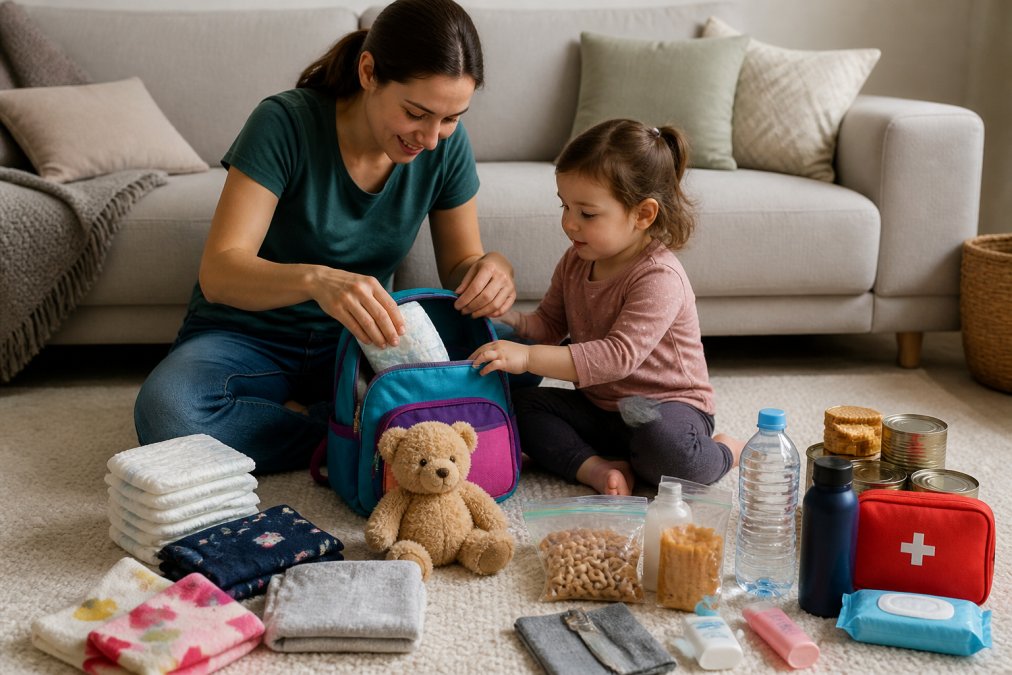
- Choose a small backpack, 10-15 liters, sized to your toddler's frame. Measure from the top of the shoulders to the top of the hips, the pack should not extend past the hips.
- Lay out all supplies and remove anything expired or outgrown. Check diaper size, shoe size, and any medication expiration dates.
- Pack heaviest items against the back panel, closest to the spine. This keeps the load from pulling the child backward.
- Group items into labeled stuff sacks by category: diapering, food, clothing, comfort. Color-coding works better than written labels for pre-readers.
- Place the first aid kit and medications in an outer pocket for fast access, you should be able to reach them without unpacking the bag.
- Add a laminated emergency contact list and a recent photo of your child in a clear outer sleeve.
- Weigh the finished bag on a kitchen scale and confirm it stays within the age-based limit below.
Backpack Organization by Weight and Age
Weight-to-age guidelines are the gap most guides miss: an overloaded pack is worse than no pack, because an off-balance toddler will refuse to walk and need carrying anyway, along with the bag.
| Age | Typical Weight Range | Max Pack Weight | Realistic Contents |
|---|---|---|---|
| Under 2 | 20-30 lb | 0 lb (parent carries) | Comfort pouch only, under 1 lb |
| 2-3 years | 25-35 lb | 2.5-3.5 lb | Comfort pouch, one snack, small water bottle |
| 3-4 years | 30-40 lb | 3-4 lb | Comfort items, snacks, water, one light layer |
| 4-5 years | 35-45 lb | 3.5-4.5 lb | Above plus a small flashlight and a light first aid pouch |
Building a 72-Hour Emergency Kit for Kids
A 72-hour emergency kit for kids covers three days of food, water, warmth, and hygiene. The American Academy of Pediatrics recommends pediatric emergency preparedness resources that parents plan for both sheltering in place and evacuation, which means your kit should work in a car, a shelter, or a relative's home.
Water, Food, and Toddler Nutrition
Store at least 3 liters of water per toddler for 72 hours, plus extra for formula mixing. Pack shelf-stable foods your child already eats: pouches, crackers, nut butter packets, and ready-to-eat rations. Toddler nutrition during a crisis is about familiarity, not variety.
Clothing and Weather-Appropriate Gear
Pack two to three complete outfits, sturdy shoes, socks, a hat, and a lightweight rain layer. Check the forecast before any known event and swap items seasonally: a winter go-bag needs gloves and fleece; a summer bag needs sun protection and breathable fabrics.
The Best Comfort Items for Toddler Emergency Bags
The best comfort items for toddler emergency bags are small, familiar, and irreplaceable in the moment: a favorite stuffed animal, a specific blanket, a pacifier, or a board book. These do more for a toddler's stability than any gear, because a toddler's sense of safety is anchored to sensory familiarity, smell, weight, texture, not logic about why the family is leaving.
Build the comfort layer around three tiers:
- The anchor object. One item your child sleeps with every night. This is non-negotiable and gets its own labeled pouch so it never gets buried.
- The engagement object. A board book, a small set of chunky crayons with a mini notebook, or a couple of familiar small toys. These buy you 20-40 minutes of calm during a car ride or shelter wait.
- The regulation object. A pacifier, a lovey, or a teether for children still in that stage. Pack two if your child is under two.
Psychological Preparation and Emotional Support
Psychological preparation for toddlers is the angle most checklists ignore, and where parents get the most value. The goal isn't to teach your toddler about emergencies, it's to make the go-bag and evacuation routine feel boring and normal, so when the real thing happens, the child's nervous system has a familiar script to fall back on.
Emergency Documents, Medication Management, and Communication
Emergency documents belong in a waterproof pouch inside the go-bag: birth certificates or copies, immunization records, a current photo, insurance cards, and a written contact list with two out-of-area contacts.
Maintenance and Rotation Schedules for Your Toddler Go-Bag
A toddler go-bag needs a rotation schedule because children outgrow supplies fast. Review every three months, and again whenever shoe size, diaper size, or medication changes.
| Task | Frequency | What to Check |
|---|---|---|
| Diaper and clothing size check | Every 3 months | Fit and quantity |
| Food and water rotation | Every 6 months | Expiration dates |
| Medication review | Monthly | Expiry and dosage |
| Full bag drill | Every 6 months | Weight and access speed |
Storage Solutions for Small Spaces
Storage solutions for small spaces start with one rule: keep the go-bag where you'll actually grab it. A closet near the front door, a hall bench, or your car trunk beats a garage shelf you never open.
Conclusion
Building a toddler go-bag is a moving target. Sizes change, food expires, and comfort items wear out, which is why a rotation schedule matters as much as the gear. SHTF Prepper Club simplifies this with expert-vetted food, water, and safety kits, long-term food storage built for up to 25-year shelf life, and a step-by-step approach that removes the guesswork. Add to cart and get your household ready without the fear.
Frequently Asked Questions
What should I pack in an emergency go bag for my toddler?
A toddler go-bag needs diapering supplies, a change of clothes, shelf-stable snacks, water, a first aid kit, any medications, comfort items, and copies of emergency documents. Aim for a 72-hour supply since most evacuations last at least three days. Pack items in a small backpack your toddler can carry short distances, keeping the heaviest items closest to their back for balance.
How often should you rotate items in a toddler go-bag?
Check your toddler go-bag every three months for expired food, outgrown clothing, and depleted supplies. Rotate seasonal gear twice a year to match weather-appropriate needs. Because toddlers grow fast, verify clothing and shoe sizes at each check. Mark your calendar for a full review every six months, and replace medications before their expiration dates.
What are the best comfort items for a toddler emergency bag?
Pack a small stuffed animal, a favorite blanket, a pacifier if they use one, and a board book or two. These items help toddlers self-soothe during scary situations. Keep duplicates of the lovey at home so the bag version stays unfamiliar enough to feel special but familiar enough to calm them. A small photo album of family members also works well.
How do you keep a toddler calm during an emergency evacuation?
Practice evacuation drills at home so the routine feels normal. During an actual event, stay calm yourself, use a comfort object, and keep your voice steady. Explain what is happening in simple words. Singing familiar songs or playing I-spy can distract a frightened toddler. If you have a 72-hour emergency kit for kids ready, you spend less time scrambling and more time reassuring your child.