
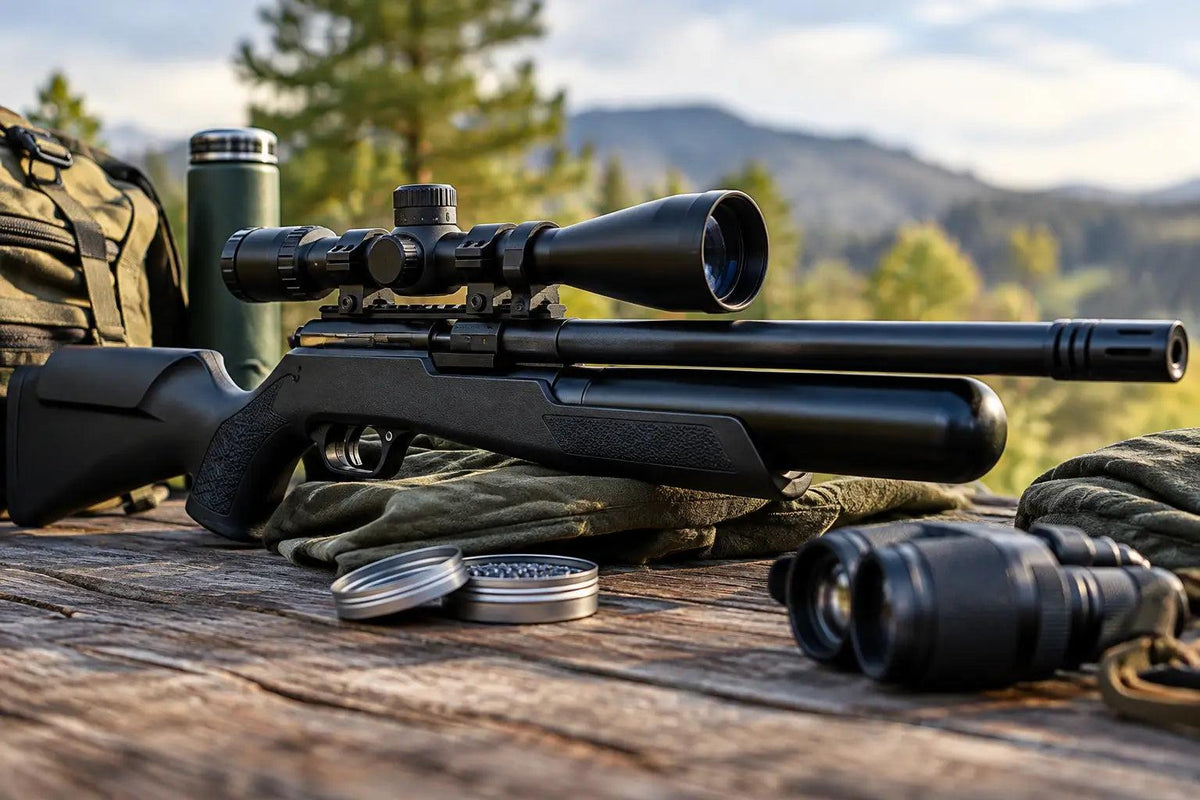
A power outage that lasts a few days changes priorities quickly. You need drinking water, a way to keep food safe, light after sunset, medications, and a clear plan for everyone under your roof. A PCP airgun in an emergency can have a limited place in a well-rounded preparedness plan, especially for rural families with legal access to small game. It is not a substitute for food storage, water, first aid, or good judgment.
That distinction matters. A pre-charged pneumatic, or PCP, airgun uses compressed air stored in a reservoir to propel a pellet. Unlike a spring-powered airgun, it does not need to be cocked against a heavy spring for every shot. Unlike a firearm, it does not use gunpowder. Those differences can make it useful for some households, but they also create a practical question many buyers miss: how will you refill it when electricity is out?
Where a PCP Airgun Fits in Emergency Readiness
Think of an airgun as a specialized tool, not the center of the plan. For a family on acreage or near suitable public land where hunting is legal, it may offer a quiet, compact option for lawful small-game harvesting during a prolonged disruption. It can also serve as a familiar sporting tool when used responsibly before any emergency happens.
Its value depends heavily on your setting. A homeowner in a dense subdivision should not assume an airgun is appropriate, safe, or legal for use in the neighborhood. Pellets can travel well beyond the intended target, and local ordinances may restrict discharge even on private property. A rural household may have more options, but state hunting regulations, seasons, licenses, landowner permission, and local rules still apply during an emergency unless authorities say otherwise.
Most families will get more immediate resilience from stored food and water. A practical starting goal is food your family already eats, safe water storage, reliable filtration, backup cooking, and a way to maintain basic power. Those supplies work on day one of a storm, wildfire evacuation, or supply interruption. An airgun may only become relevant in a longer event, and only under the right conditions.
The Biggest Limitation Is Air Supply
PCP airguns are often accurate and easy to shoot well with practice, but they are not self-sustaining. Their onboard air reservoirs require high-pressure filling equipment. That might be a hand pump, a high-pressure air tank, or an electric compressor. Each option involves trade-offs.
A hand pump can work without grid power, which is a meaningful advantage. It is also physically demanding, slow, and requires the user to understand safe filling procedures. A high-pressure tank provides convenient refills but eventually needs to be professionally filled. An electric compressor can be useful at home, but only if you have sufficient backup power and the compressor is compatible with your airgun's required pressure.
Before treating a PCP as part of emergency equipment, test your actual refill system. Learn how many usable fills your air source provides, how long the process takes, and whether the adults in your household can operate it safely. Do this on an ordinary weekend, not during a freezing outage or while managing an evacuation.
A basic maintenance kit matters too. PCP airguns rely on seals, fittings, clean air, and proper storage. A leaking seal or damaged fill connection can turn an expensive tool into dead weight. Keep the manual, appropriate lubricant if recommended by the manufacturer, spare seals where available, and a protective case in a dry, secure location.
Safety Comes Before Utility
For families with children or grandchildren, storage is non-negotiable. Treat a PCP airgun with the same seriousness you would any projectile-launching device. Keep it unloaded, secured, and inaccessible to unauthorized users. Store pellets separately when appropriate, and make sure every responsible adult understands the storage plan.
The household rules should be simple: never point it at a person or pet, keep a clear safe direction in mind at all times, and do not use it casually during a stressful event. Emergencies make people tired, distracted, and emotionally stretched. Those are poor conditions for introducing an unfamiliar tool or allowing a teenager to practice unsupervised.
Eye protection is sensible whenever the airgun is being handled or used. So is a reliable backstop during ordinary practice. Pellets can ricochet from hard surfaces, and improvised targets are not always safe. Practicing only in a controlled, lawful setting is how you learn whether this tool is truly a fit for your family.
Do not plan on an airgun for personal protection. The risks of escalation, mistaken identity, legal consequences, and injury are too high. Family emergency planning works best when it emphasizes avoidance, communication, secure shelter, evacuation decisions, and awareness of local emergency guidance.
Food Gathering Requires More Than an Airgun
If lawful small-game harvesting is part of your preparedness thinking, the airgun itself is only one small piece of the picture. You need knowledge of local wildlife laws, safe handling, humane decision-making, field dressing, sanitation, and cooking. You also need to understand that success is never guaranteed.
This is why stored staples remain the foundation. Rice, beans, canned proteins, freeze-dried meals, cooking oil, salt, and familiar pantry foods do not require you to locate game, spend time outdoors, or process an animal after a storm. They are predictable. For families with medical needs, young children, older relatives, or limited mobility, predictability is especially valuable.
A better approach is to view lawful food gathering as a supplement to stored food, never as the food plan. If the freezer is warming after an extended outage, your first job is to safely use perishable food, protect drinking water, and shift to shelf-stable meals. Hunting should not pull an adult away from children, home repairs, evacuation preparation, or a family member who needs care.
Choose Readiness in the Right Order
If you are building your preparedness supplies from scratch, put the essentials ahead of specialized gear. Water storage and filtration, at least several days of food, medical supplies, lighting, communications, warmth or cooling plans, and safe cooking capacity deserve the first share of the budget.
Once those bases are covered, a PCP airgun may make sense for a household with the right location, legal use case, and willingness to train. Factor in the full system cost, not just the airgun: safe storage, pellets, air source, maintenance items, protective equipment, and practice time. A tool that is never used before an emergency is not a dependable emergency tool.
It also helps to talk openly with your spouse or other adults in the home. One person may see a useful rural preparedness option while another may be uncomfortable with storing an airgun around children. Neither reaction is unreasonable. A clear storage plan, agreed rules, and honest discussion of local realities matter more than buying equipment quickly.
A Practical Family Checklist
Before adding a PCP airgun to your emergency preparations, make sure you can answer four questions clearly: Is ownership and use legal where you live? Do you have a safe, secure place to store it? Can you maintain a dependable air supply without grid power? Have the responsible adults practiced safe handling in a legal setting?
If any answer is no, pause there. Improving your water, food, power, or first-aid supplies is still meaningful progress. Preparedness does not require buying every tool. It means choosing the tools your family can safely use, maintain, and rely on.
The goal is a calmer household when plans change fast. Build the boring essentials first, practice the systems you own, and let specialized equipment earn its place through real usefulness rather than worry.