
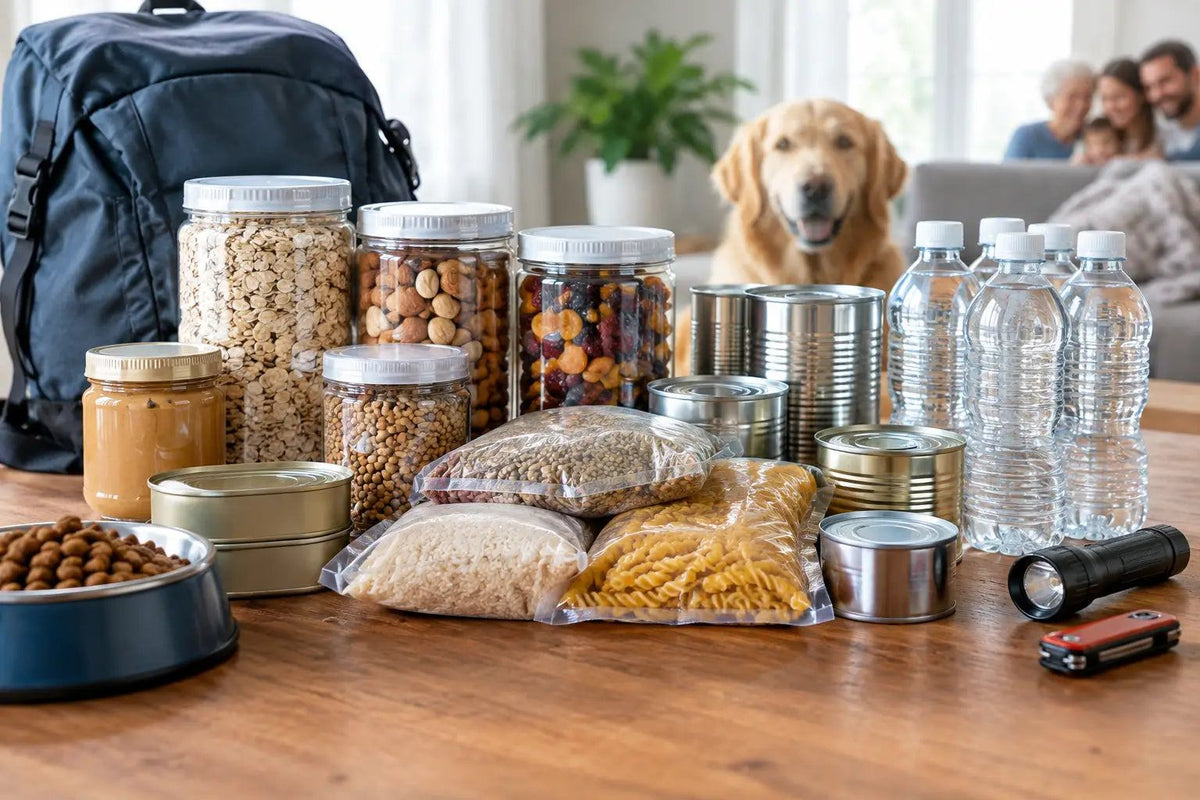
A power outage turns dinner into a real question quickly. The grocery store may be closed, roads may be blocked, and the food in your refrigerator has a limited clock. If you are asking, what food should we store for an emergency?, start with a reassuring answer: store familiar food your family will actually eat, then build from there.
You do not need a basement full of unfamiliar meals or a year’s worth of supplies on day one. A useful emergency food supply is a working pantry that can carry your household through a storm, outage, evacuation, or short-term shortage without adding stress to an already difficult week.
What food should you store for an emergency?
Store shelf-stable foods that provide calories, protein, variety, and comfort with little or no cooking. The best choices depend on your family’s needs, your storage space, and whether you expect to have water and a way to cook. A family in hurricane country may prioritize ready-to-eat foods for several days. A rural household with a generator, propane stove, or solar power station can reasonably store more dry staples that need preparation.
For most households, begin with two weeks of food. That is long enough to cover many common disruptions and manageable enough that you will keep it organized. Once that foundation is in place, expanding to one month or longer becomes much less intimidating.
The strongest pantry has food your family uses in ordinary life. Rotation is what keeps emergency food from becoming an expensive, forgotten project.
Build your supply around four food jobs
Emergency food should do more than fill shelves. Each item should have a role when routines are disrupted.
- Ready-to-eat meals and snacks cover the first 72 hours, when cooking may be difficult. Think canned chicken, tuna, salmon, chili, soup, nut butters, granola bars, crackers, shelf-stable milk, fruit cups, and familiar snack foods.
- Easy meal builders turn a few ingredients into filling meals. Canned beans, pasta, rice, canned tomatoes, jarred sauces, boxed macaroni and cheese, instant potatoes, ramen, and broth all work well.
- Longer-term staples provide affordable calories for a deeper pantry. Store rice, dry beans, oats, flour, sugar, pasta, powdered milk, cooking oil, salt, and baking basics in quantities your household can rotate.
- Morale and special-needs foods help people function when life is uncomfortable. Coffee, tea, electrolyte drink mixes, chocolate, hard candy, baby food, pet food, and medically necessary nutrition products belong in the plan too.
Start with foods that need little water and fuel
Water and cooking capacity are the difference between food storage that looks good on a shelf and food that works during an emergency. Dry rice, beans, and pasta are excellent pantry staples, but they require water, time, and heat. If you have only a small water supply or cannot safely cook indoors, those foods cannot do all the work.
Keep several days of foods that can be eaten cold or prepared with minimal water. Canned meats, beans, vegetables, fruit, soups, peanut butter, crackers, tortillas, cereal, and shelf-stable beverages are practical choices. Choose pop-top cans where possible, but still keep a dependable manual can opener in your kitchen kit.
Then add foods that work with a simple camp stove, grill used outdoors, or other safe emergency cooking method. Instant oatmeal, instant mashed potatoes, pasta sides, soups, and freeze-dried meals can be useful here. Freeze-dried food has a long shelf life and takes up relatively little space, but it needs water. It is best used as part of a broader food plan, not as a substitute for stored water.
Never use charcoal grills, propane grills, or fuel-burning camp stoves inside a garage, basement, or home. Emergency cooking needs ventilation as much as it needs fuel.
Buy for the people who will actually be there
A good food plan is specific. Consider who may be under your roof during a disruption, including grandparents, adult children who live nearby, visiting grandchildren, and pets. A household of four may need more than four people’s worth of food if it is the natural gathering place during a storm.
Account for dietary restrictions before an emergency makes substitutions difficult. Store gluten-free staples if someone needs them. Keep low-sodium choices for family members who rely on them. Add formula, purees, and age-appropriate snacks for infants and toddlers. If a family member depends on nutritional shakes, diabetic-friendly snacks, or other specialty foods, maintain an extra supply and rotate it carefully.
Do not forget comfort foods. A hot cup of coffee, a familiar cereal, or a favorite snack can make a long outage easier for adults and children alike. Preparedness is practical, but it is also about helping your family feel steady.
A realistic two-week emergency food plan
Rather than trying to calculate every calorie immediately, create meals you can picture making. For breakfast, you might rely on oatmeal, cereal, shelf-stable milk, fruit, and peanut butter. Lunch could be soup, crackers, canned chicken, tuna packets, or bean-based meals. Dinner might include chili, pasta with sauce, rice and canned vegetables, or prepared meals requiring only hot water.
As a general planning target, adults often need roughly 2,000 calories per day, though needs vary with age, activity, health, pregnancy, and climate. Children may need less overall but can be much less flexible about unfamiliar food. Build around what they reliably eat, then include a few easy alternatives.
For a family of four, two weeks means 56 person-days of food. That sounds large until you break it into ordinary grocery items. Fourteen cans of soup, for example, are not a two-week plan. Think in complete meals, snacks, breakfast options, and the extra people who may arrive at your door.
Store food so you can use it, not lose it
The pantry shelf is not the garage floor. Food keeps best in a cool, dry, dark place away from direct sunlight, pests, and dramatic temperature swings. A climate-controlled closet, pantry, or interior storage room is usually better than an attic, shed, or hot garage.
Label bins by category: ready-to-eat food, meal ingredients, breakfast, snacks, and special diets. Put the newest purchases behind older items and use the older items first. This simple first-in, first-out habit keeps your supply fresh without turning pantry management into a second job.
Check your food supply twice a year, perhaps when you change smoke alarm batteries or prepare for storm season. Look for damaged cans, leaking packages, expired specialty items, and foods your family no longer enjoys. Replace what you use. Update quantities as children grow, relatives move closer, or pets join the household.
Long-term foods such as properly packaged grains, beans, and freeze-dried meals can extend your readiness, especially if you have a larger pantry or want more food independence. But start with the food that solves next week’s disruption first. A few well-organized shelves you understand are more valuable than a complicated stockpile you never touch.
Pair food with water, power, and a cooking plan
Food storage cannot stand alone. Store at least one gallon of water per person per day for drinking and basic sanitation, with more if you live in a hot climate, have infants, have pets, or expect to cook dry foods. Keep water treatment and filtration options as a backup, but do not assume you can access a nearby stream or pool during an emergency.
Also decide how you will keep food safe during an outage. Keep refrigerator and freezer doors closed as much as possible. A refrigerator generally keeps food cold for about four hours without power, while a full freezer can hold temperature for about 48 hours if unopened. When in doubt, use a food thermometer and follow food-safety guidance rather than guessing.
A small cooking setup, fuel stored safely, a manual can opener, basic utensils, and a way to wash hands turn stored food into meals. At SHTF Prepper Club, we encourage families to build these systems in layers because food, water, cooking, and power work together.
Start with one extra grocery bag this week. Add foods your family already likes, place them where you can reach them, and make one simple meal from the shelf before you need it. That is how emergency readiness becomes part of family life: quietly, practically, and one prepared dinner at a time.