
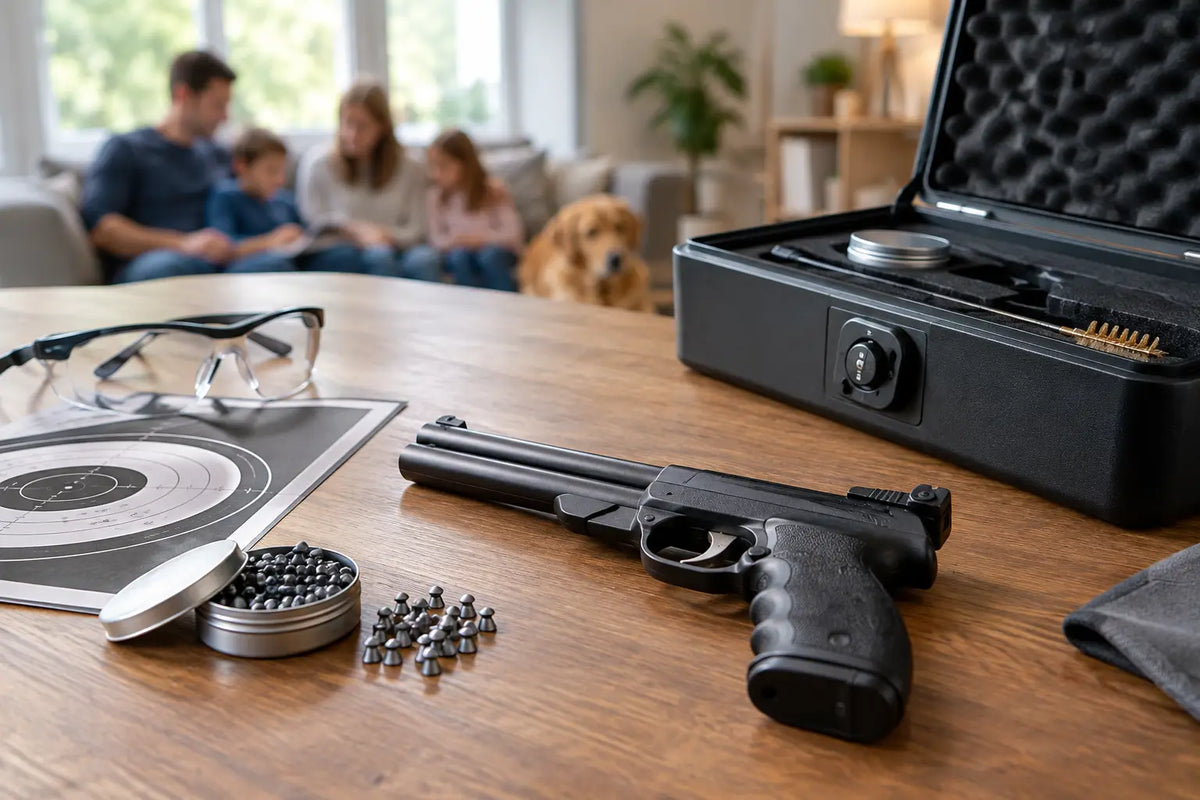
A household air pistol is not an emergency plan. It may have a place in supervised target practice, responsible pest management where legal, or a family shooting-sports routine, but it should never distract from the basics that carry a family through a real disruption: water, food, medical supplies, communication, light, warmth, and a safe place to sleep.
That distinction matters. After a storm or during a long outage, stress is already high. Adding an unsecured air gun, unclear household rules, or an unrealistic expectation that it will solve a safety problem can create more risk, not less. Preparedness means thinking through the whole system before an emergency, including how equipment is stored, who can access it, and when it should stay put.
What an Air Pistol Is - and Is Not
An air pistol uses compressed air, a spring-piston system, or CO2 to launch a BB or pellet. It is not treated the same as a firearm under many laws, but that does not make it harmless or consequence-free. Air pistols can cause serious eye injuries and other injuries, and some models have enough power to require careful handling around property, pets, children, and neighbors.
They are also frequently mistaken for firearms. In a tense situation, a realistic-looking air pistol can put the person holding it and everyone nearby at greater risk. That is one reason a family preparedness plan should not frame an air pistol as a personal-protection tool.
Its appropriate role, if your household chooses to own one, is narrow and deliberate. Think supervised recreation, skill-building at a lawful range or safe private setting, and limited property management only where local rules allow it. The right choice for one household may not be right for another. A family with young children, frequent visiting grandchildren, or limited secure storage may reasonably decide that now is not the time.
Start With the Priorities That Matter in an Emergency
When people begin preparing after a hurricane, wildfire evacuation, winter blackout, or supply shortage, it is easy to focus on equipment that feels decisive. The boring basics are usually more useful.
A realistic household plan starts with stored drinking water and a way to make additional water safer. It includes shelf-stable food your family will actually eat, a first-aid kit that matches your needs, backup power or lighting, weather-appropriate warmth, and a way to receive emergency updates. If you have medications, infants, older relatives, pets, or someone who relies on powered medical equipment, those needs come ahead of recreational gear every time.
A good benchmark is simple: if your family had to stay home without normal services for several days, could you manage water, meals, sanitation, light, charging, and basic medical needs? If the answer is not yet, put your preparedness budget there first. Starting small is still progress. A few water containers, dependable flashlights, and a practical family kit are more valuable than an item you have not safely integrated into your plan.
Safe Air Pistol Storage Is the Real Responsibility
If you decide an air pistol belongs in your home, storage should be planned as carefully as food storage or prescription medication. The goal is to prevent unauthorized access, accidental handling, and confusion during an already stressful event.
Keep the air pistol unloaded and secured in a locked cabinet, safe, or locking case when it is not under direct adult control. Store pellets or BBs separately. If it uses CO2 cartridges, follow the manufacturer’s directions for storage and do not assume spare cartridges will perform normally after exposure to extreme heat or cold.
Your storage location matters too. Avoid leaving it in a vehicle, garage shelf, or evacuation bag where children, guests, or hurried adults could encounter it unexpectedly. During an evacuation, vehicles can get hot, bags get passed around, and routines break down. More gear is not always better. For many families, the responsible choice during a fast-moving evacuation is to leave nonessential items secured at home rather than introduce another item to manage on the road.
Four household rules are worth stating clearly and repeating often:
- Treat every air pistol as though it is loaded.
- Keep it pointed in a safe direction at all times.
- Keep fingers away from the trigger until an adult has confirmed it is time to shoot.
- Never handle it around other people, pets, vehicles, windows, or an unsafe backstop.
Children, teenagers, and visiting family
Parents often worry that discussing air guns will make them more interesting to children. Silence is usually not a safety plan. Age-appropriate, direct conversation works better: this is not a toy, it is never handled without permission and adult supervision, and an adult must be told immediately if one is found out in the open.
Teenagers need the same clarity, plus a reminder that social media videos, backyard challenges, and showing off for friends are not judgment calls to make alone. Establish consequences in advance. If the rules are broken, access ends.
Grandparents should also consider the rhythms of visits. A home that is safe for two adults may need a different storage approach when grandchildren are spending the weekend. Secure storage is not a sign of distrust. It is part of being a good host.
Local Laws and Community Rules Still Apply
Before buying, transporting, or using an air pistol, check the laws that apply where you live. State and local regulations can differ substantially. Some places regulate age, purchase, possession, transport, discharge, or the appearance of air guns. Homeowners associations, city ordinances, and lease agreements may add further restrictions.
Do not rely on a neighbor’s advice or a product label alone. Rules can change, especially in cities and suburbs where even lawful backyard target practice may be prohibited or may create a dangerous situation for nearby homes. If you transport an air pistol to an approved location, keep it unloaded, secured in a case, and separate from its ammunition in accordance with applicable law.
A responsible plan also considers the people around you. A pellet that misses its intended target can travel farther than expected. A fence is not necessarily a safe backstop. Noise, visible equipment, and realistic-looking designs can alarm neighbors who do not know what they are seeing. Good preparedness strengthens relationships in a neighborhood. It does not create avoidable fear or confusion.
If You Use One for Target Practice
Target practice can teach patience, attention, and respect for safety rules when it is conducted legally and supervised carefully. Choose a purpose-built target system with a reliable backstop designed for the ammunition and power level being used. Set up only where there is a clear, controlled area behind the target and no possibility of people, animals, homes, roads, or property entering the line of fire.
Eye protection is essential for everyone in the area, not only the person shooting. Keep sessions short enough that attention does not fade. One calm adult should oversee the activity, with no horseplay, distractions, or mixed messages about the rules.
Avoid practice during an emergency itself. A power outage, storm warning, evacuation order, or civil disturbance is the wrong time to introduce noise, uncertainty, or weapons-related activity into the household. Focus on your family’s immediate needs and follow directions from local authorities.
Maintenance without false confidence
Like any piece of equipment, an air pistol needs basic inspection and manufacturer-recommended maintenance. Check the condition of seals, sights, fasteners, and storage cases. Keep it clean and dry. Do not modify it or improvise repairs if you are unsure what you are doing.
Still, maintenance does not turn it into a dependable answer for every problem. CO2 canisters run out. Seals can fail. Weather affects equipment. That is why preparedness works best in layers: dependable water storage, food, first aid, lighting, communication, and practical household skills first. Specialized equipment comes later, only when you can own and manage it responsibly.
Build a Plan Your Family Can Actually Follow
The best family emergency plan is not the one with the most gear. It is the one everyone understands on an ordinary Tuesday. Decide where you will meet if separated, how you will communicate if cell service is unreliable, who handles pets, where medications are kept, and how you will leave if an evacuation is ordered.
Then look at every item in your home through the same question: does this make our plan safer, simpler, and more realistic? For some households, an air pistol can fit into a carefully managed recreational routine. For others, secure storage demands, local restrictions, or family circumstances make it a poor fit. Either answer can be responsible.
Preparedness is not about owning the most equipment. It is about giving your family fewer hard decisions when the lights go out and the day does not go as planned.