

Last Updated: November 16, 2026
Quick Summary
To store cooking oils for long-term use, keep them in a cool, dark place away from the stove, oven, and sunlight, in food-grade containers with a tight seal. Minimize headspace and keep bottles closed, since heat, light, and air speed up oxidation and rancidity. Refined oils in sealed dark containers last longest.
- Heat is the fastest spoiler, so move oil away from the stove, oven, and sunny windows.
- Dark glass blocks the wavelengths that trigger oxidation, so keep clear bottles in a closed cabinet.
- Once opened, most cooking oil lasts about three to six months in a cool pantry.
- Write the open date on the bottle with a marker to remove the guesswork later.
- The best oil for long-term storage is a refined oil in a sealed, dark container.
Table of Contents
- Why Cooking Oil Goes Bad: Heat, Light, and Air
- Step-by-Step: How to Store Cooking Oils for Long-Term Use
- Cooking Oil Shelf Life Chart by Type and Storage State
- How Long Does Cooking Oil Last Once Opened?
- Best Cooking Oil for Long-Term Storage
- Storing Cooking Oil in the Freezer: What Changes
- Bulk Storage, Rotation, and Rancidity Checks
- Build Your Oil Rotation Into Your Family Emergency Plan
- Frequently Asked Questions
Why Cooking Oil Goes Bad: Heat, Light, and Air
Stored properly, cooking oil can stay fresh for years. Stored badly, it turns rancid in months. Oil is a fat, and fat fails slowly and quietly. Knowing how to store cooking oils for long term use starts with understanding the three enemies that speed up spoilage.
Those enemies are heat, light, and air. Each one pushes oxidation, the chemical reaction that breaks fat down.
Heat Exposure and the Pantry Shelf
Heat is the fastest spoiler. Every extra degree speeds up the breakdown of fat.
A bottle kept beside the stove lives a hard life. Warm air rises off the burners daily, and that steady heat shortens the oil's useful life.
Store oil away from the stove, the oven, and sunny windows. A low cabinet across the kitchen is a better home than the counter.
Light Exposure and Oxidation
Light damages oil even when the room stays cool. Sunlight is the worst offender, but bright kitchen light adds up over time.
That is why good oils come in dark glass. Amber and cobalt glass block the wavelengths that trigger oxidation.
If your oil came in a clear bottle, keep it in a closed cabinet. Darkness does what tinted glass does.
Oxygen and Air Exposure
Oxygen is the third enemy, and the sneakiest. Every time you open a bottle, fresh air gets in.
Oxygen reacts with fat molecules and starts the chain that leads to rancidity. A half-empty bottle has more air inside, so it spoils faster than a full one.
The fix is simple: keep bottles closed, buy sizes you will finish, and squeeze the air out of flexible containers.
Step-by-Step: How to Store Cooking Oils for Long-Term Use
Here is a step-by-step approach to storing oil so it stays fresh.
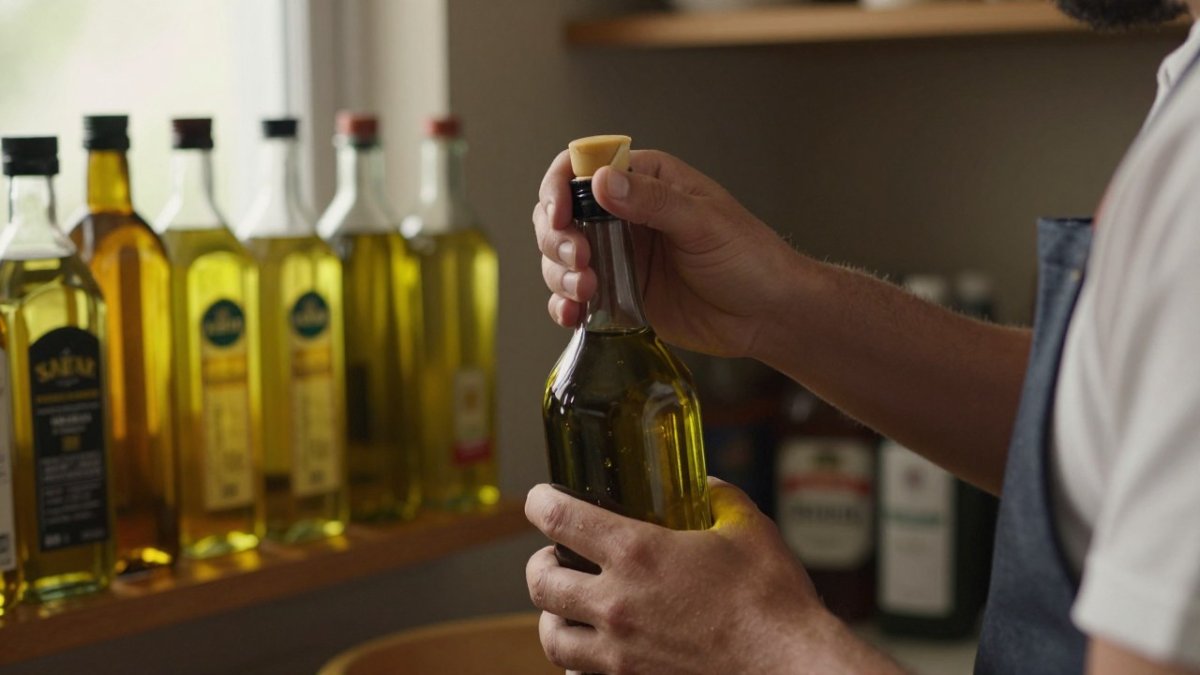
Choose a Cool, Dark Storage Location
Pick a spot that stays cool and dark year-round. A basement shelf, a closet floor, or a lower cabinet works well.
- Keep oil away from the stove, furnace, and water heater
- Avoid garages that swing hot and cold
- Skip windowsills and open shelving near lights
Steady temperature matters more than a perfect number. A cool place that stays cool beats a cold place that spikes.
Pick Food-Grade Containers With a Tight Seal
Container choice decides how much air and light reach the oil. Food-grade glass, food-grade plastic, and lined metal all work.
Dark glass is our pick for small amounts. For bulk, food-grade plastic or metal with a tight lid does the job. Compare long term food storage containers vs bags if you are weighing options for your pantry.
Watch out: never store oil in a container that held chemicals or cleaners. Fat absorbs odors, and no rinse removes every trace.
Minimize Headspace and Keep Bottles Closed
Headspace is the empty air above the oil. More air means faster oxidation.
Fill containers close to the top when you can. For partly used bottles, buy smaller sizes next time. Cap every bottle right after pouring, every single time.
Cooking Oil Shelf Life Chart by Type and Storage State
Use this cooking oil shelf life chart as a planning guide. Ranges are general, and real life depends on heat, light, and how often the bottle is opened.
| Oil Type | Unopened, Cool and Dark | Opened, Pantry | Notes |
|---|---|---|---|
| Refined vegetable oil | 12-24 months | 3-6 months | Stable, mild flavor |
| Refined olive oil | 18-24 months | 3-6 months | Keep from light |
| Extra virgin olive oil | 18-24 months | 3-6 months | Flavor fades with age |
| Coconut oil | 2 years or more | 12 months | Solid when cool |
| Unrefined nut and seed oils | 6-12 months | 2-3 months | Least stable |
Opened, Pantry
Treat every date as a guide, not a promise. A cool, dark pantry pushes oil toward the long end. A hot kitchen pushes it toward the short end.
How Long Does Cooking Oil Last Once Opened?
Once opened, most cooking oil lasts about three to six months in a cool pantry. Unrefined oils last less, closer to two or three months.
The countdown starts the day you break the seal. Air enters, and oxidation begins.
Write the open date on the bottle with a marker. That single habit removes the guesswork later.
Some oils turn cloudy or thick when refrigerated. That change is generally harmless, and the oil clears as it warms.
Best Cooking Oil for Long-Term Storage
The best cooking oil for long-term storage is a refined oil in a sealed, dark container. Refined oils are processed to resist spoilage, so they hold up longer than unrefined ones.
Our short list:
- Refined olive oil: steady shelf life and familiar flavor
- Refined vegetable oil: mild taste that suits most cooking
- Coconut oil: very stable and solid at room temperature
Unrefined, virgin, and expeller-pressed oils taste better but age faster. Buy those in smaller amounts and use them first.
Saturated fats like coconut oil resist oxidation better than unsaturated fats. That makes coconut oil a strong pick for deep storage. See how fats fit among the 10 best foods for long-term survival storage.
Storing Cooking Oil in the Freezer: What Changes
Freezing is an option some people consider for oil storage. The short answer: cold does not damage oil, but it does change texture, and not every oil freezes the same way. Freezing is best treated as a way to buy time on small portions, not as a bulk storage strategy.
Which Oils Freeze Well and Which Do Not
Suitability tracks saturated fat content. The more saturated fat an oil carries, the more firmly it sets when cold and the more cleanly it returns to liquid.
- Coconut oil: freezes into a hard, uniform solid. It thaws cleanly and is the most forgiving oil to freeze.
- Olive oil: may become cloudy or solidify when cold. These changes alone do not mean the oil has spoiled.
- Refined vegetable and canola oil: usually stay pourable in a freezer but may turn slightly hazy. They freeze acceptably but gain little benefit.
Cold storage can slow oxidation, but effects depend on the oil and storage conditions. UC Davis reports that refrigeration and freezing can help preserve olive-oil quality; freezing is not inherently harmful to olive oil.
How to Freeze Oil Without Ruining It
Freeze oil in small, single-use portions so you never thaw more than you will cook with. Repeated freeze-thaw cycles are hard on quality, and each cycle introduces condensation.
- Use food-grade, freezer-safe containers with tight lids
- Leave a small headspace for expansion, but no more than needed
- Squeeze air out of flexible containers before sealing
Watch out: never freeze oil in glass that is not rated freezer-safe. Expanding oil can crack ordinary glass bottles and leave glass in your supply.
Thawing Oil Safely
Thaw frozen oil slowly on the counter, with the lid on, so condensation stays out of the oil. Never thaw oil over direct heat or in a hot water bath, which can drive moisture into the fat and speed spoilage.
Once thawed, use the portion promptly. Do not refreeze a thawed portion; the quality loss compounds with each cycle.
Bulk Storage, Rotation, and Rancidity Checks
Bulk storage can reduce trips to the store, but it requires a system. Large amounts of oil need cool, dark space and a plan to use them in order. The step-by-step procedure below covers how to manage bulk supplies.
Dividing Bulk Oil Into Working Portions
Buy bulk oil in sealed, food-grade containers, then split it into smaller bottles for daily use so the main supply stays sealed.
- Decide your working-portion size first, based on how fast your household finishes a bottle
- Pour slowly to avoid aeration, which introduces oxygen
- Fill working bottles close to the top to minimize headspace
A common pattern is to keep one small bottle out for daily cooking and the rest sealed and stored. That single split is what protects the bulk supply from repeated air exposure.
Sealing, Labeling, and Headspace
Headspace is the empty air above the oil, and more air means faster oxidation.
Label every container with the oil type, the purchase or storage date, and the best-before date from the original packaging.
Watch out: never store oil in a container that held chemicals or cleaners. Fat absorbs odors, and no rinse removes every trace.
First In, First Out for an Emergency Pantry
First in, first out keeps your pantry honest. Shelve the oldest oil in front and put new bottles at the back.
- Mark each container with the date you store it
- Put new bottles behind old ones
- Use the front bottle first, every time
This simple loop means no oil sits forgotten until it spoils. Set up a rotation system that keeps emergency food from going to waste.
Signs of Rancidity Before You Cook
Rancid oil announces itself if you know what to look for. Smell is a useful first check.
- A sour, bitter, or paint-like smell
- An off taste in food cooked with the oil
- Darker color or a gummy texture
Rancidity is a quality problem, not the same thing as a food-safety hazard. Sensory checks help you catch spoiled oil, but they do not guarantee safety, so discard any oil that smells or tastes wrong. When in doubt, throw it out. Learn more about spotting emergency food stores going bad.
Build Your Oil Rotation Into Your Family Emergency Plan
Set a monthly check. Look at dates, smell opened bottles, and swap in fresh stock.
That is the quiet work of preparedness. Small habits, repeated, keep your household ready.
At SHTF Prepper Club, we build gear and guides for exactly this kind of planning.
Browse our food storage lineup to round out your pantry, then add a rotation check to your monthly routine.
Storing oil well is less about gear and more about habit.
Frequently Asked Questions
What is the best way to store cooking oil long-term?
Keep oil in a cool, dark place away from the stove, in a sealed food-grade container with as little air above the oil as possible. Heat, light, and oxygen are the three things that speed up rancidity, so removing all three extends freshness. For bulk quantities, split large containers into smaller full bottles so you are not opening the same jug every week. Label each container with the date you filled it, and rotate oldest stock to the front of the shelf.
How can you tell if cooking oil has gone rancid?
Smell it first: rancid oil has a stale, paint-like or crayon odor instead of a clean nutty or neutral scent. Taste a small drop if the smell is unclear, and spit it out if it tastes bitter or soapy. Cloudiness alone is not a reliable spoilage test: olive oil can become cloudy or solidify in cold storage without losing quality or safety. Unexpected changes should be assessed with the product’s storage instructions, history and odor; when in doubt, discard it. Discard oil that shows these signs rather than cooking with it, since rancidity affects flavor and the oil will not perform well at heat.
Which cooking oil lasts the longest in storage?
Refined oils with high saturated fat content generally outlast delicate unrefined oils. Coconut oil, refined olive oil, and expeller-pressed refined oils hold up longer than virgin or unrefined varieties, which carry more trace compounds that oxidize. Shelf life varies by product and storage conditions. Follow the manufacturer’s dating and storage guidance rather than assuming oil will keep well beyond its best-before date. Check the cooking oil shelf life chart in this guide for type-by-type guidance.
Should cooking oil be stored in the refrigerator or freezer?
The refrigerator works for small bottles you use often, though olive oil and coconut oil will solidify and need time to warm up before use. Storing cooking oil in the freezer is possible for some types, but texture changes and thawing make it impractical for everyday cooking. Freezing is best reserved for small backup portions of stable oils, sealed tightly and thawed in the refrigerator. For most households, a cool dark pantry shelf is the simplest and most reliable option.
