

Last Updated: October 28, 2026
Quick Summary
Signs of spoiled food in emergency food storage include bulging cans, dents on seams or rims, rust that has eaten through metal, leaks, mold, cloudiness in liquid, and off smells or texture changes. Never taste suspect food, because dangerous pathogens like Clostridium botulinum can leave no smell, taste, or visible trace. Discard any damaged or improperly stored container without opening it.
- Heat above 85°F for long stretches ages emergency food far faster than a cool, dark, dry spot.
- A dent on a can's side wall is usually cosmetic, but a dent on the seam or rim means discard.
- Properly stored freeze-dried meals should be dry and crisp; soft, chewy, or clumped contents mean moisture got in.
- The food safety temperature danger zone is between 40°F and 140°F, where bacteria multiply fastest.
- Discard perishable food left above 40°F for more than two hours during a power outage.
Table of Contents
- Why Emergency Food Storage Spoils Even When It's Sealed
- 1. Visual Inspection: Mold, Discoloration, and Damaged Packaging
- 2. Odors and Texture Changes That Signal Unsafe Food
- Signs of Spoiled Canned Food: Bulging, Dents, Rust, and Cloudiness
- How to Tell If Freeze-Dried Food Has Gone Bad
- Emergency Food Storage Shelf Life: What Lasts and What Doesn't
- The Food Safety Temperature Danger Zone and Power Outages
- Building Your Emergency Food Inspection and Rotation Checklist
- Frequently Asked Questions
Why Emergency Food Storage Spoils Even When It's Sealed
Sealed packaging slows spoilage. It does not stop it. That is the first thing to understand about signs of spoiled food in emergency storage, and it is where most families get caught out.
Food spoilage is the breakdown of food through microbial growth, chemical reactions, or physical damage until it is no longer safe to eat. Sealed emergency food supply items fail for three reasons:
- Microbial growth inside a compromised seal
- Chemical breakdown from heat, which degrades texture and taste
- Physical damage to cans, pouches, and jars that lets air and moisture in
The USDA Food Safety and Inspection Service guidance on food storage makes clear that packaging condition matters as much as the food inside. A perfect can with a bad seal is a bad can.
Storage Conditions That Speed Up Spoilage
Heat is the enemy most people underestimate. A garage that hits 100°F in summer will age emergency food far faster than a cool basement. Moisture is next. Humidity rusts metal cans, softens cardboard, and feeds mold on any packaging that isn't fully airtight.
The conditions that speed up spoilage:
- High heat above 85°F for long stretches
- Humidity that rusts cans and softens seals
- Direct sunlight that breaks down fats and vitamins
A cool, dark, dry spot is not a nice-to-have.
1. Visual Inspection: Mold, Discoloration, and Damaged Packaging
Visual inspection is your first and fastest test. Look before you open anything.
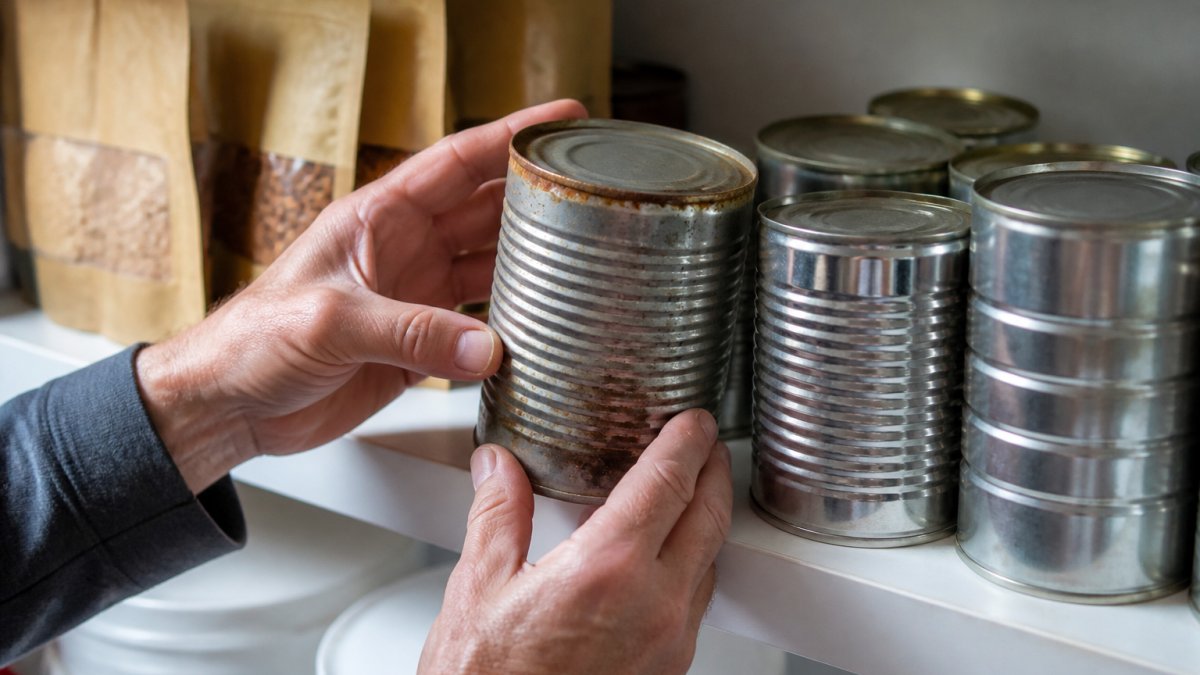
Start with the outside. Check every can, jar, and pouch for:
- Mold on lids, seams, or packaging surfaces
- Discoloration that looks off for that food
- Dents on can seams and rims
- Rust around the rim or body
- Swollen or bulging lids and pouches
- Torn or punctured packaging
- Leaking or sticky residue
2. Odors and Texture Changes That Signal Unsafe Food
Your nose and fingers catch what your eyes miss, but only sometimes. The hard truth about emergency food is that the most dangerous contamination is often the quietest.
What Smell and Touch Can Actually Tell You
An unpleasant odor or foul smell when you open a can is a clear warning. So is an off flavor you notice right away. Texture changes are equally reliable when they show up:
- Slimy texture on foods that should be dry
- Sticky texture or film on pouches and lids
- Gassiness or bubbling when a jar is opened
If you detect any of these, the food is suspect. But detecting nothing does not mean the food is safe.
The Dangerous Blind Spot: When Spoilage Has No Smell
The pathogens that cause the most serious foodborne illness do not always announce themselves. Clostridium botulinum, the bacterium behind botulism, can multiply in a sealed, low-oxygen can or jar and produce a toxin that is odorless, tasteless, and invisible. Listeria monocytogenes grows at refrigerator temperatures and does not change the smell or appearance of food. Staphylococcus aureus produces toxins that survive cooking and leave no trace you can detect.
That means a can that smells fine, looks fine, and tastes fine can still make you sick. The USDA Food Safety and Inspection Service guidance on foodborne illness is blunt about this: you cannot rely on your senses to judge the safety of a suspect container.
A Food-by-Food Discard Rule for Emergency Supplies
Instead of asking "does this smell bad?", ask "was this stored safely, and is the container intact?" If the answer to either is no, discard. Here is how that rule plays out across the foods in your emergency stock:
| Food Type | Discard Without Tasting If... |
|---|---|
| Canned goods | Bulging, dented on seam, rusted through, leaking, or stored above 85°F for long periods |
| Freeze-dried pouches | Torn, punctured, lost seal, soft or clumped contents, or off odor on opening |
| Dry rice, beans, grains | Moisture, mold, insect activity, or clumping that will not break apart |
| Powdered milk | Clumping, off odor, or discoloration beyond normal |
| Oils and fats | Rancid smell, cloudy appearance, or stored past shelf life in heat |
| Home-canned jars | Cloudiness, bubbles, spurting liquid on opening, or any off odor |
The Conservative Rule That Beats Every Sensory Test
When in doubt, throw it out. That advice sounds trite until you are hungry during an emergency and tempted to gamble on a dented can. The trade-off is simple: a lost can costs a few dollars; a case of botulism can mean weeks in intensive care.
Want the full picture on why sealed food still goes bad? Read our breakdown on why emergency food storage goes bad.
Signs of Spoiled Canned Food: Bulging, Dents, Rust, and Cloudiness
A bulging can is the single most serious sign of spoiled canned food. Bulging means gas is building up inside, usually carbon dioxide or hydrogen from bacterial growth, sometimes from a chemical reaction between the food and the metal. Either way, the can is under pressure and the contents are suspect. Do not open it. Do not taste it. Dispose of it carefully, and wash your hands afterward.
The Canned Food Warning Signs, Ranked by Severity
Not every defect is equally dangerous. Here is how to prioritize what you find:
- Bulging lids or cans, discard without opening. This is the highest-risk sign.
- Leaking or sticky residue, the seal has failed; discard.
- Dents on the seam or rim, the seal may be compromised; discard.
- Rust that has eaten through the metal, discard. Surface rust on the label area is less concerning, but rust at the seam is a fail.
- Cloudiness in the liquid, discard; normal canning liquid should be clear or naturally colored.
- Gassiness or fizzing when opened, discard; this indicates fermentation or bacterial activity.
- Mold inside the jar or on the lid, discard.
Dents: Which Ones Matter and Which Do Not
Size is not the issue, location is. A dent on the side wall of a can is usually cosmetic. A dent on the seam, the rim, or the double-seal area is a different story: the seal can be bent just enough to let air in and bacteria grow. If you cannot tell whether a dent touches the seam, treat it as unsafe.
Rust and Corrosion: When a Can Is Past Saving
Rust on the outside of a can is a warning, not always a death sentence. But rust at the seam, rust that has pitted the metal, or rust that has caused the can to leak means the barrier is gone. Discard those cans.
What to Do With a Suspect Can
Do not open a bulging or badly damaged can to "check." Double-bag it, place it in the trash away from pets and children, and wash your hands.
For more information, see our shelf life canned goods storage guide.
How to Tell If Freeze-Dried Food Has Gone Bad
Freeze-dried food is built to last, but "last" is not "forever." The most reliable test is texture. Properly stored freeze-dried meals are dry and crisp. If they feel soft, chewy, or clumped, moisture got in.
Other signs to check:
- Soft or sticky texture instead of crisp
- Clumping that won't break apart
- Off smells when you open the pouch
If a pouch has lost its seal, treat it as suspect even if it looks fine. For more information, see our guide on MRE shelf life explains what to expect.
Emergency Food Storage Shelf Life: What Lasts and What Doesn't
Not all emergency food ages the same way. Knowing the shelf life of what you store helps you rotate smart and avoid waste.
| Food Type | Typical Shelf Life | Main Spoilage Risk |
|---|---|---|
| Canned goods | 2-5 years | Rust, dents, bulging |
| Freeze-dried meals | 10-25 years | Moisture, torn pouches |
| Dry rice and beans | 5-10 years | Pests, moisture |
| Powdered milk | 2-5 years | Heat, clumping |
| Oils and fats | 1-2 years | Rancidity, heat |
For a ranked list of what to stock first, see our guide to the best foods for long-term survival storage.
The Food Safety Temperature Danger Zone and Power Outages
The food safety temperature danger zone is the range where bacteria multiply fastest: between 40°F and 140°F. During a power outage, opened food left in this range becomes unsafe quickly.
Safe handling rules during an outage:
- Keep freezer and fridge doors closed as much as possible
- Discard perishable food left above 40°F for more than two hours
- Never refreeze food that has fully thawed and warmed
The FDA food safety guidance on power outages confirms that perishable food held above 40°F for too long should be discarded. Sealed emergency food stored properly is your safe backup when the fridge fails.
Building Your Emergency Food Inspection and Rotation Checklist
Use a checklist to inspect and rotate your emergency food supply.
- Inspect every can for dents, rust, and bulging
- Check pouches and jars for tears, leaks, and mold
- Confirm storage area stays cool, dark, and dry
Pay extra attention to food for infants and other higher-risk people. Their systems are more vulnerable to foodborne illness, so be stricter with discard rules.
Browse our food storage selection to restock with confidence.
Frequently Asked Questions
How long can food sit in the temperature danger zone before it must be discarded?
Perishable food left between 40°F and 140°F for more than two hours should be discarded, and that window shrinks to one hour when temperatures climb above 90°F. This range is the food safety temperature danger zone, and bacteria multiply fastest inside it. During a power outage, keep refrigerator and freezer doors closed as much as possible, and toss any meat, dairy, or cooked leftovers that sat above 40°F for longer than two hours. Shelf-stable emergency food storage items are not affected by this rule until they are opened.
What are the signs that canned food has spoiled?
Check for a bulging can, deep dents along the seam, rust or corrosion, and cloudiness or gassiness when you open a jar or can. A foul smell or spurting liquid when you break the seal is a clear discard signal. Any can that is leaking, heavily dented, or swollen should be thrown away without tasting the contents. These signs of spoiled canned food matter most in long-term storage, where a single damaged can can contaminate nearby goods if it leaks.
Can food be unsafe to eat even if it looks and smells normal?
Yes. Smell and taste are not reliable safety tests. Some harmful bacteria, including the ones behind botulism, produce no visible spoilage signs and no off odor. That is why food safety guidance says never taste questionable food to check it. Rely on storage records, packaging condition, and known shelf life instead. If you cannot verify how long an item was stored or what temperatures it endured, discard it. This conservative approach protects your household, especially children and older adults.
How should you dispose of food that may be spoiled?
Seal spoiled food in a plastic bag or container before placing it in an outdoor trash bin so pets and pests cannot get to it. Wash your hands and any surfaces the food touched with hot soapy water afterward. For canned goods showing botulism warning signs like bulging or a foul odor, avoid opening the can near your face and clean up any spill with a diluted bleach solution. Never compost spoiled food from emergency storage, and never feed it to pets or livestock.
Spoiled emergency food is a risk you can manage with a routine and the right supplies. SHTF Prepper Club makes it simple with expert-vetted food storage, long-term shelf-stable kits, and step-by-step preparedness guides built for real families. Our curated food storage solutions and comprehensive guides take the guesswork out of readiness. Get started with SHTF Prepper Club and keep your household ready for whatever comes.
