
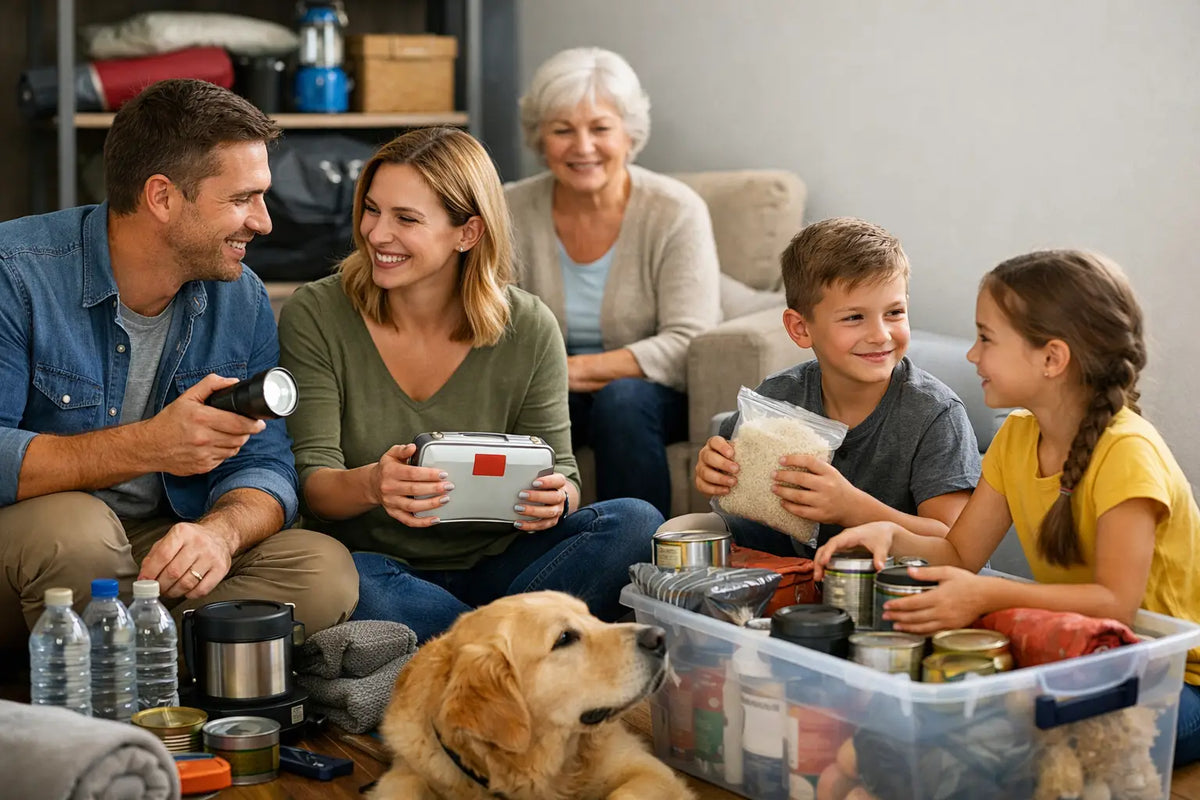
The first hard night of a power outage is when most families realize what they do not have. Phones are low, the refrigerator is warming, the garage door will not open, and the kids are asking when things will go back to normal. Learning how to start family preparedness is not about predicting the next disaster. It is about making the next disruption less stressful, safer, and easier to manage.
Start with the problems your household is actually likely to face. A family in Florida may be thinking about hurricane season and evacuation routes. A household in Texas may be planning for heat, winter outages, and severe storms. In California, wildfire smoke, evacuation, and earthquake supplies may lead the list. The right plan is local, but the basic needs are the same: water, food, power, medical care, warmth or cooling, communication, and a way to leave if staying home is no longer safe.
Start Family Preparedness With a 72-Hour Baseline
Three days is a sensible first target. It is long enough to cover many common outages and short enough that a new preparedness plan does not turn into an expensive, unfinished project.
Before buying anything, take a walk through your home with a notepad. Open the pantry, medicine cabinet, garage, and closets. Count what you already have that would still be useful if the water, power, stores, and cell service were unreliable for several days. Most households have a few supplies, but they are scattered, expired, or difficult to use in the dark.
Write down your household's real needs. Include every person who may be home during an emergency, plus pets and regular visitors such as grandchildren. Think beyond the standard checklist. Does someone need refrigerated medication, a CPAP machine, mobility equipment, infant formula, hearing-aid batteries, or a specific diet? Does your family rely on an electric well pump? These details determine which purchases matter first.
Your first goal is not perfection. It is to close the biggest gaps.
Secure Water Before Almost Anything Else
Water gets used faster than people expect. Drinking is only part of the picture. Families also need water for basic hygiene, simple meals, pets, and limited cleanup.
A practical starting guideline is one gallon per person per day for at least three days. That is a minimum, not a luxury allowance. A family of four needs at least 12 gallons, and a large dog, hot weather, pregnancy, illness, or a physically demanding cleanup can push that number higher.
Store some water ready to use, in containers you can carry safely. Large stationary containers are efficient for home storage, while smaller containers are more useful if you must evacuate or carry water from another source. Keep a reliable filtration or purification option as a second layer. Stored water can run out, and municipal water is not guaranteed after every storm, earthquake, or infrastructure failure.
Do not put water containers where they will freeze, sit in direct sun, or become buried behind holiday decorations. Prepared water only helps if you can reach it.
Build a Food Supply Your Family Will Actually Eat
Emergency food does not need to begin with a year of buckets. Start by adding familiar shelf-stable foods your family already uses: canned proteins, soups, vegetables, fruit, pasta, rice, nut butter, crackers, oats, and easy breakfasts. Rotate these through ordinary meals and replace them as you shop.
Then add foods intended for longer storage and emergencies. They can provide backup meals when the pantry is empty, roads are closed, or shopping trips are not possible. Choose options that fit your household's dietary needs and cooking setup. Freeze-dried meals are convenient and light, but they generally require water. Canned food is ready to eat but heavier and takes up more room. Neither is universally better.
Plan for a way to prepare food without grid power. A camp stove, safe outdoor cooking system, fuel, manual can opener, and simple cookware can cover a lot of ground. Never use grills, charcoal, or fuel-burning cooking equipment indoors or in a garage. Carbon monoxide is odorless, and a cold night can make a dangerous shortcut feel reasonable.
Keep a small number of no-cook foods available too. During an evacuation, heat advisory, or brief outage, simple food that needs no water or fuel may be the most useful food you own.
Make the House Livable During an Outage
Power outages are rarely only about lights. They affect refrigeration, communication, garage access, heating and cooling, cooking, medical devices, and the ability to work from home. List the items your family truly needs to run, then separate them from items that are merely nice to have.
Start with lighting, phone charging, batteries, and a battery-powered radio. Place flashlights where people sleep, not all together in one kitchen drawer. Headlamps are especially helpful when someone needs both hands free for cooking, first aid, or checking a breaker panel.
Next, decide how much backup power makes sense. A small portable power station may be enough for phones, lights, a modem, and certain small medical devices. A larger battery system, solar panels, generator, or home backup setup can support more, but costs more and requires planning. The trade-off is simple: the more essential loads you want to run and the longer you want to run them, the more capacity, fuel, and maintenance you need.
For cold-weather homes, prioritize safe warmth. Have extra blankets, sleeping bags, warm layers, and a plan to gather in one insulated room. For hot climates, focus on hydration, shade, airflow, and knowing when heat becomes a medical concern. No preparedness purchase replaces a safe decision to leave when your home is becoming dangerously hot or cold.
Put Medical Needs and Family Information in One Place
A first-aid kit should match your family, not a generic photo on a package. At minimum, organize supplies for cuts, burns, sprains, fever, allergic reactions, and routine wound care. Add items you already know you use, including child-sized doses where appropriate. Check expiration dates twice a year.
Prescription medication deserves its own plan. Ask your pharmacy and medical provider what early refill options, travel supplies, or backup documentation may be available. Keep a printed list of medications, doses, allergies, medical conditions, doctors, and insurance information in a waterproof pouch. A phone is helpful until its battery dies, gets lost, or has no service.
Also include copies of identification, key contacts, pet vaccination records, and important household account information. You do not need to carry every document you own. The purpose is to have enough information to make decisions, access care, and begin recovering if you must leave quickly.
Create an Evacuation Plan People Can Use
An evacuation plan should fit on one page and be easy enough for a teenager, grandparent, or babysitter to understand. Choose two meeting places: one close to home for a sudden event and one outside your immediate neighborhood in case roads or buildings are inaccessible. Name an out-of-area contact who can serve as a check-in point if local calls are overloaded.
Prepare evacuation bags for each person, but do not treat them as identical. A child's bag may include comfort items, snacks, a change of clothes, and a written contact card. An adult's bag may hold medication, documents, cash in small bills, chargers, hygiene items, and weather-appropriate clothing. Pet supplies need their own container with food, water, medication, leash or carrier, and cleanup supplies.
Practice one small part of the plan. Have everyone locate shoes, flashlights, and their bags after dinner. Drive one evacuation route. Test whether the pet will willingly enter the carrier. Practice reveals friction that planning on paper hides.
Organize Supplies So They Are Useful, Not Just Owned
Preparedness equipment should be easy to find under pressure. Store your core supplies in labeled bins or shelves near the area where you would use them, while keeping evacuation bags near an exit. Avoid putting all supplies in one place. If a garage floods or a bedroom is damaged, a second small cache elsewhere can matter.
Use a simple inventory sheet with purchase dates, expiration dates, battery types, and fuel requirements. Put a reminder on the calendar every six months to rotate food and water, test lights, recharge power stations, update medications, and adjust clothing sizes in children's bags. This maintenance habit is more valuable than buying a large collection of gear and forgetting about it.
If you want a clear place to shop by priority, SHTF Prepper Club organizes family-ready options around water, food storage, power outages, first aid, shelter, cooking, and practical tools. Begin with the category that solves your household's most immediate gap rather than buying a little of everything at once.
Set a Budget That Lets You Keep Going
Family preparedness can start with a few grocery-store additions and a basic water plan. It can also grow into backup power, long-term food storage, water storage systems, and food-growing supplies over time. Both approaches are valid. The mistake is assuming that if you cannot do everything now, there is no point doing anything.
Try a monthly preparedness amount that does not compete with mortgage payments, insurance, or ordinary savings. One month might be water containers and a filter. The next might be pantry food, headlamps, and batteries. Later, you might save toward a power station or a larger food reserve. Progress is calmer when it has a pace your household can sustain.
Tonight, choose one small action: count your water, write down medications, or put flashlights where everyone can find them. Preparedness begins when your family can look at a difficult week ahead and know exactly what to do next.