
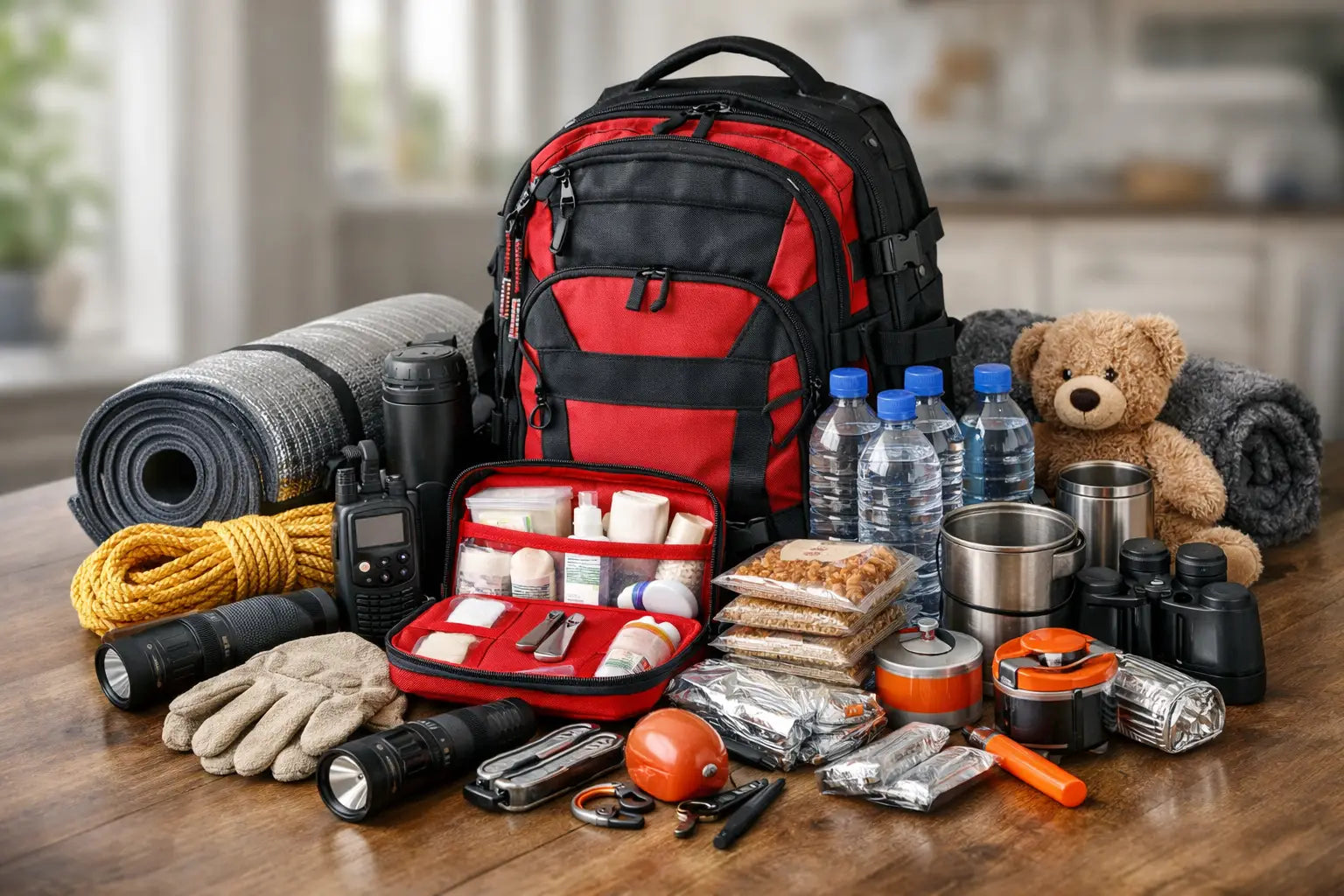
The best go kit for family emergencies is not a giant backpack filled with gadgets. It is a practical, portable set of supplies that helps everyone leave safely when home is no longer the safest place to be. Think wildfire evacuation, a hurricane order, a fast-moving flood, a gas leak, or an overnight stay with relatives after a winter storm damages your house.
Most families already have some useful items at home. The gap is that those items are scattered across closets, bathrooms, kitchen drawers, and the garage. A good evacuation bag puts the essentials in one known place, ready to grab without making tired decisions under pressure.
What a Family Go Kit Is Designed to Do
A go kit is for mobility. It should cover the first 72 hours away from home, bridge the gap until you reach a shelter or hotel, or support a safe stay with friends or family. It is not meant to replace the deeper supplies you keep at home, such as long-term food storage, larger water containers, backup power, or a full pantry.
That distinction matters. A family of four cannot realistically carry 12 gallons of water in backpacks, even though that is a useful three-day home-storage target. Your family go kit should carry drinkable water and a way to make more water safe, while your home plan holds the bulk supplies.
The right setup also depends on your likely emergency. Families in wildfire country may prioritize respirator masks, goggles, and copies of insurance records. Gulf Coast households may need rain protection and waterproof storage. In northern states, warm layers and hand warmers move higher on the list. The foundation stays the same, but the details should match where you live and who depends on you.
Build the Best Go Kit for Family Needs
Start with one backpack, duffel, or small rolling tote for shared gear, then give each capable family member a daypack for personal items. Avoid trying to make every bag identical. A seven-year-old can carry a comfort item, rain jacket, flashlight, and snacks. An adult should carry the heavier water, medical supplies, documents, and communication gear.
Your core kit needs these six categories:
- Water and water treatment
- Ready-to-eat food and feeding supplies
- First aid, medications, and hygiene
- Light, power, and communication
- Clothing, shelter, and weather protection
- Documents, cash, and family-specific items
Water: Carry Some, Treat More
Pack commercially sealed water pouches or bottles that are easy to rotate, plus a reliable water filter or purification tablets. Store a collapsible water container in the shared bag. It takes little room when empty and becomes useful once you find a safe source.
For young children, add familiar spill-resistant cups or bottles. If anyone in your household has kidney concerns, medical restrictions, or needs electrolyte support, ask their clinician what belongs in the kit. Emergency planning should work with your family’s health needs, not around them.
Food: Familiar Beats Fancy
Choose shelf-stable food that can be eaten without cooking: protein bars, nut butter packets, trail mix, crackers, fruit cups, tuna or chicken pouches, and simple comfort snacks. Pack a manual can opener only if you include canned food.
Three days of emergency meals sounds simple until you account for picky eaters, food allergies, and a child who is already upset. Include foods your family actually eats. If you use freeze-dried meals, make sure you also have the water and heat method to prepare them. They can be excellent for home storage, but they are not always the easiest first choice during a roadside evacuation.
Medical and Hygiene Supplies Need Personal Attention
A store-bought first-aid kit is a strong starting point, but it is not finished until you add what your household uses. Include prescription medications when possible, copies of prescriptions, spare glasses, inhalers, EpiPens, glucose supplies, and a written list of medications, doses, allergies, and doctors.
Keep pain relievers, bandages, antiseptic wipes, gloves, gauze, blister care, and a thermometer in the kit. Add soap, toilet paper, menstrual supplies, toothbrushes, diapers if needed, wipes, and hand sanitizer. For a short evacuation, a few practical hygiene items make a surprising difference in how well everyone copes.
Pack for the People, Not an Imaginary Family
A family go kit succeeds when it reflects the people who will use it. Toddlers may need diapers, formula, a small toy, and a sleep item. Teenagers may need a charging cable, glasses, and a little privacy in the form of headphones or a journal. Older relatives may need mobility aids, backup hearing-aid batteries, or a medication schedule printed in large type.
Pets belong in the plan too. Pack food, water, a leash, waste bags, medications, vaccination records, and a current photo of each animal. A carrier or crate should be stored where it can be reached quickly. During an evacuation, pets can become separated easily, and shelters do not always accept every kind of animal.
Do not overlook emotional comfort. A deck of cards, a paperback book, coloring supplies, or one familiar stuffed animal takes almost no room. These are not extras in the dismissive sense. They help children settle, give adults a way to pass long waits, and make an unfamiliar place feel less frightening.
Choose a Container You Can Actually Move
A stylish oversized backpack is not automatically the best choice. Load your proposed kit, then have the person who would carry it walk around the block. If it is painful, awkward, or too heavy before you add water, revise it.
Backpacks are best when you may need to walk. Rolling totes are useful when you can evacuate by vehicle and have more medical equipment, pet gear, or supplies for several people. Many families use both: personal backpacks by the door and a larger labeled bin that goes into the car if time allows.
Use clear pouches or simple labels inside. Mark one pouch “medical,” another “documents,” and another “kids.” In a stressful moment, organization is not about looking tidy. It prevents you from dumping the entire bag on a parking lot floor to find an inhaler.
Documents, Cash, and Communication
Keep waterproof copies of identification, insurance policies, key phone numbers, medical information, and school or childcare contacts. Add a USB drive with encrypted copies of essential records if you are comfortable managing one, but do not rely on digital files alone. Cell service, passwords, and charging access can all become problems at once.
Put small bills in the document pouch. Card readers and ATMs can fail during broad outages, and cash can cover fuel, food, or a basic overnight need. Keep enough to be useful without turning the bag into a risky place to store a large amount of money.
Every adult should have a charged phone, charging cable, wall plug, and battery bank. A hand-crank or battery-powered weather radio is also valuable when local information is changing quickly. Choose an out-of-town contact and write that person’s number on a card. If family members cannot reach each other directly, they may still be able to check in through that one person.
Stage It, Maintain It, and Practice Once
Store your go kit near an exit, not buried behind holiday decorations in the attic. Tell every adult and older child where it lives. If you park in a garage, consider keeping a small version in the vehicle with water, blankets, a flashlight, and a charger.
Set two calendar reminders each year, perhaps when daylight saving time changes. Replace expired food and medications, test lights and battery banks, update documents, and swap seasonal clothing. A summer kit with no warm layers can leave you cold during an unexpected winter evacuation.
Practice a simple departure. Give everyone five minutes to get shoes on, use the bathroom, grab their assigned bag, and meet at the car. You will quickly notice what is missing: a pet leash, the house keys, a child’s jacket, or a place to put muddy shoes. That small rehearsal is far more useful than buying another item you may never use.
You do not need a perfect kit before you start. Put together water, medications, a first-aid kit, light, food, and documents first. Then add the seasonal, child, pet, and comfort items over time. A calm, well-placed bag that your family understands is a meaningful step toward being ready when leaving quickly is the right call.