
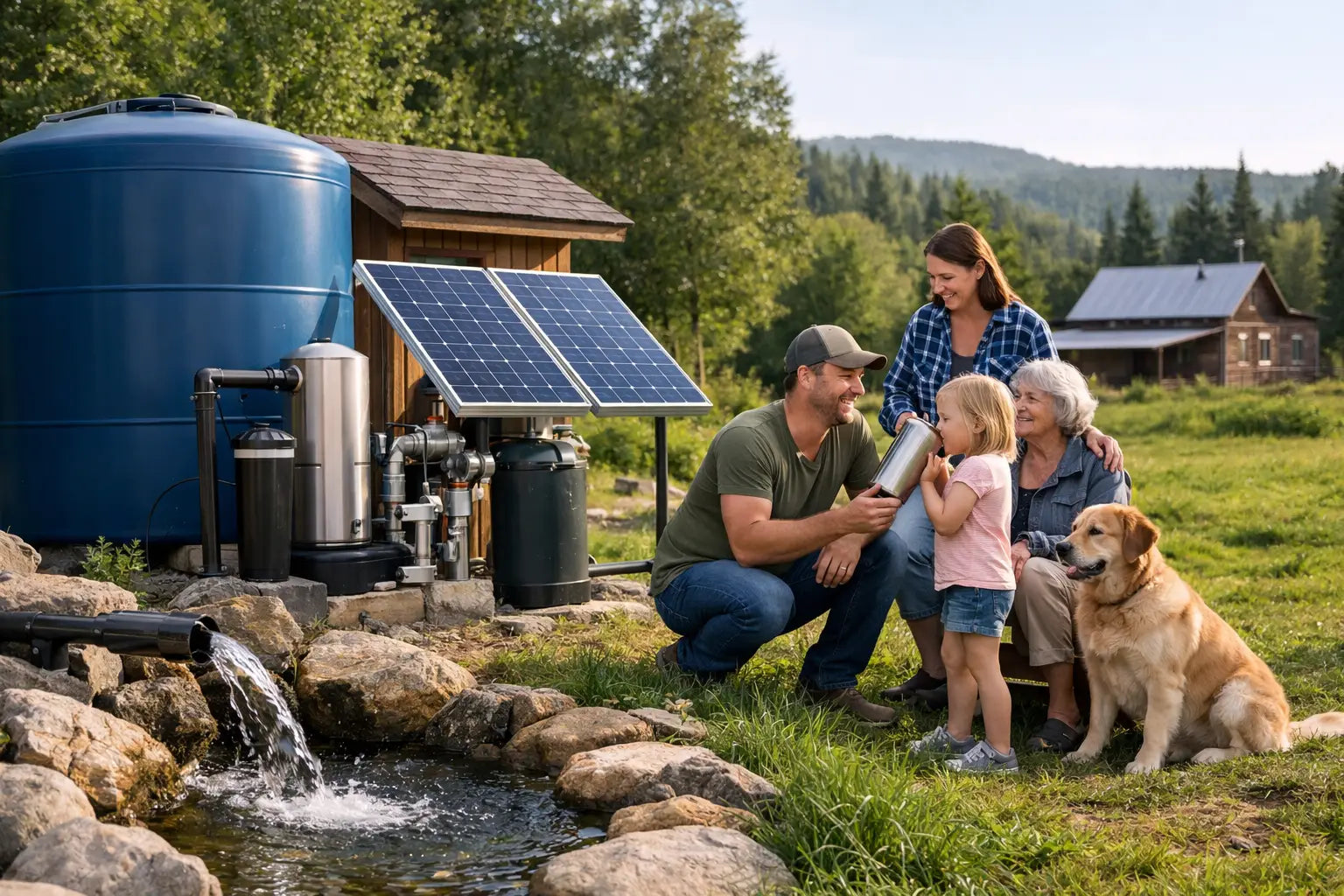
The water stops long before the need for water does. After a hurricane, ice storm, wildfire evacuation, or extended power outage, a home can still have a roof, food, and flashlights while the tap becomes unreliable. This off grid water system example shows how a regular household can build a practical backup that does not depend on the utility staying online.
The goal is not to turn your backyard into a complicated survival project. It is to give your family clean water for drinking, cooking, sanitation, pets, and basic washing when normal service is interrupted. Start with stored water. Then add collection and treatment in layers as your budget, space, and local weather allow.
An Off Grid Water System Example That Works
Picture a family of four in a suburban home with a 1,500-square-foot roof, a garage, and a small side yard. Their system has four parts: stored drinking water inside the home, rainwater collection outside, filtration and purification equipment, and a manual way to move water when the power is out.
Inside, they keep 28 gallons of commercially packaged drinking water. That covers the basic emergency standard of one gallon per person per day for one week. In reality, a gallon is a minimum, especially in hot weather, when someone is sick, or when pets are part of the household. This family also keeps several smaller containers that are easy for a teenager, grandparent, or neighbor to lift and use.
Outside, one roof downspout feeds a covered 55-gallon rain barrel. A second downspout can be redirected to a larger sealed storage tank when a storm is expected. The rainwater is not treated as drinking water by default. It is used first for toilet flushing, washing muddy hands, cleaning, and watering a garden. That choice protects the family’s stored drinking supply and stretches every gallon.
Near the storage area, they keep a gravity-fed water filter, a chemical purification backup, clean containers, a siphon pump, and a dedicated pot for boiling water. None of those tools matter if they are buried in a cluttered shed, so the family stores them together and practices using them once or twice a year.
This is a modest system. It will not provide endless showers or fill a swimming pool. It can, however, carry a family through a multi-day disruption with far more comfort and control than a few cases of bottled water.
Start With Water You Can Drink Immediately
Rain collection is useful, but it is not the first thing to buy. A storm may bring rain, but it may also bring debris, smoke, contaminated runoff, or a roof covered in leaves and bird droppings. Your first layer should be water that is already safe to drink.
Store at least one gallon per person per day for 14 days if space and budget permit. Include every person who may stay in your home, plus pets. A large dog can need roughly a gallon a day in warm conditions, while smaller pets need less but should still be planned for.
Use food-grade containers designed for water storage. Keep them in a cool, dark location away from gasoline, household chemicals, and direct sun. A basement, interior closet, or temperature-stable garage corner can work well. Rotate store-bought water according to its date, and refresh self-filled containers on a schedule recommended for that container and local water source.
Small containers are not a waste of space. During an emergency, a 5-gallon container may be hard to carry for someone with a bad back or a child helping with chores. A mix of sizes gives your family options.
Add Rain Catchment for Non-Drinking Needs
A rain barrel is one of the most approachable ways to make a household less dependent on the tap. Before buying one, check local rules. Some communities regulate rainwater collection, tank placement, or overflow drainage. Most homeowners can find a legal, sensible setup, but it is worth confirming before installing anything permanent.
Your roof is the collection surface, so its condition matters. Avoid collecting from roofs with materials or treatments that could create a health concern. Keep gutters reasonably clean, and use a screen to keep out leaves and insects. A first-flush diverter is also valuable. It routes the first dirty runoff from a rain event away from your tank before cleaner water enters storage.
Covered storage is essential. An open barrel becomes a mosquito nursery and collects debris quickly. Use an opaque, sealed barrel or tank with screened openings and an overflow outlet directed away from your foundation.
For many families, rainwater should remain a non-potable reserve unless it has been properly filtered and purified. That is not a limitation. During an outage, toilet flushing can use a surprising amount of treated municipal water. A bucket of rainwater in the toilet tank or bowl, used carefully according to your toilet type, can preserve your drinking supply.
Know What Each Treatment Method Does
Filtration and purification are related, but they are not identical. A filter can remove sediment and some microorganisms depending on its rating and design. Purification methods such as chemical treatment, ultraviolet treatment, or boiling are intended to address pathogens. Neither step automatically removes every chemical contaminant, heavy metal, or dissolved substance.
A sensible home setup uses more than one method. If collected water is cloudy, let sediment settle first and run it through a pre-filter. Then use a quality gravity filter or other rated filtration system. Follow with an appropriate purification method if the water source and equipment instructions call for it.
Boiling is a dependable emergency option when you have safe fuel and a way to heat water. Chemical treatments are compact and useful for evacuation bags and home backups, but they need contact time and may not work well in very cold or visibly dirty water. A powered UV purifier can be convenient, yet it depends on batteries or a power station and clear water.
Read the instructions for every filter and purifier before an emergency. Pay attention to what it is rated to remove, how many gallons it can treat, how it must be cleaned, and whether freezing can damage it. A filter stored in an unheated garage after use may need replacement if it freezes.
Plan for the Power-Outage Problem
Many homes have water stored in a municipal system but cannot access it when electricity fails. Private wells are even more dependent on power because the pump cannot run without it. If your family uses a well, identify the pump’s starting and running wattage before choosing a battery power station or generator. Do not guess.
A battery power station may run a small well pump or booster pump for limited periods, depending on the pump and battery size. A generator may offer more runtime, but it requires fuel management, outdoor operation, and safe transfer equipment. For a household water plan, a simpler backup is often wise too: stored water, manual containers, and a hand pump or siphon for moving water from tanks.
Do not rely on a single large tank that only works with an electric pump. Include at least one method that can be operated by hand. It is less glamorous, but it works when batteries are low and the outage lasts longer than expected.
Size the System Around Your Real Household
A family that lives in rainy western Washington will make different choices than one in drought-prone Texas or fire-prone Southern California. Roof area, rainfall, available storage space, local rules, and whether you are on a well all change the answer.
Start by tracking your normal use for a weekend. Notice how much goes to drinking and cooking versus showers, laundry, and toilet flushing. In an emergency, your household can reduce some uses dramatically. The point is not deprivation. It is knowing where water goes so you can protect the supply that matters most.
If your budget is around $200, begin with two weeks of drinking water, a dependable filter, purification backup, and several clean containers. If you have more room and a larger budget, add rain barrels, gutter improvements, a first-flush diverter, and a larger tank. Families building long-term food independence may eventually add irrigation storage and well-power backup.
SHTF Prepper Club encourages families to build in stages because a maintained system beats an ambitious project that never gets finished. Label containers, keep treatment supplies together, and make water planning part of your seasonal home routine.
The best time to test your water plan is on an ordinary Saturday. Fill a container, use the filter, practice moving water without power, and ask whether every adult in the house knows what is safe to drink. That quiet bit of practice can make a difficult week feel far more manageable.