
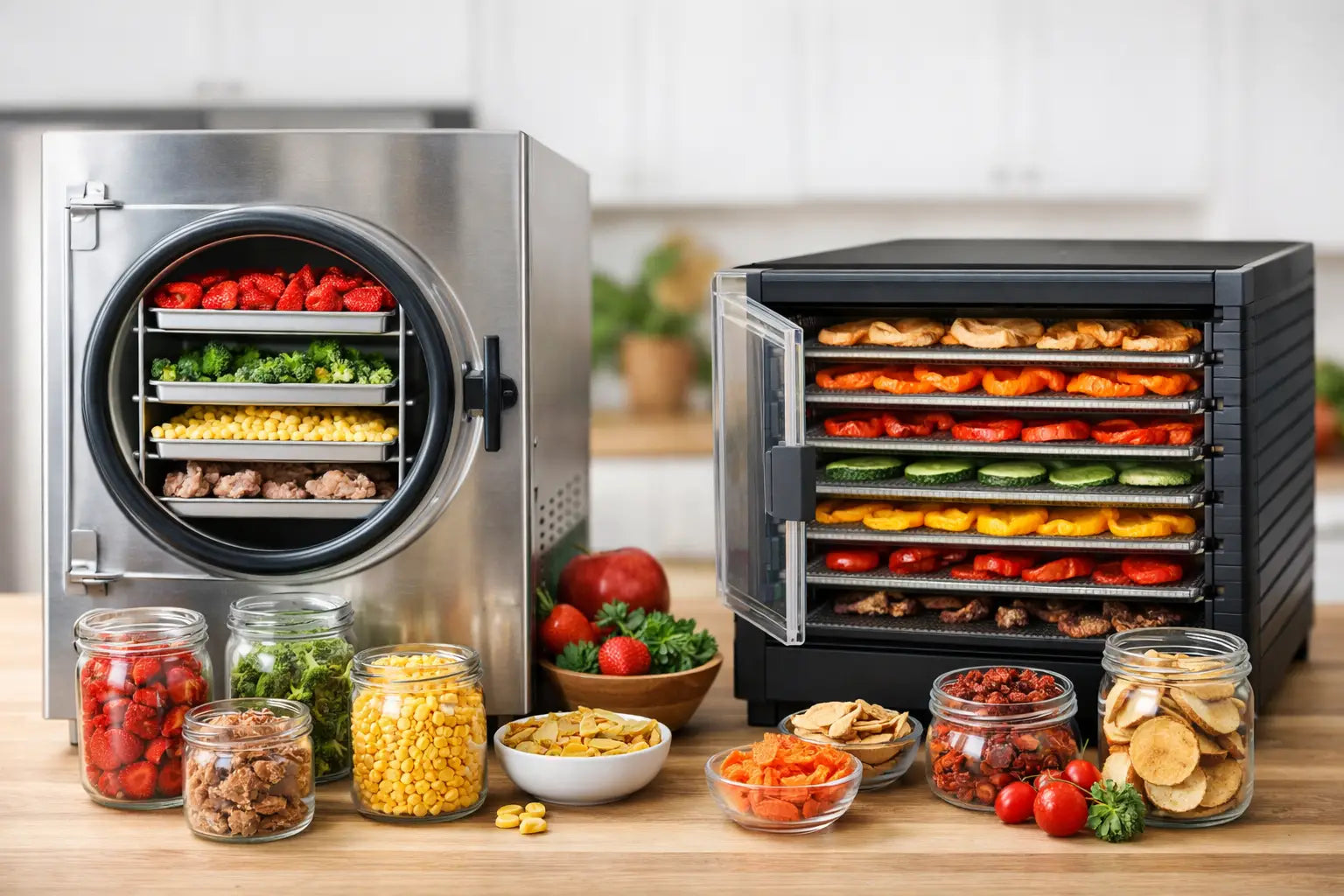
A pantry full of food is reassuring. A pantry full of food your family will actually eat, can store safely, and can replace without wrecking the budget is better. That is the real question behind a freeze dryer versus dehydrator comparison.
Both tools can turn seasonal produce, sale-priced ingredients, and garden harvests into practical food storage. But they do very different jobs. One is an accessible kitchen appliance for reducing moisture. The other is a serious long-term food preservation system with a larger price tag, a larger footprint, and a much longer storage payoff.
Freeze Dryer Versus Dehydrator: The Core Difference
A dehydrator uses low, steady heat and moving air to remove much of a food's water. Think dried apple slices, beef jerky, fruit leather, herbs, and tomato powder. The food becomes smaller, chewier, and more concentrated in flavor. Properly dried and packaged food can be useful for months or, in some cases, longer, but it is not automatically a decades-long emergency food supply.
A freeze dryer works in stages. It freezes the food, then pulls a vacuum so frozen water turns to vapor and leaves the food without passing through a liquid stage. The result is very dry, lightweight food with a porous texture. When sealed correctly with oxygen absorbers in appropriate containers, many freeze-dried foods can have a shelf life measured in decades.
That difference matters when you are building layers of readiness. A dehydrator helps you preserve food you plan to use and rotate. A freeze dryer can help you build a deeper pantry for extended disruptions, long-term food independence, or a family that wants more control over what goes into its emergency meals.
Cost Is More Than the Purchase Price
A dehydrator is the simpler starting point. Many dependable units cost far less than a freeze dryer, fit on a counter or pantry shelf, and use relatively modest power. If you have a productive garden, enjoy making snacks, or want to learn preservation without a major commitment, it is a sensible first tool.
A home freeze dryer is an investment. Beyond the machine itself, plan for a dedicated space, trays, packaging materials, oxygen absorbers, storage containers, and electricity. A freeze-drying cycle can run for roughly a day or more, depending on the food, the batch size, room conditions, and the machine. It also needs attention, cleaning, and regular maintenance according to the manufacturer's instructions.
That does not make a freeze dryer impractical. It means the math should be honest. A family that regularly preserves garden produce, buys food in bulk, manages dietary restrictions, or wants long-term storage of familiar homemade meals may get real value from one over time. A family that simply needs a two-week emergency food cushion may be better served by purchasing ready-made long-term food and using a dehydrator only if they enjoy it.
Shelf Life: Where Freeze Drying Pulls Ahead
Shelf life is the clearest dividing line. Dehydrated foods retain more moisture than freeze-dried foods. That makes them more vulnerable to quality loss, mold, and spoilage if they are not dried thoroughly, cooled before packing, and stored away from heat, humidity, and light.
For everyday pantry use, that is manageable. Dry apple rings, onions, herbs, and vegetables in quantities your household can rotate. Mark each package with the date and use the oldest food first. Vacuum sealing or airtight containers can help, but no packaging method fixes food that was not adequately dried to begin with.
Freeze-dried food, when fully dry and packaged properly, is built for the long haul. Many low-fat freeze-dried foods can be stored for 20 to 25 years under good conditions. Foods high in fat generally do not last as long because fats can become rancid. Storage temperature still matters. A cool, dry interior closet beats a hot garage every time.
Neither method is a reason to forget food once it is packed away. Keep an inventory. Check seals and containers. Build meals around what you store. A useful food supply is one your family recognizes and knows how to prepare.
Taste, Nutrition, and What Your Family Will Eat
Freeze-dried foods usually rehydrate more successfully than dehydrated foods. Freeze-dried strawberries can return close to their original shape and texture when added to cereal, oatmeal, or baking. Freeze-dried cooked meals can be especially useful during an emergency because they are light, quick to prepare, and familiar.
Dehydrated foods are excellent in their own lane. Dried onions, peppers, herbs, soup vegetables, and fruit are easy to use in daily cooking. They add concentrated flavor, take up little room, and can reduce food waste. But their texture changes more permanently. A dehydrated green bean belongs in a soup or casserole, not necessarily as a side dish that resembles a fresh green bean.
Both preservation methods affect nutrients. Heat, air, storage time, and food type all play a role. Freeze drying generally preserves more of a food's original structure and some heat-sensitive nutrients because it relies on very low temperatures. Still, no stored food is nutritionally identical to freshly harvested food. The practical goal is variety: proteins, grains, fruits, vegetables, fats, and foods your family enjoys.
Power Outages Change the Decision
Neither appliance runs during a power outage without backup power. That is worth saying plainly. A dehydrator needs continuous electricity while food is drying. A freeze dryer also depends on uninterrupted power during a long cycle, and its electrical demand is substantially higher.
If outages are common where you live, do not start a large batch when a storm is approaching unless you have reliable backup power and understand your equipment's needs. A battery system, solar generator, or generator may support some food-preservation tasks, but capacity, surge requirements, and run time must be checked before you depend on it.
Once food is safely dried, packaged, and stored, it needs no electricity. That is the preparedness advantage. You are converting perishable food into shelf-stable food before the emergency arrives.
Which Foods Work Best?
Dehydrators shine with herbs, fruit, vegetables, jerky made with safe handling practices, and ingredients for soups, sauces, and trail snacks. They are particularly useful for a garden surplus of tomatoes, zucchini, peppers, apples, and onions.
Freeze dryers handle a broader range of foods, including fruits, vegetables, cooked meats prepared and handled safely, dairy-based ingredients, leftovers, and complete meals. They are also popular with families who want to preserve individual portions of chili, pasta dishes, scrambled eggs, or soup ingredients for later use.
Some foods are poor candidates for either method. High-fat foods such as butter, pure oils, and nut butters do not store as predictably for long periods because of their fat content. Foods with very high sugar can also be tricky in a freeze dryer. Follow your appliance manufacturer's food-specific guidance, and do not treat home preservation as a shortcut around safe food handling.
A Practical Choice for Different Families
Choose a dehydrator if you want an affordable way to reduce waste, preserve garden produce, make everyday snacks, and build useful kitchen skills. It is low-pressure, easy to learn, and supports a pantry you can rotate often.
Consider a freeze dryer if you already have a solid foundation of water, emergency meals, cooking options, and basic power-outage supplies. It makes the most sense for households ready to preserve food consistently over several years, not for someone hoping to fill a pantry in one weekend.
There is also a middle path that works well for many families. Purchase a dependable supply of long-term emergency food, then use a dehydrator for daily pantry projects. If your garden, bulk buying habits, or food-independence goals grow over time, a home freeze dryer may become the next logical step. SHTF Prepper Club encourages that kind of steady, realistic progress.
Start with the food you already cook. Label it, rotate it, and make a simple plan for the next disruption. The best preservation method is the one that leaves your family with nourishing meals, clear instructions, and a pantry you can trust.