
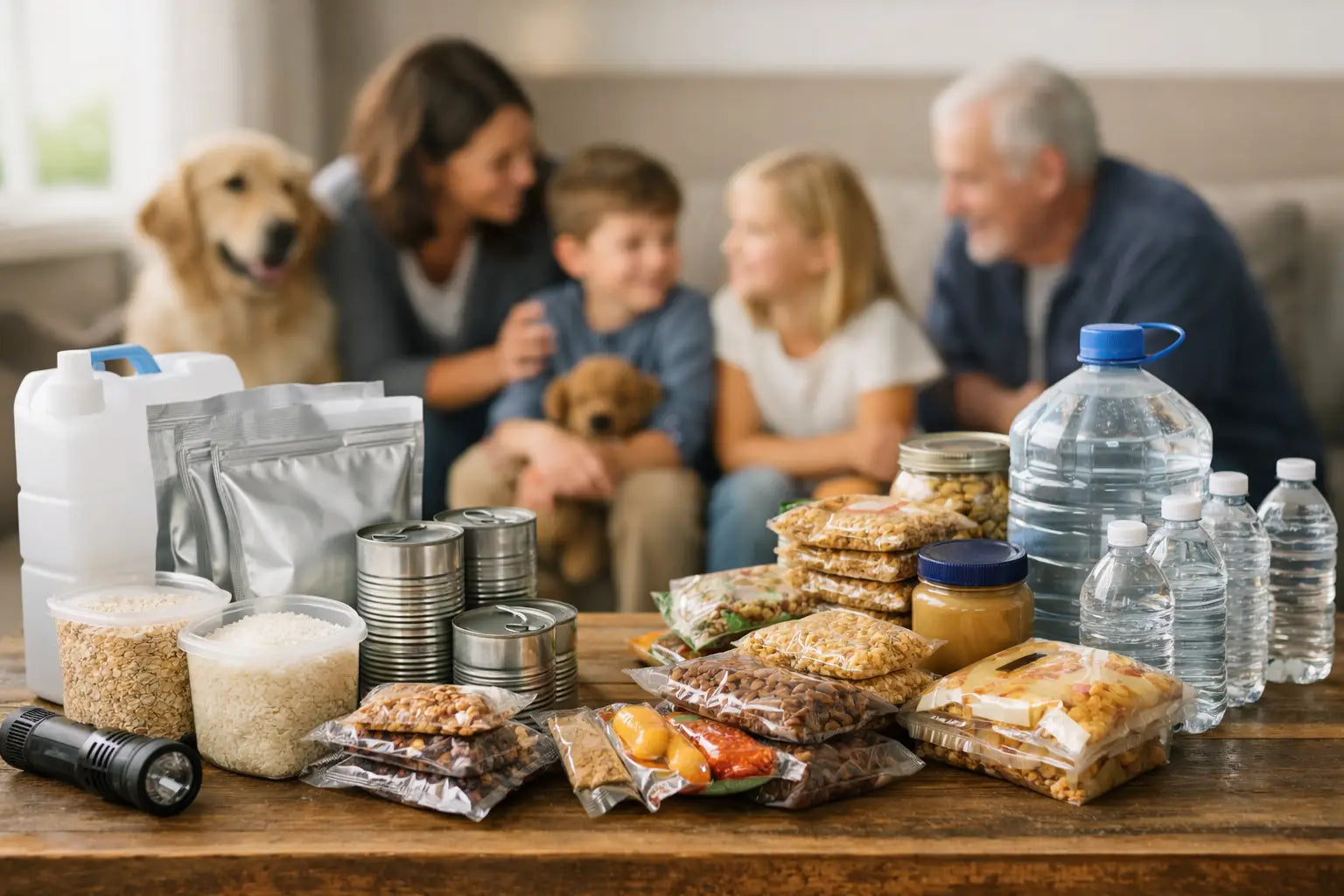
A three-day outage can turn an ordinary pantry into a question mark fast. The refrigerator is warming, stores are crowded or closed, and everyone still needs breakfast. Learning how to choose emergency food kits gives your family a dependable answer before a storm, wildfire, winter outage, or other disruption puts pressure on the household.
The right kit is not necessarily the biggest bucket or the longest shelf life. It is the food your household can store safely, prepare with the resources you are likely to have, and actually eat when the routine is interrupted. Start with your real family, your real home, and the emergencies most likely where you live.
How to Choose Emergency Food Kits by Need
Begin with time, not products. Ask how long your family should be able to stay fed without a grocery run. For many households, three days is a sensible starting point. A two-week supply offers much more breathing room during hurricanes, severe winter weather, wildfire smoke events, regional outages, or supply disruptions. Longer-term food storage makes sense once those immediate basics are in place.
A kit labeled “one person, 30 days” can be useful, but read what that promise means. It may be based on a calorie level that is too low for an active adult, a teen, or someone doing physical cleanup after a storm. Rather than counting packages, look for the total calories and divide them by the number of people and days you need to cover.
A reasonable planning baseline is about 2,000 calories per adult per day, then adjusted for your household. Young children may need less, while teenagers, pregnant or nursing family members, and physically active adults may need more. You do not need to make this perfect on day one. You do need to avoid assuming that a box of 24 servings will feed four people for several days.
It also helps to separate two different jobs:
- At-home food storage can be larger, more varied, and may include freeze-dried meals, canned goods, grains, and pantry staples.
- An evacuation bag needs compact foods that are ready to eat or require very little water and no complicated cooking.
- A vehicle kit should focus on shelf-stable snacks and water appropriate for temperature swings, with regular checks.
- A short-term emergency kit should cover the first 72 hours while you assess conditions and make a plan.
Check Calories Before You Compare Servings
“Servings” are a marketing measure, not a family meal plan. A serving of oatmeal, soup, or rice may be a side dish, not enough food for an adult working through a stressful day. Total calories tell a clearer story.
When comparing emergency food kits, calculate the cost per 1,000 calories in addition to the package price. A lower-priced kit may contain far fewer calories. A premium meal kit may cost more per calorie but offer better flavor, ingredients, and convenience. Neither is automatically wrong. The right choice depends on whether you need basic backup calories, familiar family meals, or both.
Variety matters, too. A well-rounded supply includes breakfast options, main meals, easy snacks, and a few comfort foods. After a long day without power, a warm bowl of soup or a familiar pasta meal can do more than fill stomachs. It helps a family feel steady.
Still, do not buy variety that your family will not eat. If nobody likes creamy pasta, powdered eggs, or spicy chili, a 25-year shelf life does not solve the problem. Try a few individual meals or smaller pouches before making a large purchase. Treat that taste test as useful preparedness, not a luxury.
Match the Food to Your Water and Cooking Plan
Emergency food and emergency water are connected. Many freeze-dried meals are lightweight, convenient, and long-lasting, but they require water. Rice, beans, pasta, and dehydrated foods often need both water and fuel. Canned foods may be heavier, yet many can be eaten cold if cooking is not available.
For a home food plan, store water separately and plan for at least one gallon per person per day for drinking and basic sanitation. Families in hot climates, households with pets, and people with medical needs may require more. Keep a water filter or treatment method as a backup, but do not assume a nearby creek or swimming pool is an immediate answer.
Then look honestly at how you would cook. A gas range may not work during an electrical outage if its ignition or safety systems need power. An electric stove will not work without electricity. A safe outdoor cooking setup, stored fuel, and a simple manual can opener can make a food kit much more useful. Never use fuel-burning stoves, grills, or generators indoors or in a garage because of carbon monoxide risk.
If your household is likely to evacuate, favor foods that can be eaten straight from the package: nut butter, crackers, shelf-stable milk, tuna or chicken pouches, ready-to-eat meals, fruit cups, and familiar snack foods. Keep utensils and a can opener with the kit. Small details are often what make a plan workable.
Read Ingredients for Your Actual Household
A food kit is only dependable if everyone who depends on it can eat it. Read labels for allergens, gluten, dairy, sodium, added sugar, and ingredient concerns. This is especially relevant for families managing diabetes, kidney disease, celiac disease, food allergies, or medically prescribed diets.
Be practical about special diets. A broad emergency supply does not need to be perfect for every preference, but it must be safe for medical needs. Build a separate, clearly labeled section for the family member who needs gluten-free, low-sodium, allergen-free, or other specific foods. Include enough familiar options to reduce stress, particularly for children and older adults.
Do not forget babies, pets, and guests. Formula-fed infants need a dedicated supply of ready-to-feed formula or the water and sanitation required for powdered formula. Pets need their own food and water reserve. Grandparents who keep supplies for visiting grandchildren should include easy foods those kids recognize and will eat.
Choose Packaging and Storage That Fit Your Home
Shelf life is valuable, but storage conditions decide whether food reaches its stated best-by date in good shape. Most emergency foods should be kept cool, dry, and away from direct sunlight. A climate-controlled closet, interior pantry, or basement storage area is generally better than a hot garage, attic, shed, or car trunk.
Buckets are efficient for bulk storage and protect food from pests and moisture, but they can be heavy. Pouches are easier to divide among shelves, evacuation bags, or family members. Cans are durable and familiar but use more space and add weight. Consider what you can lift, where it will sit, and whether you could access it in the dark.
A practical family system often combines all three. Keep a small, ready-to-grab food kit for the first few days. Store larger buckets or cases for staying home. Add ordinary pantry foods that you already rotate, such as canned vegetables, soup, cereal, peanut butter, pasta, and shelf-stable milk.
Write the purchase date and best-by date on the outside of every container. Put newer items behind older ones. Once or twice a year, make a meal from your stored food and replace what you use. Rotation is not busywork. It is how you make sure your emergency food remains familiar, edible, and ready.
Build in Stages Instead of Waiting for Perfect
Preparedness does not require one large purchase. A $200 starter plan can cover several days of food for a small household when paired with pantry basics. A larger family may start with a few meal pouches, canned staples, water storage, and a safe cooking method, then add a little each month.
At SHTF Prepper Club, the goal is not to load your basement with food you do not understand. It is to help your family build a realistic supply that fits your budget, storage space, and likely risks. Quality emergency food kits can be an excellent foundation, but they work best as part of a wider plan for water, cooking, light, first aid, and communication.
Start with the next outage, not the most dramatic scenario you can imagine. Choose food your family knows, calculate enough calories for the people at your table, and store it where you can reach it. The quiet confidence that comes from a prepared pantry is built one sensible decision at a time.