
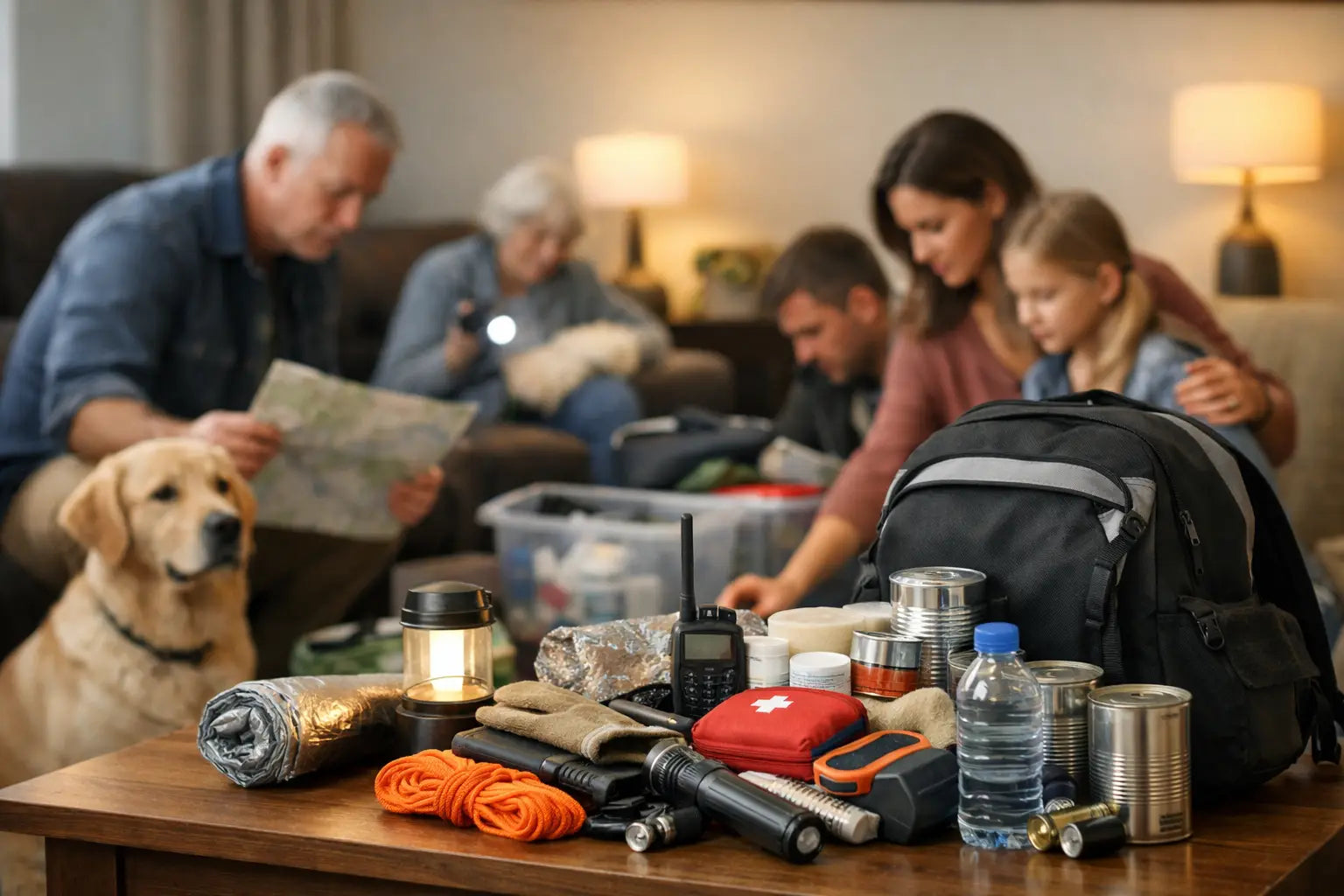
The power goes out at 7:30 p.m. Your phone is at 18%, the kids are asking whether school is canceled, and the food in the refrigerator is starting to become a question mark. That is when family emergency prep stops being an abstract idea and becomes a very practical one. The goal is not to prepare for every imaginable disaster. It is to give your household enough options to stay safe, comfortable, and informed when normal services are temporarily unavailable.
Start with the disruptions most likely where you live. A family in coastal Florida may plan around hurricanes and evacuation. A household in Texas might prioritize heat, winter outages, and water interruptions. In California, wildfire smoke and rapid evacuation may be the biggest concerns. The basics overlap, but the order in which you buy and organize supplies should match your real risks.
Start With a 72-Hour Family Plan
Three days is a useful first milestone because many common disruptions create problems long before they become a major disaster. Roads may be blocked, stores may be empty, cell service may be unreliable, and utility crews may need time to reach your neighborhood.
Before buying gear, answer a few household questions together. Where will everyone meet if you are separated? Who picks up the children if school closes early? Which relative or friend outside your area can serve as a check-in contact? If you have older parents, teenagers who drive, or children who split time between homes, make sure the plan works for them too.
Keep the plan simple enough that a tired person can follow it. Write down key phone numbers, addresses, medication details, and insurance information. Put a printed copy in your family emergency kit, because a phone battery and a cloud password are not a dependable plan during an outage.
Make evacuation a separate decision
Sheltering at home and leaving home require different supplies. An evacuation bag should be light enough to carry, easy to grab, and built for the first 24 to 72 hours away from home. It needs water, food, medications, a change of clothes, basic first aid, copies of documents, chargers, and comfort items for children.
Your home supplies can be larger and more complete. That is where stored water, shelf-stable food, backup power, cooking equipment, and warmth belong. Do not try to turn every household supply into something portable. A well-stocked home and a ready-to-go evacuation bag solve two different problems.
Build Your Family Emergency Prep Around Water
Water is usually the first limit. A common starting target is one gallon per person per day for drinking and basic sanitation. For a family of four, that means 12 gallons for three days and 28 gallons for a week. That number may need to increase in hot weather, for infants, for nursing mothers, and for anyone with medical needs.
Bottled water is fine for a short start, but it is not always the easiest system to manage at scale. A better long-term approach often combines stackable water containers for stored water with a reliable filtration method for water you may need to collect or treat. Store containers where you can reach them without moving half the garage, and rotate packaged water according to its label.
A filtration system is useful, but it does not replace stored water. During a hurricane, winter storm, or local contamination event, you may not have safe water nearby to filter. Think of storage as your immediate supply and filtration as your backup option.
Food Should Be Familiar, Easy, and Rotated
Emergency food is not a test of how little your family can tolerate. Buy food people will actually eat, including options that work for dietary restrictions, young children, and older adults. Start with shelf-stable meals and ingredients that require little water and little cooking. Then build toward a week, two weeks, or longer as your budget and storage space allow.
A practical pantry might include ready-to-eat meals, canned proteins, grains, soups, nut butters, snacks, infant supplies, and a manual can opener. Long-term food storage adds another layer, especially for households that want a deeper reserve of freeze-dried meals, bulk staples, or garden seeds. The trade-off is simple: larger food stores save trips to the store during shortages, but they need organization and periodic rotation.
Do not forget how you will prepare food if the power is out. A safe outdoor cooking option, fuel stored according to its instructions, and a basic way to boil water can make a long outage much easier. Never use grills, camp stoves, or fuel-burning heaters inside the house or garage.
Plan for Power Without Trying to Power Everything
Most families do not need a whole-house backup system on day one. They need enough power for communication, light, medical devices, refrigeration decisions, and a little normalcy.
Begin with flashlights or headlamps for each person, spare batteries where appropriate, battery banks, and charging cords kept together. Then consider a portable power station sized for the items that matter most. A small unit may keep phones, lights, and a laptop running. A larger setup may support a refrigerator, CPAP machine, internet equipment, or a fan for limited periods. Runtime depends on the capacity of the power station and the energy draw of each device, so check those numbers before you buy.
For many homeowners, a portable power station paired with compatible solar panels is a sensible middle ground. It is quieter and easier to use than a generator for small loads, though it may not run large appliances for long. A generator can provide more output, but it requires fuel, safe outdoor placement, maintenance, and careful carbon monoxide precautions. The right answer depends on what your family truly needs during an outage.
Cover Medical Needs, Comfort, and Pets
A first-aid kit should go beyond adhesive bandages. Include wound care supplies, gloves, fever reducers, pain relievers, a thermometer, and items appropriate to the people in your home. If anyone uses prescription medication, ask their clinician or pharmacist about maintaining an emergency supply when possible. Keep a current list of medications, allergies, conditions, and doctors with your printed documents.
Comfort matters because emergencies are stressful, especially for children. Pack familiar snacks, a small activity, extra diapers if needed, and a few items that help children sleep. For pets, set aside food, water, medication, leashes, carriers, waste bags, and vaccination records. If you would not leave a family member without a plan, do not leave the animals out of it.
Organize Supplies So You Can Use Them
Preparedness supplies hidden in five closets are not a system. Group items by purpose and label them clearly: water, food, lighting, medical, sanitation, and evacuation. Keep immediate supplies in an accessible location, not the far corner of an attic that becomes unsafe or unreachable in bad weather.
Once or twice a year, choose a low-stress weekend to check batteries, rotate food, review medications, update documents, and let the family practice the plan. Test your power station by charging phones. Cook one emergency meal outdoors. Ask your children where they would go if they could not reach you. These small rehearsals reveal gaps without turning preparedness into a frightening event.
If you are starting from scratch, begin with water, a family emergency kit, basic food, and lighting. Then add power, medical supplies, cooking, and longer-term food storage over time. SHTF Prepper Club is built around those practical categories because families make better decisions when readiness is broken into manageable priorities.
The best emergency plan is not the one with the most gear. It is the one your family understands, can find, and can use on an ordinary difficult night. Start with one shelf, one container of water, or one written plan. That first practical step is how a household becomes ready.