
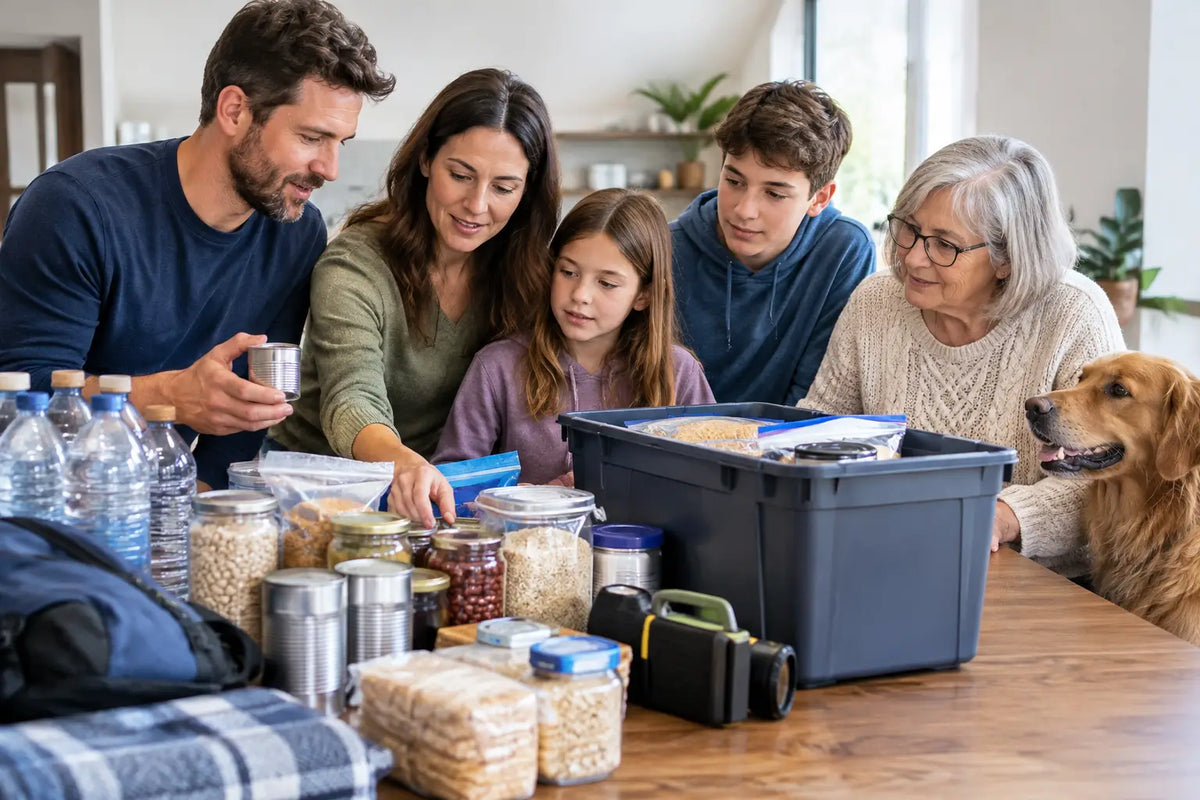
A three-day outage can turn an ordinary pantry into a stressful guessing game. The freezer is warming, the grocery store shelves are thinning out, and everyone still needs breakfast. When parents ask how much emergency food do families need, the useful answer is not a single bucket count. It is a plan based on your household, your local risks, and how long you want to be comfortable without a grocery run.
For most families, a sensible goal is 14 days of shelf-stable food at home, plus a separate three-day supply that can leave with you during an evacuation. Start with three days if that is where your budget and storage space allow. Getting started matters more than getting it perfect.
How much emergency food do families need for 14 days?
Use calories as your baseline, then adjust for real life. A commonly used planning number is about 2,000 calories per adult per day. Active adults, teenagers, pregnant or nursing parents, and people doing physical cleanup after a storm may need more. Young children generally need less, but they still need familiar, filling food and enough snacks to keep a difficult day manageable.
For a family of four with two adults and two school-age children, a reasonable starting estimate is 7,000 to 8,000 calories per day. Over two weeks, that comes to roughly 98,000 to 112,000 calories. That sounds like a lot because it is. Feeding a family through a disruption is different from keeping a few snacks in the car.
Calories are a planning tool, not a menu. A pantry made entirely of sweet bars might technically meet a number, but it will not serve your family well on day five. Build around meals people can eat, prepare, and tolerate when routines are upside down.
A simple household formula
Write down each person in your household and assign a daily calorie estimate. Multiply that figure by the number of days you are preparing for. Then add a modest buffer for an unexpected guest, a delayed reopening, or higher activity levels.
A practical example looks like this: two adults at 2,000 calories each, one teenager at 2,400, and one younger child at 1,400 equals 7,800 calories per day. For 14 days, that family should aim for about 109,200 calories, then round up rather than down.
You do not need to calculate every can in your cupboard forever. Do the math once to set your target, then use meal counts and package servings to manage your inventory. A freeze-dried food pouch labeled as 10 servings is helpful only if those are realistic servings for your family at dinner.
Start with the emergencies most likely to affect you
Your food plan should fit the disruption you are likely to face. A hurricane, ice storm, wildfire evacuation, and regional supply shortage create different problems.
For a power outage, food that requires little or no cooking deserves priority. Canned meats, beans, fruit, soups, peanut butter, crackers, shelf-stable milk, cereal, ready-to-eat meals, and familiar snack foods are all useful. If you have a safe outdoor cooking option and enough fuel, dry staples and freeze-dried meals become more practical.
For wildfire or hurricane evacuation, weight and speed matter. Keep a compact three-day food supply in each family member's evacuation bag or in clearly labeled bins by the door. Choose foods that can be eaten cold, opened easily, and carried without turning the car into a mess. A heavy home food supply is valuable, but it cannot replace portable food when you have to leave.
For winter storms and longer supply disruptions, your home pantry can do more of the work. This is where rice, pasta, oats, beans, canned vegetables, baking ingredients, powdered milk, freeze-dried meals, and long-term food storage earn their place. The trade-off is preparation: many of these foods need water, heat, and time.
Build food your family will actually eat
The best emergency food is not necessarily the food with the longest shelf life. It is food your family recognizes, enjoys, and can prepare with the resources available.
Start by looking at what you already use in a normal month. If your family eats oatmeal, pasta, chili, canned chicken, rice, soups, applesauce, and granola bars, buy extra of those items and rotate them into everyday meals. This approach costs less upfront, reduces waste, and makes an emergency menu feel less foreign to children.
Then add purpose-built long-term food storage for depth. Freeze-dried meals, dehydrated ingredients, and packaged pantry staples can extend your supply without filling every kitchen cabinet with cans. They are especially helpful for homeowners building from a three-day goal toward several weeks or months. Keep in mind that many freeze-dried foods need hot water to taste their best, so pair them with water storage and a dependable cooking plan.
A balanced emergency pantry should cover breakfast, lunch, dinner, snacks, and morale. Include protein, carbohydrates, fats, fruits or vegetables, and a few comfort foods. Coffee, tea, drink mixes, chocolate, and favorite snacks are not frivolous. They can make a long, uncomfortable day more manageable.
Account for dietary needs, babies, and pets
A family food calculation changes quickly when someone has a medical or dietary requirement. Gluten-free foods, low-sodium options, diabetic-friendly snacks, allergy-safe meals, and texture-appropriate foods for young children should be part of the stored supply from the beginning. Do not assume an emergency pantry can be improvised around a serious allergy.
If you have an infant, store enough formula, baby food, and age-appropriate snacks for at least the same 14-day period. If a child relies on a particular brand or texture, include what they already accept. Emergencies are a poor time to introduce a new food.
Pets belong in the plan too. Set aside at least two weeks of their usual food, along with treats if they help with medication or behavior. Rotate it just as you rotate human food. A hungry, anxious dog or cat adds pressure to an already demanding situation.
Do not separate food from water and cooking
Food storage only works when your family can safely eat it. Canned food is convenient because it needs little water, but sodium-heavy meals can increase thirst. Rice, pasta, beans, and freeze-dried food stretch your budget and storage capacity, but they require water and usually heat.
Plan for at least one gallon of water per person per day for drinking and basic sanitation, with more in hot climates, for larger pets, or where medical needs require it. Store both ready-to-drink water and a way to treat additional water when possible. Also make sure you have a manual can opener, utensils, cups, a safe stove or grill setup for outdoor use, and enough fuel for the meals you expect to cook.
Never use charcoal grills, camp stoves, or generators indoors, in a garage, or near open windows. Carbon monoxide emergencies can happen quietly, especially during storms when families are trying to keep warm or make dinner.
A realistic way to buy your first supply
Do not feel pressured to purchase two weeks of food in one afternoon. A steady approach is easier on the budget and more likely to stick. Begin with a three-day supply of food your family can eat without cooking. Next, add a few days of familiar pantry meals. Then build toward two weeks with shelf-stable staples and long-term storage options.
As you buy, organize food by use rather than hiding it all in one forgotten corner. Keep quick, no-cook foods accessible for outages. Store deeper pantry items in labeled bins or shelves. Put dates where you can see them, and use the oldest items first during normal meals. A simple inventory taped inside a pantry door is enough for many households.
SHTF Prepper Club encourages families to start small and scale smart because a food supply you understand and rotate is more useful than an expensive collection that sits untouched for years.
Check your plan before you need it
Once or twice a year, try a short pantry dinner using only stored food and the cooking methods you would have during an outage. You will quickly notice what is missing. Maybe your can opener is buried in a drawer, your children dislike a meal you bought in bulk, or you need more fuel and drinking water than expected.
That small test is not about pretending an emergency is coming tomorrow. It is about making a normal household more capable when a storm, outage, or supply interruption does arrive. Start with the next three days, feed the people under your roof, and let your plan grow from there.