
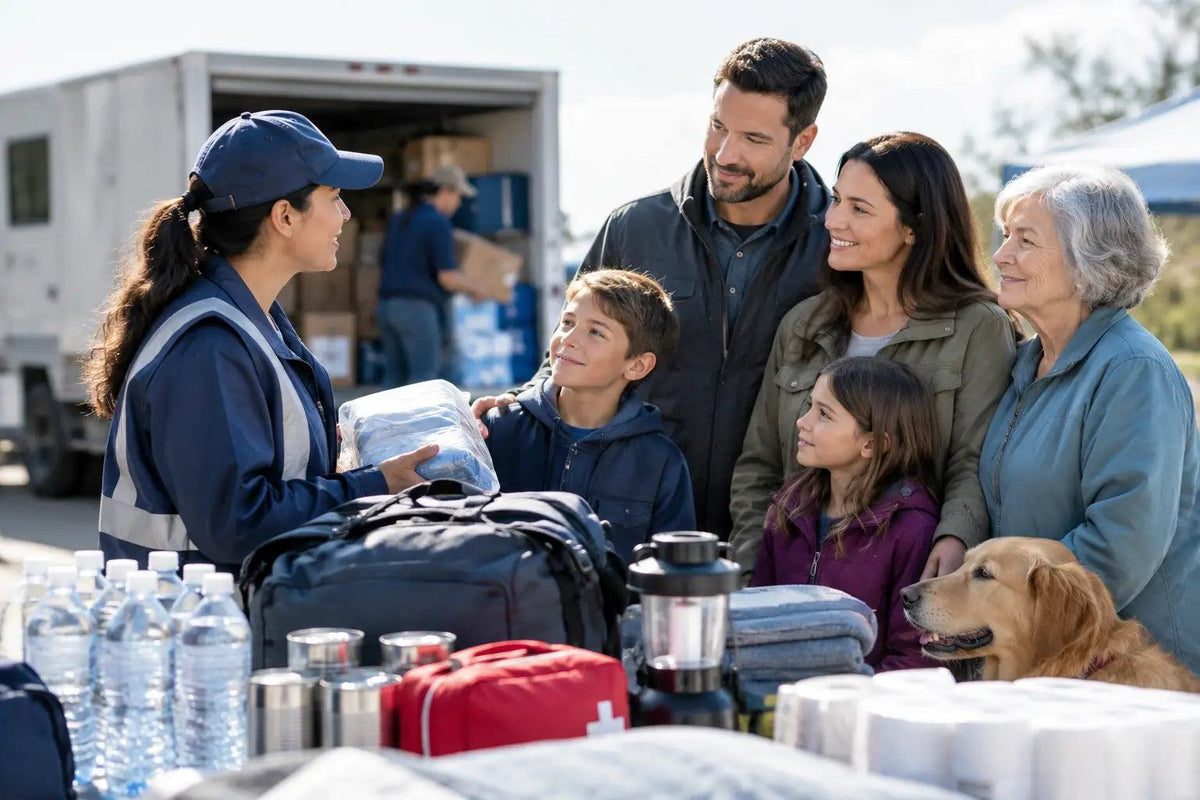
A county shelter opening, a disaster declaration, or a text alert can bring real relief in a hard moment. But government emergency resources are designed to serve an entire community under pressure, not to replace the supplies your family needs during the first difficult hours or days. That distinction matters when the power is out, roads are blocked, stores are empty, and your children are asking when things will feel normal again.
The practical goal is not to distrust public help. It is to understand what help is likely to arrive, what may take time, and what you can calmly handle at home.
What government emergency resources can provide
During a major disaster, local, state, and federal agencies may offer several kinds of support. The exact services depend on the event, where you live, and whether officials have issued an emergency or disaster declaration. Local agencies usually respond first, with state and federal support added when the scale of the event exceeds local capacity.
For an immediate, life-threatening situation, 911 remains the right call. For less urgent needs, your county or city emergency management office, public health department, school district, utility provider, and local fire department may share current instructions. Many communities use emergency alerts for evacuation orders, shelter locations, road closures, boil-water notices, and severe-weather warnings.
After a hurricane, wildfire, flood, or other declared disaster, assistance may include temporary shelter, evacuation transportation, emergency medical care, debris information, food distribution, disaster unemployment support, and limited financial assistance for eligible households. Public agencies may also set up cooling centers during extreme heat or warming centers during severe winter weather.
These services save lives. They are especially valuable for people displaced from home, families with urgent medical needs, older adults, and neighbors who do not have transportation or a safe place to stay.
The gap most families discover too late
Public resources are not a pantry, backup generator, or water system for every home. Shelters can be crowded and may open only after conditions deteriorate. Distribution sites can have long lines, limited hours, and changing inventory. Financial assistance, when available, often involves applications, documentation, and waiting.
That is not a failure of the system. It is the reality of a large-scale emergency. A storm may affect thousands of households at once, while first responders are focused on rescues, fires, medical emergencies, and damaged infrastructure.
Your family is in a stronger position when you can stay safely at home for a few days without needing immediate outside support. For some households, that means preparing for a three-day outage. For families in hurricane country, rural areas, or places with severe winter weather, a week or two of home supplies is often more realistic.
Preparedness also protects community resources for neighbors who truly need them first. If you have drinking water, shelf-stable meals, medications, warm bedding, and a way to charge a phone, you are less likely to need a shelter bed or a spot in a distribution line.
Build your plan around the first 72 hours
Start with the disruptions you are most likely to face. A Texas family may prioritize heat, water, and power during a winter grid failure. A California household may need an evacuation plan for wildfire smoke and fast-moving fire. In the Carolinas or Florida, flooding and extended outages may drive the plan. The supplies change, but the basic questions stay the same.
Water comes before convenience
Store enough water for drinking, simple meals, sanitation, pets, and basic hygiene. A useful minimum is one gallon per person per day, but that is a starting point, not a finish line. Hot weather, infants, nursing parents, medical needs, and pets can increase the amount your household needs.
Keep some water ready to use and add a reliable filtration or purification method for longer disruptions. Stored water gives you immediate certainty. A filter gives you options if the outage lasts longer than expected or your stored supply is damaged.
Food should match your actual household
Emergency food does not need to be exotic. Choose shelf-stable meals your family will eat, including options for allergies, dietary restrictions, young children, and older relatives. Build around foods that need little water and no complicated cooking at first, then expand into longer-term food storage as your budget and storage space allow.
A manual can opener, familiar snacks, baby formula if needed, and pet food are easy details to miss. So are the foods that make a difficult evening feel manageable: coffee, tea, comfort snacks, and simple meals your kids recognize.
Power has limits
A portable power station can keep phones, lights, medical devices, and small appliances running, but its capacity is finite. Know which devices are essential and how long they can realistically run. A larger battery system or generator may make sense for some homes, yet it also requires planning for safe operation, fuel, ventilation, and local rules.
For every household, simple backup lighting matters. Keep flashlights or lanterns where you can find them without searching, with spare batteries if the device needs them. Avoid relying on candles when children, pets, or a rushed evacuation are part of the picture.
Medical needs cannot wait for a declaration
Keep a well-stocked first aid kit, copies of prescriptions, and a written list of medications, doses, doctors, allergies, and emergency contacts. Ask your pharmacist or physician what is feasible for maintaining an appropriate medication supply before a seasonal risk period. Do not wait until a storm watch to discover a prescription cannot be refilled.
If someone in your home relies on electricity for a medical device, register with your utility company if that service is available. Then create a separate backup plan anyway. Registration can help utilities identify vulnerable customers, but it does not guarantee that your neighborhood will be restored first.
Know where to get information before you need it
The most useful government emergency resources are often information services. Sign up for local emergency alerts, weather alerts, and utility outage notifications. Make sure alerts can reach both adults in the household, not just one person whose phone may be dead, misplaced, or out of service.
Save key numbers in your phones and write them on paper. Include your local non-emergency number, utility outage line, poison control, your child’s school, veterinarian, and an out-of-area family contact. During a local emergency, a relative in another state can sometimes be the easiest person for everyone to check in with.
Pay close attention to official evacuation orders. If authorities tell your area to leave, leave early if you can. An evacuation bag should hold documents, medications, chargers, a change of clothes, water, food, basic first aid, pet supplies, and comfort items for children. Keep it near an exit, not scattered across closets.
Prepare for the paperwork, too
Disaster assistance often depends on records. Store digital and printed copies of identification, insurance policies, home inventory photos, vehicle details, bank contacts, medical information, and pet vaccination records in a waterproof container or secure digital location.
After damage, take photos before cleanup when it is safe to do so. Keep receipts for emergency repairs, hotel stays, supplies, and temporary living costs. Insurance and assistance programs have different rules, and outcomes depend on the situation. Good records will not remove every headache, but they can prevent a stressful process from becoming harder.
A realistic way to start this month
You do not need a warehouse of supplies to make meaningful progress. Start by covering the gaps that would worry you most during a three-day outage: drinking water, easy food, light, phone power, first aid, medications, and a family communication plan. Then add depth over time.
SHTF Prepper Club encourages families to build by category rather than chase a single perfect kit. A practical water setup, reliable food storage, power outage essentials, and an evacuation bag can be purchased and organized in stages. The right pace depends on your budget, your region, and the number of people and pets in your care.
Government help is a valuable part of disaster recovery. Your own supplies are what give your family breathing room before that help arrives. Begin with what fits in your home and budget, practice the plan once, and let each small improvement make the next emergency less uncertain.