
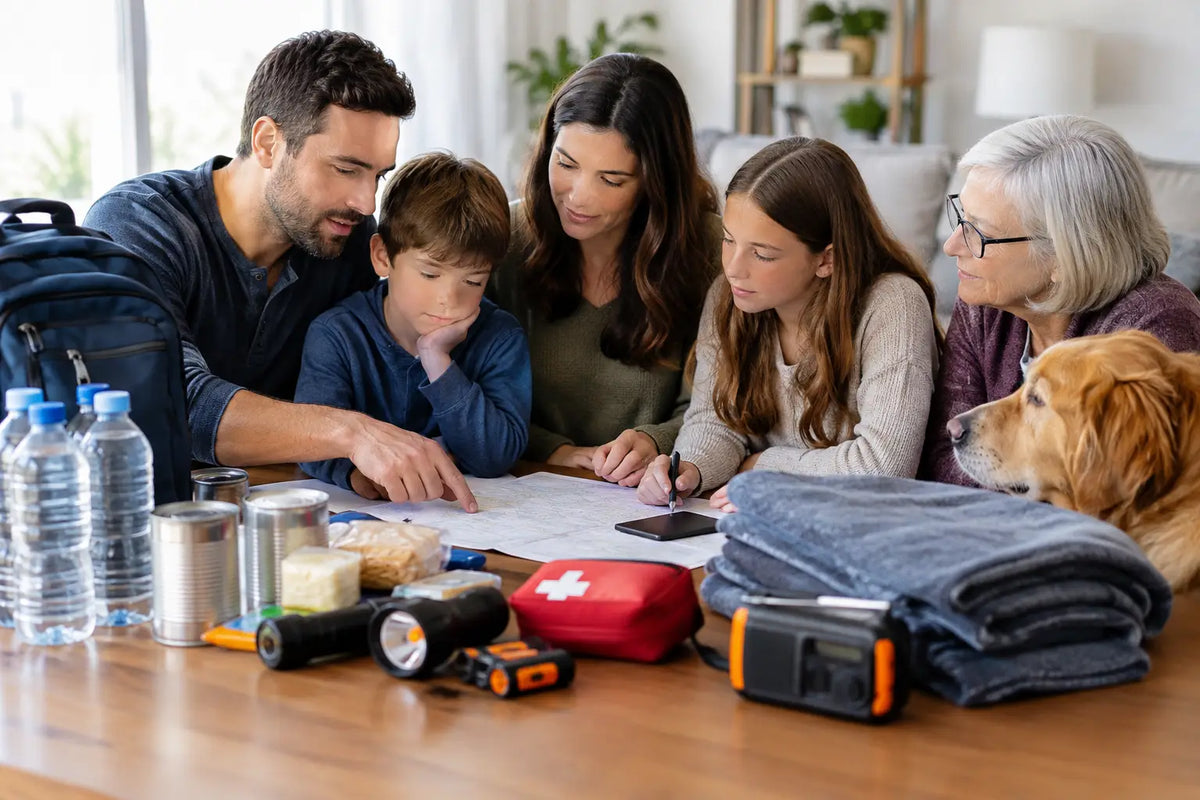
A power outage at 2 a.m. changes the questions fast. Where are the flashlights? Who calls Grandma? Does everyone know where to meet if the roads are closed? A family emergency plan checklist answers those questions before stress, darkness, or a rushed evacuation makes simple decisions harder.
The goal is not to predict every possible disaster. It is to give your family a clear, workable way to communicate, get safe, and stay supplied during the disruptions most households actually face. Start with one conversation at the kitchen table. Improve the plan as you learn what your family needs.
Start With the Emergencies Most Likely Near You
Your plan should fit your home, not a movie scenario. A family in coastal Florida may need hurricane evacuation routes and a way to protect medications during humid, extended outages. A California household may need to leave quickly for wildfire smoke or a fast-moving fire. In the Midwest, winter storms and tornadoes may make sheltering at home the more likely first decision.
Write down the two or three events that could realistically affect your household. Then ask a practical question for each one: are we safer staying home, leaving early, or taking shelter immediately? The answer can change with the event. You may shelter in place during a winter outage but evacuate for a wildfire warning.
Do not wait for a perfect plan. A written plan for the risks you know is much more useful than a complicated document no one can remember.
Build Your Family Emergency Plan Checklist
Keep this checklist in one place that adults can access easily, and give older children a simplified copy. Paper still matters. Cell phones run out of battery, and internet service can fail when you need it most.
Choose two meeting places
Pick one nearby meeting place, such as a neighbor's driveway, mailbox, or the end of your street. This is for a house fire, gas leak, or any situation where everyone needs to get out immediately.
Choose a second location outside your neighborhood, such as a library parking lot, a relative's home, or a familiar community building. This is where family members can reunite if roads, school closures, or work commutes keep you apart. Avoid choosing a place likely to be closed or inside a known flood zone.
Write the addresses down. Do not rely on everyone remembering the name of the place.
Set a communication plan
Every household needs one out-of-area contact. This person does not need to live across the country, but they should be outside your immediate area. During a regional emergency, local calling can be congested while a text or call to another state may still go through.
Each family member should know that person’s name, phone number, and the basic message to send: "I am safe. I am at [location]." Text messages often work better than calls during high-volume events. If you have young children, put the contact information in backpacks, wallets, and their school emergency forms.
Decide how you will receive alerts. That may include local emergency notifications, a weather radio, school district messages, and a battery-powered radio for updates when the power and cell service are unreliable. Make sure every adult knows who is responsible for checking official instructions.
Assign simple roles
Clear roles prevent five people from doing the same small task while another essential task is missed. Keep roles flexible enough that anyone can step in if one person is away.
For many families, one adult handles the children and pets, another gathers evacuation bags and medications, and an older teen brings phones, chargers, and the printed plan. A child can be responsible for one comfort item or a pet leash. The point is not to place adult responsibility on a child. It is to give everyone a calm, familiar job.
Include a backup plan for workdays. If school closes early, who can pick up the children? If a grandparent depends on you, who checks on them if your route is blocked? These details are the difference between a plan that sounds good and one that works on a Wednesday afternoon.
Map your exits and routes
Walk through your home and identify two ways out of each sleeping area. For a fire plan, everyone should know where to go without stopping to collect belongings. Practice opening windows if they are safe emergency exits, and keep keys available for doors or security bars.
For an evacuation, keep at least two routes out of your neighborhood. Navigation apps are useful, but have a paper map of your county or region if you live where wildfires, hurricanes, floods, or major winter storms can close roads. Your preferred route may not be usable.
If you have a vehicle, keep the fuel level above half a tank during severe-weather seasons. An evacuation is easier before gas stations are crowded or without power.
Match Your Supplies to Your Plan
A plan without supplies leaves your family with more decisions to make under pressure. Supplies without a plan can leave them scattered in closets when time matters. Keep the two connected.
Your home supplies should cover a realistic period without power, water service, or a trip to the store. For most families, that means building toward at least several days of drinking water, shelf-stable food your family will eat, lighting, a way to charge essential devices, first aid supplies, and dependable warmth or cooling strategies for your climate.
Your evacuation bags solve a different problem. They should be light enough to carry and ready to leave with each person. Include water, snacks, medications, copies of key documents, weather-appropriate clothing, hygiene supplies, a flashlight, charging capability, and a small first aid kit. Babies, pets, and people with medical needs require their own tailored supplies.
Pay particular attention to medications. Keep an up-to-date medication list with doses, prescribing providers, pharmacy numbers, and medical conditions. Ask your doctor or pharmacist what is realistic for maintaining an emergency refill. A few days of food is helpful; a missed critical prescription may be more urgent.
For documents, make protected copies of identification, insurance information, property records, emergency contacts, and pet vaccination records. Store paper copies in a waterproof pouch and secure digital copies where you can access them from another device.
Plan for the People and Pets Who Depend on You
A good plan reflects the household you have, not an average household. If someone uses mobility equipment, identify how they will exit the home and what happens if an elevator is unavailable. If a family member relies on refrigerated medication, oxygen, dialysis, or other medical equipment, build the plan around that need first. Discuss backup power, transportation, and local support options with their care provider before an emergency occurs.
Pets belong in the plan from the start. Keep carriers, leashes, food, water, waste bags, and veterinary records together. Identify pet-friendly lodging or relatives outside your immediate area. Do not assume every public shelter will accept animals, although service animal rules differ.
Older children may be home alone briefly after school. Teach them when to leave, when to stay put, where the meeting places are, and which neighbors are safe contacts. Keep the directions simple. In an emergency, children need clear instructions more than a long explanation.
Practice Without Making It Scary
A plan no one has practiced is only a set of good intentions. Run a short drill twice a year and after any major life change, such as moving, changing schools, adding a pet, or taking on caregiving responsibilities.
Start small. Have everyone find the nearby meeting place. Test whether the out-of-area contact receives a group text. Time how long it takes to locate evacuation bags, shoes, keys, and pet supplies. A ten-minute drill often exposes the small problems that would be frustrating in a real emergency.
Use the drill to check gear, too. Replace expired food, rotate stored water as needed, test flashlights and power stations, and update contact lists. Let children choose a book, stuffed animal, or card game for their bag. Familiar comfort can make a difficult night away from home easier.
Preparedness is not about living on edge. It is about giving your family a few clear next steps when normal life gets interrupted. Put the plan on paper this week, test one part of it next month, and let each small improvement make home feel a little more ready.