
Table of Contents
- How to Purify Water Without Electricity: Quick Start
- How to Boil Water to Purify It
- Gravity Water Filter Without Electricity
- Water Purification Tablets for Emergencies
- Filtering vs. Disinfecting: What Each Method Removes
- Choosing a Method by Water Source and Contamination Risk
- Storage, Maintenance, and Treated-Water Handling
- Frequently Asked Questions
Last Updated: October 6, 2026
How to Purify Water Without Electricity: Quick Start
When the power goes out, water stops being simple. Pumps fail, treatment plants stall, and the tap you trust every morning turns into a question mark. Learning how to purify water without electricity is one of the most valuable skills a household can build, and it takes less gear than most people think. At SHTF Prepper Club, we help families prepare for exactly these moments with vetted water filtration and storage solutions.
The good news: you probably already own half of what you need. A pot, a heat source, and a clean container get you started today.
Here's the short version of everything below:
- Boiling kills pathogens but does not remove chemicals
- Gravity filters remove sediment and many germs without power
- Purification tablets buy you time when fuel runs out
- The right method depends on your water source
Below, we'll walk through each method step by step so you can pick the one that fits your family's situation.
What You'll Need Before You Start
Gather these basics before you treat a single drop:
- A large pot with a lid
- A heat source: propane stove, campfire, or grill
- Clean storage containers with tight lids
- A gravity-fed or portable water filter
- Unscented household chlorine bleach or purification tablets
- Clean cloth or coffee filters for pre-straining
Skip the bleach if it has added scent or color. Those additives make the water unsafe to drink.
How to Boil Water to Purify It
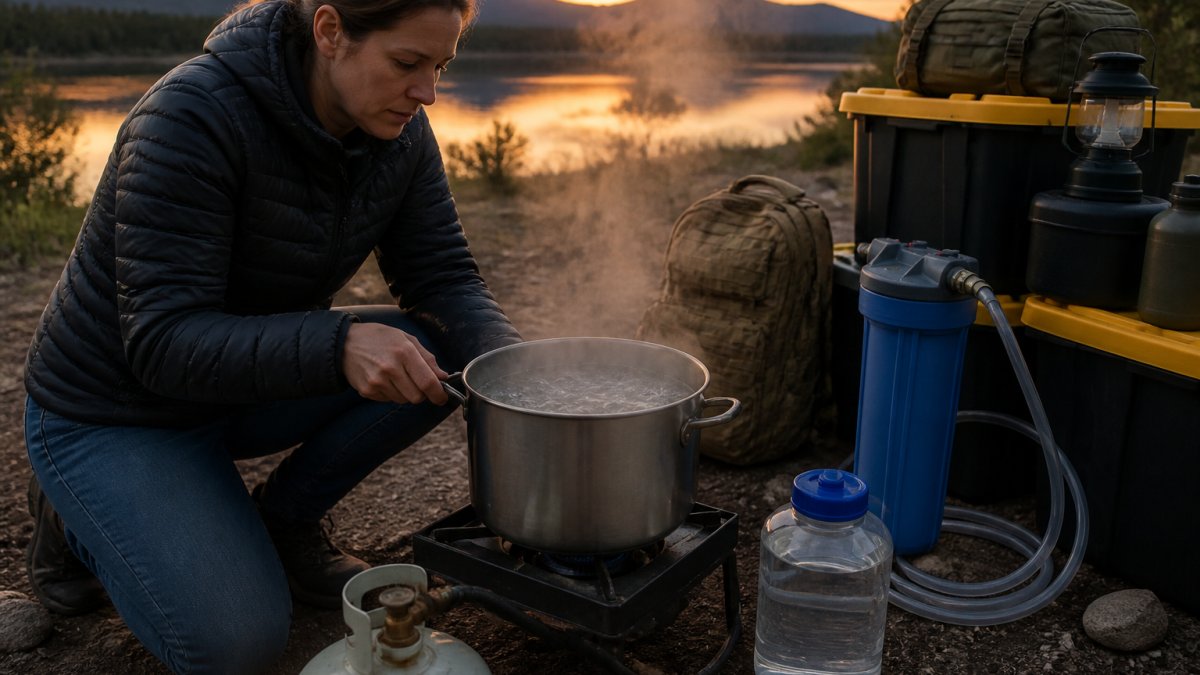
Boiling is the most reliable no-electricity method for killing pathogens. It works on bacteria, viruses, and parasites alike, and it needs nothing but fuel and a pot. It is also the method most often done wrong, because people boil for the wrong length of time, at the wrong altitude, or assume boiling fixes water that is chemically contaminated.
Follow these steps:
- Strain cloudy water through a clean cloth, coffee filter, or dedicated pre-filter to remove debris.
- Fill your pot no more than two-thirds full so it does not boil over and waste fuel.
- Bring the water to a rolling boil, large bubbles breaking the surface continuously, not small bubbles clinging to the bottom.
- Hold the rolling boil for the full time listed below, based on your elevation.
- Let the water cool on its own, covered, then pour it into clean containers for storage.
A rolling boil is the visual cue that matters. At sea level, water boils at 212°F. At 6,500 feet, it boils at roughly 199°F, and at 10,000 feet, closer to 194°F. The lower boiling point means the water is not as hot, so pathogens need more contact time to be killed.
How Long to Boil Water for Drinking
How long to boil water for drinking depends on your elevation, not on how dirty the water looks. The Centers for Disease Control and Prevention guidance is the standard most preparedness groups follow:
- Below 6,500 feet: Bring to a rolling boil for 1 full minute.
- 6,500 feet and above: Bring to a rolling boil for 3 full minutes.
Some sources say a rolling boil alone is enough at any altitude, and that is true for most pathogens. The extra time at altitude is cheap insurance against the harder-to-kill organisms and against a pot that is not quite at a full boil.
Let the water cool naturally. Do not add ice, and do not pour it back and forth to speed things up. Both can reintroduce germs from hands, cups, or the air.
Fuel reality check. Boiling a gallon of water on a propane camp stove typically takes 8-12 minutes and burns a meaningful amount of fuel. A 1-pound propane canister holds roughly 4-5 hours of burn time at a moderate flame.
What boiling does not fix. Boiling kills living organisms. It does not remove lead, arsenic, nitrate, salt, pesticides, or most industrial chemicals. In fact, boiling concentrates them, because water evaporates and the contaminants stay behind.
Gravity Water Filter Without Electricity
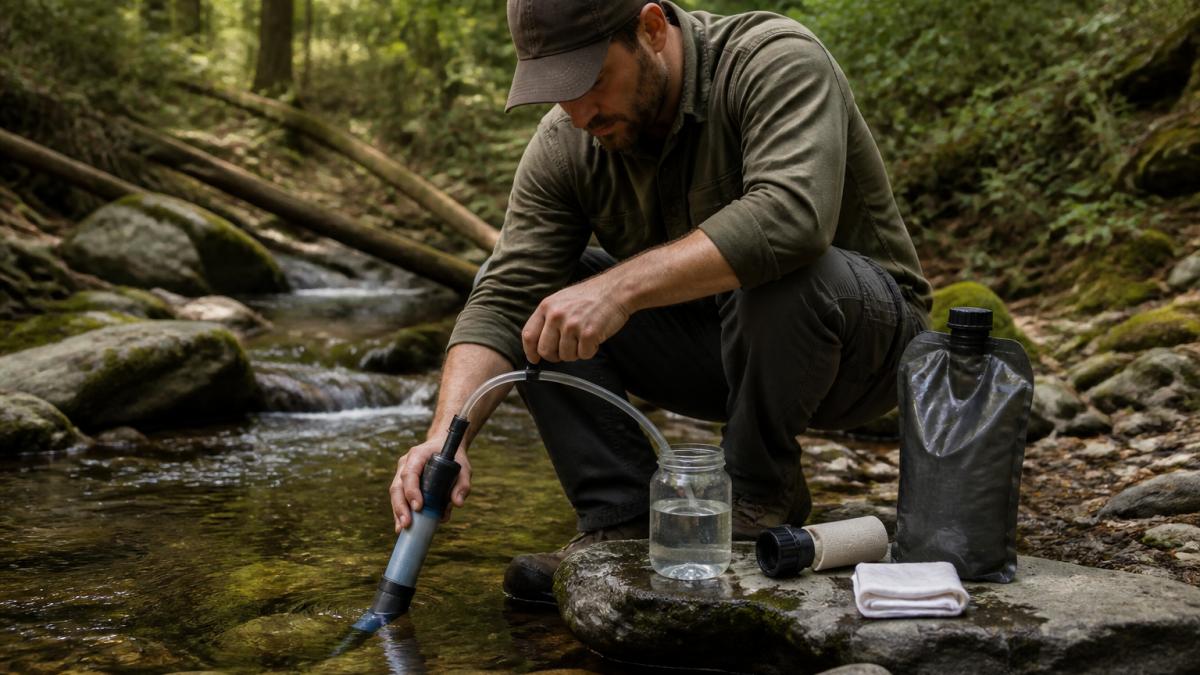
A gravity water filter without electricity pushes water through a filter media using nothing but weight. You pour dirty water in the top, and clean water collects below. No pumps, no power, no moving parts.
Most gravity systems use ceramic or hollow-fiber cartridges that trap bacteria and parasites. Many also reduce protozoa like Giardia and Cryptosporidium. Check the filter's label for what it actually removes before you rely on it.
Why families like them:
- They run silently for hours
- One fill can serve a whole household
- Replacement cartridges store flat
- They work day after day without fuel
The trade-off is speed. A gravity filter drips rather than pours, so start it early if you need a large batch.
Fabric Straining and Pre-Filtration
Fabric straining is not purification. It is the step that makes every other method work better.
A clean cotton shirt, a coffee filter, or a dedicated pre-filter cloth removes silt, leaves, and grit. That matters because sediment clogs filter cartridges and shields pathogens from disinfectants.
Think of it as a two-part job:
- Straining removes the visible dirt
- Filtering or boiling removes the invisible threats
Do both. Skipping the strain shortens cartridge life and weakens your results.
Water Purification Tablets for Emergencies
Water purification tablets for emergencies are the lightest backup you can carry. They typically use chlorine dioxide or iodine to kill bacteria and viruses in a set amount of time.
How to use them:
- Pre-filter the water to remove debris.
- Follow the tablet's dose instructions exactly.
- Wait the full contact time before drinking, usually 30 minutes or more.
- Store treated water in a covered container.
Tablets work slowly in cold or cloudy water. They also leave a slight taste, which bothers some families. Carbon drops or a quick pass through a filter can fix that.
One caution: iodine tablets are not for pregnant women, people with thyroid conditions, or long-term use. Chlorine dioxide tablets are the safer general choice.
Check the Environmental Protection Agency's guidance on emergency disinfection for current recommendations on chemical treatment.
Filtering vs. Disinfecting: What Each Method Removes
Filtering and disinfecting are not the same job, and mixing them up is the most common mistake we see.
Filtration is the physical removal of particles and organisms by passing water through a filter media. The filter's pore size determines what it catches.
Disinfection is the chemical or heat-based killing of pathogens. Boiling, chlorine bleach, chlorine dioxide tablets, iodine, and UV light all fall here.
Chemical contaminant removal is a third job.
Here is how the main no-electricity methods compare:
| Method | Removes Bacteria | Removes Viruses | Removes Parasites | Removes Chemicals | Needs Fuel |
|---|---|---|---|---|---|
| Boiling | Yes | Yes | Yes | No, concentrates them | Yes |
| Gravity filter (0.2 micron hollow-fiber) | Yes | Varies, often no | Yes | No | No |
| Gravity filter with carbon stage | Yes | Varies | Yes | Some organics | No |
| Purification tablets (chlorine dioxide) | Yes | Yes | Varies, slow on Crypto | No | No |
| Iodine tablets | Yes | Yes | Varies | No | No |
| Fabric straining | No | No | No | No | No |
| Reverse osmosis (hand-pump) | Yes | Yes | Yes | Yes, including salt | No (manual) |
Notice the pattern. No single method covers everything.
The 'clear equals safe' trap. Water can look perfectly clear and still carry viruses, dissolved lead, or nitrate from agricultural runoff. Clarity only tells you sediment is low.
Log reduction, in plain terms. Filter and purifier makers often cite 'log reduction', a 1-log reduction removes 90% of a contaminant, 2-log removes 99%, 3-log removes 99.9%, and so on.
Choosing a Method by Water Source and Contamination Risk
The right method depends on where your water comes from and what might be in it.
- Rainwater: Usually low risk. Strain and boil, or run through a gravity filter.
- Surface water (rivers, lakes): High risk. Pre-filter, then boil or use tablets.
- Well water: Depends on the well. Test it if you can, and treat it if you cannot.
- Floodwater: Treat as heavily contaminated. Filter, then disinfect.
For chemical contaminants, salt, or toxins, none of these methods is enough on its own. Boiling actually concentrates them as water evaporates. In those cases, you need a filter rated for chemical removal or a different water source entirely.
Storage, Maintenance, and Treated-Water Handling
Clean water goes bad in dirty containers. This step is where many careful households undo their own work.
Storage rules:
- Use food-grade containers with tight lids.
- Label the date you treated the water.
- Store in a cool, dark place.
- Rotate stored water every six months.
Maintenance matters too. Backflush gravity filters after heavy use. Replace cartridges on the schedule the maker gives you. Dry ceramic elements fully before storing them to prevent cracks.
For treated-water handling, pour with clean hands and never dip a used cup into a storage container. That single habit keeps a full batch safe.
Our team at SHTF Prepper Club builds water kits around this exact sequence: strain, treat, store, rotate. It is simple, and it works when the grid does not.
Frequently Asked Questions
Can I just boil water to purify it?
Yes, boiling is the most reliable way to kill bacteria, viruses, and parasites in water. Bring water to a rolling boil for at least one minute (three minutes at altitudes above 6,500 feet). Boiling does not remove chemical contaminants, heavy metals, or salt. If the water is cloudy, filter it through a clean cloth first to remove sediment, then boil. Store boiled water in clean, covered containers and use within a few days.
How long should you boil water to make it safe to drink?
The CDC recommends bringing water to a rolling boil for at least one minute. At elevations above 6,500 feet, boil for three minutes because water boils at a lower temperature. A rolling boil means bubbles are rising rapidly and cannot be stirred down. Let the water cool naturally before drinking. Boiling longer than the recommended time does not make it safer and wastes fuel.
Can a gravity-fed water filter work without electricity?
Yes, gravity water filters operate without electricity or pumping. They rely on gravity to pull water through a filter media such as ceramic, activated carbon, or hollow fiber membranes. These filters remove bacteria, protozoa, and sediment, but most do not remove viruses. For virus removal, combine gravity filtration with boiling or chemical disinfection. Gravity filters are ideal for basecamp or home use during extended power outages.
How can you tell if water is safe to drink after treatment?
You cannot reliably tell if water is safe by look, smell, or taste. Pathogens are invisible. After treatment, the only way to be certain is to use a test kit or follow proven methods. If you used a filter, check that it meets NSF/ANSI standards for the contaminants of concern. For chemical contaminants, use a test kit. When in doubt, treat again with a different method or choose a different water source.
When the power fails, clean water decides how comfortable your family stays. SHTF Prepper Club makes that easier with expert-vetted water filtration gear, long-term food storage, and comprehensive preparedness guides built for real households. Our kits require minimal preparation and are designed to keep your family ready without the fear. Get started with SHTF Prepper Club and build a water plan your household can trust.