
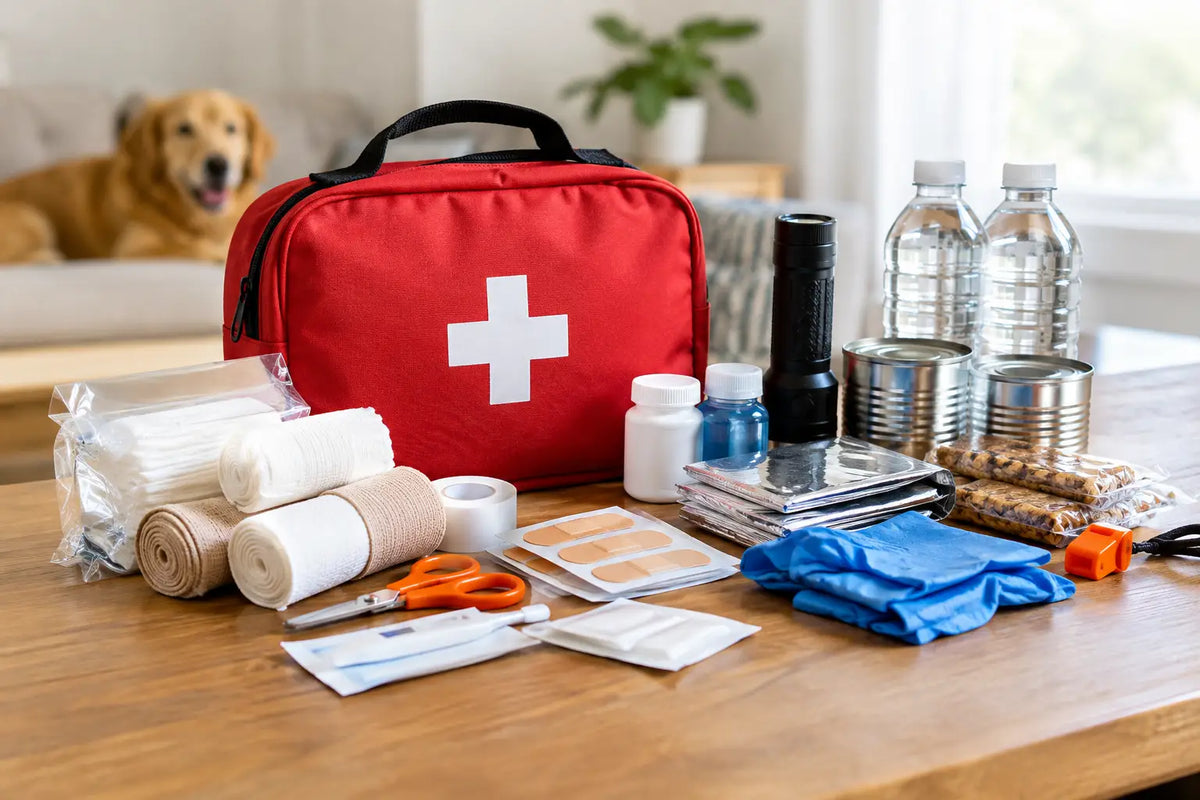
A scraped knee is easy to handle when the lights are on, the pharmacy is open, and everyone is calm. A deep cut during a three-day power outage or a burn while cooking on a camp stove feels different. That is why a first aid kit for home emergency should be more than a handful of adhesive bandages in a bathroom drawer.
Your goal is not to turn your home into a clinic. It is to give your family the supplies and confidence to handle common injuries, provide care while waiting for help, and stay comfortable when a storm, wildfire, winter event, or local outage makes normal errands difficult.
What a Home Emergency First Aid Kit Needs to Do
A good home kit covers three jobs. First, it handles everyday problems such as cuts, splinters, blisters, minor burns, headaches, and upset stomachs. Second, it helps control a serious injury until professional care arrives. Third, it supports your household when roads are blocked, stores are closed, or you are sheltering at home for several days.
That third job is where many store-bought kits come up short. Small kits can be useful in a car or evacuation bag, but they often contain one or two of each item. That may be enough for a single scrape. It is not enough for a family of four dealing with repeated minor injuries, illness, or a long disruption.
Start with a sturdy, clearly labeled container that closes securely and can be carried with one hand. A plastic storage bin, soft-sided medical bag, or well-organized cabinet drawer can work. What matters is that adults in the home can find it quickly, and older children know where it is without having to search.
Build a First Aid Kit for Home Emergency in Layers
The easiest way to avoid overspending or overlooking basics is to build in layers. Begin with the supplies you will use most often, then add items for bleeding, burns, illness, and your family’s specific needs.
Everyday wound care
For ordinary cuts and scrapes, keep a generous supply of adhesive bandages in several sizes, sterile gauze pads, rolled gauze, medical tape, antiseptic wipes, wound-cleaning solution, antibiotic ointment, tweezers, and small scissors. Include nonstick dressings for abrasions and minor burns. A pair of disposable gloves protects both the caregiver and the injured person.
Buy more bandages and gauze than you think you need. These are inexpensive items, and they disappear quickly when children are home during a storm or when a household is doing cleanup after wind, flooding, or a fallen tree.
Bleeding and serious injury supplies
Serious bleeding is uncommon, but it is the kind of problem where the right equipment and a few minutes matter. Add several large trauma dressings, compressed gauze, an emergency pressure bandage, and a commercial tourniquet from a reputable medical supplier. Keep the tourniquet accessible, not buried beneath loose bandages.
A tourniquet is not a substitute for training. It is a tool for life-threatening bleeding from an arm or leg when direct pressure is not working or cannot be maintained. If you keep one, take a basic first aid or bleeding-control class and show the other adults in your home where it is. Calm familiarity is more useful than owning a complicated bag of supplies no one understands.
Consider adding a CPR face shield, instant cold packs, an emergency blanket, and a triangular bandage. These take little space and can be useful for shock, sprains, or keeping someone warm while waiting for emergency services.
Burns, sprains, and everyday pain
Kitchen burns, hot grill surfaces, space heaters, and cleanup work are common sources of injury during an emergency. Keep sterile nonstick burn dressings, burn gel, and loose gauze. For a minor burn, cool running water is often the first step when it is available. Avoid putting ice, butter, or home remedies on a burn.
For sprains and strains, include elastic wrap bandages, a simple splint material, and cold packs. Over-the-counter pain relievers can help, but choose products your family can safely take and follow the label. Children’s and adult formulations are not interchangeable, and measuring tools matter.
Illness and personal medications
A home emergency kit should also account for the problems that do not look dramatic. Fever, allergies, diarrhea, nausea, and dehydration can become harder to manage when you cannot get to the store.
Keep a thermometer, oral rehydration packets, an antihistamine, age-appropriate fever and pain medicine, anti-diarrheal medicine for adults when medically appropriate, and basic stomach relief products. If young children visit often, stock child-safe versions and keep all medication secured.
Prescription medication deserves its own plan. Aim to maintain an extra supply when your prescriber and insurance rules allow. Store medicines in their original containers, make a current list of prescriptions and dosages, and include pharmacy and doctor contact information. Anyone who relies on insulin, oxygen, inhalers, EpiPens, seizure medication, or other essential treatment needs a more specific preparedness plan. Talk with their medical provider before an emergency, especially if temperature control is required.
Match the Kit to Your Household
The best kit is personal. A household with a toddler needs pediatric medication, a reliable dosing syringe, and more bandages. A home with an older adult may need blood pressure records, spare glasses, a pill organizer, and mobility-related supplies. Pet owners should keep a separate pet first aid pouch with gauze, pet-safe wound supplies, a tick remover, and copies of veterinary records.
Your location changes the priorities too. In hurricane and flood areas, waterproof bags and extra gloves are smart additions because cleanup brings dirty water, sharp debris, and contaminated surfaces. In wildfire country, eye wash, saline, and extra masks may be practical during smoky conditions. Winter storms make hand warmers and extra blankets useful alongside medical supplies.
There is no need to buy every specialized item at once. A well-stocked basic kit, enough household medications for several days, and a plan for prescriptions is a meaningful start. Add specialty gear as your budget and family needs become clearer.
Store It Where You Can Reach It
Medicine cabinets are convenient, but bathrooms are often warm and humid. That can shorten the useful life of some medications and adhesive products. A cool, dry hall closet or pantry shelf is usually a better choice, as long as children cannot access medicines without supervision.
Keep a small grab-and-go version near the main kit. If you must leave quickly because of a fire, evacuation order, or severe weather, you will not have time to sort through a cabinet. Your main home kit can be larger and more complete; the portable one should focus on wound care, essential medications, gloves, a trauma dressing, water, and copies of key information.
Place a printed emergency contact sheet inside both kits. Include household members’ names, allergies, medications, doctors, emergency contacts, and insurance information. During a stressful event, even familiar phone numbers can be hard to remember.
Check It Before You Need It
First aid supplies are not a set-it-and-forget-it purchase. Put a reminder on the calendar twice a year, perhaps when daylight saving time changes. Replace expired medications, dried-out wipes, used bandages, and depleted cold packs. Check flashlight batteries if your kit includes a light.
After any injury, restock immediately. A kit that handled one weekend project should not be left half-empty until the next storm season.
It also helps to practice the simple things. Make sure every responsible adult knows how to use the thermometer, locate the trauma supplies, shut off the water if needed, and call for help. Take a family first aid and CPR course when you can. Equipment matters, but practiced decisions matter more.
A first aid kit for home emergency is one of the most practical places to begin building family readiness. Set aside an hour this week, gather what you already have, write down what is missing, and fill the gaps one category at a time. The quiet confidence of knowing you can care for your family through the first difficult hours is worth far more than a full cabinet of supplies you cannot find when you need them.