
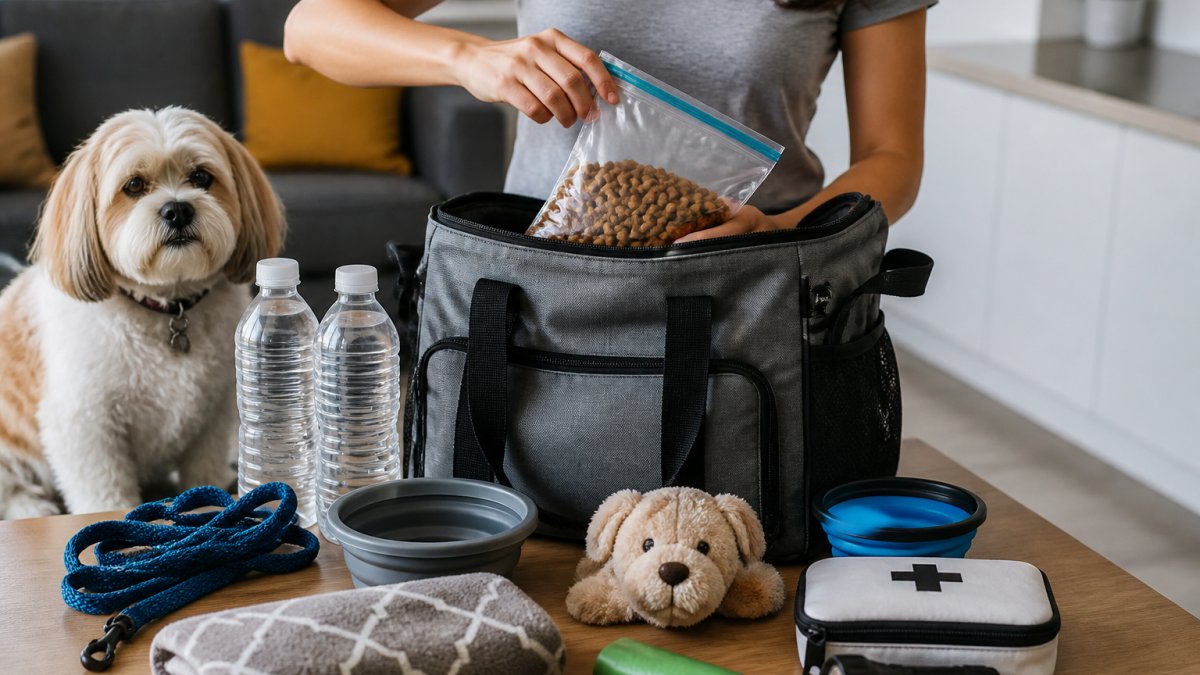
Table of Contents
- Start With a Go-Bag Strategy, Not a Shopping List
- Your Pet Emergency Kit Checklist: What Goes In
- How Much Food and Water to Pack for Pets
- Pet Emergency Documents and Medications to Store
- Building a Pet Evacuation Kit for Carriers and Transport
- Species-Specific Packing Lists: Dogs, Cats, and Small Animals
- Kit Maintenance: How Often to Check and Rotate Supplies
- Conclusion: Build It Once, Check It Twice a Year
- Frequently Asked Questions
Last Updated: October 4, 2026
Start With a Go-Bag Strategy, Not a Shopping List
Most pet owners build an emergency go bag backwards. They buy a few items, toss them in a tote, and call it done. Then a storm warning hits, and they can't find the leash, the food is expired, and the cat carrier is buried in the garage.
A pet go-bag is a pre-packed, grab-and-go container holding everything your animal needs to survive three to five days away from home. It is not a junk drawer. It is a plan.
Here is the core idea: build one kit per pet, store it where you can grab it in under a minute, and check it twice a year. That is the whole strategy.
Treat the go-bag like a fire extinguisher. You hope you never need it. You still keep it ready.
The FEMA guidance on preparing pets for disasters recommends assembling supplies before an evacuation order, not during one. That matters, because roads jam fast and shelters fill faster.
Choose Your Container and Storage Location
Pick a container that matches your pet's size and your space.
- Small pets: a waterproof duffel or plastic bin
- Medium dogs: a rolling storage tote
- Large dogs: a wheeled crate plus a separate supply bag
- Apartments: stack two shallow bins under a bed
Store the kit near your exit door, not in the attic. If you have a garage, keep it on a low shelf you can reach in the dark.
Your Pet Emergency Kit Checklist: What Goes In
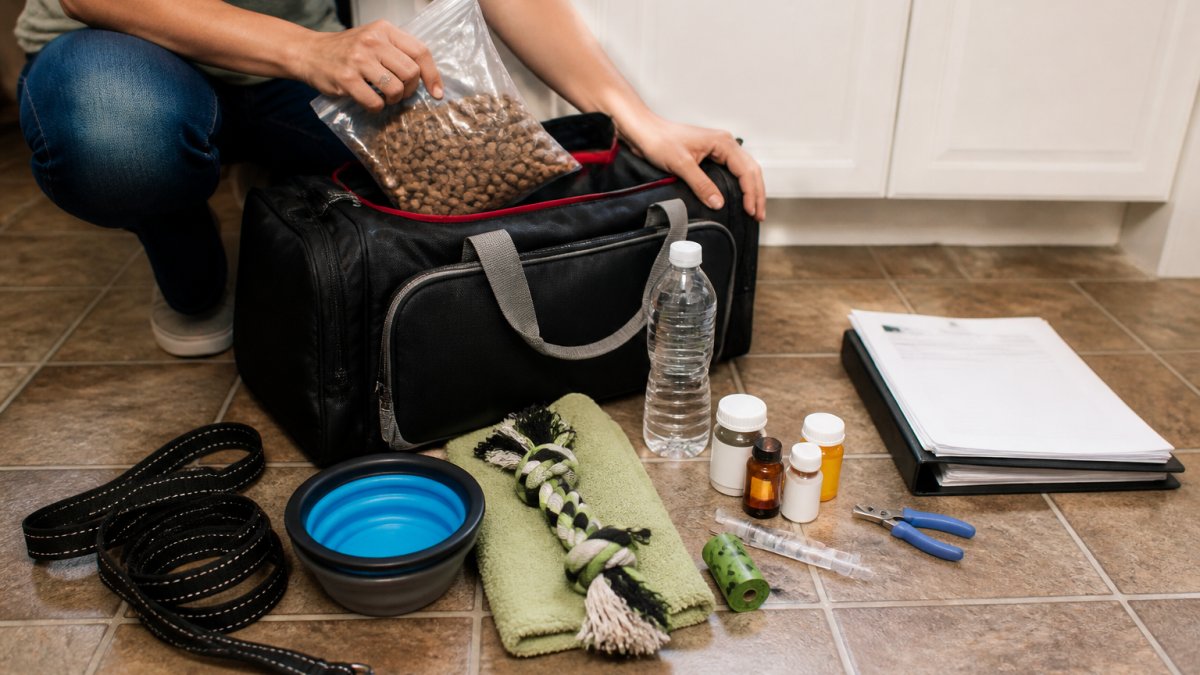
A complete pet emergency kit covers five needs: food, water, medication, identification, and restraint. Pack all five or the kit fails when it counts.
Core Supplies Every Kit Needs
- Sealed pet food in a waterproof bag
- Drinking water in a separate container
- Food bowl and water bowl, collapsible or non-spill
- Manual can opener if you pack canned food
- Leash, harness, and a spare collar
- Carrier or crate sized to your pet
- Waste bags and a small litter box for cats
- Copies of vaccination records and medical records
- A current pet photo, printed
- A pet first-aid pouch
This is a pet emergency kit checklist. Print it, tape it inside the lid, and check items off as you pack.
How Much Food and Water to Pack for Pets
Pack a three-day supply at minimum, and five days if you have room. That is the standard most emergency planners use, and it matches what shelters and hotels expect you to bring. But the exact amount depends on your pet's size, diet, and the conditions you expect.
The Math for Dogs, Cats, and Small Pets
The formula is simple. Take your pet's daily food amount and multiply by the number of days. Then adjust for these factors:
- Size: Larger pets need more food and water.
- Diet: Wet food is heavier and spoils faster; dry food is lighter and lasts longer.
- Climate: In hot weather, pets drink more. Double the water in summer heat.
- Stress: Anxious pets may eat less, so pack a little extra of their regular food to encourage eating.
| Pet Type | Daily Food | 3-Day Supply | 5-Day Supply |
|---|---|---|---|
| Small dog (under 20 lbs) | 1 cup dry | 3 cups | 5 cups |
| Large dog (over 50 lbs) | 3-4 cups dry | 9-12 cups | 15-20 cups |
| Adult cat | 1/2 to 1 cup dry | 1.5-3 cups | 2.5-5 cups |
| Small animal (rabbit, guinea pig) | 1/4 cup pellets | 3/4 cup | 1.25 cups |
For water, plan on roughly one ounce per pound of body weight per day. A 40-pound dog needs about 40 ounces daily, so a five-day supply is around 160 ounces, or about five quarts. A 10-pound cat needs about 10 ounces daily, so a five-day supply is about 50 ounces, or a little over three pints.
Double the water in summer heat. Pets drink more when stressed or panting.
Adjusting for Evacuation Duration and Climate
If you expect to be away for more than five days, pack a seven-day supply. Shelters may not have pet food, and stores may be closed or out of stock. For cold weather, pack extra calories for outdoor pets. For hot weather, pack extra water and a collapsible bowl for frequent stops.
Special Diets and Medications
If your pet is on a prescription diet, pack enough for the full evacuation period plus two extra days. Sudden diet changes can cause digestive upset, so stick to their regular food. If your pet takes medication, pack two weeks' worth and rotate it before it expires.
Pet Emergency Documents and Medications to Store
Documents are the part most people skip. They are also the part that gets you into a pet-friendly shelter.
Store these in a waterproof folder or sealed bag:
- Vaccination records, especially rabies
- A written list of current medications and dosages
- Your veterinarian's name, clinic, and phone number
- Microchip number and registry contact
- A recent photo showing you with your pet
Pack two weeks of medication if your pet takes a daily prescription (the CDC). Rotate it before it expires.
Digital and Physical ID Backups
Keep a digital copy and a paper copy. Email the documents to yourself and save them in your phone. Then print a set for the bag.
If your phone dies, the paper copy still works. If the paper gets soaked, the digital copy still works. Redundancy is the point.
AVMA guidance on disaster preparedness for pet owners notes that up-to-date identification is one of the most effective ways to reunite with a lost pet after a disaster.
Building a Pet Evacuation Kit for Carriers and Transport
Transport gear is what turns a supply bag into a working pet evacuation kit. Without a carrier, many shelters and hotels will turn you away.
Match the carrier to the trip:
- Cats: hard-sided carrier with a removable top
- Small dogs: soft carrier with a secure zipper
- Large dogs: crate plus a seatbelt harness
- Small animals: ventilated carrier with bedding
Practice loading your pet into the carrier before you need it. A pet that panics at the crate will slow your exit.
Species-Specific Packing Lists: Dogs, Cats, and Small Animals
Different animals need different gear. A one-size kit leaves gaps. Use these lists to build a kit that actually fits your pet.
Dogs
- Extra leash and a long line
- Booties for hot pavement or debris
- Poop bags and a towel
- A favorite toy or chew to reduce stress
- A collapsible travel bowl
Cats
- Disposable litter box and litter
- A towel that smells like home
- A calming pheromone spray
- A secure, hard-sided carrier with a removable top
- A small blanket or bed
Birds
- A secure travel cage or carrier with a perch
- A cage cover to reduce stress
- Food and water dishes that attach to the cage
- A spray bottle for misting if needed
- A copy of the bird's health certificate
Small mammals (rabbits, guinea pigs, hamsters)
- Bedding and a hide box
- A water bottle that clips to the carrier
- A small supply of their usual treats
- A carrier with good ventilation
- A chew block or toy
Reptiles
- A secure carrier with ventilation
- A heat pack or hand warmer for temperature-sensitive species
- A small water dish
- A hide box or shelter
- A copy of any special care instructions
Livestock (horses, goats, chickens)
- A halter and lead rope
- A portable water bucket
- A first-aid kit for large animals
- A temporary fence or panels
- A copy of vaccination and health records
If you care for livestock or a pet with mobility needs, add a sling, ramp, or cart. Plan the route before the emergency. For birds and reptiles, practice loading them into their carriers so they stay calm during an evacuation.
Kit Maintenance: How Often to Check and Rotate Supplies
Check your kit twice a year. Pick two dates you will remember, like daylight saving changes, and do it then.
During each check:
- Replace expired food and medication
- Test batteries in any light or radio
- Refill water containers
- Confirm documents are current
- Re-check the carrier for cracks or broken zippers
Rotate food into your pet's regular meals so nothing goes to waste. Buy a fresh bag, use the old one, and restock the kit.
Conclusion: Build It Once, Check It Twice a Year
The hard part of pet emergency planning is not the shopping. It is the discipline to check and rotate. Build the kit once, then treat it like a living system that needs two tune-ups a year.
Most families can pull this together in a single afternoon. Start with the container, work down the checklist, and pack food, water, and documents first.
If you would rather skip the guesswork, SHTF Prepper Club offers expert-vetted food storage, water filtration, and safety gear built for exactly this kind of readiness. Our kits are designed for minimal prep and long shelf life, so your household stays ready without the fear.
Frequently Asked Questions
How long should a pet emergency kit last?
Plan for at least five days, and seven to fourteen days if you live in a hurricane, wildfire, or flood zone where shelters may stay closed longer. The 3-3-3 rule (three hours, three days, three weeks) is a useful planning frame: three days of supplies covers most evacuations, three weeks covers extended displacement. Pack food and water for the full window you choose, then rotate everything before it expires.
What should I pack in an emergency go bag for my pet?
Start with five days of food and water, a food bowl and water bowl, a two-week supply of medications, a leash, harness, and carrier, waste bags, and a waterproof folder holding vaccination records, microchip information, a current pet photo, and emergency contacts. Add a can opener if you pack canned food, a pet first-aid kit, and a comfort item with your scent on it. A printed pet emergency kit checklist taped to the bag lid keeps you from forgetting anything during a rushed exit.
How much food and water should I pack for my pet?
Pack the same amount your pet eats and drinks daily, multiplied by the number of days in your kit. A 50-pound dog typically eats 2 to 3 cups of dry food and drinks roughly 50 ounces of water per day, so five days means about 12 cups of food and 2 gallons of water. Cats drink 4 to 6 ounces daily, so five days needs about 30 ounces. Small pets like rabbits and guinea pigs need roughly 2 to 4 ounces of water daily plus fresh hay. Always add a 20 percent buffer for stress and spills.
How often should I check and update my pet's emergency supplies?
Check the bag every six months and rotate anything perishable. Replace food and water before their expiration dates, swap out medications that are nearing the end of their shelf life, and update vaccination records, microchip details, and contact numbers. Confirm your pet's collar tag and harness still fit, and test the carrier to make sure it has not cracked. A calendar reminder on the same day you change your smoke detector batteries keeps the habit automatic.