
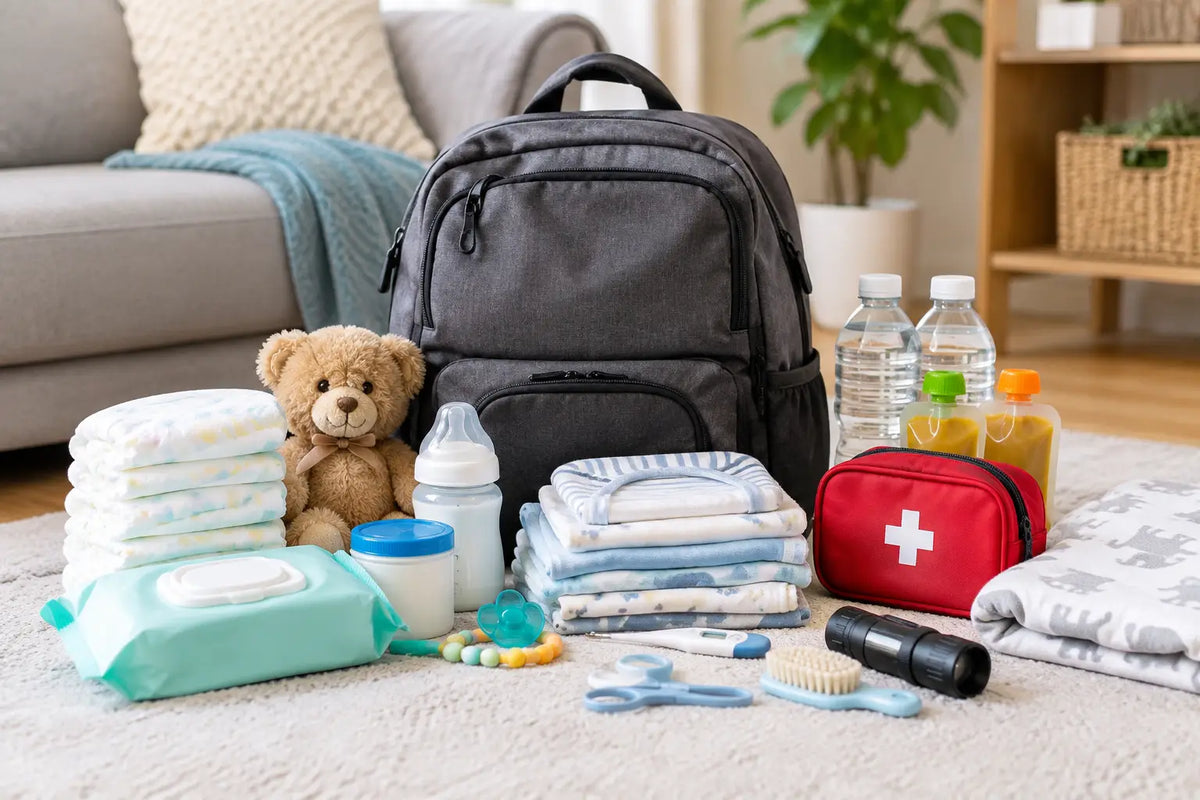
A baby does not need much to be happy. But during a power outage, wildfire evacuation, winter storm, or long wait for help, the few things they do need become non-negotiable. An emergency kit for babies turns a stressful scramble into a simple plan: keep your child fed, clean, warm, hydrated, and as comfortable as possible for at least 72 hours.
This is not about buying every gadget marketed to new parents. It is about setting aside the everyday supplies your baby already relies on, then protecting them from being used up during normal life. Start with three days. If your family lives in a hurricane, wildfire, or winter-storm area, building toward a week is a sensible next step.
Start With Your Baby's Normal Routine
The best kit follows your child, not a generic packing list. A breastfed infant, a formula-fed baby, a toddler who drinks whole milk, and a child with a medical condition all have different needs. Write down what a normal 24 hours looks like before you shop or pack.
Think through feeding, diapers, sleep, medication, and comfort. Then multiply the essentials by three days, with a little extra margin for delays. Babies may eat more often for comfort during a disruption, and diaper changes can increase when routines are off.
Keep these supplies in a clearly labeled tote or backpack near your family evacuation bag. Do not bury them in a garage shelf behind holiday decorations. A kit only helps if you can grab it quickly, even in the dark.
Emergency Kit for Babies: Feeding and Water
Feeding is usually the first concern, and it deserves its own protected supply. If your baby uses formula, store ready-to-feed formula whenever possible. It does not require clean mixing water and is much easier to use during an evacuation, hotel stay, or outage. Include nipples and bottles that your baby already accepts, plus a bottle brush and unscented soap for longer disruptions.
Powdered formula is useful as a backup, but it depends on safe water and careful preparation. Store it in its original sealed container, check expiration dates, and rotate it into regular use before it expires. If you use concentrated formula, remember that it also requires water.
Breastfeeding families should still pack practical backup supplies. Include a manual breast pump if it is part of your routine, milk storage bags or containers, nursing pads, and a familiar cover if you use one. A manual pump does not depend on charging or electricity. If you normally pump, consider how you will clean parts and keep expressed milk cold during a prolonged outage.
Every family needs water. Store enough for drinking, basic cleaning, and formula preparation. General household water planning often starts at one gallon per person per day, but babies can require additional water for cleaning bottles and washing hands. Keep water treatment options in the wider family kit as a backup, but do not assume untreated water is appropriate for mixing infant formula. Follow the guidance from your pediatrician and local public health authorities for your child's age and situation.
For babies eating solids, add shelf-stable foods they recognize: puree pouches, dry cereal, crackers, fruit cups, or other age-appropriate options. Pack a spoon, bib, and wipes. Choose foods your child has eaten before. An emergency is not the time to learn that a new snack causes an upset stomach.
Diapers, Hygiene, and a Clean Place to Change
Running out of diapers is a fast way to make a hard day harder. Pack enough disposable diapers for at least 72 hours, plus extras if your child has frequent changes or stomach sensitivity. For many babies, that means roughly 24 to 36 diapers. Newborns may need more.
Add wipes, diaper cream, disposable changing pads, hand sanitizer, and small trash bags. Unscented products are usually the safer choice for sensitive skin. Trash bags do double duty: they contain dirty diapers, wet clothes, and messes when regular trash service is interrupted.
A compact changing pad matters more than it sounds. Floors in shelters, public restrooms, and temporary lodging are not always clean or convenient. A waterproof pad gives you a reliable surface and keeps the rest of the kit cleaner.
If your family uses cloth diapers, include a small supply of disposables for evacuation. Cloth can work at home when water and laundry access are available, but it is less practical when you are traveling, sheltering elsewhere, or conserving water.
Warmth, Sleep, and Familiar Comfort
Babies lose heat faster than adults and cannot regulate body temperature as well. Pack seasonally appropriate layers rather than one bulky outfit: several changes of clothes, socks, a hat for cold weather, and a wearable sleep sack your child already uses. Avoid loose blankets in an infant's sleep space. Safe-sleep rules still apply during an emergency.
A portable crib or other familiar safe sleep arrangement may be worth keeping near the kit if you could need to evacuate. What makes sense depends on your child's age, your vehicle space, and whether local shelters are likely during the hazards you face. For a short evacuation, a lightweight travel crib can be more useful than extra comfort items.
Still, do pack one or two familiar things. A favorite small stuffed animal, pacifiers, a board book, or a quiet toy can calm a baby in an unfamiliar place. Bring more pacifiers than you think you need. They disappear quickly under car seats and cots.
Medicine and Information That Travel With You
Keep baby-specific medical supplies together in a small pouch. Include a thermometer, any prescribed medication, dosing instructions, and a medicine syringe or cup. Ask your pediatrician whether it makes sense to keep an age-appropriate pain or fever reducer on hand, and confirm the correct dose based on your child's current weight. Never guess at dosing during a stressful night.
Add a short medical information sheet. It should list your child's full name and date of birth, allergies, medications, pediatrician, insurance details, and emergency contacts. Include a recent photo of your child and parents or guardians. If you are separated in a crowded evacuation center or during a hurried move, those details are useful.
Keep copies in a waterproof pouch, and save secure digital copies on your phone as well. Update the sheet when medications, feeding needs, or childcare arrangements change.
Pack for the Emergency You Are Most Likely to Face
A baby kit for a Florida hurricane may need more heat-management supplies, mosquito protection appropriate for the child's age, and extra formula for an extended evacuation. A kit for a Midwest ice storm should prioritize warm layers, safe indoor lighting, and a plan for staying warm if the furnace stops. Wildfire-prone households should keep the kit close to the exit and include spare clothing sealed against smoke and ash.
Your family kit should also support the baby kit. Reliable lighting makes nighttime feedings safer. Backup power can keep phones charged and may help run approved feeding or medical equipment. Stored food, water filtration, first aid supplies, and a way to cook safely outdoors or in a properly ventilated area all reduce pressure on the baby-specific supplies.
SHTF Prepper Club organizes readiness around those practical categories because a diaper bag alone cannot carry a family through a multi-day disruption. Build the baby's supplies first, then make sure the rest of the household plan can support them.
Maintain the Kit Without Making It a Chore
Set a calendar reminder every three to six months. Check formula, food, medications, batteries, clothing sizes, and diaper sizes. Rotate items into daily use before they expire, then replace them immediately. This costs less than throwing away neglected supplies and keeps the kit familiar.
As your child grows, the kit changes quickly. Formula becomes snacks and cups. Diapers become pull-ups. A sleep sack becomes pajamas and an activity book. Keep the container, but let its contents grow with your child.
You do not need a perfect emergency kit for babies before you begin. Put aside one extra package of diapers, a few days of familiar food, water, warm clothing, and the medical basics. That small, thoughtful step can give your family more calm when your baby needs it most.