
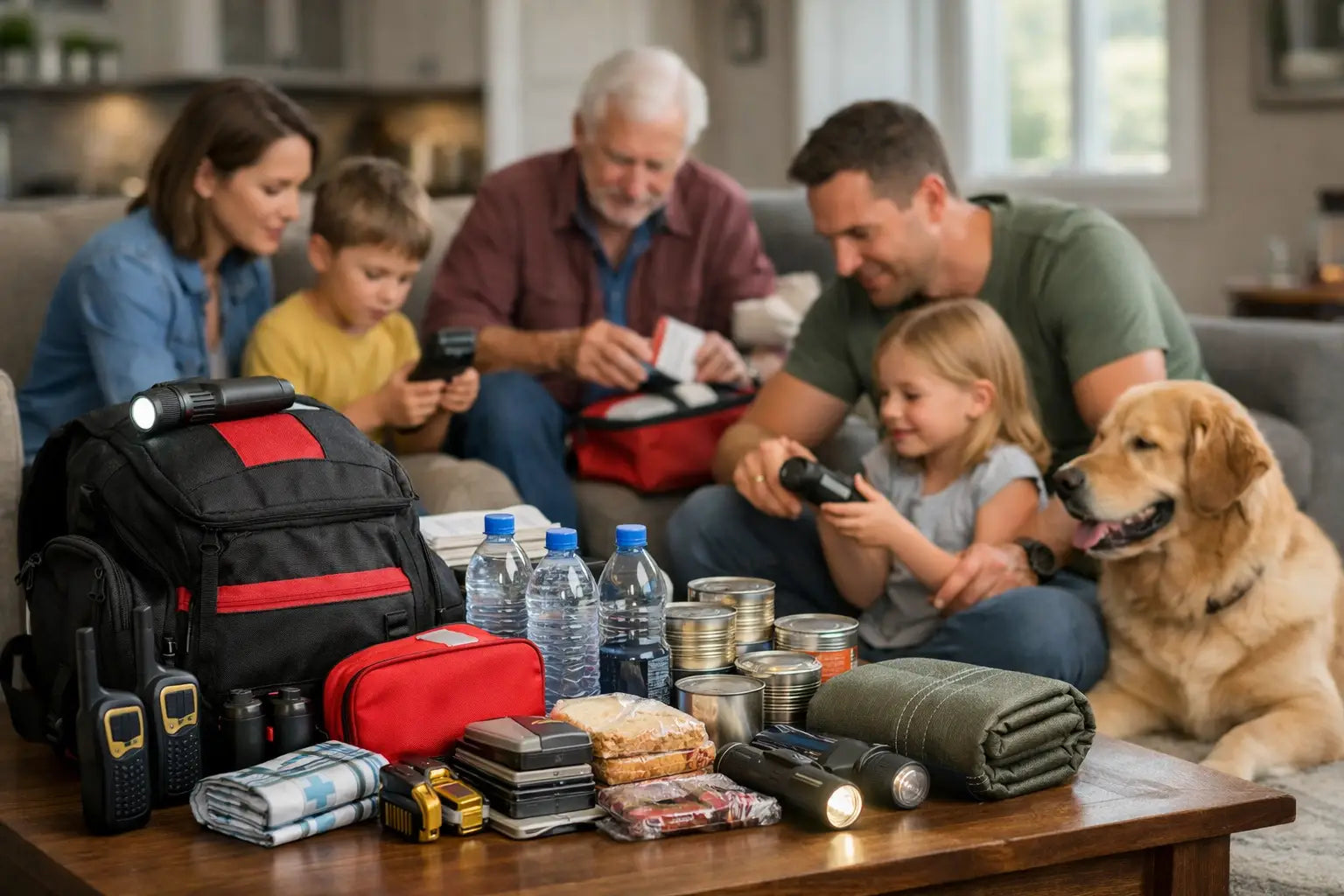
The first night of a power outage usually reveals the gaps. Phones run low, the fridge gets warmer, children want to know what happens next, and a single flashlight gets passed from room to room. Family disaster readiness is not about predicting the worst. It is about making ordinary disruptions less stressful because your household already has the basics handled.
A good plan does not need to begin with a garage full of gear. It begins with a realistic look at your home, the people in it, and the emergencies most likely where you live. A family in hurricane country needs a different emphasis than one near wildfire zones or in a northern area prone to ice storms. The core needs, however, stay remarkably consistent: water, food, light and power, medical supplies, warmth or cooling, communication, and a clear plan.
Start Family Disaster Readiness With the First 72 Hours
Three days is a practical first milestone. It is long enough to cover many outages, road closures, and short-term evacuations, while still being manageable for a new household plan. Once those first 72 hours are covered, build toward one or two weeks without trying to buy everything at once.
Start with water. A useful baseline is one gallon per person per day for drinking and basic sanitation. That means a family of four needs at least 12 gallons for three days, plus additional water for pets, formula-fed babies, or family members with medical needs. Store part of that supply in portable containers. A large water barrel is valuable at home, but it will not help much if an evacuation order arrives.
Food comes next, but think beyond calories. Choose familiar shelf-stable meals that your family will actually eat, including options that require little or no cooking. Canned goods, ready-to-eat meals, rice, beans, nut butters, soups, and freeze-dried foods can all have a place. The right mix depends on your storage space, budget, dietary needs, and whether you have a reliable way to heat water during an outage.
Keep a manual can opener with your food. It sounds small until the electric opener is useless. Also rotate what you store by putting newly purchased items behind older ones and using the oldest food in normal meals. Emergency food should not become a forgotten collection of expired cans.
Build Around the Disasters You Actually Face
National advice is helpful, but local risks should shape your priorities. A household in Florida or the Carolinas may need more water storage, storm shutters, portable power, and an evacuation plan. In California, Oregon, or other wildfire-prone areas, quick evacuation, smoke protection, and copies of important documents may rise to the top. Families in Tornado Alley need a way to get everyone, including pets, to a safe interior space quickly.
Winter storms create a different set of problems. Heat, safe indoor cooking, pipe protection, warm bedding, and medication access may matter more than a fast departure. Earthquake planning puts more weight on securing heavy furniture, knowing how to shut off utilities, and keeping shoes, flashlights, and a basic first aid kit near beds.
Do not build one generic kit and call the job finished. Create two layers: supplies that stay home for sheltering in place, and evacuation bags that can leave with each family member. The home supply supports a longer disruption. The bags help when staying is no longer the safe choice.
Make evacuation bags personal
An evacuation bag should be light enough for its owner to carry and practical enough to use. Adults can carry water, food, a flashlight or headlamp, charging cables, medications, basic toiletries, a change of clothes, copies of documents, and cash in small bills. Children need age-appropriate versions, plus comfort items that will make a frightening change easier to manage.
If you have infants, plan for formula, bottles, diapers, wipes, and any special feeding supplies. For older adults, include an updated medication list, spare glasses, mobility items, and items needed for hearing aids or other devices. Pets need food, water, leashes, carriers, vaccination records, and a familiar blanket or toy. They are not an afterthought in the plan.
Solve the Power Problem Before the Lights Go Out
Power outages are rarely only about lighting. They affect refrigeration, communication, garage doors, medical devices, work arrangements, cooking, and sometimes water. Start simply with reliable flashlights or headlamps, spare batteries, power banks, and battery-powered radios. Headlamps are especially useful because they leave both hands free for cooking, first aid, or helping a child.
From there, consider backup power based on the loads that matter most. A compact power station may keep phones, lights, a modem, or a small medical device running. A larger system can support selected appliances, but it costs more and requires more planning. A generator can be useful for longer outages, yet it needs safe outdoor placement, fuel management, and strict carbon monoxide awareness. Never run fuel-burning equipment in a garage, basement, or near open windows.
The trade-off is straightforward: larger systems provide more capability but take more money, space, and maintenance. Start by listing the devices your family truly cannot do without. You may find that keeping communications, lighting, medication refrigeration, and a few basic appliances operating is a more attainable goal than powering the entire house.
Put Medical and Communication Plans on Paper
A well-stocked first aid kit is more useful when adults know where it is and what is inside. Include supplies for common cuts, burns, sprains, fever, and stomach illness, then adjust for your household. Keep prescription medications replenished where possible, and store a printed list of prescriptions, allergies, doctors, insurance details, and emergency contacts in a waterproof pouch.
Communication plans should be simple enough that children and grandparents can follow them. Choose an out-of-area contact who can serve as a check-in person if local calls are overloaded. Pick two meeting places: one just outside the home for a fire or sudden evacuation, and one outside the neighborhood if you cannot return. Write addresses and phone numbers down. A dead phone turns a saved contact list into a blank page.
Talk through who picks up children if school closes early, who checks on nearby relatives, and where pets go if a shelter cannot take them. These conversations can feel awkward until the day they save everyone from guessing.
Organize Supplies So They Work Under Stress
Preparedness supplies do not help if they are scattered across closets. Designate a visible, accessible storage area and label containers by purpose: water, food, first aid, lighting, cooking, and evacuation. Avoid keeping everything in the garage if extreme heat, freezing temperatures, or moisture could damage it.
A quick household inventory once or twice a year is enough for most families. Replace expired food and medications, check batteries, recharge power stations, update documents, and make sure children’s clothes still fit. Pair the review with a familiar seasonal routine, such as daylight saving time, back-to-school season, or the start of hurricane season.
This is also the time to practice. Spend one evening using only emergency lighting. Have each family member find their evacuation bag. Turn off the Wi-Fi for an hour and see whether everyone knows the meeting plan and the out-of-area contact. Practice exposes small problems while solutions are still easy.
A Practical Way to Start This Week
If the whole project feels expensive, begin with the items that solve the most immediate problems. Build a three-day water supply, add foods your family already eats, assemble a dependable first aid kit, and make sure every bedroom has light. Then add portable charging, a radio, backup cooking options, and larger water or food reserves as your budget allows.
SHTF Prepper Club exists for families taking that steady approach: start small, choose dependable equipment, and build a system that fits real life. A $200 starter setup that is organized and maintained is far more valuable than a costly collection of supplies nobody can find or use.
The goal is not to live on edge. It is to know that when the next storm, outage, or evacuation notice interrupts an ordinary day, your family has water to drink, food to eat, a way to communicate, and a plan that begins with calm.