
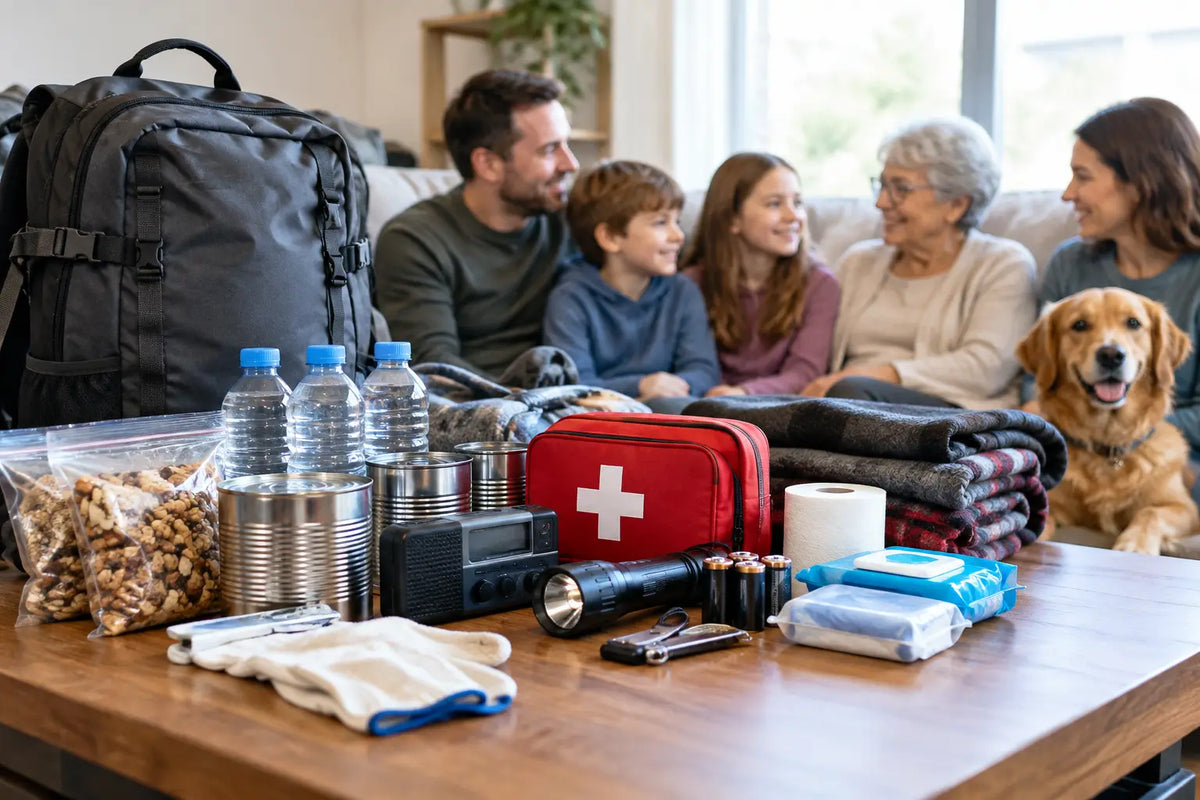
A flashlight and a case of water are a start. But when school is closed, the power has been out for two days, and the grocery shelves are thin, they are not a complete plan. An emergency preparedness kit for family use should help everyone in your household stay safe, hydrated, fed, warm or cool, informed, and able to make good decisions without a last-minute rush.
The goal is not to prepare for every imaginable event. It is to cover the basics for the disruptions families actually experience: storms, outages, wildfire smoke, evacuation orders, water interruptions, and short-term shortages. Start with three days if you are starting from zero. Build toward two weeks at home as your budget and storage space allow.
Start With Your Family, Not a Generic Checklist
A kit works only if it fits the people relying on it. A household of two healthy adults needs a different setup than a family with a toddler, a teenager with asthma, an elderly parent, two dogs, and a long commute home.
Take ten minutes to write down who may be in your home during an emergency. Include regular visitors, pets, and anyone who depends on medication, mobility equipment, refrigerated insulin, CPAP power, formula, or a specific diet. Then consider the most likely problems where you live. A Florida family may prioritize hurricane evacuation and humidity. A Colorado household may need dependable warmth during a winter outage. In California, smoke protection and quick evacuation may matter most.
This simple exercise prevents a common mistake: buying a prepacked kit, putting it in a closet, and discovering later that it has no pet supplies, no child-sized masks, no way to charge a phone, or food no one can eat.
Water Comes First in an Emergency Preparedness Kit for Family Use
Plan for at least one gallon of water per person per day. That includes drinking and basic sanitation. Three days is the minimum practical target for an evacuation or short disruption. A two-week home supply is a stronger goal, especially in areas with hurricanes, earthquakes, or winter weather that can delay deliveries.
Stored water is the simplest layer. Use purpose-built containers that are easy for one adult to carry, and avoid creating one massive tank you cannot move or rotate. Keep some smaller bottles for evacuation and some larger containers for sheltering at home.
Then add a way to make questionable water safer. A quality water filter and backup purification treatment give your family options if stored water runs low. Filters and treatments have different limits, so read their instructions before an emergency. Some are designed for bacteria and protozoa, while viruses, chemicals, and sediment may require another approach. If you rely on a private well, remember that a power outage may stop the pump even when the well itself is fine.
Food Should Be Familiar, Shelf-Stable, and Easy to Make
Emergency food is not about eating perfectly for a week. It is about keeping your family fueled when cooking, shopping, and refrigeration are limited. Build around shelf-stable food your household will genuinely eat: ready-to-eat meals, canned proteins, nut butter, rice, beans, soups, fruit, crackers, oatmeal, and comfort foods that make a stressful evening easier.
Long-term food storage adds useful depth, particularly for larger households or those who want more independence from repeated supply disruptions. Freeze-dried meals, pantry staples in long-life packaging, and ingredients you normally cook with can extend your supply without taking over the kitchen.
The trade-off is preparation. Some emergency foods need hot water, extra water, or longer cooking time. Keep a manual can opener and a simple way to heat food outdoors or in a properly ventilated space. Never use charcoal grills, camp stoves, or fuel-burning appliances inside the home, garage, or enclosed porch. Carbon monoxide is odorless and dangerous.
Rotate what you store. A practical system is to use a few items from your pantry each month and replace them on the next shopping trip. Food that gets eaten and replaced is more valuable than expensive food forgotten in a basement.
Plan for the First 72 Hours of a Power Outage
Most families notice an outage first because the house gets dark, the refrigerator starts warming, and every phone battery suddenly matters. Your kit should make those first hours less chaotic.
Keep flashlights or headlamps where family members can find them without searching. Headlamps are especially helpful for cooking, checking a breaker, helping a child, or administering first aid because they leave both hands free. Store extra batteries in their original packaging and test lights twice a year.
A portable power station can keep phones, lights, medical devices, and small electronics running. The right size depends on what you need it to power and for how long. Charging phones is a modest job. Running a refrigerator, space heater, or medical equipment requires careful capacity planning. If a family member depends on powered medical equipment, speak with their care provider and make a dedicated backup-power plan rather than assuming a general-purpose battery will cover every need.
A battery-powered or hand-crank radio is worth having when cell networks are congested or local information is changing quickly. Store charging cords, a vehicle charger, and a printed contact list together. Your phone may hold the information you need, but only while it has power and service.
First Aid Means More Than Bandages
A basic first-aid kit is essential, but families should go one step further. Include supplies for common injuries and a plan for ongoing medical needs. That may mean children’s fever medicine, spare glasses, an inhaler, wound-cleaning supplies, electrolyte packets, or backup batteries for hearing aids.
Keep a written list of prescriptions, dosages, allergies, medical conditions, and doctors' contact information in a waterproof pouch. If possible, maintain an extra supply of critical medications within the limits of your prescription and insurance rules. Check dates regularly and replace items as you use them.
Choose a first-aid kit that matches your comfort level. A well-stocked kit is helpful, but only if you know what the contents are for. Taking a local CPR and first-aid class may be one of the most useful preparedness purchases your family makes.
Build an Evacuation Bag Alongside Your Home Supplies
Home supplies and evacuation supplies solve different problems. Your pantry and water storage help when you can safely stay home. An evacuation bag helps when leaving is the safer choice.
Each person should have a manageable bag with weather-appropriate clothes, sturdy shoes, water, ready-to-eat food, medications, hygiene items, a flashlight, a phone charger, copies of key documents, and a small amount of cash. For children, add a comfort item, a simple activity, and any needed care supplies. For pets, pack food, a bowl, leash, medication, vaccination records, and a carrier if appropriate.
Keep documents in a waterproof folder: identification, insurance information, property records, emergency contacts, and copies of medical information. Digital copies are useful, but a printed backup still matters when batteries or networks fail.
Do not make bags so heavy that they stay behind. A smaller bag you can grab quickly is better than an ambitious pack no one can carry. Revisit clothing and supplies at the change of seasons.
Store It Where It Can Actually Be Used
Organization turns supplies into a working system. Keep daily-use emergency items in a central, easy-to-reach location. Store deeper food and water reserves where temperatures are stable and containers will not freeze, overheat, or be damaged by moisture.
Label bins by purpose: water, lighting and power, first aid, food, sanitation, and evacuation. This helps an adult find what they need quickly and lets older children participate without confusion. A simple paper inventory taped inside a cabinet door can prevent duplicate purchases and reveal gaps.
SHTF Prepper Club encourages families to build in layers. Begin with water, light, food, and first aid. Add filtration, backup power, warmth, cooking, and longer-term food storage over time. A $200 start that is maintained is far more useful than a costly setup purchased in panic and never checked.
Check Your Kit Before It Is Urgent
Set a reminder twice a year, perhaps when clocks change, to inspect your supplies. Test lights and power stations, rotate food and water, update documents, replace expired medications, and adjust sizes for growing children. Ask everyone a few practical questions: Where do we meet if we are separated? Who picks up the kids if school closes? Which neighbor has a generator? Where is the shutoff for water or gas?
Preparedness becomes less intimidating once it is part of normal household maintenance. Start with the next likely disruption, not the most dramatic one. A few well-chosen supplies, stored thoughtfully and checked regularly, can give your family something valuable when plans change fast: steadiness.