
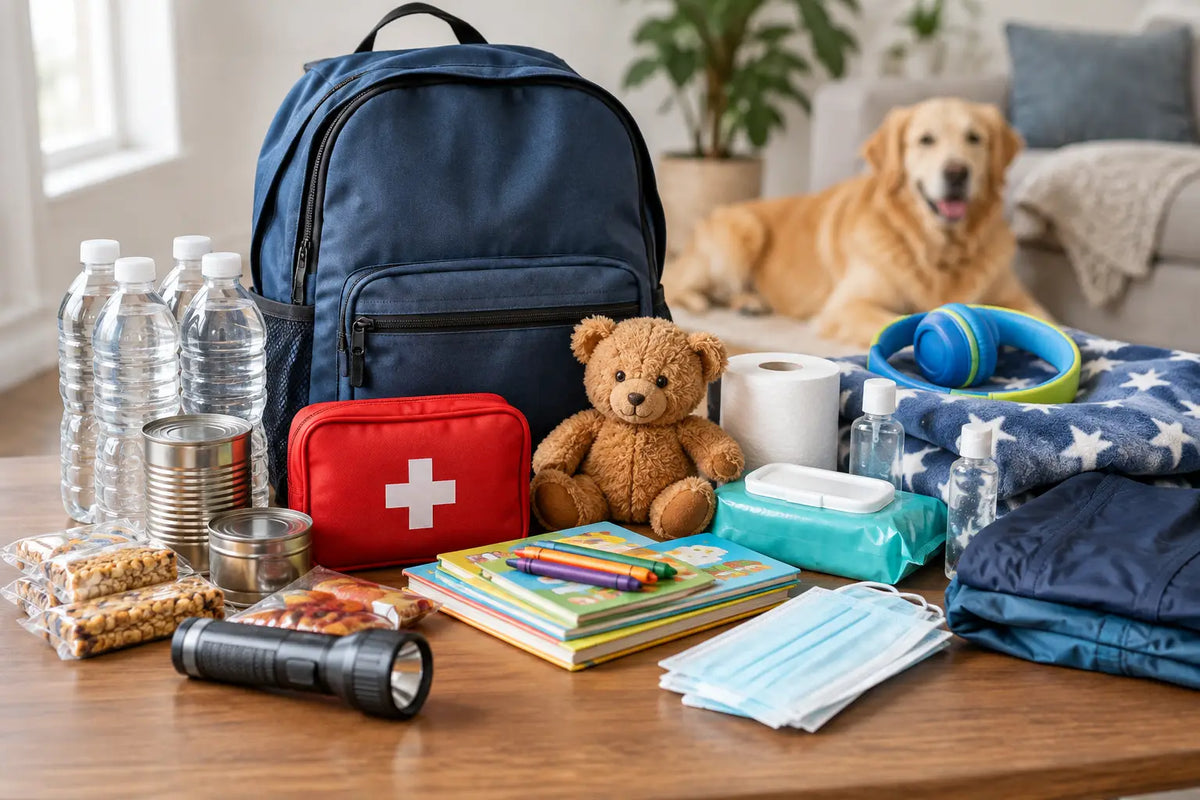
The hard part of an emergency is rarely finding one more flashlight. It is keeping a tired, thirsty, frightened child comfortable enough to listen, rest, and move safely with the family. An emergency kit for kids helps solve that problem before a hurricane warning, wildfire evacuation, winter outage, or earthquake puts everyone under pressure.
A child’s kit should not be a miniature version of an adult survival pack. It needs to reflect their age, size, medical needs, routines, and ability to carry weight. It should also give them a small, appropriate role in the family plan. That sense of familiarity can make a difficult day feel more manageable.
Start with the emergency your family is most likely to face
The best kit depends on where you live and how your family may need to respond. A family in Florida may need quick evacuation supplies during hurricane season. A household in the Midwest may be more concerned with tornado sheltering and long winter power outages. In wildfire country, clean air, sturdy shoes, and a ready-to-go evacuation bag deserve extra attention.
Begin with a simple goal: prepare for 72 hours away from home, while also keeping enough basics at home for an extended disruption. Your child’s portable kit should be easy to grab, not packed so heavily that it becomes another burden during an evacuation.
For younger children, a parent or caregiver will carry most of the essentials. School-age kids can carry a small backpack with their comfort items, water, snacks, and a few personal supplies. Teenagers can usually manage a more complete kit and help with family tasks such as charging devices, filling water containers, or checking on pets.
Emergency kit for kids: the practical essentials
Think in layers. First cover health, water, food, warmth, and communication. Then add the familiar items that help your child feel secure.
A well-planned child kit usually includes these core supplies:
- Water in child-friendly containers, plus a reliable way for the adults to treat or filter additional water
- Shelf-stable foods your child will actually eat, such as protein bars, applesauce pouches, crackers, nut-free snacks, or ready-to-eat meals appropriate for their age
- A small first-aid pouch with bandages, antiseptic wipes, blister care, and any necessary personal medical items
- A headlamp or flashlight with simple controls, extra batteries, and a glow stick for younger children
- Weather-appropriate layers, including socks, a rain poncho, a warm hat, gloves, and a compact blanket or sleeping bag
- Basic hygiene supplies, such as tissues, hand sanitizer, wipes, a toothbrush, and feminine products for older children
- A printed family contact card and a recent family photo that can help if family members become separated
Water deserves special attention. Children become dehydrated faster than adults, particularly in heat or when they are upset and active. Keep a reasonable amount of ready-to-drink water in the kit, but do not try to make a child carry a three-day supply. That is where the family’s larger water storage and filtration plan matters. The child kit is for immediate access. The household system carries the bigger load.
Medical needs are personal
If your child takes prescription medication, has severe allergies, uses an inhaler, or needs medical equipment, build the kit around that reality first. Keep a written medication list with doses, prescribing doctors, pharmacies, allergies, and insurance information. A medical ID bracelet or card can also be useful when a child is old enough to be away from you briefly.
Ask your pediatrician or pharmacist how to handle emergency medication storage, especially if it requires refrigeration. Do not leave prescription medications in a car or a hot garage. Check expiration dates on a regular schedule, and keep supplies in their original labeled containers when possible.
For infants and toddlers, add formula, bottles, diapers, wipes, diaper cream, a changing pad, and a familiar comfort item. Breastfeeding families may still benefit from a manual pump, storage supplies, and clean water arrangements. The right answer depends on your routine, but the planning principle is the same: protect the routines your child depends on.
Pack comfort on purpose
A small stuffed animal may not look like preparedness gear. During a long night without power or an unexpected stay in a hotel or shelter, it can be exactly that.
Include one or two lightweight comfort items: a soft toy, small blanket, card game, coloring book, crayons, paperback book, or a family photo. For older children, a journal, deck of cards, headphones, or downloaded entertainment can help pass the time. Keep expectations realistic. Devices are useful, but battery power and internet service may be limited.
Comfort is not an extra. It supports sleep, emotional regulation, and cooperation. The goal is not to distract children from every hard moment. It is to give them familiar anchors while adults handle the bigger decisions.
Let your child help choose these items, within limits. A child who helped pack the bag is more likely to know where it is and less likely to be afraid of it. You can say, “This is our just-in-case bag. We hope we never need it, but it helps us take care of each other if plans change.” That is calm, honest language without adding fear.
Keep the bag light, labeled, and easy to reach
A kit that is buried in the attic is not an evacuation kit. Store it near the main exit, in a hall closet, or another location every adult in the home can reach quickly. If your family uses more than one vehicle, consider keeping a small backup kit in each car, especially in areas with severe weather or long commutes.
Label each child’s bag with their name and your phone number. If they are old enough, add a card with the names and numbers of trusted relatives or friends outside your immediate area. Teach them that if phones are not working, they should stay with a trusted adult, school staff member, or first responder rather than trying to find home alone.
Weight matters. A six-year-old does not need a full-size sleeping bag, large water bottle, and heavy battery bank on their back. They need a small, comfortable pack that they can carry without falling, tiring quickly, or refusing to wear it. Adults should plan to carry the heavier water, food, shelter, and medical supplies.
Build a plan around the kit
Supplies help, but children also need to know what will happen next. Practice the basics once or twice a year without turning it into a frightening drill. Show them where the kit lives, where to meet outside the home, and who will pick them up if you cannot reach school or daycare immediately.
Talk through likely situations in plain language. During a tornado warning, you go to the safe room. During a wildfire evacuation, shoes go on, pets come with you, and the family meets at the car. During a power outage, you use flashlights instead of candles and keep refrigerator doors closed. Repetition turns instructions into something familiar.
If your child has sensory sensitivities, anxiety, or developmental needs, make the plan more specific. Add noise-reducing headphones, familiar snacks, visual routine cards, or a communication device backup. There is no one-size-fits-all family kit. A good plan accounts for the child you have, not an imaginary average child.
Review it before it becomes urgent
Put a reminder on the calendar at the start and end of daylight saving time, before hurricane season, or around each child’s birthday. Check clothing sizes, replace expired food and batteries, update contact cards, and refresh medical supplies. Ask your child whether their comfort item still feels comforting. A favorite stuffed animal at age five may become a deck of cards at age ten.
SHTF Prepper Club encourages families to start with the essentials, then improve the system over time. You do not need to assemble a perfect setup in one weekend. A basic, current kit that your family understands is far more useful than an expensive bag filled with gear nobody has practiced using.
Set aside 20 minutes this week. Choose a backpack, add water, familiar snacks, a light, basic medical items, and one comfort item. Then show your child where it goes. That small act of preparation can make a future hard day feel much less uncertain.