
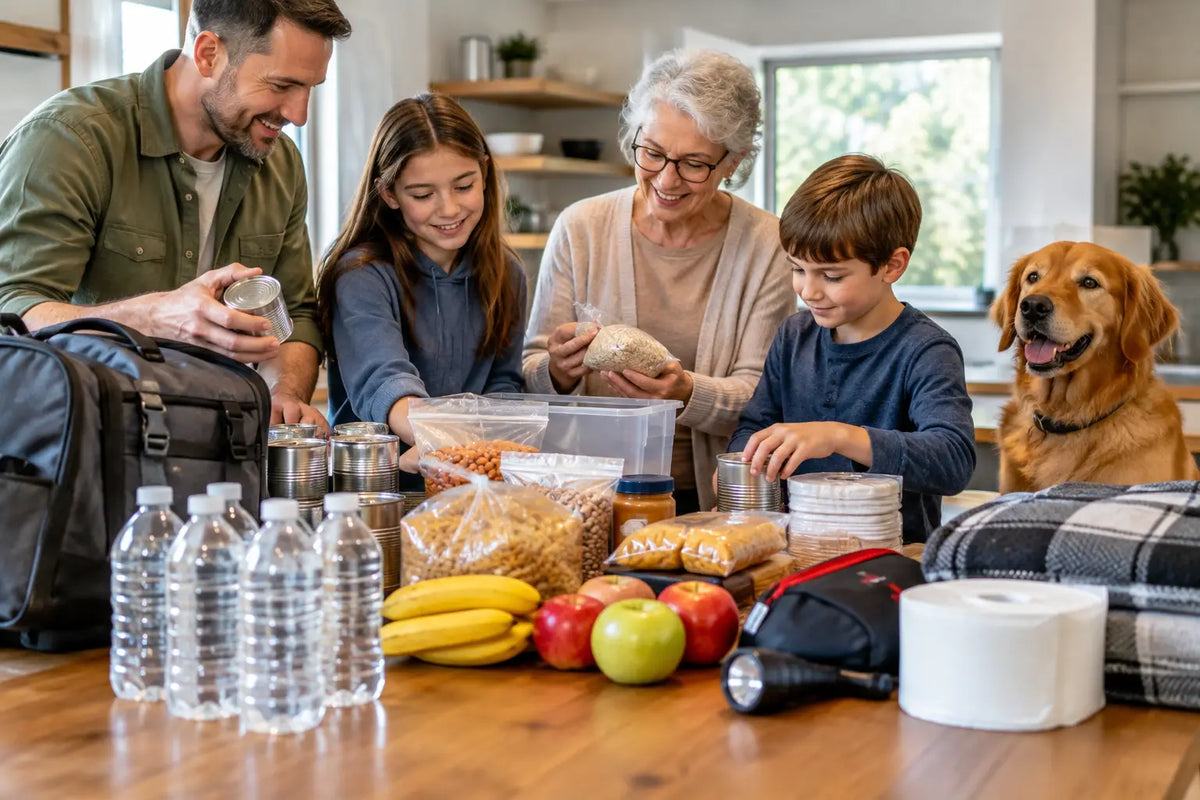
The first dinner after a storm is rarely the hard part. The challenge comes on day three, when the power is still out, stores are short on basics, your kids are tired of snack food, and everyone wants something warm and familiar. An emergency food supply for your family is not about preparing for a dramatic scenario. It is about making sure your household can eat well enough when normal routines pause.
Start with the disruption you are most likely to face. A hurricane, wildfire evacuation, ice storm, extended power outage, or temporary supply shortage all create different problems. But the foundation is the same: food your family recognizes, can prepare with limited utilities, and will actually eat.
Start With a Family Emergency Food Supply Goal
A sensible first target is two weeks of food for every person in your home. That is enough to cover many weather emergencies and local disruptions without turning preparedness into an expensive, overwhelming project. If two weeks feels like a stretch, begin with three days, then add a few meals or pantry items each month.
Do not calculate by bags of food alone. Think in meals and calories. Most adults need roughly 1,800 to 2,400 calories per day, depending on age, activity, and health. Teenagers, active adults, pregnant or nursing parents, and people doing cleanup or physical work may need more. Young children generally need less, but they still need dependable meals, familiar snacks, and enough fluids.
For a family of four, a 14-day supply means planning for 168 meals, plus snacks. That number sounds large until you break it into breakfast, lunch, dinner, and simple options between meals. The goal is not a perfectly calculated menu. It is a dependable cushion that does not rely on one trip to an empty grocery store.
Plan for the people you actually feed
Your emergency pantry should reflect your household, not a generic checklist. If someone has diabetes, celiac disease, food allergies, kidney disease, or another dietary need, build around foods they can safely eat. Do not assume an emergency makes medical nutrition less important.
Include infant formula, baby food, or easy-to-chew foods if needed. Grandparents may need low-sodium choices or shelf-stable nutrition drinks. Pets need their own supply too. A hungry dog, cat, or backyard flock is not a small detail when roads are closed or shelves are bare.
Build Meals, Not a Shelf of Random Cans
Canned soup is useful. So is peanut butter. Neither is a complete plan by itself. A family food supply works better when it is organized around meals you can make under ordinary conditions and simplified meals you can make when cooking is limited.
Start with foods your family already uses: canned chicken, tuna, beans, vegetables, fruit, pasta, rice, oats, cereal, nut butter, shelf-stable milk, broth, sauces, crackers, and familiar seasonings. Add foods that require little or no cooking, such as canned chili, ready-to-eat meals, granola, applesauce, jerky, and individual fruit cups.
Then add longer-term food storage. Freeze-dried meals, dehydrated ingredients, and properly stored bulk staples can give your family more variety and a much longer shelf life. They are especially useful if you want to grow beyond a short-term pantry without constantly replacing everything. The trade-off is that many freeze-dried foods need water, and bulk ingredients require more planning and cooking ability.
A good supply has layers. Your first layer is everyday pantry food you rotate often. Your second is shelf-stable food set aside for outages and short disruptions. The third is long-term storage for a larger emergency or for families working toward greater food independence.
Keep comfort food in the plan
Familiar food matters when people are stressed. Coffee, tea, hot cocoa, shelf-stable treats, favorite cereal, and a few simple desserts can make a difficult week feel more manageable. This is not frivolous. A warm drink and a recognizable breakfast can steady a child who is anxious about a dark house or a change in routine.
That said, comfort food should support the plan, not replace it. Prioritize protein, calories, fiber, and foods with vitamins and minerals before filling bins with snack cakes and candy.
Match Your Food to Your Cooking Options
Food storage and water planning belong together. Many families buy dry staples or freeze-dried meals, then realize they have not stored enough water to prepare them. Keep drinking water separate from cooking water in your calculations.
A common baseline is one gallon of water per person per day for drinking and basic sanitation. In hot climates, with pets, or when cooking heavily from dry food, you may need more. Store what your space allows, then add a reliable way to filter and treat additional water when appropriate.
Next, look honestly at how you would cook. During a power outage, an electric stove, microwave, and standard coffee maker may be useless. A propane camp stove, outdoor grill, solar generator paired with suitable cooking equipment, or compact fire-safe cooking setup can make a major difference. Use any fuel-burning equipment outdoors and away from doors, windows, and garages. Carbon monoxide is a real household danger.
If you do not have an alternate cooking method yet, lean more heavily on ready-to-eat foods. You can still build an excellent emergency pantry around items that open, serve, and require no heat.
Store It Where You Can Reach It
The garage is not always the answer. Extreme heat can shorten shelf life, and freezing temperatures can damage canned goods. A cool, dry, dark interior closet, basement, pantry, or under-bed storage area is usually better.
Organize food so it is visible and usable. Label bins by meal type or category: breakfasts, no-cook meals, dinner ingredients, snacks, special diets, and pet food. Put a simple manual can opener in the same place. If a meal needs water, fuel, or a specific pot, keep a note with the food so no one has to remember details during a stressful evening.
Rotation is what turns stored food into a practical household system. Use the oldest everyday items first and replace them on your normal grocery runs. Check dates twice a year, perhaps when clocks change or before hurricane and winter-storm seasons. Long-term foods generally need less frequent rotation, but they still deserve an occasional inspection for damaged packaging, pests, moisture, or temperature exposure.
Avoid the Most Common Gaps
The biggest mistake is buying food based only on shelf life. A 25-year bucket is valuable only if your family can prepare it, has the water for it, and is willing to eat it. Try unfamiliar items before relying on them.
Another gap is forgetting the first 24 hours. Keep several meals that need no water, no heat, and no preparation beyond opening a package. Evacuations, boil-water notices, and sudden outages do not always leave time to set up cooking gear.
Finally, do not put every meal in one location. A main supply at home makes sense, but a small amount of food in each vehicle and in your evacuation bags provides flexibility if your family needs to leave quickly. Keep vehicle food appropriate for local temperatures and replace it regularly.
A Realistic Way to Begin This Month
Begin with one week of meals your household already likes. Add a case or two of water, a manual can opener, and several no-cook options. Then make one small upgrade each grocery trip: extra protein, breakfast staples, a few vegetables, or a long-term meal option.
If your budget allows, a curated family food kit can create a reliable starting point quickly. SHTF Prepper Club recommends treating kits as a foundation, then personalizing the supply with your family’s favorite foods, special-diet items, and everyday pantry staples. No prebuilt kit knows your child’s safe snacks or your spouse’s coffee preferences better than you do.
Preparedness does not need to happen in one large purchase. A labeled shelf with food your family will eat is a meaningful first step. Build it patiently, test a few meals, and let the plan become part of how your home already works.