
Last Updated: November 5, 2026
Quick Summary
Climate controlled storage keeps temperature and humidity within a steady range, ideally in the 60s to low 70s Fahrenheit with relative humidity under about 50%. That stability prevents heat and moisture from degrading batteries, electronics, food, and metal parts in your emergency gear. Confirm the unit itself is climate controlled and ask about outlets and backup power before signing.
- Humidity does most of the damage to stored gear, so keep relative humidity under about 50%.
- Ask whether the unit itself is climate controlled or only the building.
- Check a hygrometer reading on every visit and log it.
- Prioritize 24-hour access if your kit includes medical equipment or you live in a hurricane or wildfire zone.
- Start with a written inventory so you can rotate food and water on a schedule.
Table of Contents
- Why Climate Controlled Storage Matters for Emergency Gear
- Quick Comparison: Top Climate Controlled Storage Chains
- How to Store Emergency Gear Long Term Without Ruining It
- Choosing a Climate-Controlled Storage Unit With Electricity
- How to Find the Best Climate Controlled Storage Units Near Me
- When You Need 24-Hour Climate-Controlled Storage Units
- Building Your Emergency Gear Storage Plan With SHTF Prepper Club
- Frequently Asked Questions
Why Climate Controlled Storage Matters for Emergency Gear
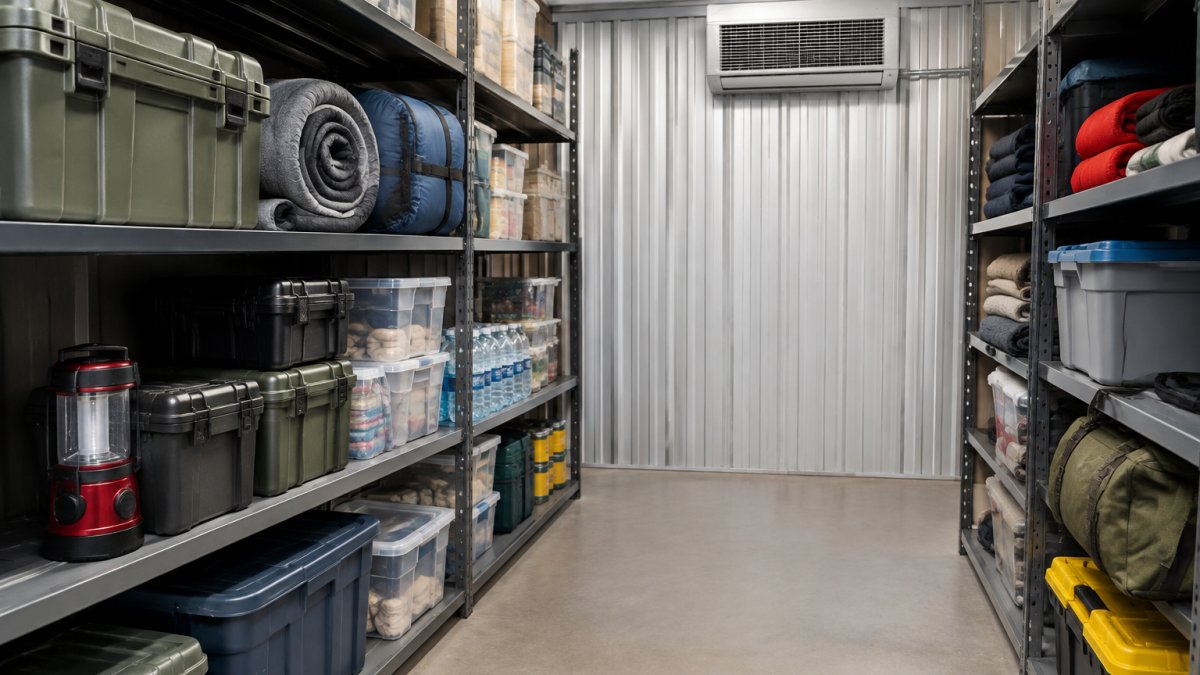
Climate controlled storage is a unit that keeps temperature and humidity within a steady range instead of letting both swing with the weather. For emergency gear, that stability is the difference between a kit that works in year ten and a kit that fails in year two.
Heat and moisture attack emergency equipment quietly, and the damage is usually invisible until the moment you need it.
Below, we break down what actually ruins stored gear, how the major storage chains compare, and how to build a unit setup that holds up for years.
How Temperature and Humidity Destroy Emergency Supplies
Two forces do most of the damage: heat and moisture. Neither announces itself.
Heat degrades batteries and electronics. It also shortens the shelf life of stored food and can warp or weaken plastic components in water filters and lanterns. Moisture is worse. It corrodes metal parts, feeds mold and mildew growth, and turns paper records and instructions into pulp.
The National Weather Service heat safety guidance is written for people, but the physics apply to gear too: sustained high temperatures accelerate breakdown in anything heat-sensitive.
If you want to see how fast humidity ruins paper, read our breakdown on how to protect paper records from humidity. The same mechanism eats cardboard food packaging and printed manuals.
The Thresholds That Actually Matter: Humidity vs. Temperature
Temperature gets all the attention. Humidity does most of the damage.
A practical target for stored emergency gear is a stable ambient temperature, ideally in the 60s to low 70s Fahrenheit, with relative humidity kept under about 50%. Above that, mold prevention becomes a real concern and corrosion speeds up.
Garages and sheds in humid climates can sit above 60% relative humidity for extended periods, which is why a climate-controlled environment is worth considering.
Quick Comparison: Top Climate Controlled Storage Chains
Here is how the major chains stack up on the features that matter for emergency gear. Prices vary by facility and unit size, so treat these as starting points and confirm current rates with each location.
| Chain | Climate Control | Electricity in Unit | Best For | Note |
|---|---|---|---|---|
| SHTF Prepper Club | N/A (gear curation) | N/A | Vetted gear and storage planning | Not a storage facility |
| Extra Space Storage | Yes | Varies by facility | Comparing many nearby locations | Wide facility count |
| Public Storage | Yes | Varies by facility | Established national brand | Confirm unit specs locally |
| U-Haul Storage | Yes | Varies by facility | Documents, electronics, photos | Wide availability |
| CubeSmart | Yes | Varies by facility | Budget-conscious renters | Named a budget pick in comparisons |
| Go Store It | Yes | Varies by facility | Modern facilities | Confirm climate settings |
| StorageMart | Yes | Varies by facility | Readers' choice recognition | Confirm unit specs |
| 10 Federal Storage | Yes | Varies by facility | Readers' choice recognition | Confirm unit specs |
| Storelocal | Yes | Varies by facility | Prepper-focused content | Confirm unit specs |
Our take: SHTF Prepper Club is not a storage chain. What we do is curate the gear that goes into the unit and help families plan what belongs in it.
How to Store Emergency Gear Long Term Without Ruining It
Long-term storage works when you control three things: moisture, temperature, and access. Most people get the first two partly right and the third completely wrong.
Here is how we would set up a unit.
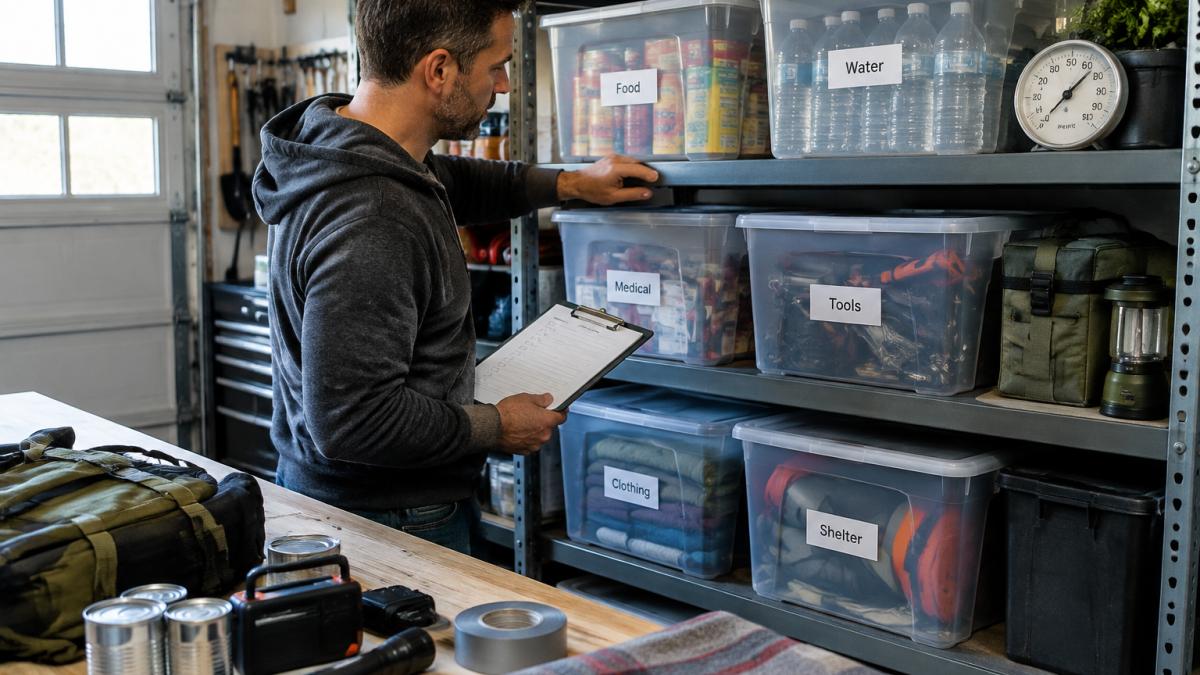
Emergency Gear Inventory List for Long-Term Storage
Start with a written inventory. If you cannot list what is in the unit, you cannot rotate it.
- Water: stored water plus purification tablets or a filter
- Food: shelf-stable kits, rotated on a schedule
- Power: batteries, a power bank, a lantern, a radio
- Medical: first aid supplies, prescription backups
- Documents: copies of IDs, insurance, and medical records
- Tools: multi-tool, duct tape, work gloves, matches
- Comfort: blankets, hygiene items, spare clothing
For a fuller list, use our shelter in place emergency supplies list. For documents specifically, our guide on how to organize important documents for disasters covers the filing and protection side.
DIY Climate Monitoring and Maintenance Protocols
You do not need expensive equipment to monitor a unit. A basic hygrometer costs little and tells you more than any facility brochure.
- Check the hygrometer reading on every visit and log it
- Inspect batteries for leakage every quarter
- Rotate food and water on a calendar, not on memory
- Open the unit and let it air out briefly during visits
- Keep desiccants in sealed bins and replace them when saturated
For more on best practices that pair with climate control, read our guide on long term water storage.
Choosing a Climate-Controlled Storage Unit With Electricity
Electricity inside the unit changes what you can store. Without it, a power bank sits dead and a backup battery is just weight.
Ask the facility four questions before signing:
- Is the unit itself climate controlled, or is only the building?
- Are there outlets inside the unit, and are they metered separately?
- What temperature range does the facility maintain?
- Is there backup power during an outage?
On that last point, our article on emergency power backup solutions for home medical equipment explains why backup power matters for anything with a battery or a medical function.
How to Find the Best Climate Controlled Storage Units Near Me
The best climate controlled storage units near you are the ones you can visit, inspect, and verify, not the ones with the best photos online.
Use this checklist when you tour:
- Ask to see the actual unit, not a model
- Confirm the temperature range in writing
- Check for a hygrometer or monitoring system on site
- Verify outlet access if you need electricity
- Confirm gate hours and 24-hour access if relevant
- Read the contract for climate-control guarantees
A common mistake is renting based on the website. Facility conditions vary widely, even within the same chain.
When You Need 24-Hour Climate-Controlled Storage Units
You need 24-hour access when your gear is part of an active plan, not a backup plan.
Families caring for elderly relatives, households in hurricane or wildfire zones, and anyone whose kit includes medical equipment should prioritize round-the-clock access. If a storm hits at 2 a.m., a unit that opens at 9 a.m. is useless.
Ask specifically whether 24-hour access includes climate control during off-hours.
Building Your Emergency Gear Storage Plan With SHTF Prepper Club
Storage is the last step. The plan comes first.
SHTF Prepper Club offers expert guidance and a curated selection of essential survival gear, including food storage, water filtration, power, and safety gear.
You do not need a perfect plan. You need a starting point and a schedule. That is what we build with families every day.
Frequently Asked Questions
Is climate-controlled storage worth it for emergency gear?
Yes, for most households. Heat and humidity degrade batteries, corrode metal tools, and shorten the shelf life of stored food and medical supplies. A climate-controlled unit keeps temperatures stable and humidity low, which protects sensitive belongings like electronics, documents, and gear with rubber or plastic components. If you have invested in quality emergency gear, climate controlled storage protects that investment from moisture damage and thermal stress.
What temperature and humidity are best for storing emergency supplies?
Aim for a stable ambient temperature between 60 and 75 degrees Fahrenheit and relative humidity below 50 percent. Fluctuations cause more damage than a steady slightly warmer temperature. Battery leakage, mold prevention, and food shelf-life all depend on keeping humidity in check. Use a cheap hygrometer inside your unit to confirm conditions, and add desiccants if readings creep above 55 percent.
Can you store batteries and electronics in a climate-controlled storage unit?
Yes, and climate control is exactly what they need. Extreme heat accelerates battery leakage and degrades electronic components, while high humidity causes corrosion on contacts and circuit boards. Store batteries in original packaging, keep them off concrete floors, and avoid stacking heavy items on top. A climate-controlled environment with steady temperature regulation extends shelf-life and reduces the chance of failure when you need power most.
How often should I inspect emergency gear in storage?
Inspect your emergency gear every three to six months. Check food packaging for swelling or damage, test flashlights and radios, verify water storage containers are sealed, and review expiration dates. Rotate inventory so older items get used first. During each visit, log the temperature and humidity readings from your hygrometer. This simple inventory rotation habit catches degradation early and keeps your long-term storage reliable.
Can I get a climate-controlled storage unit with electricity?
Many facilities offer units with electrical outlets, but availability varies by location and unit size. Ask specifically about power access when comparing facilities, and confirm whether the outlet is included in the monthly rate or billed separately. A unit with electricity lets you run a dehumidifier, charge devices, or keep a small fan moving air for air circulation. Verify the facility's policy on what equipment you can plug in before signing a lease.
The gear you store is only as good as the conditions you store it in. If you are ready to stop guessing and start with a plan, SHTF Prepper Club can help you choose vetted food, water, power, and safety gear built for long-term storage. Get started with SHTF Prepper Club and build a kit your household can actually rely on.
