
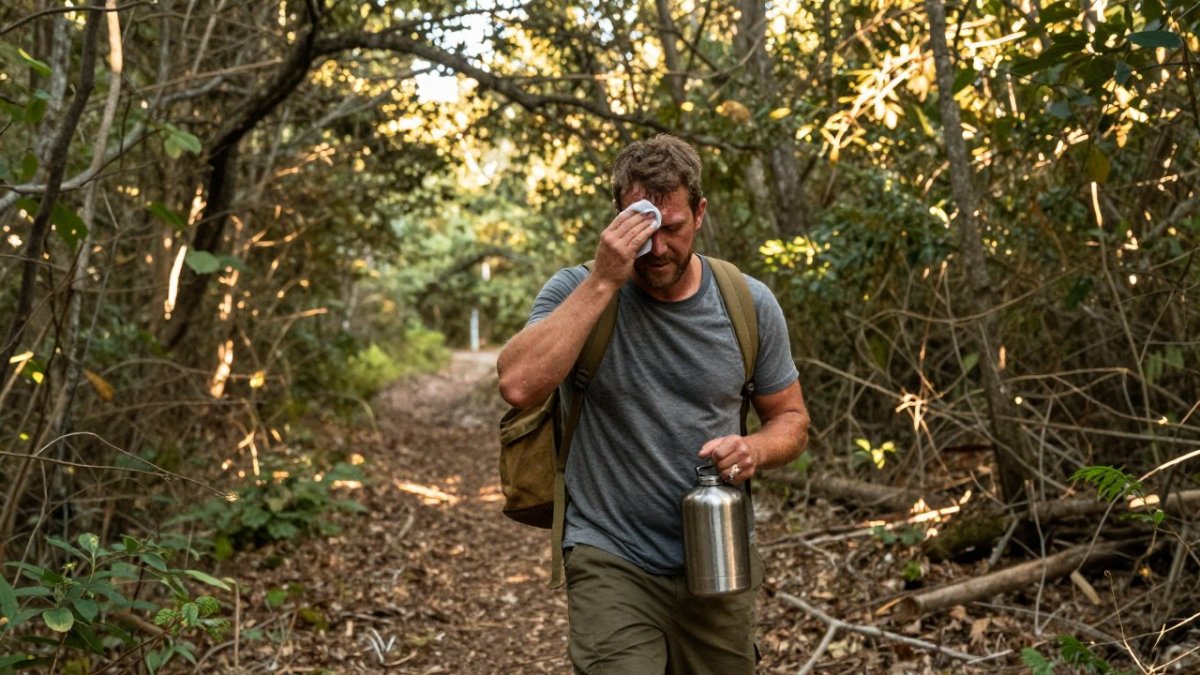
Last Updated: November 6, 2026
Quick Summary
Exercise changes your daily water needs because working muscles produce heat and your body cools itself by sweating, so that lost fluid must be replaced. Add about 16 to 24 ounces per hour of moderate activity to your baseline, plus another 8 to 16 ounces in hot or humid conditions.
- Aim for roughly half an ounce to one ounce of fluid per pound of body weight per day before exercise.
- Drink about 16 to 20 ounces in the two hours before starting a workout.
- Replace roughly 16 to 24 ounces for every pound lost during a session.
- Sweat rate can roughly double when you move from the 60s to conditions above 85°F.
- Relative humidity above 60% is where most people notice fluid loss climbing.
Table of Contents
- Why Exercise Raises Your Daily Water Needs
- How Much Water to Drink a Day Calculator for Active People
- Water Intake Before, During, and After Exercise
- Signs of Dehydration During Exercise
- Drinking Too Much Water During Exercise
- How Heat, Humidity, and Workout Duration Change Fluid Needs
- Your Next Step: Building a Family Hydration Plan
- Frequently Asked Questions
Why Exercise Raises Your Daily Water Needs
Exercise changes your daily water needs because working muscles produce heat, and your body cools itself by sweating. That sweat is water leaving your body, and it has to be replaced.
The effect is simple to state. Harder and longer workouts, hotter rooms, and more humid air all push sweat loss up. So does body size.
Sweating and fluid loss are the core mechanism here, so let's start there.
How Sweating and Fluid Loss Work During Physical Activity
Sweating is your body's cooling system. As your core temperature rises during physical activity, your skin releases fluid that evaporates and carries heat away.
Sweat is not pure water. It contains sodium and other electrolytes (Sweating Rate and Sweat Sodium Concentration in Athletes).
That matters for two reasons:
- Plain water replaces volume but not sodium
- Very long or very sweaty sessions can leave you low on both
For most workouts under an hour in mild conditions, water is enough. Push past that, and the picture changes.
How Much Water to Drink a Day Calculator for Active People
A basic daily water needs estimate starts with body weight and adds a workout allowance. Here is the simple version we recommend:
- Baseline: aim for roughly half an ounce to one ounce of fluid per pound of body weight per day, before exercise.
- Workout add-on: add about 16 to 24 ounces for each hour of moderate activity.
- Heat adjustment: add another 8 to 16 ounces if it's hot or humid.
- Check yourself: use urine color and thirst as your daily feedback loop.
That gives you a working number, not a fixed rule. Your real needs move with the weather, your workout, and how much you sweat. Readers who want to track their personalized fluid intake can compare hydration tracking apps.
A Personalized Daily Water-Needs Formula That Accounts for Exercise
A more useful approach combines your baseline need with a workout allowance that reflects duration, intensity, and climate, then adjusts with your own sweat-rate number. Use this four-part formula:
Step 1, Baseline. Multiply your body weight in pounds by 0.5 to 0.6 ounces. A 180-pound person lands at 90 to 108 ounces before exercise.
Step 2, Workout allowance. Multiply hours of exercise by an intensity factor:
- Light activity (walking, easy cycling): 16 ounces per hour
- Moderate activity (jogging, recreational sports): 24 ounces per hour
- Vigorous activity (running, interval training, heavy labor): 32 ounces per hour
Step 3, Climate multiplier. Multiply the workout allowance by 1.0 in mild conditions (under 70°F, low humidity), 1.2 in warm conditions (70-85°F), and 1.4 or more in hot or humid conditions (above 85°F or relative humidity above 60%).
Step 4, Personal correction. If you have run a sweat-rate test (below), replace the Step 2 and Step 3 estimate with your measured sweat rate multiplied by hours of exercise. Your own number beats any table.
Worked Examples for Three Different Workouts
The formula only becomes useful when you see it applied.
Example 1, Short indoor session. A 45-minute moderate indoor cycling class in a climate-controlled room.
Example 2, Long endurance workout. A 2.5-hour moderate run in mild spring weather.
Example 3, Outdoor exercise in hot weather. A 2-hour vigorous hike at 90°F with high humidity.
These are estimates, not prescriptions. Use them as a starting point, then correct with your measured sweat rate and how you feel.
A Simple Sweat-Rate Test You Can Do at Home
Want a real number instead of a guess? Run this test on a normal training day.
- Weigh yourself with little clothing before the workout. Write it down.
- Do your session as usual, and note how many ounces you drink during it.
- Towel off and weigh yourself again right after, in the same clothing.
- Subtract your after-weight from your before-weight. Each pound lost equals about 16 ounces of fluid.
- Add the ounces you drank to the pounds lost, converted to ounces. That total is your sweat loss.
- Divide by the hours of exercise. That's your sweat rate per hour.
So if you drop 2 pounds and drank 16 ounces, your total loss is about 48 ounces over a one-hour session. That's your target for replacing fluid at that intensity.
Watch out: if you urinate during the test window, that fluid counts as loss too, add it to the total or the test will overstate your sweat rate.
Planning Across the Whole Day, Not Just the Workout
Exercise hydration is not an isolated drinking window. Meals, coffee, tea, and ordinary beverages all contribute to your daily total, and most people get a meaningful share of their fluid from food. A bowl of soup, fruit, and vegetables can add several ounces each. The practical move is to spread your target across the day: a glass with each meal, a bottle at your desk, and a planned amount around your workout.
Fluid needs per hour by exercise intensity
Water Intake Before, During, and After Exercise
Start your session hydrated, sip during it, and replace what you lost afterward. That's the whole strategy in one line.
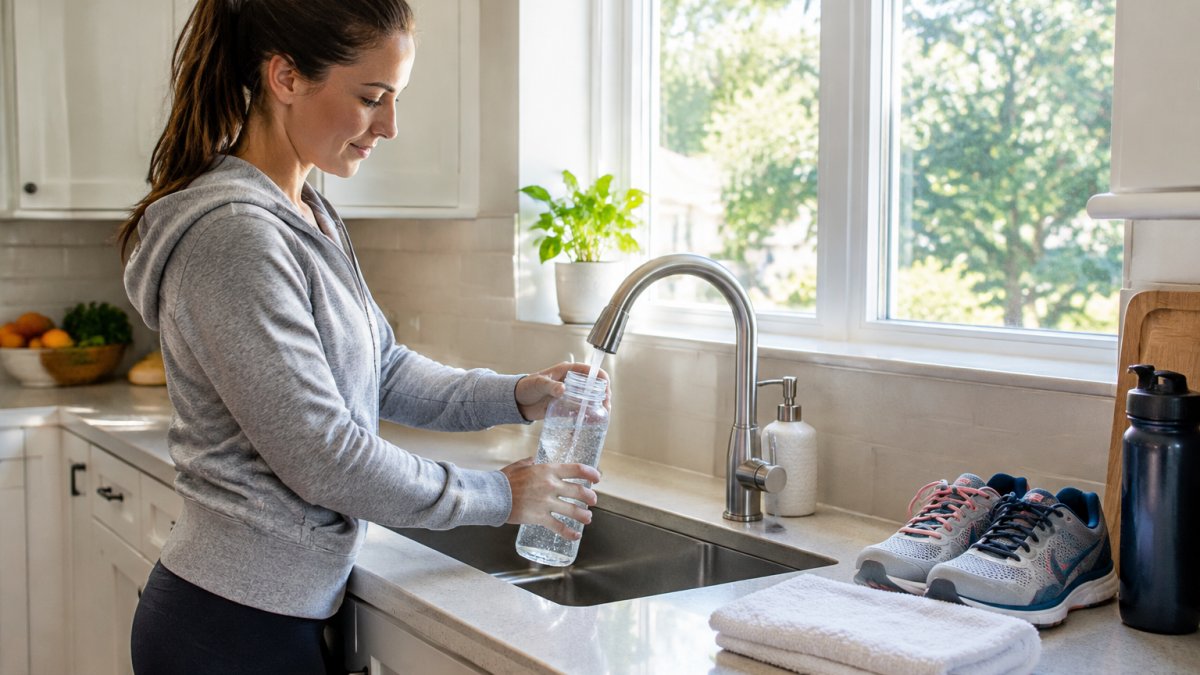
Before: drink about 16 to 20 ounces in the two hours before you start. This gives your body time to absorb it.
During: for sessions under an hour, water is usually enough.
After: replace roughly 16 to 24 ounces for every pound lost during the session.
If you're hiking or training outdoors, a portable water filter can help you refill from a stream or tap instead of carrying every ounce.
For a deeper look at how water supports body weight goals, see our guide on the benefits of drinking water for weight loss.
Signs of Dehydration During Exercise
Watch for thirst, dark yellow urine, dry mouth, and a drop in performance. Those are the early warning signs.
As fluid loss climbs, symptoms get louder:
- Headache and dizziness
- Muscle cramps
- Fatigue that feels out of proportion to the effort
Stop and drink if you notice the early signs.
Thirst is a useful signal, but it lags behind real need during hard effort.
If you're tracking symptoms for a family member, our guide to the signs of chronic dehydration in adults goes deeper.
Drinking Too Much Water During Exercise
Yes, you can drink too much.
The result is a condition called hyponatremia. It's rare, but it shows up in endurance events where people drink heavily for hours without replacing sodium.
Watch out: drinking large volumes of plain water during very long workouts can push sodium levels dangerously low.
Signs include bloating, nausea, headache, and confusion. Those overlap with dehydration, which is why the pattern of your drinking matters.
How Heat, Humidity, and Workout Duration Change Fluid Needs
Heat and humidity raise sweat loss, and longer workouts multiply it. Both factors push your fluid needs up, sometimes sharply. The practical question is how much, and how to plan for it.
Heat: Sweat Rate Climbs With Temperature
As air temperature rises, your body relies more on sweating to shed heat. A common pattern is that sweat rate roughly doubles when you move from mild conditions in the 60s to hot conditions above 85°F, though individual variation is wide. That means a workout that costs you 16 ounces per hour in spring can cost 32 ounces or more per hour in summer.
Humidity: The Sneaky Multiplier
Humidity matters because sweat only cools you when it evaporates. In dry air, sweat evaporates quickly and you may not notice how much you are losing. In humid air, sweat evaporates more slowly, so your body keeps producing it and it drips off instead of cooling you. You may not notice how much you are losing because it isn't drying off your skin.
Duration: The Compounding Factor
Duration compounds everything. A 30-minute walk in mild weather is a small addition to your day. A two-hour hike in summer heat can cost well over a liter of fluid. The reason is simple: sweat loss is a rate multiplied by time, so doubling the duration doubles the loss at the same intensity. Combine long duration with heat and humidity and the total can exceed a full day's baseline intake on its own.
A Planning Table for Common Conditions
Use this as a starting point for a moderate-intensity session, then correct with your own sweat-rate test:
- Mild, under 70°F, low humidity: 16-24 ounces per hour
- Warm, 70-85°F: 24-32 ounces per hour
- Hot, above 85°F: 32-48 ounces per hour
So your plan should flex:
- Shorter sessions in mild conditions: water and a normal day's intake
- Long sessions or hot days: add electrolytes and plan refills
- Very hot, humid, or high-altitude days: treat fluid as part of the gear list
Water Versus Electrolytes: A Short Decision Guide
Electrolyte drinks make sense when sessions run long or sweat is heavy. Use this guide instead of guessing:
- Under 60 minutes, mild conditions, light sweat: water is enough.
- 60-90 minutes or moderate sweat: water plus a normal meal afterward usually covers it.
- Over 90 minutes, heavy sweat, or hot/humid conditions: an electrolyte drink with sodium is worth including.
For most everyday workouts, water plus a normal diet covers it. The exceptions are the long, hot, and heavy-sweat sessions where sodium loss adds up.
Watch out: in hot weather, drinking only plain water in large volumes during long sessions can dilute sodium levels, the same overhydration risk covered above.
Use this as a starting point for a moderate-intensity session, then correct with your own sweat-rate test.
| Condition | Fluid per hour | Note |
|---|---|---|
| Mild, under 70°F, low humidity | 16-24 ounces | Water and a normal day's intake |
| Warm, 70-85°F | 24-32 ounces | Add electrolytes on long sessions |
| Hot, above 85°F | 32-48 ounces | Plan refills |
| Hot and humid, above 85°F with humidity above 60% | 32-48 ounces | Plus electrolytes |
| High altitude, above 8,000 feet | Add 8-16 ounces per day | Dry air and faster breathing increase losses |
Your Next Step: Building a Family Hydration Plan
The real test of any hydration plan is whether it still works when the power is out or the store is closed.
Build your plan around three layers:
- Daily baseline: a water target for each family member, adjusted for activity
- Workout add-on: a sweat-rate number for the active people in the house
- Emergency reserve: stored water and a way to filter more
The reserve is the part most families skip. If you want a ready-made starting point, our emergency water supply for a family of four is built for exactly this.
Start with your baseline number this week. Then test your sweat rate once. You'll know more about your body's needs than most people ever will.
Your family's water needs don't pause when the grid goes down. Build a plan you can trust before you need it.
Frequently Asked Questions
How much water should I drink a day if I exercise a lot?
There is no single number that fits everyone. A practical starting point is to use a daily water needs calculator that adds your baseline intake to the fluid you lose through sweat. Weigh yourself before and after a workout: every pound lost equals roughly 16 to 24 ounces of fluid to replace. If you train hard most days, your daily total can climb well above the common 8-cup guideline. Spread intake across the whole day rather than chugging it all at once.
What are the first signs of dehydration during exercise?
Early signs of dehydration during exercise include thirst, a dry mouth, dark yellow urine, and feeling more tired than the effort should cause. As fluid loss continues, you may notice a headache, dizziness, muscle cramps, or a rising heart rate at the same pace. Stop and drink if symptoms appear. For longer or hotter sessions, a sports drink with sodium helps replace what you lose in sweat and supports fluid balance.
Can you drink too much water during exercise?
Yes. Drinking too much water during exercise can dilute the sodium in your blood, a condition called hyponatremia. It is most common in endurance events lasting several hours when athletes drink large volumes of plain water. Symptoms include bloating, nausea, confusion, and swelling in the hands. To avoid it, drink to thirst, include electrolytes during long sessions, and do not force fluids beyond what your sweat rate calls for.
Do heat and workout duration change your hydration needs?
Both raise fluid needs significantly. In hot, humid conditions, sweat loss can double or triple compared with cool weather because your body works harder to regulate temperature. Longer workouts also mean more total sweat loss. A 30-minute walk may need little extra water, while a 2-hour hike in summer heat can require a liter or more of replacement fluid. Adjust your intake based on conditions, duration, and how much you sweat.
