
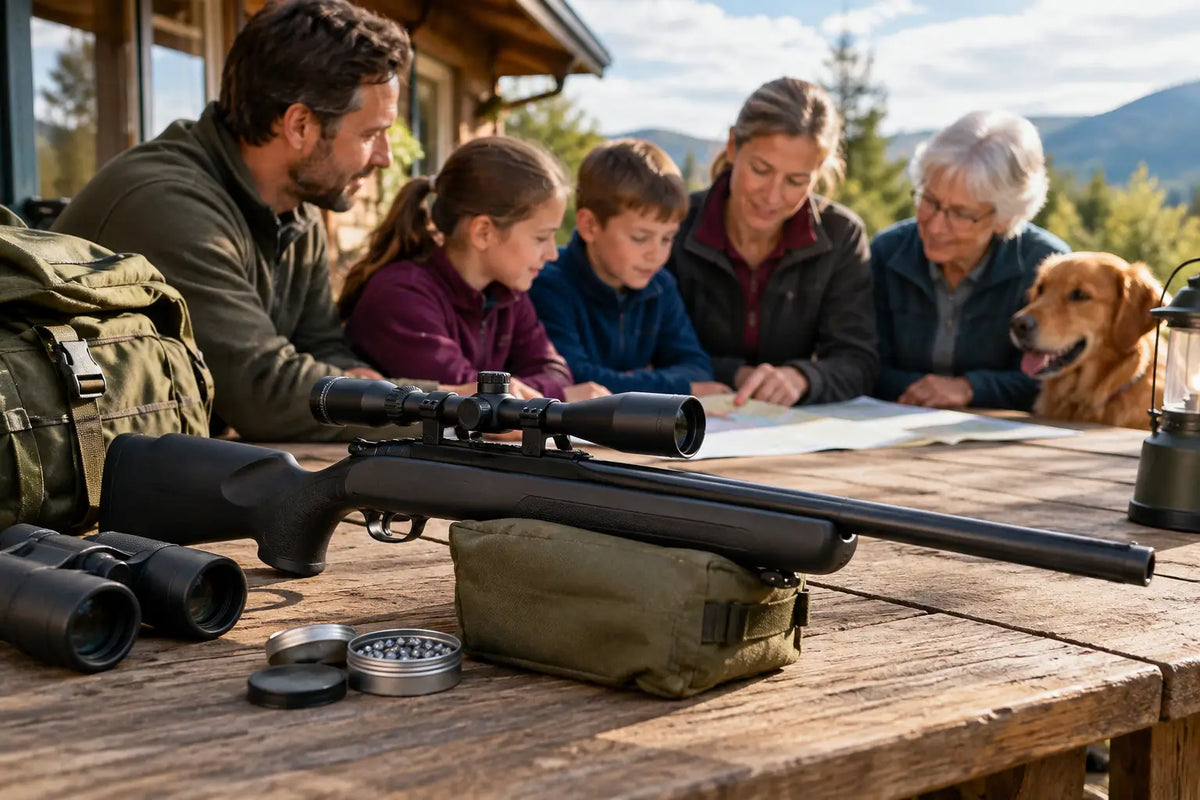
A long power outage changes small household problems quickly. A tipped-over trash can may attract pests. A garden can become more valuable. A rural family may find that nuisance animals are damaging feed, fencing, or stored food. In those limited situations, an airgun may have a place in a thoughtful preparedness plan.
But it belongs in the right place. An airgun is not a substitute for stored water, shelf-stable food, first aid supplies, reliable light, a weather radio, or a family evacuation plan. It is also not a general-purpose answer to personal safety concerns. For most families, its practical role is narrow: lawful pest control, supervised marksmanship practice where permitted, and familiarity with a tool that requires serious handling.
Start With the Needs That Matter Most
Preparedness works best when you build from the ground up. Before considering an airgun, make sure your household can cover the basics for at least several days: drinking water, food your family will eat, backup power or lighting, medications, sanitation, warmth or cooling, and a way to communicate.
That order matters. A family dealing with a hurricane, winter storm, wildfire evacuation, or earthquake is far more likely to need clean water and a charged power station than any specialized tool. The practical question is not, “Could this be useful someday?” Almost anything could be. The better question is, “Does this solve a likely problem after we have covered the essentials?”
For a homeowner with a vegetable garden, chickens, animal feed, or recurring nuisance-pest issues, the answer may be yes. For an apartment family with no safe, legal place to use or store one, it may be no. Both answers are reasonable.
What an Airgun Can and Cannot Do
An airgun uses compressed air, gas, or a spring-driven mechanism to propel a projectile. It is often treated casually because it is not always regulated the same way as a conventional firearm. That is a mistake. It can cause severe injury or death, damage property, and create legal consequences when handled carelessly.
Its most realistic preparedness use is lawful pest management. Rodents and certain nuisance animals can threaten food storage, gardens, livestock feed, and sanitation, particularly after a storm disrupts normal waste collection or access to supplies. Even then, prevention comes first. Secure food in durable containers, clean up spilled seed and pet food, close entry points, and manage trash properly. Those steps are usually safer and more effective than reacting after pests have moved in.
An airgun may also be useful for recreational target practice, where local rules allow it and a safe range is available. Practice can reinforce habits that matter around any potentially dangerous household tool: following rules, controlling access, using eye protection, and never handling equipment casually.
What it cannot do is replace a family security plan. If you are concerned about a break-in or unrest in your area, focus first on door and window security, exterior lighting, communication, neighbors who know one another, emergency contacts, and a clear plan for sheltering safely or leaving early when authorities advise evacuation. An airgun is not a dependable answer to a dangerous confrontation.
Legal Rules Are Local and Worth Checking
Airgun laws vary widely. State, county, and city rules can differ on purchase age, possession, transportation, discharge, hunting, projectile type, and where an airgun may be used. Homeowners association rules and local noise ordinances may add another layer.
Do not assume that a large yard makes use legal or safe. Nearby homes, roads, trails, fences, and changing weather conditions all affect the risk. A projectile that misses its intended target does not stop being your responsibility.
Before buying or using an airgun, verify your current local and state requirements through official government or wildlife-agency sources. If the tool is intended for pest control, confirm whether the animal involved is classified as a pest, protected wildlife, or a game species with seasonal restrictions. Laws change, and a neighbor’s advice is not a legal standard.
If you travel with one, transport it unloaded, secured, and out of public view according to applicable rules. This is especially important when crossing state lines or entering areas with stricter local ordinances.
Storage Is the Family Safety Decision
The most important choice is not the model. It is whether your home can store it responsibly.
Any airgun in a family home should be inaccessible to children, visitors, and anyone who has not been trained to handle it. Store it unloaded in a locked cabinet or dedicated lockable case. Keep projectiles secured separately. Do not leave it propped in a closet, stored in a garage corner, or displayed as if it were harmless sporting equipment.
Treat the storage plan as part of your broader emergency organization. Your water, food, medical supplies, batteries, and documents should be easy to find without creating hazards. A locked item that requires adult oversight belongs in its own clearly defined place, not mixed into a child-accessible preparedness shelf.
Households should also talk plainly about rules. Children do not need a frightening lecture, but they do need a firm message: never touch it without permission, never point it at a person or animal, and tell an adult if they find one unsecured. Grandparents should apply the same standard when grandchildren visit. Familiarity is not safety. Consistent boundaries are.
Choose Practical Features, Not Marketing Claims
If an airgun fits your needs and is legal where you live, prioritize reliability, safe storage compatibility, and a design you can operate responsibly. Avoid treating high velocity or aggressive marketing language as proof that a model is better for family preparedness. More power can mean greater risk, increased backstop requirements, more noise, and more potential for property damage.
Consider the full system rather than the item alone. You may need a lockable storage solution, eye protection, appropriate maintenance supplies, and a safe, lawful place to use it. Some types require consumable gas cartridges, while others rely on pumping, spring mechanisms, or charging equipment. During a prolonged outage, a system that depends on a hard-to-find consumable may be less convenient than it appears.
This is where the “it depends” part is real. A rural household managing a garden may value a different setup than a suburban homeowner dealing with occasional pests. A person with limited hand strength may find one operating style easier than another. The right decision is the one that your household can use safely, maintain properly, and store securely.
Build Pest Prevention Into Your Preparedness Plan
The best emergency pest-control strategy starts before the emergency. Store dry food in sealed containers. Keep pet food off the floor and clean up spills. Protect outdoor feed and compost. Repair torn screens, seal obvious gaps around pipes and doors, and keep vegetation trimmed back from the home where practical.
During an outage or storm recovery, inspect food storage areas more often. A damaged garage door, flooded shed, or open window can create an easy entry point. If you see signs of rodents or other pests, address sanitation and access first. For many families, traps, exclusion measures, and professional guidance will be more appropriate than an airgun.
That does not make the tool useless. It simply puts it in proportion. Family preparedness is less about owning every possible item and more about knowing what problem each item solves, when it is appropriate, and what safer alternatives may work better.
Keep the Plan Calm and Useful
SHTF Prepper Club encourages families to prepare for ordinary disruptions with practical layers of support. Start with water, food, medical supplies, light, communication, and weather-ready shelter. Then add tools that match your home, region, skills, and responsibilities.
An airgun can be one of those tools for a small number of households, especially where lawful pest control is a genuine need. It should never be the centerpiece of the plan. The stronger investment is a home that stays supplied, organized, and safe when the lights are out and normal routines are temporarily gone.
A well-prepared family does not need to own everything. They need to make a few sound decisions before stress makes every decision harder.