
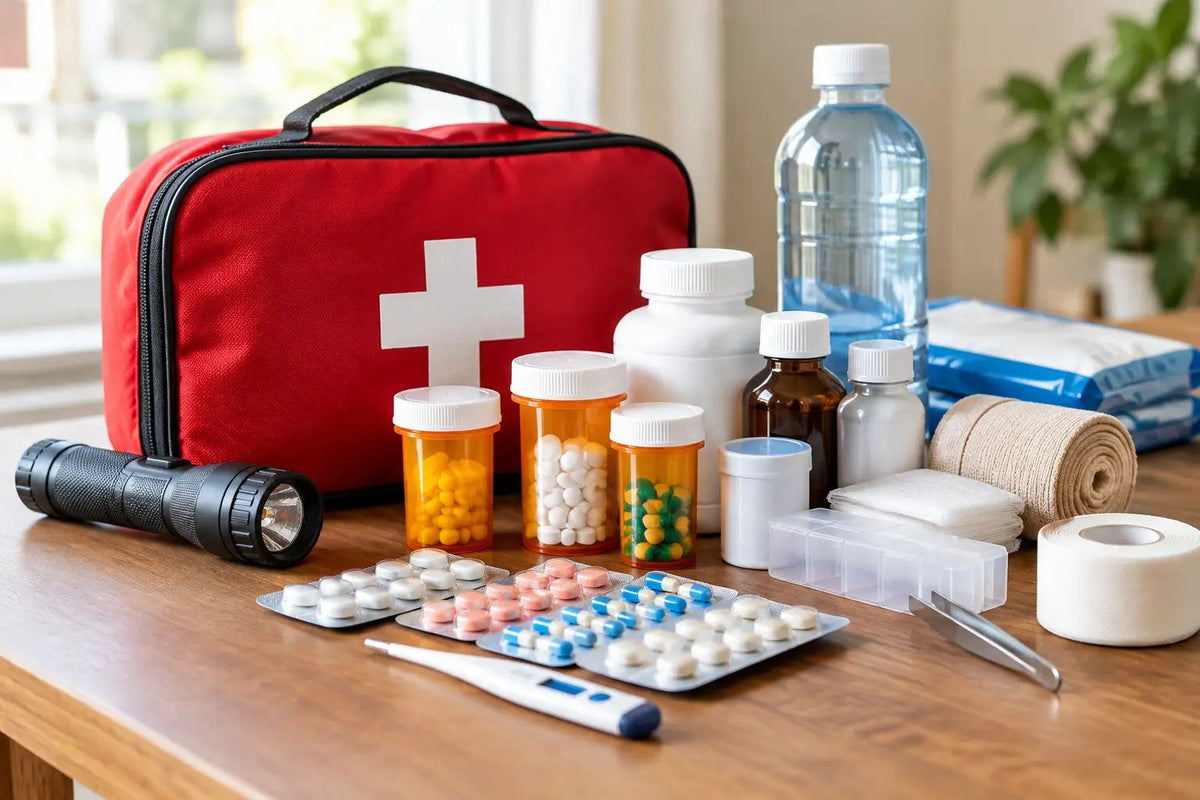
A storm has already knocked out power, the roads are flooded, and the pharmacy is closed. That is the moment when a half-used bottle of pain reliever and an old box of bandages stop feeling like a plan. If you have asked, “what medicine should I have in a disaster?” start with the needs your family already has, then build enough backup to get through a short disruption safely.
This is not about turning a bathroom cabinet into a pharmacy. It is about having familiar, age-appropriate supplies for common problems: fever, pain, allergies, stomach upset, minor cuts, and the chronic conditions that cannot wait for normal routines to return.
Start with prescription medicines
For many families, prescription medication is the most urgent part of disaster readiness. Someone with diabetes, asthma, high blood pressure, seizures, heart disease, thyroid disease, or a serious mental health condition may be at real risk if medication runs out.
Aim for at least a 7-day reserve of essential prescriptions when possible. A 14- to 30-day cushion is even better for households in hurricane zones, wildfire areas, rural communities, or places where winter weather can close roads for days. What you can keep on hand depends on your insurance plan, prescriber, pharmacy, medication type, and state or federal rules.
Talk with your doctor or pharmacist before disaster season. Ask whether a slightly early refill, a vacation supply, a 90-day prescription, or an emergency refill authorization is available. Do not stretch doses, stop medications, or borrow someone else’s prescription without medical guidance.
Keep prescriptions in their original labeled containers. Store a printed medication list with the name of each medicine, dose, prescribing clinician, pharmacy, allergies, and the reason it is taken. A phone photo is useful, but paper still works when your phone is dead or service is down.
Some medicines require refrigeration or special handling. Insulin, certain biologics, and liquid medicines deserve a specific power-outage plan. Ask your pharmacist how long the medication remains safe at room temperature and what temperature range it needs. Write those instructions down before an emergency.
What medicine should I have in a disaster for everyday symptoms?
Over-the-counter medicine can make an uncomfortable few days much more manageable. Choose products your household has used safely before, check labels for active ingredients, and follow the dosing directions exactly. If you have young children, stock pediatric formulations and a proper measuring syringe or cup - not a kitchen spoon.
A practical family medicine supply usually includes these categories:
- Pain and fever relief, such as acetaminophen or ibuprofen. These can help with headaches, fever, muscle aches, dental discomfort, and minor injuries. They are not interchangeable for every person, so consider kidney disease, liver disease, ulcers, blood thinners, pregnancy, and your clinician’s advice.
- Allergy relief, including a non-drowsy antihistamine for seasonal reactions and an option your family can use for itching or hives. Severe allergic reactions require emergency care and prescribed epinephrine, not just an antihistamine.
- Cold and cough relief that fits your family’s needs. A simple cough medicine, throat lozenges, saline nasal spray, and decongestant may be useful, but combination cold products can accidentally duplicate ingredients. Buy fewer products and read the labels.
- Stomach medicines for nausea, diarrhea, constipation, heartburn, and gas. Oral rehydration solution or electrolyte packets are particularly useful if a stomach bug, heat exposure, or contaminated water leaves someone dehydrated.
- Skin-care basics, such as hydrocortisone cream for minor itching, antifungal cream if someone in the household commonly needs it, and calamine or similar relief for poison ivy and insect bites.
Do not overlook the medicines that prevent a crisis
A few items are easy to miss because they are used only occasionally. Yet they can matter more than another bottle of cough syrup.
If anyone in your household has a life-threatening allergy, keep unexpired epinephrine auto-injectors available and make sure trusted adults know how to use them. People with asthma or COPD should have rescue inhalers as prescribed, plus any nebulizer supplies their clinician recommends. Families managing diabetes need the full system, not just insulin: glucose meter or continuous monitor supplies, test strips, lancets, fast-acting glucose, ketone strips if advised, and a plan for temperature control.
Consider backup supplies for migraine treatment, seizure rescue medication, contact lens solution, glaucoma drops, hearing-aid batteries, mobility-related skin care, and pet medications. Pets are family, and a pet’s prescription should be included on the same inventory and refill calendar.
Pair medicine with a capable first-aid kit
Medicine is only one part of medical readiness. A well-stocked first-aid kit handles the cuts, burns, splinters, blisters, and strains that become harder to manage when urgent care is closed or travel is unsafe.
At minimum, keep adhesive bandages in several sizes, sterile gauze, rolled gauze, medical tape, wound-cleaning supplies, antibiotic ointment if appropriate for your family, tweezers, trauma shears, disposable gloves, a digital thermometer, and instant cold packs. Add blister care if you may need to evacuate on foot or shelter somewhere unfamiliar.
For serious bleeding, a basic kit is not enough. Consider learning hands-on bleeding-control skills and keeping purpose-built trauma supplies where adults can reach them quickly. A tourniquet, pressure dressing, and hemostatic gauze can be valuable tools when used correctly, but they do not replace emergency services. Call 911 whenever it is safe to do so for severe bleeding, chest pain, stroke symptoms, trouble breathing, serious burns, suspected poisoning, or a change in consciousness.
Avoid the common medicine-cabinet mistakes
The goal is a usable supply, not a pile of expired bottles. Review your medicine bin twice a year, such as when clocks change or before hurricane and winter-storm seasons. Use the oldest items first during normal life and replace them before they expire.
Avoid stocking antibiotics “just in case.” The wrong antibiotic, dose, or timing can cause harm, hide a serious infection, and contribute to resistance. The same caution applies to leftover opioids, sedatives, and prescription drugs from a past illness. Store controlled medicines securely, away from children and visitors, and dispose of unused medication according to local guidance.
Also watch for duplicate active ingredients. Acetaminophen appears in many cold, flu, and nighttime products. Taking separate products without checking labels can lead to an accidental overdose. A simple written inventory helps everyone see what is available and prevents panic purchases after a warning is issued.
Store your family medicine where it will still be useful
Heat, moisture, and confusion ruin a good plan. Keep most medicine in a cool, dry, clearly labeled container rather than in a humid bathroom. A waterproof tote or zippered organizer works well for your home supply. Keep a smaller version in your evacuation bag, with enough medicine for several days and copies of essential health information.
Store medicine out of children’s reach, even during a stressful evacuation. Keep dosing tools with pediatric medicines. Include a flashlight or headlamp in the same area, because reading a label by candlelight is an avoidable problem.
Make one adult responsible for the calendar, but make sure another adult knows where everything is. Grandparents who regularly host grandchildren should keep child-safe basics and a current list of the children’s allergies and medications. If your family has adult children living nearby, compare plans so one household is not caught short while another has excess supplies.
A strong medical plan begins with one small task: open your medicine cabinet tonight and write down what your family truly relies on. Then fill the gaps a little at a time. The best disaster medicine supply is not the biggest one - it is the one your family recognizes, can use safely, and can find when the lights are out.