
Table of Contents
- Why Water Conservation Matters in a Survival Garden
- How to Conserve Water in a Vegetable Garden
- Drip Irrigation for Vegetable Gardens
- Rainwater Harvesting for Gardens
- Growing Drought-Tolerant Vegetables
- Group Plants by Water Needs and Plan for Drought
- Water Budgeting and Emergency Planning
- Frequently Asked Questions
Last Updated: October 13, 2026
Why Water Conservation Matters in a Survival Garden
A survival garden produces food when supply chains fail, but water is the limiting factor in most growing seasons, making garden water conservation essential.
SHTF Prepper Club provides expert guidance to households building emergency food systems.
Most survival gardeners assume water will be available when they need it.
Garden water conservation isn't about fancy equipment. It's about matching supply to your plants' actual needs, reducing evaporation, and capturing every drop you can.
How to Conserve Water in a Vegetable Garden
Water conservation in a vegetable garden starts with timing and mulch, two changes that alone cut water needs by 30-50%.
Water at the Right Time
Water early in the morning, before 9 AM. This is the single most important rule for water efficiency.
Evening watering is second-worst (midday is worst): water sits on leaves overnight, promoting fungus and root rot.
Midday watering is worst because 50% evaporates before roots use it, a gallon applied at noon becomes half a gallon reaching the plant.
Water deeply but less often. Light, frequent watering encourages shallow roots; deep roots find moisture where it doesn't evaporate.
Apply Mulch to Retain Soil Moisture
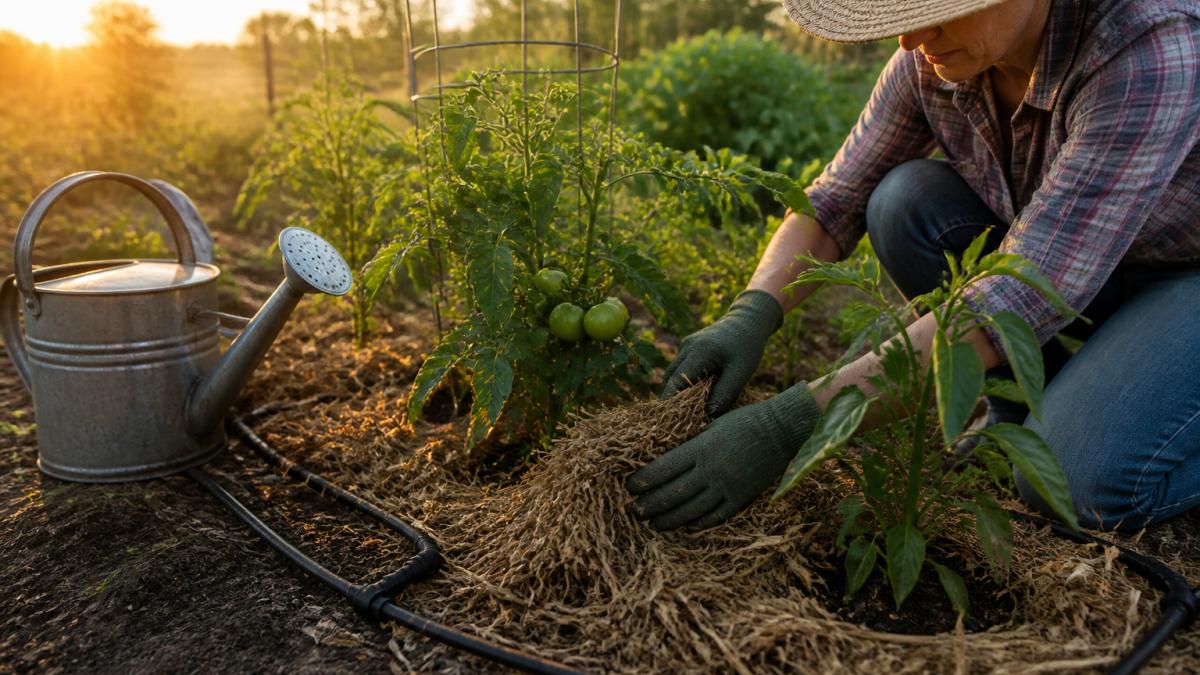
Mulch is the second pillar of water conservation. A 2-3 inch layer of organic mulch around plants cuts evaporation by 50%.
Mulch blocks sun from hitting soil, keeps soil cooler, adds organic matter as it breaks down, and reduces runoff during heavy rain.
Never pile mulch against plant stems. Leave 2-3 inches of bare soil around the base to prevent rot and pest problems.
Monitor Soil and Adjust Watering Frequency
Feel the soil before watering. Push your finger 2 inches into soil near the plant. If it feels moist, don't water; if dry, water deeply. Sandy soil dries in 2-3 days, clay in 4-7, loamy soil in 3-5.
Containers dry faster than beds, check daily in hot weather. Adjust by observation, not calendar: a week of rain means no watering, a heat wave means checking daily.
Drip Irrigation for Vegetable Gardens
Drip irrigation delivers water directly to soil, not leaves. This cuts water use by 50% compared to sprinklers and eliminates leaf diseases.
Drip systems deliver water slowly to the soil surface, reduce evaporation, eliminate runoff on slopes, and let you water specific plants.
Setting Up a Basic Drip System
A basic drip system costs less than you think and lasts years.
Layout before installing: run the main hose along the garden edge, attach drip lines to each bed, place emitters 12-18 inches apart, cover tubing with mulch to prevent UV damage, then test and adjust spacing.
If water sprays or gushes from emitters, pressure is too high, add a regulator. Drip works best at 20-30 PSI. Flush monthly: open the end cap, run water 30 seconds, close it.
Gravity-Fed and Low-Cost Off-Grid Options
When power isn't available, gravity does the work.
A 55-gallon drum elevated on cinder blocks provides enough pressure for a small garden. Fill it by hand, rain, or from a larger cistern.
For zero-cost options, poke holes in a 5-gallon bucket and set it beside plants, bury a soaker hose attached to a timed faucet, or siphon water from a barrel to beds.
Olla Pots: The Lowest-Tech Subsurface Method
An olla is an unglazed clay pot buried to its neck with only the rim above soil. You fill it with water, cap it, and the porous clay seeps moisture into surrounding soil for days.
Why ollas matter: no moving parts or emitters to clog, surface evaporation near zero, one fill lasts 3-7 days, and they work grid-down with nothing but a bucket to refill.
Sizing rule: a 1-2 gallon olla serves 3-5 heavy feeders like tomatoes or peppers.
Wicking Beds: A Reservoir Under the Soil
A wicking bed is a raised bed with a gravel-and-water reservoir at the bottom and a fabric wick or soil column drawing moisture upward.
A wicking bed can go 1-2 weeks between fills in mild weather, longer in cool weather. The trade-off is upfront cost and weight, a full reservoir is heavy, so place wicking beds where they won't need to move.
Matching the Method to Your Situation
| Method | Power needed | Refill interval | Best for |
|---|---|---|---|
| Gravity drip from barrel | None | Daily to every few days | Row crops, larger beds |
| Olla pots | None | 3-7 days | Tomatoes, peppers, clusters |
| Wicking beds | None | 1-2 weeks | Small intensive beds, containers |
| Bucket drip | None | 1-2 days | Single plants, spot watering |
Pick one primary method and one backup. A gravity drip line plus a few ollas covers most survival-garden scenarios without electricity or replacement parts.
Rainwater Harvesting for Gardens
Rainwater is free water falling on your roof. One inch of rain on a 1,000-square-foot roof yields 600 gallons, and a typical vegetable garden needs 1-2 inches per week, so even modest capture covers most watering needs.
Rain Barrels and Cistern Sizing
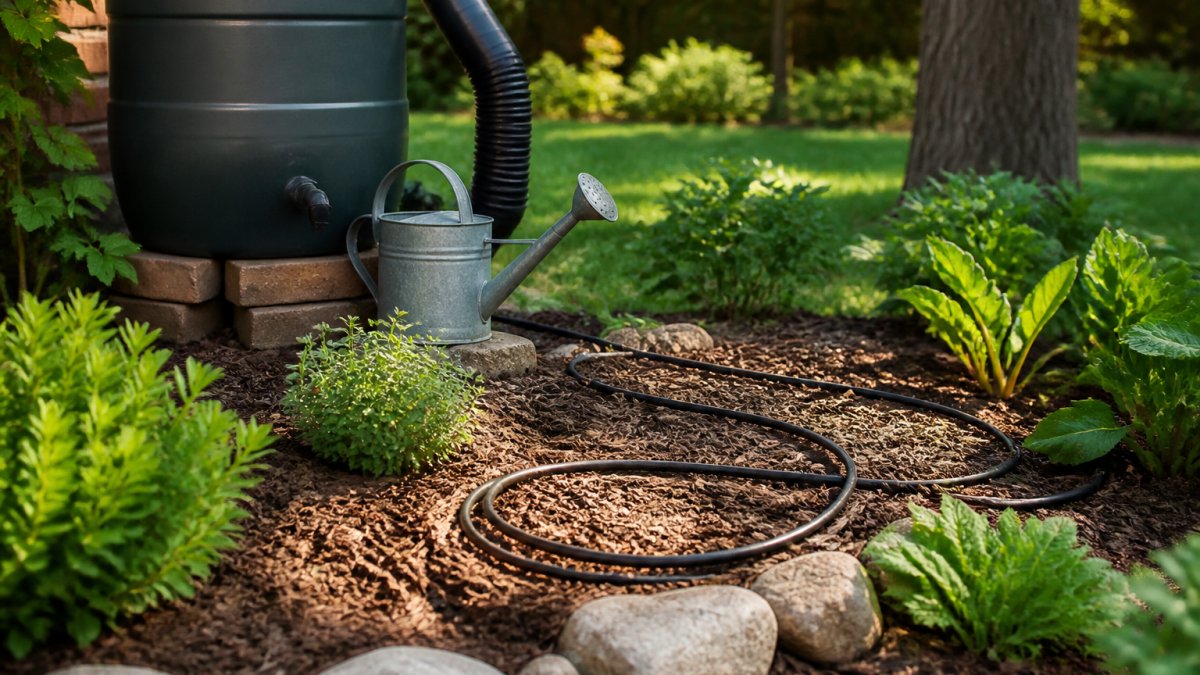
Start with rain barrels if space is limited. A 55-gallon barrel is standard and fits most yards.
Calculate storage by multiplying roof area (square feet) by 0.6 for gallons per inch of rain.
Cisterns (500-5,000+ gallons) make sense if you have space and plan long-term water independence, pricier, but they store months of water. Size for your climate: dry regions need bigger storage, wet regions smaller barrels.
Filtration and Safe Storage
Rainwater is clean but not sterile. Filter it before using on edible crops.
Cover all barrels to block light and mosquitoes, which lay eggs in standing water within 3-4 days.
For edible crops, some growers use stored rainwater as-is; others filter through cloth or a sediment filter. Clean rainwater without algae or sediment is safe for vegetables.
Growing Drought-Tolerant Vegetables
Not all vegetables need equal water. Some thrive in dry conditions. Choosing the right plants cuts water demand by 50%.
Drought-tolerant vegetables: beans, peas (until flowering), squash and zucchini once established, tomatoes (especially heirlooms), peppers, lettuce and spinach, root vegetables (carrots, beets, turnips, parsnips), and kale and collards.
High-water crops to avoid in drought: cucumber, celery, broccoli and cauliflower, and melons.
Plant drought-tolerant varieties in your main beds. Reserve water-heavy crops for small patches where you can hand-water or use drip irrigation.
Group Plants by Water Needs and Plan for Drought
Plant grouping cuts water waste. Create zones: high-water (cucumber, celery, lettuce, daily or every other day), medium-water (tomatoes, peppers, beans, every 2-3 days), and low-water (root vegetables, kale, squash, every 4-7 days). This focuses water where it matters most.
Drought planning means assuming water will be scarce: plant 60% drought-tolerant varieties and 40% higher-yield, water-intensive crops so you still produce food on limited water. Store seed for drought-tolerant varieties, heirlooms from dry-adapted plants often outperform modern hybrids in dry years.
Water Budgeting and Emergency Planning
Survival gardens need a water budget. Know exactly how much water your garden needs and where it comes from, before the tap runs dry.
Estimate Water by Crop, Not Just by Area
A single per-square-foot number hides that a tomato uses several times the water of a beet. Build your budget crop by crop, using rough weekly needs per plant in warm weather (adjust down in cool weather, up in extreme heat):
| Crop | Gallons per plant per week | Notes |
|---|---|---|
| Tomato | 2-4 | Highest demand at flowering and fruit set |
| Pepper | 1-2 | Tolerates short dry spells once established |
| Squash / zucchini | 2-3 | Thirsty during fruit production |
| Beans (bush) | 1-2 | Lower once pods form |
| Cucumber | 2-3 | Needs consistent moisture or fruit turns bitter |
| Root vegetables | 0.5-1 | Deep roots stretch intervals |
| Leafy greens | 0.5-1 | Shallow roots, dry out fast |
Multiply per-plant needs by plant count, then add 10-20% for evaporation, runoff, and imperfect delivery. A 30-plant tomato patch alone can demand 60-120 gallons a week at peak.
Size Your Storage to Your Worst Case
Work backward from a realistic outage. If municipal water fails and rain doesn't fall for four weeks, add up weekly crop demand, multiply by weeks of coverage, add household drinking and cooking water (roughly 1 gallon per person per day), then add a 15% buffer.
Example: a 400-square-foot mixed garden might need 150-250 gallons per week. Four weeks plus household use pushes storage into the 1,000-2,000 gallon range, which is why rainwater capture and a cistern, not just a couple of barrels, belong in the plan.
Triage Rules When Water Runs Short
When supply drops below demand, decide in advance what gets water:
- Drinking and cooking water, never compromise this
- Transplants and seedlings, no deep roots, die fast
- Flowering and fruiting crops, where food calories are made
- Established perennials and deep-rooted crops, often survive on half rations
- Lawn, ornamentals, and low-value beds, cut first, cut completely
Experienced growers concentrate limited water on fewer high-value plants rather than spreading it thin, half-watering a whole garden often kills more food than fully watering half of it.
Stretch the Budget With These Levers
- Shade cloth: A 30-50% shade cloth over tender crops cuts water demand noticeably during heat waves
- Deep mulch: 3-4 inches instead of 2 keeps soil moisture longer between waterings
- Windbreaks: A simple row of tall plants or a fence reduces drying wind across beds
- Containers: Move pots into afternoon shade to cut evaporation
- Timing: Shift all watering to early morning and consolidate into fewer, deeper sessions
Keep a Water Backup Plan
- Store rainwater in barrels and a cistern year-round, not just in the dry season
- Maintain and test any well or hand pump before you need it
- Identify backup sources (streams, ponds, neighbors with wells) and plan to treat surface water before it touches edible crops
- Keep purification supplies on hand: filters, unscented bleach, and fuel or capacity for boiling
- Rotate stored water, months-old water grows algae and bacteria; use it on the garden and refill
A water budget turns guesswork into a plan: know your weekly demand, size storage to your worst case, and decide your triage order before the shortage arrives.
Frequently Asked Questions
What are the best ways to conserve water in a survival garden?
The most effective methods combine timing, soil improvement, and smart watering tools. Water early morning to reduce evaporation, apply 2-3 inches of mulch to retain moisture, use drip irrigation instead of overhead sprinklers, group plants by water needs, and harvest rainwater in barrels or cisterns. For survival gardens, also plan water budgets for each crop and maintain soil health with organic matter to improve water retention.
How often should a vegetable garden be watered in hot weather?
Most vegetable gardens need 1-2 inches of water per week, but frequency depends on soil type, heat, and plant stage. Check soil moisture 2-3 inches deep; water when it feels dry. In extreme heat, daily watering may be necessary, but drip irrigation allows you to deliver water slowly and consistently without runoff. Mulch reduces watering frequency by 30-50% by lowering soil temperature and evaporation.
Which vegetables need the least water to grow?
Drought-tolerant vegetables include kale, chard, root crops (carrots, beets, turnips), beans, peas, squash, and peppers once established. Herbs like basil, oregano, and thyme also handle dry conditions well. These crops require less frequent watering and are ideal for survival gardens where water may be limited. Grouping these plants together reduces overall garden water demand and makes emergency planning simpler.
Can I safely reuse household water on my vegetable garden?
Greywater from sinks, showers, and washing machines can be used on non-edible ornamentals and some vegetables if it contains no harsh chemicals or pathogens. For edible crops, use only water from rinsing vegetables or boiling pasta (cooled). Avoid water from dishwashers, laundry with bleach, or toilets. Always check local regulations before reusing household water; some jurisdictions restrict greywater use. For survival situations, focus on rainwater harvesting and municipal water conservation first.