
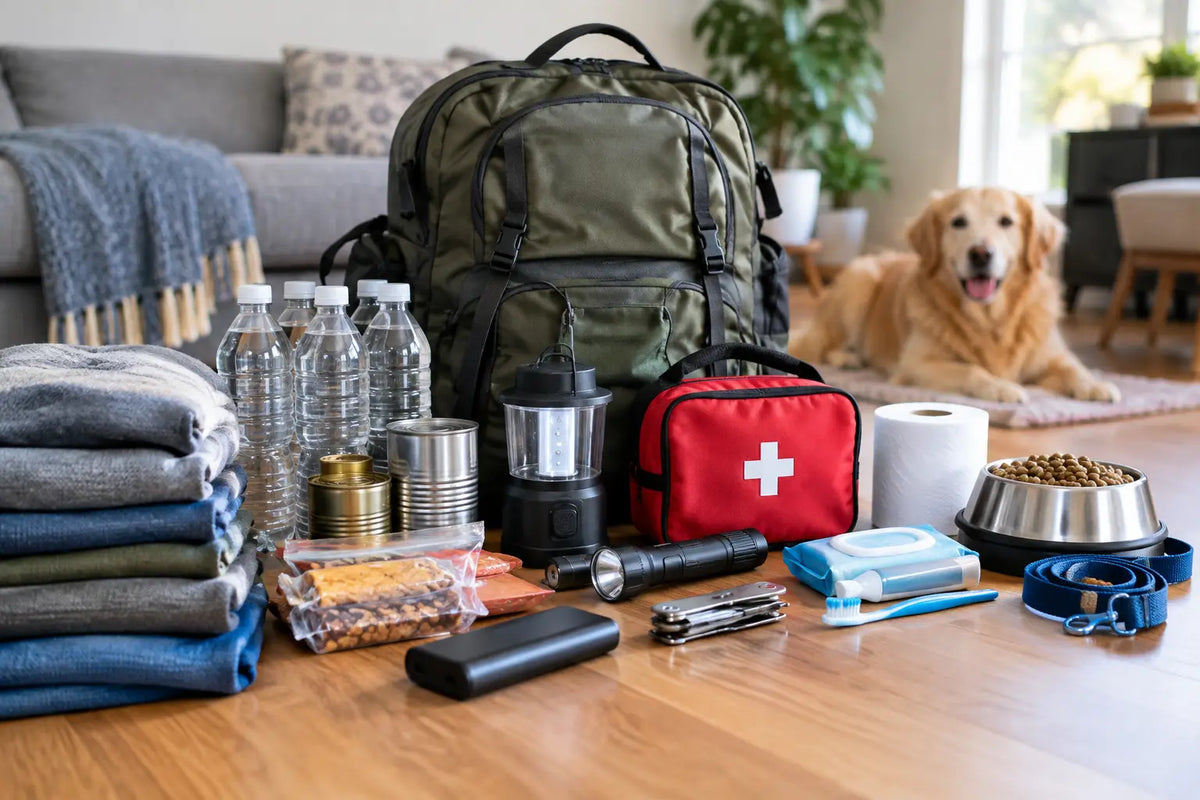
A family go bag is not a dramatic purchase for a worst-case fantasy. It is the set of supplies you can grab when a wildfire evacuation order comes through, floodwater is rising, a hurricane changes track, or your home becomes unsafe after a storm. The goal is simple: get your people out the door with enough essentials to make the first 72 hours safer, calmer, and more manageable.
For most families, that means planning for an ordinary kind of hard day. You may be sleeping at a hotel, a relative's house, a school shelter, or in the car while roads reopen. Your bag should help your family function there, not turn a hurried evacuation into a camping expedition.
What a Family Go Bag Is Meant to Do
A go bag is different from the supplies you keep at home. Your pantry, stored water, backup power, and larger first-aid supplies are for sheltering in place. An evacuation bag is portable. It covers immediate needs while you travel or stay somewhere else.
That distinction keeps packing practical. If you cannot comfortably carry it from the bedroom to the car, it is probably too heavy. If it contains bulky gear you would only use after weeks away from home, it probably belongs in your home emergency supplies instead.
A good starting point is one medium backpack for each capable adult, plus a smaller bag for each child who is old enough to carry one. Parents can carry shared supplies for younger children. Some households prefer one rolling duffel for the car and individual backpacks for personal items. Either approach works if everyone knows where it is and can load it quickly.
Start With the First 72 Hours
Three days is a useful planning window because it gives local response systems time to catch up and gives you options if stores, pharmacies, and roads are disrupted. It is not a promise that an emergency will last only three days. It is the minimum period your family should be able to cover without relying on a last-minute store run.
Water, food, and simple cooking
Water comes first. Pack a few ready-to-drink bottles or pouches for the trip, then add a compact water filter or purification treatment so you are not carrying every ounce your family might need. Stored water in the vehicle is useful, but heat and freezing temperatures can make long-term car storage less dependable. Rotate it regularly.
Choose food that is familiar, shelf-stable, and easy to eat without a full kitchen. Ready-to-eat meals, protein bars, nut butter packets, crackers, trail mix, and shelf-stable milk can work well. If anyone has allergies, pack food they can safely eat rather than hoping a shelter or convenience store will have the right option.
Do not build your plan around a camp stove unless you know it is allowed and you can safely use it outdoors. A small stove, fuel, and a metal cup can be helpful during a roadside delay or outdoor stay, but many evacuation destinations will not permit open-flame cooking. Foods that need no heating are the reliable foundation.
Light, power, and communication
Pack headlamps rather than relying only on handheld flashlights. They leave your hands free to carry a child, sort medication, or set up a sleeping area. Include spare batteries if your light uses them.
A charged power bank and appropriate charging cables are equally practical. Your phone may be your map, camera, contact list, weather source, and way to receive local alerts. A small battery-powered weather radio is worth considering in hurricane, tornado, and wildfire regions where cell service may be strained.
Put a printed contact card in every adult bag and in older children's bags. Include phone numbers for close family, an out-of-area contact, doctors, insurance, and your child's school. Phones fail, batteries run down, and children may be separated briefly during a busy evacuation.
Health, hygiene, and personal essentials
Prescription medication deserves its own step. Keep a current list of medications, doses, prescribing doctors, and pharmacy numbers in a waterproof pouch. When possible, ask your pharmacy about maintaining a small emergency reserve within the rules of your insurance and prescription plan. Pack several days of necessary medication, inhalers, glucose supplies, glasses, hearing-aid batteries, and other items your family cannot easily replace.
Your first-aid kit should handle common problems: cuts, blisters, headaches, fever, allergic reactions, minor burns, and basic wound care. A larger household medical kit can stay at home, while the bag carries a compact, organized version. If someone in your family has a specific medical condition, build around that reality first.
Include toilet paper, wipes, hand sanitizer, toothbrushes, menstrual supplies, and a few trash bags. These may not feel urgent while packing, but they are often what make a crowded shelter, long car ride, or overnight power outage easier to manage.
The Family Go Bag Checklist That Fits Real Life
Every household has different needs, but these are the core categories worth covering before adding specialty gear:
- Water bottles or pouches, a compact filter or purification option, and a refillable bottle for each person
- Ready-to-eat food for three days, including allergy-safe foods and infant or toddler supplies if needed
- Prescription medications, a basic first-aid kit, spare glasses, and personal medical items
- Headlamps, batteries, power banks, charging cables, and a weather radio if appropriate for your area
- Copies of IDs, insurance information, medical records, emergency contacts, and cash in small bills
- Seasonal clothing, sturdy shoes, rain protection, warm layers, blankets or sleeping bags, and face masks where smoke or dust is a risk
- Hygiene supplies, maps, spare keys, a multitool, work gloves, and a whistle
Cash still matters during localized outages. Card readers, ATMs, and fuel pumps can stop working when power or communications go down. A modest amount in small bills is more useful than a large bill that a stressed cashier cannot break.
Pack for the People, Not an Imaginary Family
The best evacuation bag is personal. A generic checklist can get you started, but it cannot know that your son sleeps with a particular stuffed animal, your parent needs a cane, your teenager wears contacts, or your dog panics without a familiar leash.
For babies and toddlers, pack diapers, wipes, formula or familiar snacks, a change of clothes, and comfort items. Add more than you think you need if formula preparation depends on clean water. For school-age children, a small activity book, cards, headphones, or a comfort item can make long waits much easier. Give older children a role, such as carrying their own clothing and contact card, without making them responsible for critical family supplies.
Pet plans deserve the same attention. Include food, water, medications, vaccination records, a leash or harness, waste bags, and a carrier if needed. Before an emergency, identify pet-friendly hotels, relatives, or boarding options. Public shelters may have limited pet accommodations, and assuming otherwise creates a painful decision when time is short.
If you care for an older adult or anyone with mobility limitations, think beyond the bag. How will they get into the vehicle? Is there a backup for powered medical equipment? Do you have a written list of medications and care needs? A lightweight folding cane, extra batteries, and a simple paper care summary can be more valuable than another piece of survival gear.
Where to Keep It and How to Keep It Ready
Put bags near an exit, in a hall closet, or in another spot that is easy to reach without crossing a garage full of tools or climbing into an attic. Tell every family member where they are. During a real evacuation, clear access is better than a perfectly hidden storage spot.
Review the bags twice a year, ideally when you change clocks or prepare for hurricane and winter-storm seasons. Replace expired food, rotate water, update medications and documents, and swap clothing sizes for growing children. Recharge power banks and test lights. This takes less time than rebuilding the whole system after you discover a dead battery at midnight.
Keep a short departure list next to the bags. It might say: phones, wallets, medications, pets, car keys, document pouch, and shut off utilities only if officials instruct you to do so. The list protects your attention when everyone is tired, worried, and trying to leave at once.
Avoid These Common Go Bag Mistakes
The first mistake is overpacking. Heavy bags are hard to move, especially with children, pets, or a rushed departure. Start with essentials, then make a separate vehicle tote for extras such as additional food, blankets, water, and larger tools.
The second is buying equipment without practicing with it. A water filter, camp stove, radio, or portable power station is only helpful if you know how it works before the emergency. Open it, charge it, read the instructions, and use it once on an ordinary weekend.
The third is treating the bag as a substitute for an evacuation plan. Know two routes out of your neighborhood, pick a meeting point, and decide who will collect children if school is dismissed early. Your family may need to leave before everyone is together, and a simple plan prevents frantic guesswork.
Start with one bag and one calm hour at the kitchen table. The supplies do not need to be perfect on day one. What matters is that when your family needs to leave, you are not beginning from zero.