
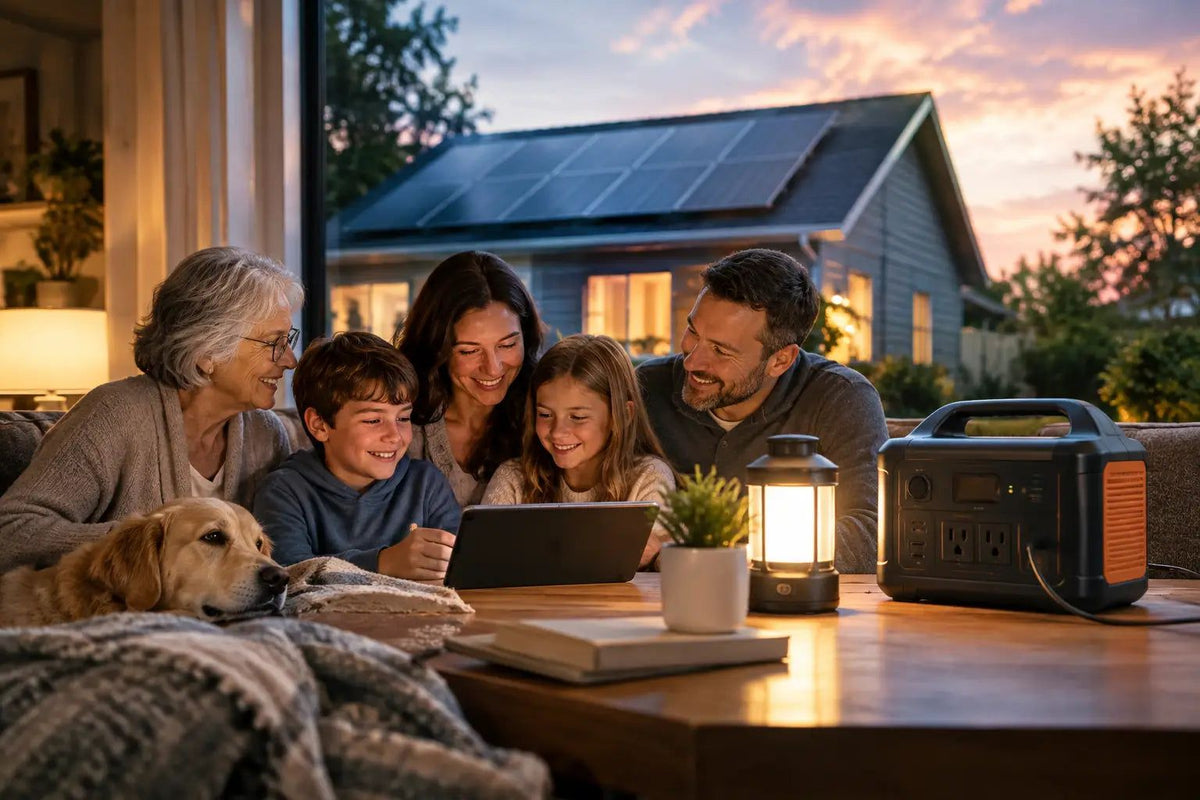
The refrigerator is getting warmer. Your phone is at 18 percent. The storm has passed, but the utility company says restoration could take several more days. That is the moment solar power family protection becomes more than a good idea. It gives your household a quiet, renewable way to keep the essentials working while you wait for the grid to return.
For most families, the goal is not to run the whole house exactly as normal. That takes a much larger and more expensive system. The practical goal is simpler: preserve food and medicine, keep phones and weather alerts charged, provide safe light, and support the devices your family truly depends on.
What Solar Power Can Protect During an Outage
A portable solar setup works best when it is built around priorities. Start with what would create a real problem if it stopped working. For one household, that may be a CPAP machine or refrigerated medication. For another, it may be a freezer full of food, a well pump, or phones needed to stay in touch with adult children.
Small solar generators, also called portable power stations, are excellent for low-draw essentials. They can charge phones, tablets, flashlights, battery banks, radios, cameras, and many laptops. A midsize unit may also run a modem, a fan, a CPAP, or a small medical device, depending on its wattage and battery capacity.
Refrigeration is possible, but it requires more planning. A modern refrigerator may use relatively little power over a full day, yet it draws a larger surge when its compressor starts. Check the appliance label or measure actual use with a plug-in watt meter before assuming a power station will handle it. Many families get better results by powering the refrigerator periodically, keeping the doors shut, and using coolers with ice for items they need frequently.
Solar power does not replace every backup option. A gas generator can make more sense for a central well pump, large sump pump, electric range, or whole-home air conditioning. It also comes with fuel storage, noise, exhaust, and safe outdoor placement requirements. Portable solar is quieter, can be used indoors, and does not require a fuel run after a storm. For many homes, the strongest plan uses both: solar for everyday critical loads and a properly managed generator for high-demand equipment.
Build Solar Power Family Protection Around Your Real Needs
The most common mistake is buying a power station because its advertising sounds impressive, then discovering it cannot run the equipment that matters. A little homework prevents that disappointment.
Start with watts, watt-hours, and runtime
Watts measure the power an item needs while it is operating. Watt-hours measure how much energy a battery stores. If a device uses 50 watts for 10 hours, it needs roughly 500 watt-hours of energy. Real-world results will be lower than the math suggests because inverters and charging equipment use some power themselves.
Write down the equipment your family would want during a three-day outage. Include its running watts, starting watts if it has a motor, and the number of hours you expect to use it each day. Keep the list honest. A phone charger is a small load. A hair dryer, space heater, toaster oven, and portable air conditioner are not.
As a rough starting point, a 300 to 500 watt-hour power station can cover communications, lighting, and small personal devices. A 1,000 to 2,000 watt-hour unit gives a family more room for a CPAP, modem, fan, small cooler, or limited refrigerator support. Larger battery banks can do much more, but weight, cost, recharge time, and panel size rise with capacity.
Plan for the sun you actually get
A solar panel is not a magic refill button. Its rated output is measured under ideal conditions. Cloud cover, smoke, shade, winter sun angles, panel direction, and dirty glass all reduce production. A 200-watt panel may not provide 200 watts for every hour it sits outside.
That does not make solar less useful. It means your plan should leave a margin. If you need 600 watt-hours per day, choose enough panel capacity and battery storage to account for a cloudy afternoon or a short winter day. In hurricane country, consider that the day after a storm may be bright and productive. In areas affected by wildfire smoke or long winter storms, extra battery capacity and another charging method are especially valuable.
Use panels in a location with direct sunlight, away from vehicle traffic and where children or pets will not trip over cables. Bring them inside overnight and whenever conditions turn unsafe. Solar panels can handle weather, but the power station and its connections may not be rated for rain.
Protect the basics before adding comforts
A simple hierarchy keeps spending focused. First, cover communication, lighting, weather information, and medical needs. Next, add food preservation and sanitation support, such as a refrigerator cycle, a small fan, or a device needed to operate a water filter system. Comfort items come after that.
This is also where a family plan matters. Decide who is responsible for checking battery level, moving panels as the sun shifts, and turning off unused equipment. Teach older children how to charge a phone or lantern without draining the main power station. A labeled power strip and a handwritten runtime sheet can be more helpful than an app when everyone is tired.
Choosing Equipment Without Overspending
A dependable setup does not need to begin with a whole-home battery installation. A portable power station paired with folding solar panels is a sensible first step for many homeowners, renters, grandparents, and families who may need to evacuate.
Look for a unit with enough AC outlets and USB ports for your household, a clear display, pass-through charging if you need it, and battery chemistry designed for frequent use. Lithium iron phosphate batteries are often a good choice for preparedness because they typically offer a long service life and stable performance, though they can cost more upfront. Brands such as Jackery and Lion Energy offer options at different sizes, but capacity and compatibility matter more than a logo.
Before buying, confirm the unit's continuous output and surge rating. A station may store plenty of energy but still fail to start an appliance with a demanding motor. Also check solar input limits. Pairing oversized panels with an input the station cannot accept does not improve charging and can create compatibility problems.
Keep cables, adapters, a weather radio, headlamps, rechargeable lanterns, and a printed copy of your power plan together. A power station is only useful if you can find the right cord in the dark.
Test Your System Before the Next Storm
The first outage should not be your training day. Pick a calm weekend and run a short home exercise. Charge the station fully, connect the panels, and power the devices on your priority list. Notice what runs, how much energy it uses, and what takes more setup than expected.
Try the refrigerator plan. Test the CPAP with its normal settings. Make sure everyone knows which outlet is reserved for medical equipment. If your home relies on an electric garage door, test the manual release and keep a key accessible. If you have a security system or internet-based phone service, learn how long its backup battery lasts.
Review the system twice a year, ideally when you change smoke alarm batteries or refresh emergency food. Recharge the power station according to its manual, inspect cables for damage, clean panels, and update your device list when your family's needs change. A new baby, a new prescription, a pet with temperature-sensitive medication, or an aging parent staying in the home can change your priorities quickly.
Solar Is One Layer of a Family Plan
Solar power is most useful when it supports the rest of your preparedness supplies. Stored water reduces pressure on electric pumps. Shelf-stable food means you do not have to save every watt for the refrigerator. Blankets, safe indoor lighting, and a way to cook without grid power make a cold or dark evening more manageable.
If your budget is limited, begin with a modest power station, a panel, and a clear plan for charging phones and running lights. Add capacity after you have tested what your family actually uses. SHTF Prepper Club encourages families to build readiness in layers because a working, understood setup is better than an expensive system still sitting in its box.
Start with the next outage you can realistically picture, not the biggest disaster you can imagine. A little stored power, used wisely, can give your family more options, more information, and a calmer home while the lights are out.