
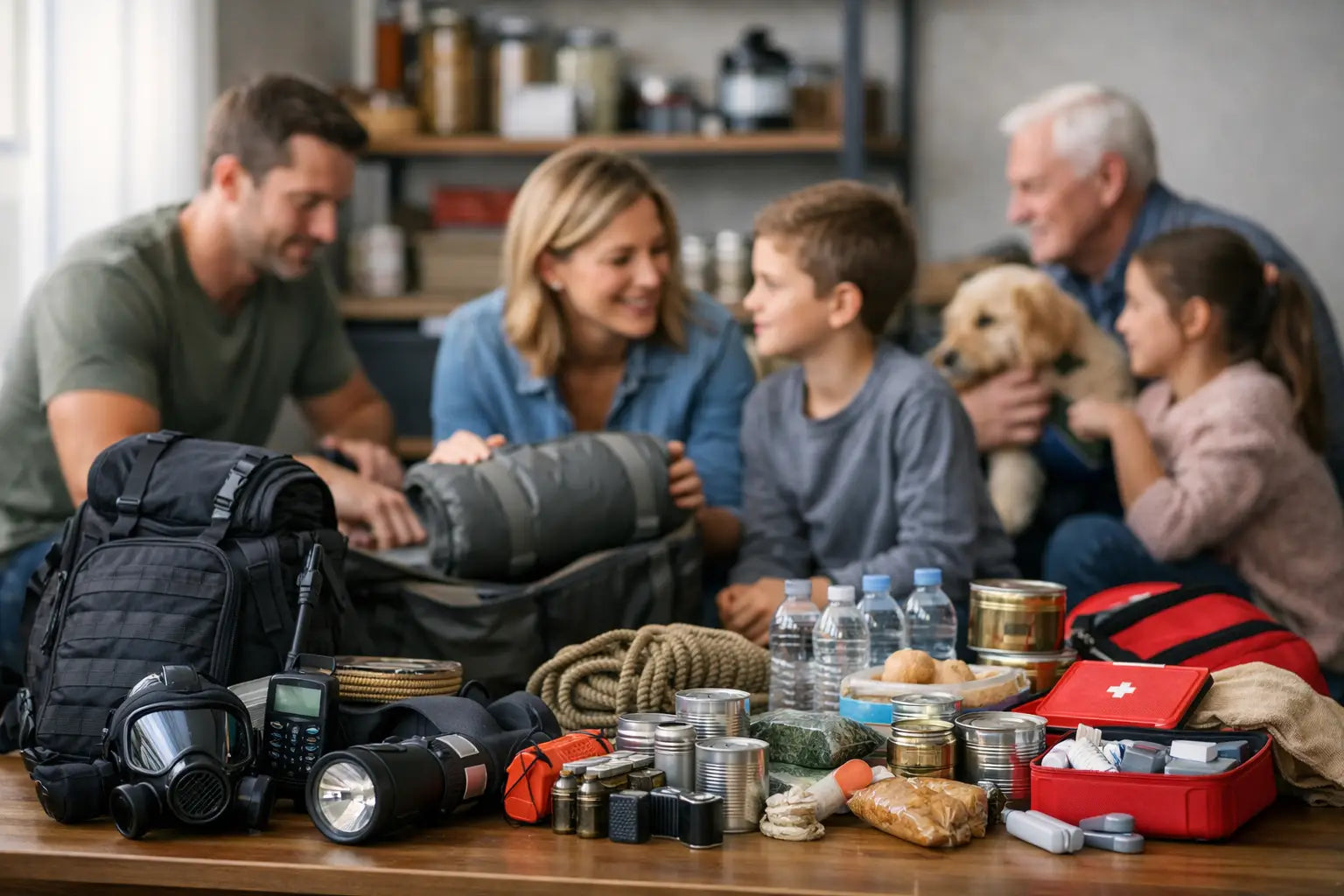
A dead cell tower, an empty grocery shelf, and a power outage stretching into its second day can make the term SHTF feel less like internet shorthand and more like a real question: What does my family need to be okay?
For most households, the answer is not a bunker or a warehouse of gear. It is a calm plan for the disruptions that actually happen: hurricanes, winter storms, wildfire smoke, a local evacuation, a water-main break, or a week when stores cannot restock. Preparedness gives your family more options when normal routines stop working.
What SHTF Preparedness Really Means for a Family
SHTF is commonly used to describe a serious emergency where everyday systems are disrupted. That can sound dramatic, but family preparedness works best when it stays grounded. Think less about a movie-style catastrophe and more about the practical problems created by a three-day or three-week disruption.
Can everyone drink safe water? Can you keep phones charged and necessary medications protected? Do you have food your children will eat without relying on a refrigerator? Does every adult know where to meet if school, work, and home are separated by an evacuation order?
Those are the decisions that matter first. Your plan should reflect where you live, who lives with you, and the risks you have already seen. A family in coastal Florida may prioritize hurricane evacuation and backup power. A household in the Pacific Northwest may focus on earthquake supplies and water storage. In a northern state, warmth and safe indoor cooking may rise to the top of the list.
Preparedness is not one shopping trip. It is a system you build, test, and improve over time.
Start With the First 72 Hours
The first three days of an emergency are when a few well-chosen supplies make the biggest difference. Public services may be stretched thin, roads may be blocked, and stores may be closed or sold out. Your goal is to keep everyone safe, hydrated, fed, warm or cool enough, and informed.
Begin with water. Store at least one gallon per person per day for drinking and basic sanitation, then account for pets, hot weather, medical needs, and cooking. A family of four needs at least 12 gallons for three days, but many families find a two-week supply more realistic once they begin adding containers gradually. Stored water is reliable. A quality water filter and purification backup add flexibility if your stored supply runs low.
Next, build food around what your family will genuinely use. Shelf-stable meals, canned proteins, grains, fruit, snacks, and familiar comfort foods all have a place. Emergency food storage is most useful when it provides calories, variety, and simple preparation. If the power is out, foods requiring little water and no complicated cooking are especially valuable.
Then cover light, communication, and power. Flashlights or headlamps are safer and more useful than relying on candles. Keep batteries organized and labeled. A charged power station can keep phones, lights, medical devices, and small appliances running, but its value depends on matching its capacity to your needs. A small unit may be perfect for communications and lights. Running a refrigerator, sump pump, or portable air conditioner requires a much larger plan.
Finally, make room for medical needs. Your first-aid supplies should go beyond a small box of adhesive bandages. Include wound care, over-the-counter medications your family uses, gloves, a thermometer, copies of prescriptions, and a plan for keeping prescription medicines available. If someone relies on powered medical equipment, backup power should be one of your first priorities, not an item for later.
Build Your SHTF Plan Around Real Scenarios
Supplies matter. Decisions matter just as much.
Start by discussing the three situations most likely to affect your home: sheltering in place without utilities, leaving quickly because of an evacuation, and being unable to travel home from work or school. Each situation calls for a different setup.
For sheltering at home, organize supplies where they can be reached in the dark. A labeled storage area with water, food, light, sanitation supplies, first aid, and cooking equipment prevents the frantic search through closets. Keep a printed contact list and local maps with these supplies. During a widespread outage, you may not have internet access when you need it most.
For evacuation, prepare a bag or tote for each person with clothing, medications, hygiene items, copies of key documents, snacks, water, a flashlight, and comfort items for children. This does not need to be military-looking or oversized. It needs to be easy to grab, easy to carry, and refreshed as seasons and family needs change. Include pet food, a leash or carrier, and veterinary records if animals are part of your household.
For separation during the day, choose an out-of-area contact who can relay messages if local networks are overloaded. Agree on two meeting places: one near home and one outside your neighborhood. Parents should also know their school district's reunification procedures before an emergency, not while waiting in line afterward.
Spend in the Right Order
A preparedness budget can be modest or substantial. Either way, the order matters more than buying the most impressive item first.
Cover water, food, light, first aid, and a basic communications plan before investing in specialized equipment. After that, add power outage essentials, safe cooking and warmth options, and longer-term food storage. If you have a larger budget, a home power station, additional water capacity, freeze-dried food, a freeze dryer, or a garden and seed plan can make sense. These are useful tools, but they do not replace the basics.
Avoid buying supplies because they look good on a checklist. A compact stove is helpful only if you have safe fuel storage, know how to use it, and have a safe outdoor place to operate it. A generator can be a lifesaver, but it requires fuel management and must always run outdoors, far from doors, windows, and vents. A large food supply should include foods your family can prepare, tolerate, and rotate before expiration.
The best system is one you can maintain. Start with a $200 foundation if that is what fits your household. Add one practical category at a time. SHTF Prepper Club organizes preparedness around the needs families handle first, from water and food to power, first aid, warmth, and long-term food independence.
Do Not Forget the Everyday Details
Emergencies become harder when small household needs are overlooked. Think through sanitation when plumbing is unavailable, including trash bags, toilet paper, wipes, soap, and a simple backup toilet plan. Keep cash in small bills because card readers and ATMs may not work during a prolonged outage.
Consider temperature, too. In cold weather, layers, sleeping bags, blankets, hats, and a plan for safe heat can protect your family better than one oversized coat. In hot weather, cooling becomes a health issue, especially for older adults, infants, and people taking certain medications. Identify public cooling centers and relatives or friends outside your immediate area before heat becomes an emergency.
Take photos of insurance documents, identification, property records, and valuable belongings. Store copies securely, and keep printed copies of the essentials in your evacuation supplies. It is not exciting work, but it can save days of stress after a storm, fire, or evacuation.
Practice Before You Need It
A plan that has never been used is only a starting point. Once or twice a year, turn off the lights for an evening and see how your household functions with only prepared supplies. Cook a simple meal using your backup method. Check whether the children know where flashlights are. Make sure every phone has the key contact numbers saved and written down.
Rotate food and water on a calendar. Test batteries and power stations. Review clothing in evacuation bags as children grow and seasons change. Replace expired medicines and first-aid items. These small habits keep a preparedness plan from becoming a forgotten pile of boxes.
You do not need to prepare for every imaginable event this month. Put a few gallons of water aside, choose a reliable light source, and make a family phone plan this week. That is how readiness begins: one useful decision, made while life is still normal.