
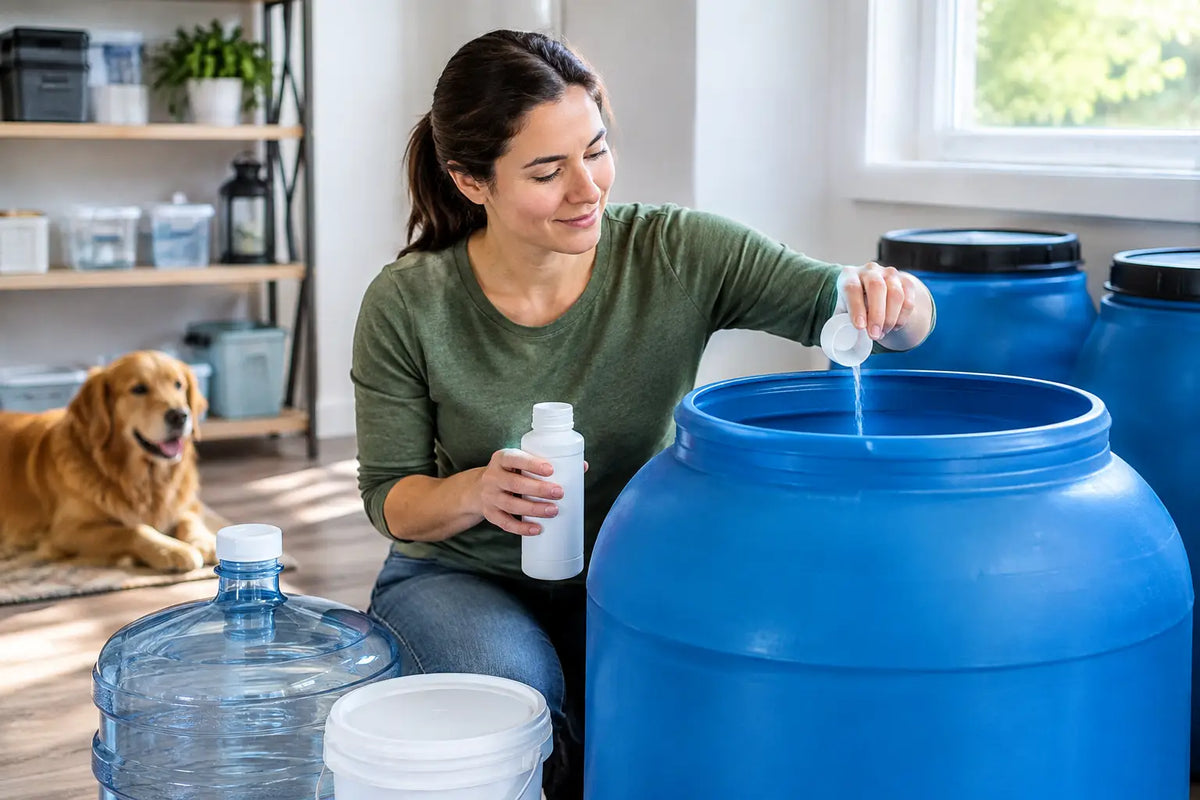
The water in the back of the pantry is easy to forget - until a hurricane, winter storm, or broken water main makes the kitchen faucet unreliable. Knowing how to sanitize stored water gives your family a practical backup plan, but it starts with one important distinction: water that has been stored cleanly and remains sealed may not need treatment at all.
Sanitizing is for water you are unsure about. Perhaps a container was opened, stored in a hot garage, exposed to debris during an emergency, or filled from a source that may no longer be safe. The goal is to kill germs that can cause illness. It does not remove gasoline, pesticides, heavy metals, salt, or other chemical contamination.
First, Decide Whether the Water Needs Treatment
Start with a quick, honest check. Commercially bottled water that is unopened, undamaged, and within its best-by date is normally ready to drink. The same is generally true for municipal tap water stored in a properly cleaned, food-grade container with a tight cap, provided it has been rotated on schedule and has no unusual odor, color, or visible particles.
If water looks cloudy, has floating material, smells unusual, or came from a source you cannot verify, treat it as questionable. Cloudy water should be filtered before disinfection. Pour it through a clean cloth, coffee filter, or paper towel into a clean container to remove sediment. That step does not make water safe by itself, but it helps the disinfectant or heat work properly.
Do not try to sanitize water that may contain fuel, industrial chemicals, sewage, ocean water, or floodwater. Boiling and bleach kill many germs, but neither turns chemically contaminated water into drinking water. In that situation, use another stored source or a water treatment system specifically rated for the contaminant involved.
How to Sanitize Stored Water With Bleach
For most households, plain liquid household bleach is the simplest emergency disinfection option. Use only regular, unscented bleach with sodium hypochlorite as the active ingredient. Avoid scented, splashless, color-safe, gel, or bleach products with added cleaners. Those are not meant for drinking-water treatment.
Check the label before you begin. Household bleach formulas vary in strength, so the product label and current local public-health guidance should take priority over any general rule. For clear water, a common emergency guideline for regular unscented household bleach is 8 drops per gallon. If the water is cloudy after filtering, use 16 drops per gallon.
Add the bleach, stir or shake the container thoroughly, and let it stand for 30 minutes. A slight chlorine smell afterward is a good sign. If there is no faint chlorine smell, repeat the dose once and wait another 15 minutes. If the water still does not have a light chlorine smell, do not rely on it for drinking.
A clean medicine dropper makes this much easier than guessing. Keep one with your water supplies, clearly labeled for this purpose only. Also keep bleach in its original container, stored away from children, heat, and direct sunlight. Bleach loses strength over time, so rotate it regularly rather than assuming an old bottle will work when you need it.
Bleach-treated water can taste a little flat or chlorinated. That is usually a quality issue, not a reason to skip treatment. Once the water is safe, pouring it back and forth between two clean containers can improve the taste. Do not do this before treatment, since it can introduce more contamination.
A note on water purification tablets and drops
Water purification tablets and chlorine dioxide drops can be a good fit for evacuation bags, travel, and compact emergency kits. They are light, clearly portioned, and do not depend on keeping a bottle of bleach fresh. Follow the product directions exactly, especially the required wait time. Some products take longer than bleach, and cold water may need extra contact time.
These options are useful additions, not replacements for stored water. A family sheltering at home for several days needs volume first. Treatment products help you stretch options when a container becomes questionable or when you must collect water from a safer available source.
Boiling Is Reliable When You Have Safe Fuel
Boiling is another dependable way to disinfect stored water. Bring the water to a rolling boil for one full minute. If you live above 6,500 feet, boil it for three minutes because water boils at a lower temperature at higher elevations.
Let the water cool naturally in a clean, covered container. Do not add ice unless it was made from safe water. Boiling does not leave behind a protective disinfectant residual the way chlorine does, so keep boiled water covered and use it soon.
The trade-off is fuel. During a power outage, an electric range may be useless, and every gallon takes time and energy to heat. A camp stove, outdoor propane cooker, or safe indoor-rated emergency cooking option can be valuable, but never use charcoal grills, gasoline-powered equipment, or outdoor-only stoves inside the house, garage, or enclosed porch. Carbon monoxide can become an emergency of its own.
Sanitize the Container Before You Fill It
A clean container matters as much as the water inside it. If you refill your own water containers, start with food-grade plastic, stainless steel, or containers made specifically for potable water. Do not use containers that previously held milk, juice, chemicals, or non-food products. Their openings can be difficult to clean, and residues or bacteria may remain.
Wash the container and cap with dish soap and clean water, then rinse well. To sanitize it, use a bleach solution made according to current public-health guidance or the container manufacturer’s instructions. Swish the solution so it touches the interior walls, threads, cap, and spout. Drain it completely, then allow the container to air-dry or rinse it with treated water if directed.
Fill sanitized containers from a safe drinking-water source. Seal them tightly, label each container with the fill date, and store them in a cool, dark location away from gasoline, paint, pesticides, and strong-smelling household chemicals. Water containers can absorb odors, especially when stored in a garage or shed.
Store Enough Water So You Have Choices
Treatment is useful, but it should not be your first line of defense. A basic target is one gallon of water per person per day for at least three days. That amount covers drinking and limited food preparation, but it can feel lean for families with infants, older adults, nursing mothers, pets, medical needs, or hot-weather conditions.
For a household of four, three days means at least 12 gallons. A more comfortable two-week supply is 56 gallons before accounting for pets and extra hygiene needs. You do not have to buy it all at once. Start with a few cases of bottled water and a couple of stackable water containers, then build from there as your budget allows.
Keep drinking water separate from water intended for flushing toilets or basic cleanup. If you have a water filter, know what it is designed to handle. Many portable filters reduce bacteria and protozoa but do not reliably address viruses or chemical pollutants. Some systems work best when paired with a disinfectant step. Read the rating before an emergency, not while your family is waiting for a boil-water notice to end.
Rotate Water Before It Becomes a Question Mark
The simplest water plan is the one you can maintain. Write the fill date directly on every container. Replace self-filled stored tap water about every six months, using the older water for plants, cleaning, or ordinary household tasks if it still looks and smells normal. Replace commercially bottled water according to the manufacturer’s date.
As you rotate, inspect each container for cracks, leaks, swelling, damaged caps, algae growth, or a changed smell. A small leak can leave you with far less water than you thought. A quick check twice a year, perhaps when clocks change or you service smoke alarms, keeps the job manageable.
Preparedness does not require a warehouse full of supplies. It requires knowing what you have, keeping it clean, and making one calm decision before a disruption forces the issue. A few properly stored gallons today can spare your family a difficult choice later.