
Table of Contents
- Why Securing Heavy Furniture Is Your First Line of Defense
- How to Find Wall Studs for Furniture Anchoring
- Earthquake Furniture Straps: The Most Versatile Anchoring Tool
- Step-by-Step: Securing Bookcases, Cabinets, and Appliances
- Earthquake Safety for Renters: Non-Destructive Solutions That Work
- Weight Capacity, Hardware Selection, and the Mistakes That Cause Failures
- Maintenance and Inspection: Keeping Your Anchors Ready
- Frequently Asked Questions
Last Updated: September 13, 2026
Why Securing Heavy Furniture Is Your First Line of Defense
Most earthquake injuries inside a home aren't caused by the ground shaking. They're caused by what falls on you while it shakes. That single fact reframes how to secure heavy furniture for earthquake safety: the goal isn't protecting your belongings, it's protecting the people standing next to them.
Furniture restraint is the practice of anchoring top-heavy items to wall studs so they can't tip, slide, or topple during seismic activity. It's the cheapest hazard reduction you can do, and it works because it stops the fall before it starts.
At SHTF Prepper Club, we build household readiness plans around the principle that structural integrity beats reaction time. You can't outrun a falling bookcase. You can bolt it down. According to FEMA's earthquake safety guidance, unsecured tall furniture and appliances are among the leading causes of earthquake-related injuries indoors, which is why anchoring them is treated as a priority mitigation step rather than an optional upgrade.
Below, we'll walk through how to find studs, which hardware actually holds, and how to handle this if you rent.
How to Find Wall Studs for Furniture Anchoring
Locating wall studs is the step that decides whether your anchor holds or rips out of drywall. Studs are the vertical wood or metal framing members behind your wall surface, typically spaced 16 or 24 inches apart on center (hud.gov).
Three ways to find them:
- Stud finder. Run it slowly across the wall and mark both edges of each stud with painter's tape. Re-check at two heights to confirm.
- Magnet method. A strong magnet locates the drywall screws holding the wallboard to the stud. Follow the vertical line of screws.
- Baseboard nails. Nails in the baseboard trim usually land on studs. Probe gently with a thin finish nail to confirm.
A common mistake is anchoring into drywall alone. Drywall has almost no pull-out strength, and a loaded bookcase will win that fight every time. Also check for plumbing and wiring before drilling; stud finders with electrical detection are worth the extra cost.
Earthquake Furniture Straps: The Most Versatile Anchoring Tool
Earthquake furniture straps are flexible nylon or polyester restraints that connect furniture to a wall anchor, allowing slight movement while preventing tipping. They're the most forgiving option because they tolerate the flex that rigid brackets can't.
Why they work: a strap distributes force across a wider attachment area and bends with seismic movement instead of snapping. Rigid L-brackets are stronger in a straight pull, but they can crack the furniture frame when the wall and floor move in different directions.
Matching Hardware to Furniture Weight
Most guides skip this step, and it's the one that decides whether your anchor holds. You can't pick hardware by eyeballing the furniture, you have to estimate the loaded weight, then size the fastener above it.
A workable rule of thumb: add the empty furniture weight, the contents, and a 50% safety margin. A 70-pound empty bookcase loaded with 150 pounds of books is a 220-pound load; size hardware for at least 330 pounds (fema.gov).
| Hardware | Best For | Typical Working Load | Renter-Friendly |
|---|---|---|---|
| Nylon furniture strap (1.5-2 in.) | Bookcases, dressers, TVs | 200-400 lb per strap | Yes, with toggle anchors |
| Steel L-bracket (2-3 in.) | Cabinets, appliances, frames | 300-600 lb per bracket | No, needs stud screws |
| Cabinet latches | Cupboard doors | Door only, no load rating | Yes |
| Safety hasps | Cabinets, drawers | 50-100 lb | Yes |
| Hook and eye | Light items, decor | 20-40 lb | Yes |
These are working ranges, not guarantees, always defer to the manufacturer's printed rating on the package. A strap rated for 400 pounds in a straight pull may hold far less if it's anchored into drywall instead of a stud.
Straps vs. Brackets: When to Use Which
- Use straps on tall, narrow furniture (bookcases, wardrobes, dressers) where a rigid bracket would concentrate stress at one point and crack the frame.
- Use L-brackets on heavy, boxy items (refrigerators, ranges, file cabinets) that won't flex and where a straight-pull connection is stronger.
- Use both on very tall or very heavy units, a strap at the top and a bracket at the base stops both tipping and sliding.
Pair straps with cabinet latches on the doors so contents stay inside. A secured bookcase that dumps its shelves is still a hazard.
Step-by-Step: Securing Bookcases, Cabinets, and Appliances
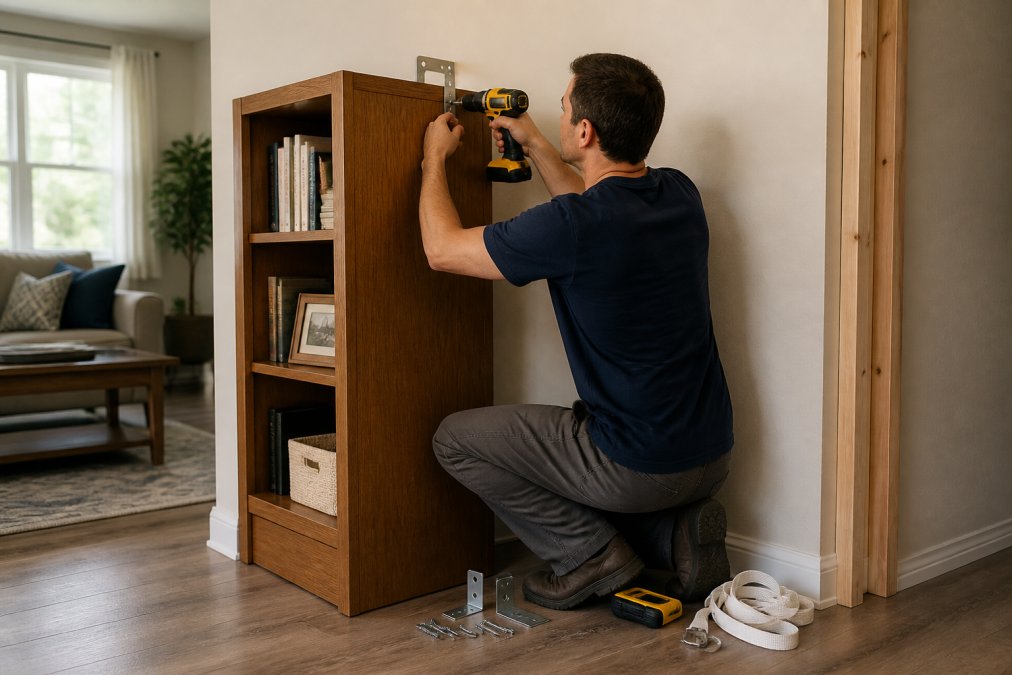
Different furniture fails in different ways, so the installation sequence changes with the item. Here's how to handle the three categories that cause the most injuries.
Bookcases and Tall Shelves
- Empty the unit and move it slightly away from the wall. Weight shifts during installation are a real injury risk.
- Mark your stud locations at the height where the anchor will sit, usually the top third of the furniture.
- Attach the strap plate or bracket to the back of the furniture using the included screws. Drill pilot holes to avoid splitting the frame.
- Position the unit back against the wall and transfer the stud marks to the anchor point.
- Fasten to the stud with screws long enough to bite at least 1.5 inches into solid wood.
- Repeat at two points for tall items. A single anchor lets furniture pivot; two stop rotation.
Cabinets and Dressers
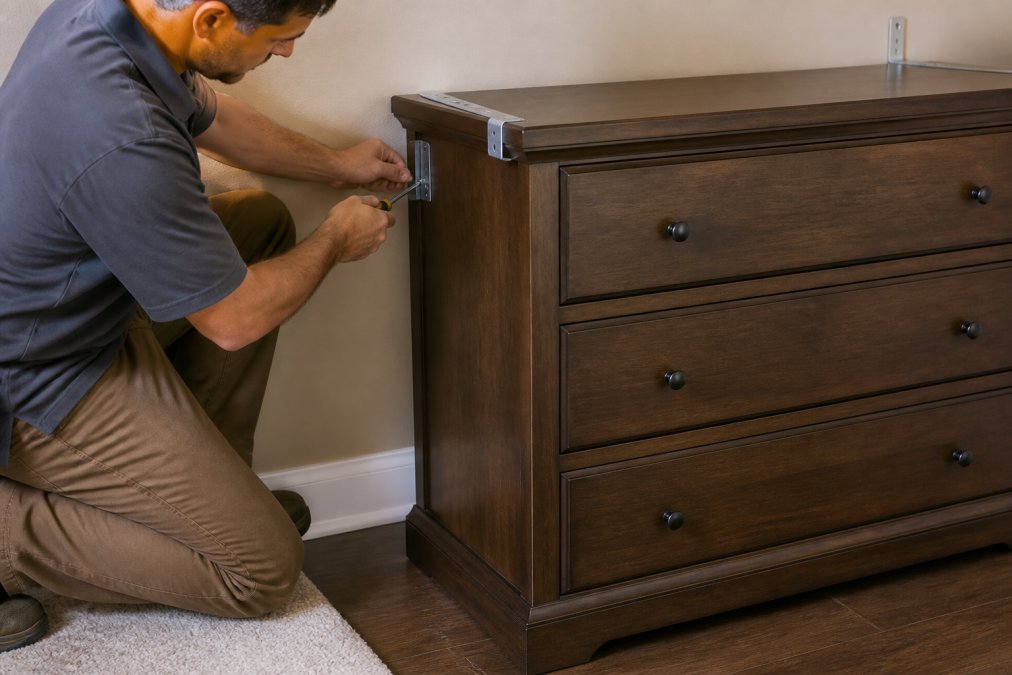
Cabinets and dressers add a second failure mode: the drawers and doors fly open and dump contents. Anchor the carcass to the wall the same way you would a bookcase, then add cabinet latches or safety hasps on every door and drawer. For dressers, anchor at the top back corners, the top-heavy load makes the upper anchor the one doing most of the work.
Appliances: Refrigerators, Ranges, and Water Heaters
Appliances are heavier and often have designated attachment points. Check the manufacturer's manual first, using the factory points preserves your warranty, and drilling into the wrong spot can crack a compressor housing or pierce a gas line.
- Refrigerators: anchor at the top rear to the wall stud, or use a floor-mounted bracket if the wall behind is inaccessible.
- Ranges: most have a rear anti-tip bracket that bolts to the floor or wall. Install it even if the range came without one, anti-tip brackets are widely available and inexpensive.
- Water heaters: strap the tank to two studs with plumber's tape or a manufactured strapping kit, wrapping at the upper and lower thirds of the tank.
Electronics and TVs
Secure TVs with a strap rated for the screen's weight, or use a wall mount rated for at least the TV's weight plus a margin. Route cords so they can't yank the set off a stand, and anchor the stand itself if it's a freestanding unit. Monitors and desktop towers get the same treatment, a strap or museum putty for light items, a bracket for anything over 20 pounds.
Earthquake Safety for Renters: Non-Destructive Solutions That Work
Renters face a real constraint: you can't remodel someone else's wall. But earthquake safety for renters doesn't require drilling into studs at all.
The best non-destructive options:
- Toggle bolts and heavy-duty wall anchors leave small holes you can patch with spackle before move-out.
- Quake putty and museum wax hold small decor and electronics in place without hardware.
- Velcro straps and hook and eye latches secure cabinet doors and light items.
- Tension rods inside cabinets keep dishes from sliding forward.
- Furniture straps with adhesive wall plates work for lighter bookcases when paired with cabinet latches.
Be honest about limits. Adhesive-only solutions fail under real seismic loads on heavy furniture. If your lease allows it, negotiate permission for a few anchor holes, then patch them at move-out. Document the condition of the wall before and after.
Weight Capacity, Hardware Selection, and the Mistakes That Cause Failures
Most anchoring failures trace back to one of four errors, not to bad luck.
- Skipping the stud. The single most common failure. Drywall anchors are for pictures, not bookcases.
- Undersizing hardware. Match the fastener rating to the item's weight plus contents. A loaded bookcase can weigh far more than the empty unit.
- One anchor point. Tall furniture needs at least two, or it pivots sideways.
- Ignoring attachment points. Drilling into the wrong part of an appliance can crack the frame or void the warranty.
Weight capacity matters more than most guides admit. Add up the furniture, the contents, and a safety margin, then pick hardware rated above that total. When in doubt, go heavier.
Maintenance and Inspection: Keeping Your Anchors Ready
An anchor you installed three years ago isn't guaranteed to be ready today. Seismic safety is a maintenance habit, not a one-time project.
Run this check twice a year, and after any noticeable shaking:
- Tug each strap and bracket by hand to confirm it's tight
- Re-tighten screws that have loosened from vibration
- Inspect straps for fraying, stiffness, or UV damage
- Confirm cabinet latches still engage fully
- Re-check that nothing heavy has been stacked on top of a secured unit
- Verify TVs and monitors are still strapped
A common mistake is treating installation as permanent. Wood dries, screws back out, and nylon ages. Five minutes twice a year keeps the whole system trustworthy. Keep a small hardware kit with spare screws, anchors, and a screwdriver near your evacuation kit so repairs don't wait.
Earthquake preparedness rewards the household that acts before the shaking starts, and anchoring heavy furniture is the highest-return task on the list. SHTF Prepper Club builds family readiness around exactly this kind of practical, low-fear preparation, from expert-vetted safety gear to comprehensive preparedness guides and long-term food storage with up to 25-year shelf life. Our kits and tools are designed for households that want reliable readiness without the overwhelm. Get started with SHTF Prepper Club and build a home that holds together when it matters.
Frequently Asked Questions
What are the best tools for anchoring heavy furniture to walls?
A drill with a stud finder, heavy-duty L-brackets, lag screws or toggle bolts, and nylon straps cover most situations. For masonry walls, you will need masonry anchors. For renters, adhesive-backed straps and tension wedges offer non-destructive options. Always match the hardware to your wall type and furniture weight. Earthquake safety depends on using fasteners rated for the load, not just any screw from a junk drawer.
How do I find wall studs for secure furniture anchoring?
Use an electronic stud finder, which costs little and saves time. Slide it across the wall until it signals a stud, then mark both edges with painter's tape. Studs sit 16 or 24 inches apart in most homes. If you do not have a stud finder, tap the wall and listen for a solid thud versus a hollow sound, or check for outlets and light switches, which are mounted to studs. Knowing how to find wall studs for furniture anchoring is the difference between an anchor that holds and one that rips out.
Can I secure furniture without drilling into walls if I rent?
Yes. Earthquake safety for renters relies on non-destructive options like heavy-duty adhesive hooks paired with nylon straps, tension rods wedged between furniture and ceilings, and furniture restraint kits that use adhesive pads rated for seismic loads. These work well for bookcases, TVs, and dressers up to a certain weight. Check the product's weight rating and test the adhesive bond after 24 hours. For very heavy items, ask your landlord about drilling, since safety often justifies minor wall repair.
Which pieces of furniture are most dangerous during an earthquake?
Tall, top-heavy items pose the greatest risk: bookcases, china cabinets, dressers, wardrobes, and TVs on stands. These can tip over with minimal shaking and cause crush injuries, especially to children. Anchoring these pieces to wall studs with L-brackets or earthquake furniture straps is the single most effective step. Also secure appliances like water heaters and refrigerators, which can rupture gas or water lines when they move.