

Last Updated: November 18, 2026
Quick Summary
To preserve goods for future bartering, store staples like rice, beans, honey, and salt in sealed, portioned units kept cool, dark, and dry, then rotate stock so older items are used first. Label each item with contents and date, and check expiration dates on a set schedule.
- Portion dry goods into small sealed mylar bags or airtight jars labeled with contents and date.
- White rice lasts 10+ years sealed below 70°F with oxygen absorbers and light blocked.
- Store what you eat and eat what you store, keeping older stock in front.
- Oils and fats turn rancid faster than other foods, so store them cool and dark in smaller bottles.
- Store fuel only in approved containers away from heat sources, pilot lights, and living areas.
Table of Contents
- Why Preserved Goods Beat Cash When Supply Chains Fail
- Start With Long-Term Food Storage Built for Trade
- Food Storage Shelf Life: What Actually Lasts and What Does Not
- Best Barter Items for Survival: The Categories Worth Stockpiling
- How to Rotate Emergency Food Supplies Without Losing Track
- Preserving Medicines, Batteries, Fuel, and Tools Safely
- Storage Conditions, Security, and Proof of Condition
- Build Your Trade Stock With Vetted Gear and a Written Plan
- Frequently Asked Questions
Why Preserved Goods Beat Cash When Supply Chains Fail
Money only works when everyone agrees it works. When shelves empty and card readers go dark, that agreement breaks fast. Learning how to preserve goods for future bartering turns your pantry into a currency that never needs a signal.
Cash loses value in a crisis. A sealed jar of honey does not.
Here is the part most guides miss. It is not enough to stockpile goods. You have to preserve them so they survive the wait and still look trustworthy when you trade. Below, we walk through what to store, how to keep it, and how to rotate it.
Start With Long-Term Food Storage Built for Trade
Food is the first currency in any disaster scenario. It is also the easiest to ruin through bad storage. Start with staples that hold up for years and portion them into small tradeable quantities.
Good starter items include:
- White rice and dry beans in sealed buckets
- Canned goods with intact seams
- Honey and salt, which keep almost indefinitely
- Sugar and coffee, both high-demand barter goods
If you want a ready-made stock you can portion into trade-sized units, browse our long term food independence selection. It saves you the guesswork on packaging and shelf life.
Packaging and Portioning for Small Trades
Big containers are hard to barter. Nobody wants to open a 50-pound bucket to trade for a cup of rice. Portion your stock into small, sealed units before you need it.
Repackage dry goods into sealed mylar bags or airtight jars. Label each one with the contents and the date. A small, clean, sealed portion is worth more in a trade than a scoop from a dirty bin.
Food Storage Shelf Life: What Actually Lasts and What Does Not
Shelf life is not a single number printed on a can. It is the product of the item, the packaging, and the storage conditions.
Here is a working reference built around the conditions that matter most: temperature, moisture, oxygen, and light. The ranges below are general planning estimates, not guarantees.
| Item | Typical Shelf Life | Temperature | Moisture / Humidity | Oxygen & Light | Packaging That Helps |
|---|---|---|---|---|---|
| White rice | 10+ years sealed | Below 70°F, stable | Keep dry; desiccant packs help | Low oxygen; block light | Mylar bag in bucket with oxygen absorber |
| Dry beans | 5-10 years sealed | Below 70°F | Dry; humidity shortens life | Low oxygen; dark | Mylar or airtight jar with absorber |
| Canned goods | 2-5 years | Cool, stable | Keep cans dry to prevent rust | No light needed; keep labels on | Original can; do not freeze |
| Honey | Indefinite | Room temperature | Sealed; honey is hygroscopic | Dark; sealed lid | Glass or food-grade plastic, airtight |
| Cooking oil | 1-2 years | Cool, dark | Keep water out | Dark; minimal headspace | Original sealed bottle; smaller bottles |
| Powdered milk | 5-10 years sealed | Below 70°F | Very moisture-sensitive | Low oxygen; dark | Mylar with absorber; reseal after opening |
| White sugar | Indefinite | Cool, dry | Clumps in humidity | Airtight; dark | Sealed container with desiccant |
| Salt | Indefinite | Any stable temp | Keep dry | Airtight | Sealed container |
| Pasta | 2-5 years | Cool, dry | Moisture causes mold | Dark | Original box inside sealed bag |
| Coffee (whole bean) | 1-2 years sealed | Cool | Moisture degrades flavor | Low oxygen; dark | Vacuum-sealed or mylar |
Three variables do most of the damage:
- Heat accelerates every chemical reaction, including rancidity and vitamin loss. A pantry that swings from 60°F to 90°F ages food faster than a steady 75°F closet.
- Moisture drives mold, caking, and rust. Desiccant packs and sealed containers matter more than most people expect.
- Oxygen oxidizes fats and oils and dulls flavor.
Watch out: oils and fats turn rancid faster than any other food, and rancid oil is not safe to trade as if it were fresh.
To compare real shelf-life and calorie data across survival food brands before you stockpile, read our survival food brands guide.
Best Barter Items for Survival: The Categories Worth Stockpiling
The best barter items for survival are the ones people need, cannot make themselves, and can use in small amounts. Think beyond food. Trade value follows supply and demand.
The core categories worth stockpiling:
- Food and water: rice, beans, canned goods, water in sealed containers
- Medical and first aid: bandages, antiseptics, pain relievers
- Hygiene and sanitation: soap, toothpaste, sanitizer, toilet paper
- Fuel and heat: propane, kerosene, firewood, matches
- Tools and repair: hand tools, duct tape, saws, chainsaws
- Comfort goods: coffee, alcohol, tobacco
Medical, Hygiene, and Sanitation Supplies
These items carry outsized trade value because people run out fast and cannot improvise them. Stock first aid supplies, soap, and sanitation products in sealed, small units.
Our first aid medical supplies let you build a barterable medical stock without overbuying. Keep everything dry, sealed, and checked for expiration dates.
How to Rotate Emergency Food Supplies Without Losing Track
The fix is simple: store what you eat and eat what you store. A rotation system keeps your trade stock usable.
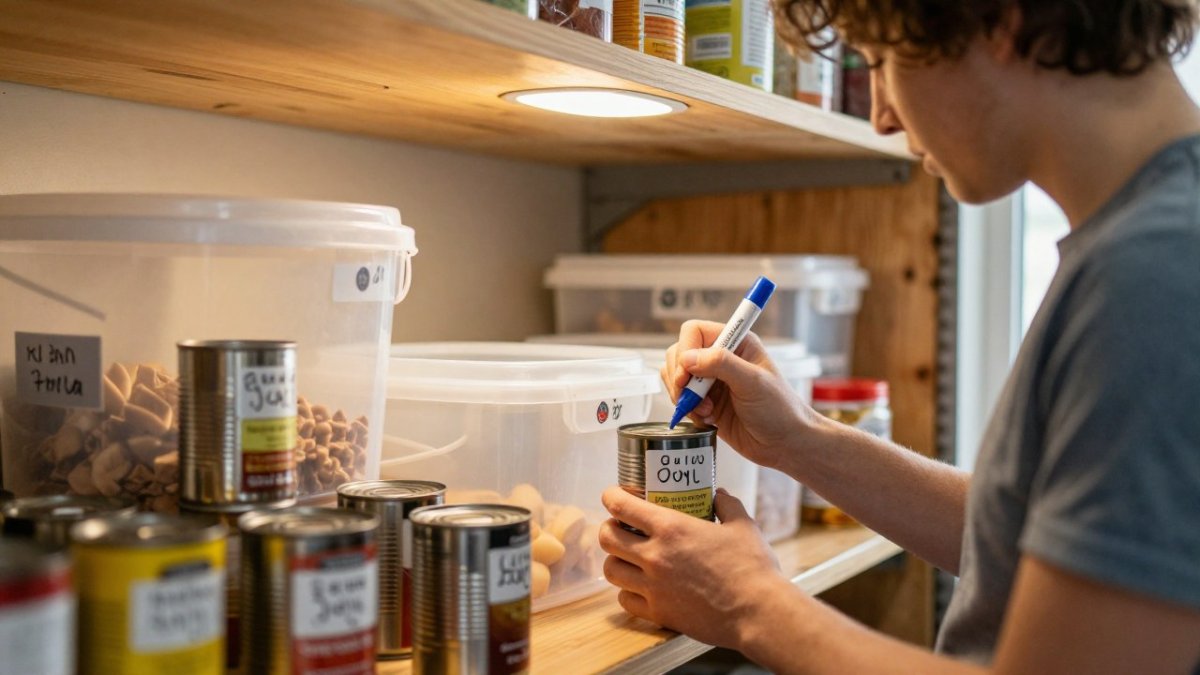
Use these habits:
- Label every item with the date it was stored
- Keep older stock in front, newer stock behind
- Check the pantry on a set schedule, such as every season
- Pull short-dated items into daily meals and replace them
If you want a full rotation method, our guide on how to rotate emergency food supplies walks you through a system that keeps trade stock fresh without wasting money or space.
Preserving Medicines, Batteries, Fuel, and Tools Safely
Not all trade goods are food, and each type needs its own handling. Get this wrong and you store a hazard instead of an asset. The guidance below sticks to common manufacturer and safety-authority recommendations; when a label or official guidance is stricter, follow it.
Medicines and First Aid
Most over-the-counter and prescription medicines lose potency over time, and some degrade faster in heat or humidity. The bathroom cabinet is one of the worst places to store them because of steam and temperature swings.
- Keep medicines dry, cool, and out of direct light. A locked, labeled bin in a climate-controlled room beats a bathroom shelf.
- Leave pills in their original labeled containers so dosage and expiration stay readable.
- Check expiration dates on a set schedule and rotate short-dated stock into everyday use first.
- Do not use or trade expired medicines. The FDA advises against using expired medicines because their safety and effectiveness are no longer guaranteed. Labeling an expired medicine does not make it safe to use.
- Use a medicine take-back location or mail-back option for expired or unwanted medicines when available. Otherwise, follow FDA disposal guidance; only medicines on the FDA flush list should be flushed when a take-back option is unavailable.
Watch out: insulin and some liquid antibiotics require refrigeration, and a power outage can ruin them. Do not present temperature-compromised medicine as usable.
Batteries
Batteries are high-demand trade goods, but they self-discharge and can leak or rupture if stored badly.
- Store in a cool, dry place, ideally around room temperature or cooler. Heat shortens life and raises leak risk.
- Keep batteries in original packaging, away from loose metal that can short the terminals.
- Do not freeze alkaline batteries; condensation after thawing can damage them.
- Check dates and rotate. Test a sample from each batch before trading.
- Store lithium and alkaline batteries separately and follow the manufacturer's storage guidance.
Fuel and Heat Sources
Fuel is one of the most valuable trade goods and one of the most dangerous to store. Follow the manufacturer and your local fire authority.
- Store propane, kerosene, and gasoline only in approved containers, away from heat sources, pilot lights, and living areas.
- Ventilate storage spaces. Fuel vapors accumulate and ignite.
- Keep fuel out of reach of children and away from anything that can spark.
- Never refill a container that is not designed for that fuel, and never store fuel in unmarked containers.
- Rotate fuel according to manufacturer guidance; gasoline in particular degrades over months, not years.
Watch out: fuel stored near a heat source or in the wrong container is a fire and explosion risk. If you are unsure about a container or a storage location, do not store fuel there.
Tools and Repair Supplies
Tools hold value when they are clean, sharp, and rust-free. A rusty saw or a seized pair of pliers trades poorly.
- Clean and oil metal tools after use, and keep them dry.
- Store hand tools in a dry box or cabinet with a moisture absorber.
- Keep chainsaw chains sharp and bar oil topped off; store the saw empty of fuel if it will sit.
- Label and organize repair supplies like duct tape, wire, and fasteners so a trade is quick and clean.
For oils and similar perishable consumables, our guide on how to store cooking oils for long-term use covers the storage conditions that keep them usable.
Storage Conditions, Security, and Proof of Condition
Cool, dark, dry storage protects shelf life. Clean, sealed packaging helps show the goods were cared for.
Keep these conditions in mind:
- Hold storage areas at a stable, cool temperature
- Block light and moisture from dry goods
- Keep pests out with sealed containers and regular checks
- Store trade stock out of sight, and do not advertise what you have
Proof of condition matters. A labeled, sealed, undated jar tells a trading partner you kept it properly. A dusty, open bag tells them the opposite.
Build Your Trade Stock With Vetted Gear and a Written Plan
A pile of goods is not a plan.
Start small. Pick three categories, portion them into small units, and set a rotation schedule you will actually keep.
SHTF Prepper Club offers curated gear and guidance for food storage, water filtration, power, and safety, including long-term food storage solutions with up to a 25-year shelf life.
The hardest part of bartering is not the trade. It is the years of storage before the trade, when goods spoil quietly and plans fall apart.
Frequently Asked Questions
What are good items to barter with after a disaster?
Small, high-demand consumables move fastest: canned goods, coffee, cigarettes, alcohol, hygiene items, first aid supplies, batteries, and fuel. Keep quantities small so a single trade does not wipe out your own stock. Preserve goods in sealed, labeled portions and store them where heat and moisture stay low. Items people already use daily, like soap and pain relievers, tend to hold trade value better than specialty gear most households never learned to use.
How should you store goods intended for future bartering?
Match the storage method to the item. Dry staples go into food-grade buckets or mylar bags with oxygen absorbers. Canned goods stay off concrete floors and out of freezing temperatures. Batteries stay in original packaging, away from heat. Fuel goes in approved containers in a ventilated space, never inside living areas. Label everything with the date it was stored so you can rotate it later and show a buyer the condition before a trade.
How can you rotate stored goods without losing track of them?
Use first-in, first-out. Write the storage date on every container, keep the oldest items at the front, and check the shelves on a set schedule, such as every six months. Keep a simple paper log of what you have and when it expires. When something nears its date, move it into everyday use and replace it. This keeps your barter items for survival in good condition and stops you from trading expired goods.
Which supplies keep well for long-term storage?
White rice, dry beans, rolled oats, sugar, salt, honey, and freeze-dried meals hold up for years when sealed against moisture and oxygen. Canned goods generally stay usable well past their printed date if the can is undamaged. Hard soap, sealed first aid supplies, and quality hand tools also store well. Coffee, cooking oil, and most medicines lose quality faster, so rotate those on a shorter cycle and store them according to the label.
