
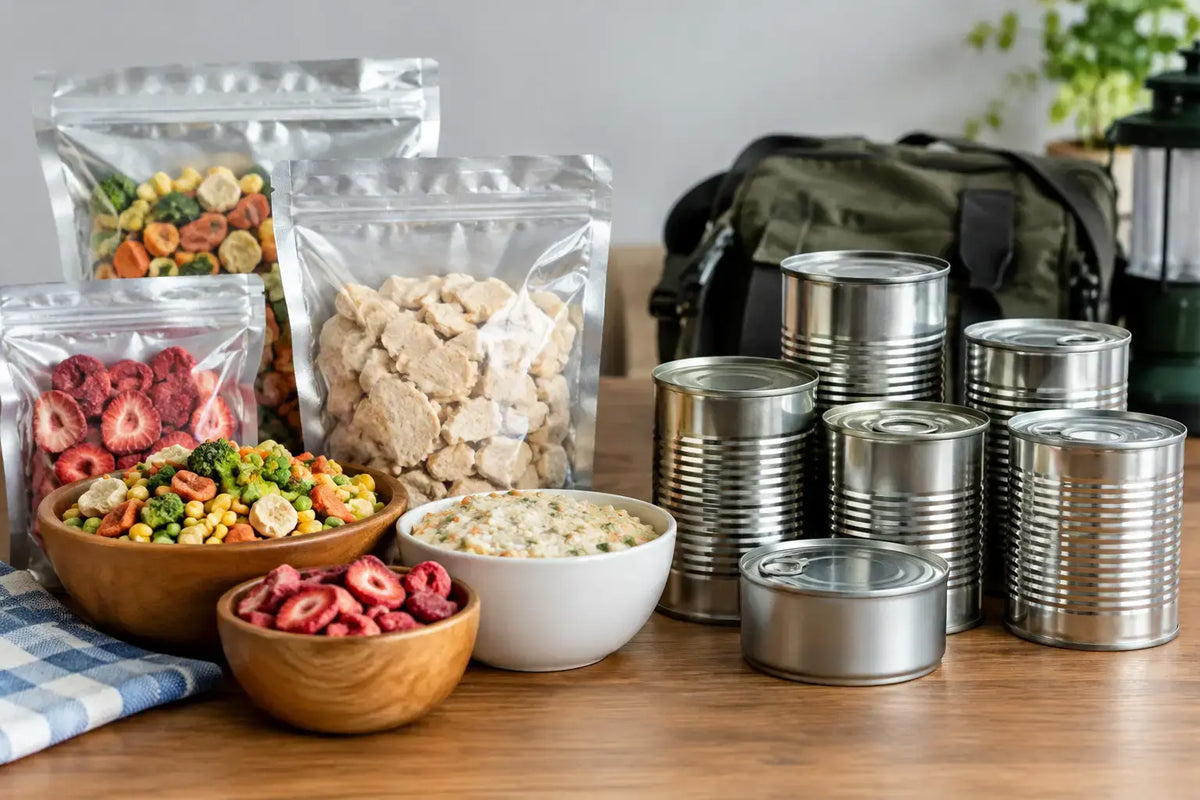
A pantry can look well stocked and still leave your family with a problem during a long outage: plenty of food, but not enough water, fuel, or time to prepare it. That is why freeze dried versus canned food is not really a question of which one is better. It is a question of what kind of emergency you are preparing for and what your household can use without added stress.
Canned food is familiar, affordable, and ready when the lights are out. Freeze-dried food is light, compact, and built for long-term storage. Most practical family food plans need some of both.
Freeze Dried Versus Canned Food: The Quick Answer
Keep canned foods for the next meal, the next storm, and the next few months. Keep freeze-dried foods for the deeper pantry - the food you may not need for years, but will be grateful to have during a prolonged disruption.
If your family is starting from scratch, canned foods usually make the most sense first. You can buy items your family already eats, rotate them through normal meals, and build a useful supply without a major upfront purchase. Think canned chicken, tuna, beans, vegetables, fruit, soups, chili, and shelf-stable meals.
Freeze-dried food becomes especially valuable when you want to store more calories in less space, reduce waste from expiration dates, or build a longer-term food reserve. It is also a strong fit for evacuation, camping, remote homes, and households that want to store food without filling every closet with heavy cans.
The smartest choice is often a layered pantry: everyday groceries in front, canned food behind them, and freeze-dried staples and meals set aside for true emergencies.
Shelf Life Is the Biggest Difference
Freeze-dried food wins on storage life. Properly packaged freeze-dried foods, stored in a cool, dry place and left unopened, can often last 20 to 25 years. That long window is why families use it for serious emergency food storage. You buy it, inventory it, protect it from heat and moisture, and do not have to replace it every year.
Canned food has a much shorter best-quality window, commonly one to five years depending on the product. Many commercially canned foods can remain safe beyond their best-by date if the can is intact and stored well, but texture, flavor, and nutritional quality gradually decline. Cans are made for rotation, not for ignoring in the back of a garage for a decade.
Storage conditions matter for both. A hot attic, humid shed, or sun-baked garage can shorten shelf life and damage packaging. Food storage belongs in a dry, temperature-stable part of the home whenever possible. A basement pantry, interior closet, or dedicated shelf in a conditioned space is usually a better choice.
For canned food, inspect each can before use. Do not use cans that are bulging, leaking, deeply dented at a seam, badly rusted, or that spray or smell unusual when opened. Those are not situations to gamble on, especially when feeding children or older relatives.
Water Changes the Equation
Freeze-dried food is only convenient if you have water. Most freeze-dried meals, fruits, vegetables, and ingredients need water to rehydrate. Some can be eaten dry, but that is rarely how your family will want to eat them for several days.
This does not make freeze-dried food a bad choice. It simply means food planning and water planning must happen together. A household storing freeze-dried meals should also have stored drinking water and a dependable way to treat additional water. During a hurricane, winter outage, or wildfire-related evacuation, water can become the limiting resource long before calories do.
Canned food has an advantage here. Beans, chicken, fruit, vegetables, and ready-to-eat soups can often be eaten directly from the can. Canned fruit and vegetables may even provide some liquid, although they should never replace your drinking-water supply.
For a short disruption, ready-to-eat canned items can reduce pressure on your water supply. For a longer emergency, freeze-dried food works well if your family has planned for water storage, filtration, and a way to heat water safely.
Convenience Depends on the Emergency
Canned food is hard to beat on a difficult first day. A manual can opener, spoon, and basic food-safe judgment may be all you need. That matters when you are clearing storm debris, caring for children, or dealing with an outage that has disrupted your normal routine.
Freeze-dried meals usually require a little more planning. Many need hot water and a wait of several minutes. Others can rehydrate with cool water, though the result may be less satisfying and take longer. You will want a reliable camp stove, outdoor cooking setup, or other safe backup cooking method. Never run charcoal grills, propane camp stoves, or generators indoors or in a garage.
There is also a family preference issue. A familiar can of chicken noodle soup may be more comforting to a worried child than an unfamiliar pouch meal. On the other hand, well-chosen freeze-dried meals can offer variety and reduce the feeling that everyone is eating the same canned beans for a week.
Before committing to a large supply, try a few freeze-dried meals at home. Let the people who will actually eat them have a say. A food storage plan only works when the food is acceptable to your household.
Cost, Space, and Weight
Canned food is usually cheaper at the grocery store, especially when purchased on sale. It is an approachable way to build a two-week pantry on a normal family budget. The trade-off is weight and space. Cans are bulky, heavy to move, and inefficient for evacuation. A few weeks of canned meals can take up a surprising amount of shelving.
Freeze-dried food costs more upfront. You are paying for processing, specialized packaging, and a much longer shelf life. In return, you get food that weighs very little and stores compactly. A #10 can of freeze-dried ingredients may provide many servings while taking up the same shelf footprint as a few ordinary canned goods.
That difference matters in apartments, smaller homes, RVs, and households where food storage must fit in one closet. It also matters for people who may need to evacuate. You cannot load a car quickly with hundreds of pounds of canned food, but freeze-dried meals and ingredients are much easier to carry.
Do not judge freeze-dried food only by the sticker price. Compare cost per serving, calories per serving, storage life, and whether your family will use it. A cheap food supply that expires unused is not a bargain. Neither is an expensive supply your family dislikes.
Nutrition and Meal Planning
Both forms can support a healthy emergency pantry, but neither should be treated as magic food. Canned vegetables and fruits are practical, yet they can be high in sodium or packed in syrup. Choose lower-sodium options when available, and include fruit packed in juice or water when it suits your budget.
Freeze-drying generally retains food's shape, flavor, and much of its nutritional value better than traditional high-heat canning, particularly for delicate fruits and vegetables. Still, the best emergency pantry is not built from one food type. Your family needs protein, carbohydrates, fats, fiber, and foods they can tolerate under stress.
A well-rounded pantry includes simple staples such as rice, oats, pasta, beans, canned meats, nut butter, cooking oil, salt, shelf-stable milk, fruits, vegetables, and comfort foods. Freeze-dried fruits, vegetables, meats, eggs, and complete meals can strengthen that foundation. Remember that cooking oil has a shorter shelf life than dry staples, so rotate it regularly.
If anyone in your home has food allergies, diabetes, swallowing challenges, or a medically prescribed diet, plan around those needs now. Emergencies are not the time to discover that every stored meal is too spicy, too salty, or unsafe for someone in the family.
A Practical Mix for a Family Pantry
Start with enough familiar canned and shelf-stable food for at least several days, then build toward two weeks. Make sure those meals can be eaten with minimal water and fuel. Keep a manual can opener in the same area, not buried in a kitchen drawer you may forget about.
Next, add freeze-dried foods to extend your pantry beyond the short term. Complete meals are convenient, while individual ingredients give you more flexibility. Freeze-dried chicken, vegetables, berries, eggs, and potatoes can turn ordinary pantry staples into more complete meals. Families interested in a longer reserve can gradually add larger-format foods from established emergency food brands such as ReadyWise or Augason Farms.
Finally, practice. Once or twice a year, choose a weekend and cook from your emergency pantry. You will learn how much water you actually use, which meals your children enjoy, whether your backup stove is adequate, and what you forgot to store. That small rehearsal is more useful than a shelf full of food you have never opened.
Preparedness does not require choosing one perfect food system. Put familiar food on the shelf now, add long-term options as your budget allows, and make sure every meal has a realistic path from storage to your family's table.