
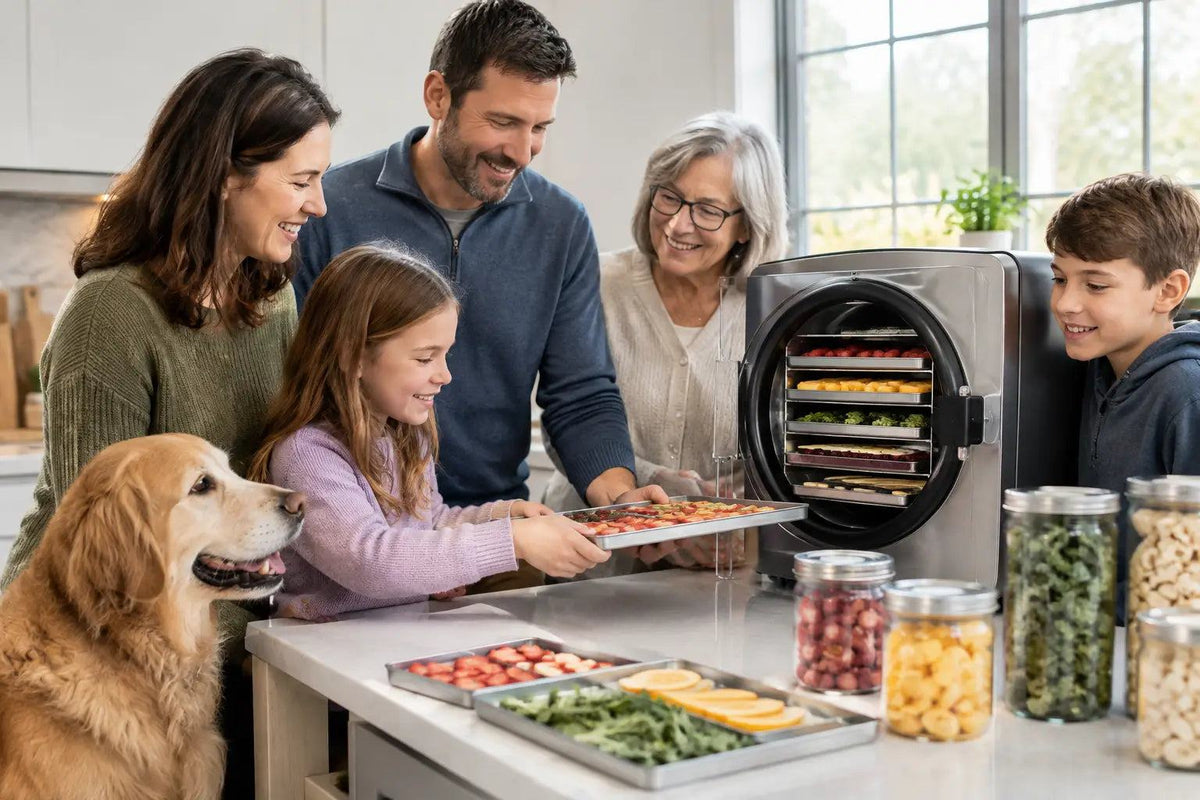
A freezer full of groceries is reassuring until the power has been out for three days. A freeze dryer gives families another option: preserving food for years instead of days or months. It is a serious piece of preparedness equipment, not a small kitchen gadget, but for the right household it can turn garden harvests, bulk purchases, leftovers, and family favorites into a dependable long-term food supply.
The key is buying one for the right reasons. A freeze dryer can support food independence and reduce waste, but it takes space, electricity, time, and a realistic plan for using what you preserve. For some families, commercially packaged emergency food is the simpler starting point. For others, especially households with a garden, dietary restrictions, or a desire to build deeper reserves over time, home freeze-drying is worth considering.
What a Freeze Dryer Actually Does
Freeze-drying removes moisture from frozen food under a vacuum. The process preserves the food's shape, flavor, and much of its nutrition better than ordinary dehydration. When the food is packaged correctly with oxygen absorbers, it can remain shelf-stable for many years.
The difference matters when you are building food storage your family will actually eat. Freeze-dried strawberries rehydrate into something close to fresh fruit. Cooked chicken, scrambled eggs, chili, soups, and many complete meals can be stored dry and brought back with water when needed. The texture will not be identical to a fresh meal, but it is generally far more familiar than many people expect.
A dehydrator uses warm air and leaves more moisture behind. It is less expensive, quieter, and useful for jerky, herbs, fruit leather, and snack foods. But dehydrated food usually has a shorter shelf life and does not rehydrate as completely. Both tools have a place. They simply solve different problems.
Is a Home Freeze Dryer Worth the Cost?
This is the question to answer before you make room in the garage or utility room. Home freeze dryers commonly represent a several-thousand-dollar investment once you account for the machine, accessories, packaging supplies, storage containers, and electrical use. That does not make them a poor value. It means they should be treated like a long-term household system.
A freeze dryer often makes the most sense for families who regularly buy food in bulk, grow a productive garden, raise animals, hunt, manage food allergies, or want greater control over ingredients. It can also be valuable for parents with children who will only eat certain familiar foods. A shelf of meals your family recognizes is more useful than a shelf of food nobody wants to touch.
It may not be the best first preparedness purchase if you still need basic water storage, a way to filter water, a family emergency kit, backup lighting, medications, or a simple supply of ready-to-eat food. Those basics protect your family sooner and require less learning. Start there without apology. Readiness is built in layers.
There is also a practical middle ground. Many households begin with quality packaged long-term food, then add a freeze dryer later after they have organized storage space and learned what their family actually uses during a power outage, severe storm, or supply shortage.
Space, Power, and Time: The Real Requirements
A freeze dryer needs a permanent, well-ventilated home. Most families use a garage, basement, pantry-adjacent utility space, laundry room, or enclosed porch that stays within the manufacturer's temperature recommendations. These machines generate heat and noise, and a full cycle can take roughly 20 to 40 hours depending on the food, tray load, room temperature, and machine size.
Plan for more than the footprint of the unit itself. You need room to prepare food, pre-freeze trays if recommended, package finished batches, label bags or jars, and store supplies. A dedicated shelving area keeps the system from becoming one more unfinished household project.
Power deserves thought, too. A freeze dryer is not usually something you will run from a small emergency battery during an outage. It draws meaningful electricity over a long cycle. If your home has solar, a large battery bank, or a generator setup, check the machine's electrical requirements carefully before assuming it will be part of your backup-power plan.
That said, the machine does not need to operate during an emergency to be useful in one. Its job is to help you build a shelf-stable pantry before bad weather arrives.
Foods That Work Best for Family Food Storage
The most successful freeze-drying projects are foods your household already enjoys. Start with straightforward items and learn your machine before filling every tray with an experimental recipe.
Fruit is an easy first win. Strawberries, blueberries, apples, bananas, peaches, and mangoes are popular for snacks, oatmeal, school lunches, and baking. Vegetables such as corn, peas, green beans, peppers, and onions work well in soups and casseroles.
Cooked proteins and meals add real preparedness value. Freeze-dried cooked chicken, ground beef, eggs, chili, spaghetti sauce, soups, and casseroles can make an emergency menu feel much more normal. For grandparents, familiar meals can be especially helpful when children are staying over during a storm or evacuation.
Not every food is a good candidate. Foods high in fat or sugar can be difficult to preserve for long periods because fat does not freeze-dry well. Butter, peanut butter, chocolate, syrup, and very oily foods generally need another storage approach. Raw meat can be freeze-dried, but careful handling and clear instructions are essential. Many families prefer to freeze-dry fully cooked meat and meals for simplicity.
Packaging Is Where Shelf Life Is Won or Lost
A perfectly dried batch can still be wasted by poor packaging. Moisture and oxygen are the enemies. Once food is fully dry and cooled, package it promptly in quality mylar bags or airtight jars with appropriate oxygen absorbers. Label every package with the food, date, and serving size or rehydration notes.
Portioning matters more than people think. A large bag may look efficient, but once opened it exposes all the food inside to air and humidity. Smaller packages are usually better for a family of four, a weekend trip, or a single recipe. Keep a few larger packages for pantry depth, but make daily use easy.
Store finished food in a cool, dark, dry area away from concrete floors, direct sun, attic heat, and damp basements. A sturdy shelf, labeled bins, and a simple inventory sheet make it far easier to rotate food and spot gaps. If your family has pets, remember to include pet food storage in the larger plan. They are part of the household, too.
A Practical Way to Start Without Wasting Food
The first few batches are a learning period. Do not begin with expensive cuts of meat or a year's worth of garden produce. Start with fruit, vegetables, or a small batch of a meal you already cook often. Follow the machine instructions, check that food is dry all the way through, and package it carefully.
A good dryness check is simple: break open the thickest or largest piece after the cycle. It should be dry throughout, with no cool, soft, gummy, or icy center. If there is any doubt, give it more dry time. Under-dried food is not a bargain.
Keep notes for the first several runs. Record the food, tray weight, cycle time, packaging type, and how well it rehydrates. Soon, you will know which foods are worth repeating and which are better eaten fresh, frozen, canned, or purchased commercially.
Build a Food Plan, Not Just a Shelf of Bags
A freeze dryer is most useful when it supports a broader family preparedness plan. Begin by identifying meals your household can make with stored water, a basic cooking method, and limited refrigeration. Then preserve ingredients that fill genuine gaps: protein, vegetables, fruit, breakfast foods, and comfort meals for children.
Balance home-preserved food with pantry staples such as rice, beans, pasta, flour, canned goods, cooking oil, seasonings, and shelf-stable milk. Store enough water for drinking and meal preparation. If you rely on a medical diet, infant formula, or prescription medications, those needs belong at the center of the plan rather than as an afterthought.
SHTF Prepper Club encourages families to build readiness one useful category at a time. A freeze dryer can become a powerful part of that work, but it does not have to be the first step.
The best batch to make is not the fanciest one. It is the meal your family will recognize, enjoy, and be grateful to have when the grocery store is closed and home is where everyone needs to be.