
Table of Contents
- Choosing the Right Food-Grade Bucket and Lid
- How to Seal a 5-Gallon Bucket Lid: Standard Snap-On Method
- Gamma Seal Lids for Food Storage: Installation and Use
- Are Food-Grade Buckets Airtight Without Additional Sealing?
- How to Open and Close a 5-Gallon Bucket Without Damage
- Verifying Your Seal and Food-Safety Preparation
- Troubleshooting Difficult or Damaged Lids
- Storage Limits and Food-Safety Caveats
- Frequently Asked Questions
Last Updated: October 15, 2026
Choosing the Right Food-Grade Bucket and Lid
The foundation of proper food storage starts with selecting the right container. Not all buckets work for long-term food preservation. You need to seal food-grade buckets specifically designed to hold edible items safely.
Food-grade buckets are manufactured from materials that don't leach chemicals into stored food. They typically come in 3.5-gallon and 5-gallon sizes, with the 5-gallon bucket being the industry standard for emergency food storage. These buckets meet FDA requirements for food contact and are built to last decades when stored properly.
When shopping for a food-grade bucket, verify the bucket is labeled "food-grade" on the bottom. Look for the recycling symbol with the number 2 (HDPE plastic) or 5 (polypropylene), which are approved for food storage. Avoid buckets previously used for chemicals, paint, or non-food items, contamination is impossible to remove completely.
Lids matter as much as the bucket itself. Standard snap-on lids provide basic protection but don't create an airtight seal. Gasketed lids (like Gamma-style twist lids) offer superior protection against moisture and pests. Your choice depends on storage duration and your food type.
How to Seal a 5-Gallon Bucket Lid: Standard Snap-On Method
What You'll Need
Sealing a 5-gallon bucket with a standard snap-on lid requires minimal equipment:
- One food-grade 5-gallon bucket
- One compatible snap-on lid
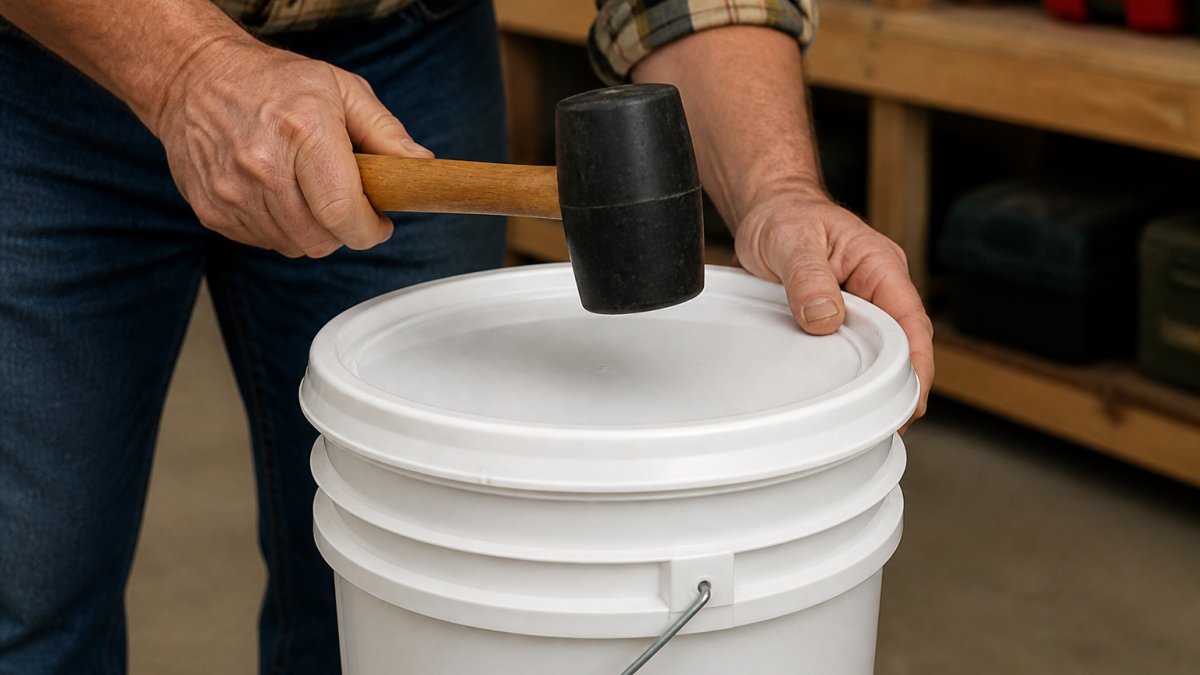
- One rubber mallet (2-4 pound weight)
- Clean, dry cloth
- Liquid soap (optional, for lubrication)
That's it. The simplicity is intentional, you don't need specialized tools to create a reliable seal.
Step-by-Step Installation
Step 1: Prepare the bucket rim
Inspect the rim of your bucket carefully. Run your fingers around the entire circumference. Check for dents, cracks, or warping. A damaged rim prevents a tight seal.
Wipe the rim clean with a dry cloth. Remove any dust, food particles, or debris. A clean surface is essential for the lid to seat properly.
Step 2: Position the lid
Place the lid on top of the bucket. Don't force it down yet. The lid should rest on the rim with slight resistance.
Step 3: Apply pressure with the rubber mallet
This is where most people make mistakes. They tap lightly around the lid and wonder why it won't seal. Sealing requires even pressure applied firmly.
Start at one point on the lid. Strike the lid firmly with the rubber mallet. Use deliberate, controlled swings, not aggressive pounding. Move around the circumference systematically.
Work your way around the entire lid. Don't skip areas. An incomplete seal defeats the purpose of sealing food-grade buckets at all.
Step 4: Verify the seal
After sealing, attempt to lift the lid by hand. Grasp the lid edges and pull upward with moderate force. The lid should resist strongly.
Gamma Seal Lids for Food Storage: Installation and Use
Why Choose a Gamma Seal Lid
A Gamma Seal lid is a twist-on lid with a built-in gasket that creates an airtight seal. Unlike standard snap-on lids, Gamma-style lids don't rely on brute force. They use a threaded design and rubber gasket to lock in freshness.
Gamma Seal lids work best for long-term storage lasting years or decades. The gasket maintains its integrity far longer than a standard snap-on lid. They're ideal for dry foods like grains, beans, flour, and powdered milk.
The trade-off: Gamma Seal lids cost more upfront than standard lids. For emergency preparedness, many households use standard snap-on lids for shorter-term storage (6-12 months) and Gamma Seal lids for long-term reserves (5+ years).
Installing a Gamma Seal Lid
Step 1: Prepare the bucket and adapter ring
Gamma Seal lids require an adapter ring that screws onto the bucket rim. This ring provides the threaded surface for the lid to twist onto.
Clean the bucket rim thoroughly. Dry it completely. Position the adapter ring on top of the bucket. The ring should sit flat against the rim with no gaps.
Step 2: Screw the adapter ring down
Turn the adapter ring clockwise by hand. Tighten it firmly until it won't turn anymore. Don't use tools, hand tightness is sufficient.
Step 3: Attach the Gamma Seal lid
Place the Gamma Seal lid on top of the adapter ring. Align the threads. Turn the lid clockwise slowly. You'll feel resistance as the threads engage.
Keep turning until the lid sits firmly on the adapter ring. The gasket inside compresses slightly. Stop when the lid feels snug, don't over-tighten, which can damage the gasket.
Step 4: Test the seal
Attempt to twist the lid counterclockwise by hand. It should resist. The lid shouldn't spin freely. If it does, tighten it more.
Lift the bucket by the lid handle (if present). The lid should hold firm. A properly sealed Gamma Seal lid can support the bucket's weight without slipping.
Are Food-Grade Buckets Airtight Without Additional Sealing?
No. A food-grade bucket with an unsealed lid is not airtight. Air and moisture can enter freely. Standard buckets with loose-fitting lids offer only basic pest protection.
Even a standard snap-on lid doesn't guarantee an airtight seal without proper installation. The lid must be seated with firm, even pressure. A half-hearted snap creates gaps that allow air and moisture inside.
Moisture is the enemy of long-term storage. It promotes mold growth and spoilage. Oxygen accelerates degradation of fats and vitamins in stored food. To achieve true airtight storage, you need both proper lid installation and ideally, oxygen absorbers or mylar bags inside the bucket.
Many preppers use a layered approach: snap-on lid for the bucket, mylar bags inside for oxygen barrier, and oxygen absorbers to remove remaining air. This combination extends shelf life dramatically compared to bucket and lid alone.
How to Open and Close a 5-Gallon Bucket Without Damage
Opening a sealed bucket requires technique. Aggressive prying damages the rim and lid, compromising future seals.
To open a snap-on lid:
Locate the lid's edge. Insert a flat tool (plastic pry bar, old credit card, or flat screwdriver) under the lid edge at one point. Apply gentle, steady pressure. The lid should pop up slightly. Move to the opposite side and repeat. Work your way around, lifting gradually at multiple points.
Never pry aggressively at one spot. This bends the lid or cracks the rim. Patient, distributed pressure works better.
To open a Gamma Seal lid:
Turn the lid counterclockwise by hand. It should unscrew easily. If it's stuck, try wrapping the lid with a rubber band for better grip, then turn slowly.
Closing without damage:
For snap-on lids, replace the lid and apply firm, even pressure with the rubber mallet as described earlier. For Gamma Seal lids, hand-tighten the lid until snug, no tools needed.
Store your rubber mallet near your buckets. You'll need it every time you reseal. Many preppers keep a mallet in the same storage area as their emergency food.
Verifying Your Seal and Food-Safety Preparation
Before storing food long-term, verify your seal actually works. A seal that fails silently is worse than no seal at all.
Test for airtightness:
After sealing, wait 24 hours. Then attempt to remove the lid. A properly sealed snap-on lid requires real effort to remove. A Gamma Seal lid should resist turning. If either comes off easily, reseal and test again.
Inspect the bucket interior:
Look inside before adding food. The bucket should be completely clean and dry. Any moisture inside compromises storage life. Wipe the interior with a clean, dry cloth if needed.
Prepare food for storage:
Dry foods like grains, beans, and pasta store best. Moisture content should be below 10% for optimal preservation. Never store foods directly in the bucket if they're damp or oily.
Consider adding food-grade oxygen absorbers inside the bucket before sealing. These small packets remove oxygen that causes spoilage. They're inexpensive and dramatically extend storage life for dry goods.
Troubleshooting Difficult or Damaged Lids
Lids that won't seal tightly:
Check the bucket rim for dents or warping. Run your finger around the entire circumference. Even small damage prevents a proper seal. If the rim is damaged, replace the bucket.
Verify you're using the correct lid size. A 5-gallon lid doesn't fit a 3.5-gallon bucket. Mismatched components never seal properly.
Apply more pressure with the rubber mallet. Many people under-estimate the force needed. Strike each section of the lid firmly multiple times. Work your way around the entire circumference.
Lids that are warped or cracked:
A damaged lid cannot seal. Replace it. Continuing to use a compromised lid wastes your stored food.
Stuck or difficult-to-open lids:
For snap-on lids, use a plastic pry bar instead of metal tools. Metal scratches and can puncture the lid. Work around the entire lid edge gradually rather than forcing one spot.
For Gamma Seal lids, try tapping the lid gently with a rubber mallet while turning it counterclockwise. The vibration sometimes helps loosen stubborn threads.
Rust or corrosion on lids:
This indicates moisture inside the bucket. Once rust appears, the seal has failed. Remove the food and inspect it for spoilage. Replace the lid with a new one and reseal.
Storage Limits and Food-Safety Caveats
Sealed buckets extend food shelf life dramatically, but they're not infinite storage. Different foods have different limits.
Dry goods like white rice, pasta, and beans can last 10-25 years in sealed buckets with oxygen absorbers. Powdered milk lasts 2-10 years depending on storage temperature.
Temperature matters significantly. Cool, dark storage extends shelf life. Warm environments accelerate spoilage.
Inspect stored food periodically. Open buckets every year or two and check for signs of spoilage: off odors, discoloration, or insect activity. If you notice problems, discard the contents.
Never store foods that require refrigeration in sealed buckets at room temperature. Butter, cheese, and meat products don't preserve safely this way regardless of sealing method.
FDA guidance on safe food storage
SHTF Prepper Club recommends rotating stored food regularly. Use older supplies first and replace them with fresh stock. This ensures your emergency reserves are always current and safe.
Sealing food-grade buckets properly is one of the most practical skills for emergency preparedness. A properly sealed bucket protects your family's food supply for years.
| Lid Type | Best For | Seal Method | Ease of Use |
|---|---|---|---|
| Standard Snap-On | Short-term (6-12 months) | Rubber mallet pressure | Moderate |
| Gamma Seal Twist | Long-term (5+ years) | Hand-tighten threads | Easy |
| Gasketed Snap-On | Medium-term (1-3 years) | Firm mallet pressure | Moderate |
Frequently Asked Questions
How do you seal a 5-gallon bucket lid properly?
Position the snap-on lid centered on the bucket rim, then use a rubber mallet to tap around the circumference with even pressure until the lid seats completely and snaps into place. For Gamma Seal lids, align the adapter ring on the bucket rim, seat it fully, then screw the twist-on lid clockwise until snug. Test the seal by tilting the bucket, no air or moisture should enter.
Are food-grade buckets airtight on their own?
No. A food-grade bucket alone is not airtight. The bucket body is food-safe but allows air and moisture to pass through. You must install a proper lid, either a snap-on lid with a gasket or a Gamma Seal twist lid, to create an airtight seal. Without a lid, the bucket cannot protect food from oxygen, humidity, or pests during long-term storage.
What is the difference between Gamma Seal lids and standard snap-on lids?
Gamma Seal lids feature a twist-on design with a built-in gasket, allowing easy repeated opening and closing without tools. Standard snap-on lids are one-time or limited-use seals best for long-term storage where frequent access isn't needed. Gamma Seals cost more but offer convenience and reusability; snap-on lids are economical for fire-and-forget storage.
How do I know if my bucket seal is actually airtight?
After sealing, tilt the bucket at a 45-degree angle over a sink. If no air bubbles rise from the seal line or water seeps out, the seal is likely airtight. For long-term storage, pair your sealed bucket with oxygen absorbers or a mylar bag inside to further protect against air and moisture. Test the seal again after 24 hours to confirm it has held.