
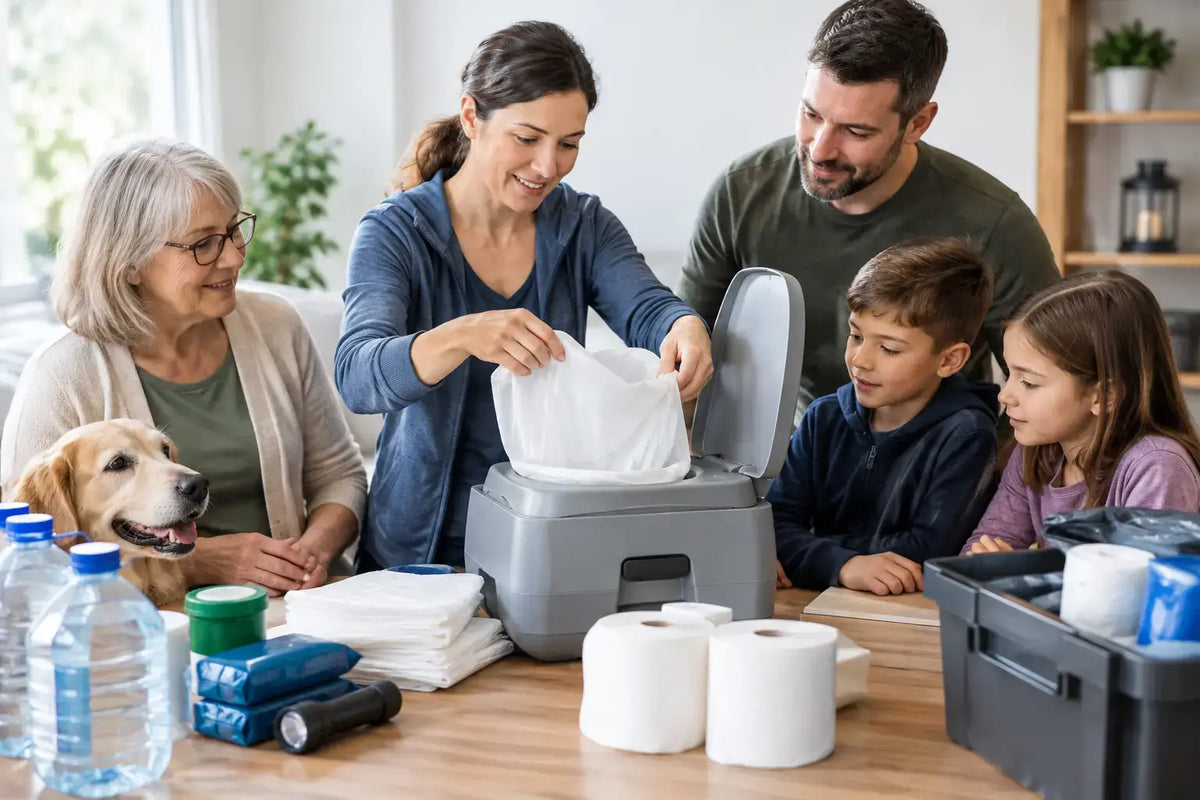
A working bathroom is easy to take for granted until the power is out, the water is shut off, or a sewer line backs up after a storm. Emergency toilet planning gives your family a simple, dignified answer before that uncomfortable moment arrives.
This is not a dramatic project. It is a basic household system, much like storing water or keeping flashlights charged. A few inexpensive supplies and clear expectations can make a multi-day disruption far less stressful, especially with children, older relatives, guests, or pets in the house.
Start With the Emergency You Are Actually Facing
Not every disruption requires the same toilet plan. If your water is off but the sewer system is still working, you may be able to use your regular toilet with stored water for flushing. Pour several gallons quickly into the bowl to trigger a flush. Do not use this method if local officials have warned of sewer damage, flooding, or a possible sewage backup.
If a power outage affects a private well, the toilet may still flush once or twice from water already in the tank, then stop because the home has no running water. If the sewer system is compromised, flushing can make a bad situation worse by sending waste back into drains, tubs, or showers.
The safest rule is simple: use the normal toilet only when you know both water service and wastewater service are functioning. When either is uncertain, switch to your backup setup. Your local emergency management department or utility provider will often give instructions during a major event.
Build a Simple Emergency Toilet Setup
For most families, the best starting point is a five-gallon bucket fitted with a toilet seat lid. It is compact, inexpensive, and easy to store in a garage, utility closet, basement, or preparedness area. A portable camping toilet can also work well, particularly for older adults or anyone who needs a sturdier, more familiar seat height.
Line the bucket with heavy-duty waste bags made for portable toilets, or use two strong contractor bags as a backup option. Add an absorbent material after each use. Commercial gel packets are convenient and compact, but alternatives such as kitty litter, sawdust, shredded paper, or peat moss can help contain liquid and reduce odor. The goal is not perfection. It is to keep waste contained, manageable, and away from your living space.
Keep these supplies together rather than scattered across the house:
- A five-gallon bucket and snap-on toilet seat lid
- Heavy-duty waste bags and absorbent material
- Toilet paper, wipes, and hand sanitizer
- Disposable gloves, disinfectant, and paper towels
- A small privacy tent or screen if outdoor use may be necessary
- A lidded container for clean supplies and a separate container for used-waste bags
Put Hygiene Supplies Within Reach
The toilet setup is only half the plan. Handwashing and surface cleaning matter just as much, particularly when several people share one small temporary bathroom.
If you have water available, set aside a handwashing station with a dispenser, soap, catch basin, and clean towel or paper towels. If water is limited, use hand sanitizer first and reserve soap-and-water washing for visibly dirty hands and before food preparation. Keep disinfecting wipes or an appropriate household disinfectant nearby for the toilet seat, bucket handle, and any surfaces people may touch.
Never use disinfecting wipes as a substitute for toilet paper and never flush them. In an emergency, they can create clogs that are difficult to deal with when plumbing service is already unreliable.
Decide Where the Family Will Use It
Location makes a big difference. A garage, laundry room, covered porch, or bathroom with the regular toilet closed off can work well. Pick a spot that offers privacy, ventilation, stable flooring, and enough distance from food storage and food preparation.
For a short outage, an indoor location is often more comfortable and practical. For a longer event, an outdoor privacy tent may help keep odor and cleanup away from the main living area. That choice depends on weather, safety, neighborhood privacy, and whether family members can comfortably get outside. A plan that works for a healthy adult may not work for a grandparent with mobility limitations or a child who is frightened by storms.
Avoid setting up near a well, garden, creek, storm drain, or open water. Human waste should never be dumped into a storm drain, ditch, lake, or stream. Those systems are not designed to treat sewage.
Make Waste Storage and Disposal Part of the Plan
The hardest part of emergency toilet planning is not using the bucket. It is knowing what happens after.
Seal each used bag tightly, then place it in a second bag or a dedicated lidded container. Keep it out of reach of children and pets. Store it away from direct sun and away from anything you eat, cook with, or use for drinking water.
Do not put bags of human waste into your household trash bin unless local authorities specifically say it is allowed. Disposal guidance varies by city, county, and type of emergency. After hurricanes, floods, and earthquakes, public health departments may set up collection instructions or designate particular waste procedures. Follow those directions even if they differ from your usual household routine.
Some families consider digging a latrine as a backup. That can be appropriate in a rural setting with adequate land, but it is not a universal solution. Soil conditions, groundwater, wells, drainage, local rules, and the length of the emergency all matter. For suburban households, contained bag systems are usually cleaner, simpler, and more realistic.
Plan for Children, Older Adults, and Pets
A toilet plan only works if everyone can use it safely. Young children may need a smaller potty seat, step stool, or a familiar training potty placed near the main emergency toilet. Explain the routine before an emergency, using calm, matter-of-fact language. A small nightlight or battery lantern can make a dark hallway less intimidating.
Older adults and people with limited mobility may need armrests, a raised seat, or a bedside commode rather than a low bucket. Build around the person, not around the gear. If someone uses medication that affects bowel habits, add extra bags, cleaning supplies, and any needed personal-care items to the plan.
Pets need their own sanitation supplies, too. Keep extra litter, waste bags, and cleaning materials on hand. Do not let a pet use the family emergency toilet area. It creates confusion and makes hygiene harder to manage.
Keep Two Options, Not One
A useful family preparedness principle is to avoid relying on a single point of failure. Your primary emergency toilet might be a bucket system, while your second option is a portable camping toilet, a spare commode, or a plan to temporarily stay with nearby relatives whose utilities are operating.
The same thinking applies to water. Store water specifically for drinking and cooking, then consider additional non-potable water for flushing and cleaning. You do not need to buy everything at once. Start with the basic toilet kit, then expand your water storage and sanitation supplies as your budget allows.
At SHTF Prepper Club, sanitation belongs alongside water storage, power outage supplies, and family emergency kits because real preparedness is about keeping ordinary routines functioning when conditions are not ordinary.
Store It Where You Can Reach It
Do not bury sanitation supplies behind holiday decorations or heavy storage bins. Put the kit in a labeled container where an adult can reach it without searching. Include a simple instruction sheet inside: when to stop flushing, how to set up the toilet, where used bags go, and who will check official disposal guidance.
Once a year, inspect the bags, gloves, wipes, batteries, and absorbent material. Replace anything damaged by heat, moisture, or pests. If you move, renovate, add a family member, or begin caring for an aging parent, revisit the plan. Household needs change.
A prepared bathroom backup is not glamorous, but it is one of the clearest ways to protect comfort, health, and dignity during a difficult week. Set up one small kit now, talk through it with your family, and let that be one less decision you have to make when the lights go out.