

Last Updated: November 20, 2026
Quick Summary
To organize your home food pantry, start with a written inventory of what you already own, then empty every shelf, purge expired or damaged items, and group similar foods into zones that match how you cook. Measure your shelves before buying bins, rotate stock first in, first out, and store long-term staples cool, dark, and pest-free.
- Measure shelf height, depth, and width before buying any bins, risers, or canisters.
- Set up keep, donate, and toss boxes, and check dates on every package.
- Put heavy items low and daily items at eye level, with a kid-height snack shelf.
- Freeze new flour, rice, and grains about four days to kill pest eggs.
- Keep bulk staples near 50 to 70°F with humidity below 60 percent.
Table of Contents
- Start With a Pantry Inventory and a Written Plan
- Clear Every Shelf, Then Declutter and Purge Expired Food
- Group Similar Items Into Pantry Zones That Match How You Cook
- How to Organize a Small Pantry With Limited Shelf Space
- Pantry Organization Without Bins: Free and Low-Cost Solutions
- Pantry Food Rotation and Date Management That Prevents Waste
- Keep Long-Term Storage Safe, Cool, and Pest-Free
- Build Your Pantry Back Up With Shelf-Stable Staples
- Frequently Asked Questions
Start With a Pantry Inventory and a Written Plan
Learning how to organize your home food pantry starts with knowing what you already own. Most families store far more than they realize, and a written inventory turns a crowded closet into a working supply. Treat the pantry as equipment, not decoration, and count it before you arrange it.
Grab a notepad and work shelf by shelf. Write down each item, how many you have, and the date on the package.
- Canned goods and jarred sauces
- Dry goods: rice, pasta, flour, beans
- Baking supplies and spices
- Snacks and breakfast foods
- Paper goods and non-food extras
Then note what your household actually eats in a normal week. A pantry full of food nobody touches is wasted money. The USDA food waste resources make the point plainly: planning meals before you shop is one of the simplest ways to cut waste at home.
Measure the Space Before You Buy Anything
Measure the height, depth, and width of every shelf and the floor space beneath them. Write those numbers down. Then check your door swing and how far you can comfortably reach.
Those measurements decide what fits. Bins, risers, and canisters that do not match your shelf depth become clutter. Measure first, shop second, and you avoid buying storage you cannot use.
Clear Every Shelf, Then Declutter and Purge Expired Food
Empty the pantry completely before you sort anything. Working from bare shelves lets you see the whole space, wipe it down, and spot problems you would otherwise miss.
Set up three boxes or bags: keep, donate, and toss. Check dates on every package as it comes out. Anything past its date, swollen, rusted, or leaking goes in the toss pile. Unopened, in-date food your family will not eat can go to a local food bank.
Here is what to watch for as you purge:
- Bulging or dented cans
- Torn bags and broken seals
- Signs of insects or rodent droppings
- Spices that have lost their smell
- Flour or grains with a musty odor
Clean the empty shelves with warm soapy water, dry them fully, and check the back corners for pest activity.
Group Similar Items Into Pantry Zones That Match How You Cook
Pantry zones are shelf areas assigned to one food category, and they work best when they mirror your actual meals. Group similar items together so a dinner can be assembled from one part of the shelf.
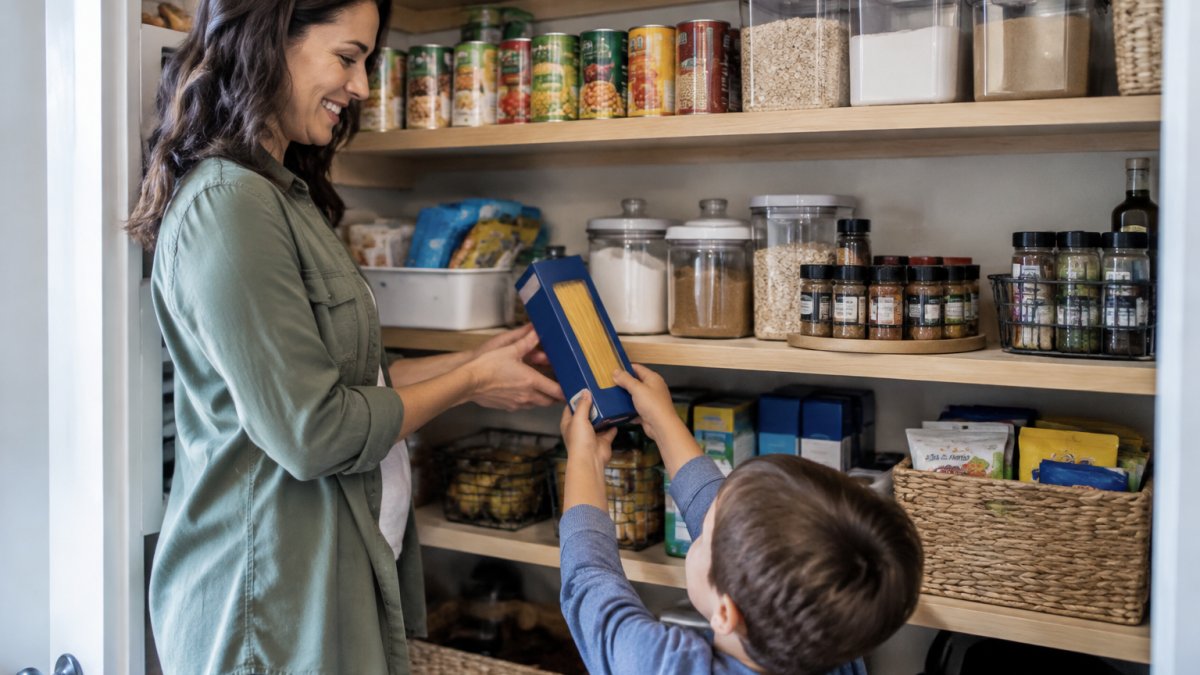
Build your zones around how your household eats:
- Canned goods: soups, vegetables, beans, tomato products
- Dry goods: rice, pasta, oats, beans
- Baking supplies: flour, sugar, leavening, extracts
- Spices and seasonings: small jars, kept together and easy to reach
- Breakfast foods: cereal, coffee, syrup
- Snacks: kid-height shelf so they stop digging through everything else
Put heavy items low and the things you reach for daily at eye level. If pasta night happens twice a week, the pasta and sauce belong together at arm's length. Our guide to long term food storage that fits family life goes deeper on building a supply your household will actually eat and rotate.
How to Organize a Small Pantry With Limited Shelf Space
A small pantry works when you use height, depth, and the back of the door. The trick is to stop storing air. Most small pantries waste the top foot of every shelf and the full depth of the back row.
Try these space savers:
- Shelf risers to create a second level for cans
- Turntables in deep corners so nothing gets lost
- Over-the-door racks for spices, foil, and wrap
- Stackable bins that use the full shelf height
- Under-shelf baskets for lightweight items
Keep the deepest shelf for bulk backstock and the door for small, light items. A step stool beats a chair, and it makes the top shelf usable again.
Pantry Organization Without Bins: Free and Low-Cost Solutions
You do not need to buy a single container to get a working pantry. Pantry organization without bins starts with what is already in your house.
Repurpose what you have:
- Cardboard boxes cut down to tray height
- Mason jars and clean deli containers
- Shoe boxes for snack packets
- Binder clips to seal open bags
- Freezer bags sorted into labeled groups
Arrange cans with labels facing out and stack like items in columns. A cheap can dispenser made from a cut cardboard box keeps the oldest can in front. This approach costs nothing and works as well as a store-bought system for many households. If you later want to upgrade, you will know exactly which sizes fit.
Pantry Food Rotation and Date Management That Prevents Waste
First in, first out is the whole game. New groceries go behind or under the older ones, and the oldest package is always the next one used. That single habit prevents most pantry waste.
Know which dates matter. Date labels on food are mostly about quality, not safety, and the wording varies.
Write the date on everything you repackage. A marker taped inside the pantry door is the cheapest tool you own. When you transfer flour, rice, or cereal into a canister, put the original date on the lid.
Run a simple inventory. Keep a running list on the door or in a notes app with three columns: item, quantity on hand, and the date to use next. Update it when you shop and when you cook. A monthly count of the front row catches the items that quietly age out, and a seasonal full count catches the backstock.
Build the shopping list from the inventory. Shop from the list, not from memory.
Adapt rotation to the household. In a shared household, label shelves by person or by category so no one digs through someone else's staples. Keep a kid-height shelf for snacks they can reach and rotate themselves.
A simple rotation routine:
- Check dates on the front row each week
- Move older items forward when you restock
- Keep a running shopping list on the door
- Plan one meal each week around food nearing its date
- Review the whole pantry once a season
If you are unsure which dates actually matter, our guide on when to rotate food storage at home explains the difference between best-by, use-by, and sell-by dates so nothing gets tossed early.
Keep Long-Term Storage Safe, Cool, and Pest-Free
Long-term storage has different rules than the shelf you cook from.
Temperature and humidity. Most shelf-stable staples hold their quality longest in a cool, dry spot.
Light. Ultraviolet light degrades oils, colors, and vitamins. Store bulk staples in opaque food-grade containers or inside a closed cabinet, not on an open shelf in direct sun.
Moisture and containers. Keep bulk staples off concrete, which wicks moisture, and off the floor on a shelf or pallet.
Pests. Pantry pests arrive in flour, rice, cereal, and pet food, and they spread fast once established.
Cleaning schedule. Wipe shelves with warm soapy water and dry them fully at each seasonal rotation. Vacuum or sweep shelf edges and the floor beneath them, and pull containers out to check behind them.
Watch out: the garage and the attic are the two worst places for food in most homes. Summer heat and winter swings shorten shelf life fast, and a single chewed bag invites a full infestation.
Our list of long term food storage mistakes to avoid covers the traps we see most often, from storing onions next to potatoes to trusting a lid that never sealed.
Build Your Pantry Back Up With Shelf-Stable Staples
Once the shelves are clean and zoned, restock with intention. Buy what you eat, buy in quantities you can rotate, and add a buffer of long-keeping staples for outages and shortages.
Good anchors for any pantry:
- Rice, pasta, and dry beans
- Canned vegetables, beans, and tomato products
- Baking basics and cooking oil
- Spices and dehydrated flavor builders
- Eggs and dairy in shelf-stable form
We stock a bulk long grain white rice that gives a pantry a reliable base. For flavor, Augason Farms Tomato Powder turns plain rice and beans into chili, soup, or spaghetti sauce, and the can holds up to 25 years unopened when stored cool and dry at 55 to 70°F. To pack dry goods for the long haul, our oxygen absorber guide walks through sizing and placement step by step.
Here is how the staples compare:
| Staple | Best For | Storage Note |
|---|---|---|
| White rice | Base calories for any meal | Cool, dry, sealed |
| Tomato powder | Sauce, paste, seasoning | Use within a year of opening |
| Chopped onions | Soup, stew, casserole flavor | Rehydrate in 10 minutes |
| Egg powder | Baking and breakfasts | Mix only what you will eat |
A pantry that is counted, zoned, and rotated will feed your family through a storm, a shortage, or a bad week. That is the standard we build to at SHTF Prepper Club. SHTF Prepper Club offers food storage products with long shelf life and emergency food kits that need minimal preparation. Start with an inventory and one zone, then add a little each month.
Get started with SHTF Prepper Club and build a pantry your household can count on.
Frequently Asked Questions
What is the best way to organize a food pantry?
Empty the shelves, throw out anything expired, and group similar items together before you put anything back. Build pantry zones around how you actually cook: baking supplies in one spot, canned goods in another, snacks where kids can reach them. Put the heaviest items on lower shelves and the things you use weekly at eye level. Label the zones, then restock so older packages sit in front and new ones go behind. A pantry organized this way takes minutes to check and keeps food moving instead of sitting forgotten.
How do you organize a small pantry with limited shelf space?
Use the full height of each shelf, not just the front edge. Stack cans in columns two deep, stand boxed goods on end, and hang a shoe organizer or wire rack on the back of the door for spices, packets, and small jars. Move rarely used bulk items to a closet or under-bed box and keep only what you cook with weekly in the pantry itself. Before buying any insert, measure the shelf depth and height so containers actually fit. Small pantries work best when every item has one assigned zone and nothing lives on the floor.
How should you arrange food so older items get used first?
Practice first-in, first-out rotation: when you bring groceries home, pull the older package forward and place the new one behind it. Write the purchase month on the lid or front of anything you decant, and keep a running list of what you have so you shop from the pantry before the store. Check dates on canned goods, baking supplies, and snacks once a month. Anything within a few weeks of its date moves to a front shelf or a use-it-up box in the kitchen, which is where pantry food rotation actually happens.
What are the 7 pantry zones?
A workable seven-zone layout covers canned goods, dry goods like rice pasta and beans, baking supplies, spices and seasonings, snacks and breakfast foods, beverages, and bulk or backup storage. Adjust the list to your household: a family that bakes a lot gives baking supplies a full shelf, while a household heavy on canned soup gives cans more room. The point of pantry zones is that every item has one predictable home, so anyone in the house can find it and put it back without asking.
