
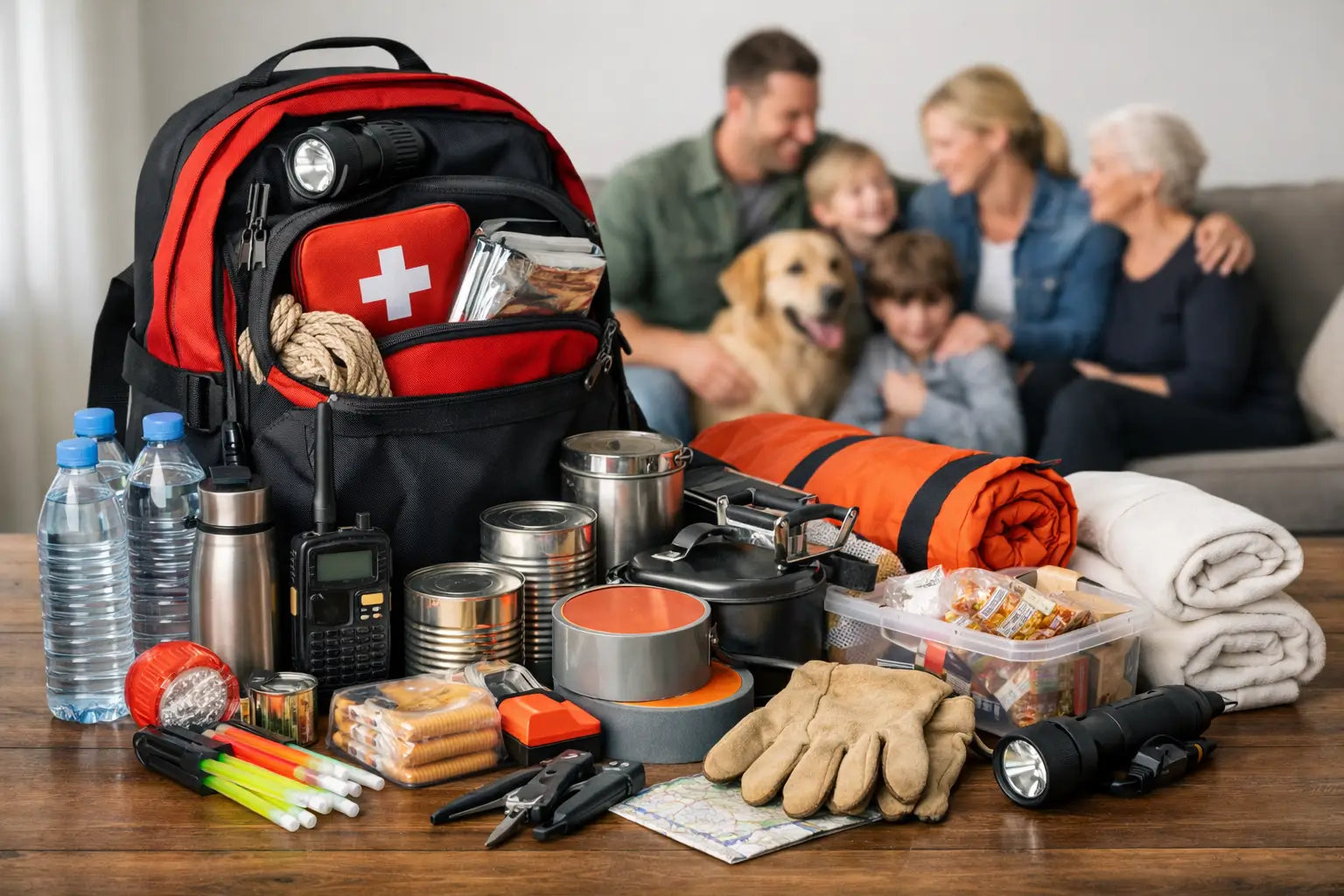
The best time to build an emergency pack for my family is not when the weather alert arrives. It is on an ordinary Saturday, when the power is on, the kids are nearby, and you can think clearly about what your household would actually need.
That does not mean buying a mountain of gear. It means preparing for the first 72 hours of a disruption, then improving your setup over time. A realistic family emergency pack covers the basics: safe water, food your family will eat, light and power, medical needs, warmth, communication, and a plan for pets and paperwork.
Start With the Emergencies Most Likely to Affect You
A family in coastal Florida may need to leave ahead of a hurricane. A household in Texas may be more concerned about a winter outage. In California, wildfire smoke and a fast evacuation can change the plan. Earthquakes, tornadoes, flooding, and long utility interruptions all create different problems.
Your pack should match the risks you know, not a movie version of an emergency. Start by asking two simple questions: Would we be safer staying home, or might we need to leave quickly? Then ask what would make the first three days difficult for the people and animals under your roof.
For many families, the answer is both. Keep one set of supplies at home for sheltering in place and a smaller, portable evacuation bag for each adult. If you have school-age children, keep a family grab-and-go bag near the exit rather than expecting every child to manage a full pack alone.
What Goes in a Family Emergency Pack
Think in categories, not random items. That keeps you from ending up with five flashlights and no way to make water safe.
Water Comes First
Store at least one gallon of water per person per day for three days. That is a starting point, not a finish line. In hot climates, with infants, older adults, nursing mothers, or pets, your household may need more.
Bottled water is useful for immediate needs, but it takes up space quickly. A practical setup often combines stored drinking water with durable containers and a water filter or purification option. If a boil-water advisory, storm damage, or supply interruption lasts longer than expected, having more than one way to make water drinkable matters.
Do not forget the water your pets need. A large dog can change your math substantially, especially in warm weather.
Food Should Be Familiar and Easy to Make
Choose shelf-stable food that requires little or no cooking. The goal is not to create a perfect pantry overnight. It is to make sure your family can eat adequately when the grocery store is closed, the roads are blocked, or the refrigerator is no longer reliable.
Start with three days of food, then build toward two weeks or more of rotating pantry supplies and long-term food storage. Include ready-to-eat meals, protein-rich snacks, foods appropriate for babies or seniors, and a manual can opener if you store canned food.
Freeze-dried meals and food storage pouches can be a smart fit for families who want long shelf life and compact storage. They do require water, so count that water in your plan. If your family has allergies, diabetes, a restricted diet, or picky young eaters, test foods before you depend on them. An emergency is a bad time to discover that nobody will touch the meals you bought.
Light, Power, and Communication
A phone flashlight helps for a few minutes. It is not a home power plan.
Pack headlamps or flashlights for adults, extra batteries where appropriate, and a battery-powered or hand-crank weather radio. Headlamps are especially helpful when someone is holding a child, preparing food, or dealing with a medical issue in the dark.
For outages, a portable power station can keep phones, lights, medical equipment, or a small fan running, depending on its capacity. The right size depends on what you need to power and for how long. A compact battery bank is excellent for phones during an evacuation; it will not run a refrigerator. Be honest about the difference before you buy.
Keep charging cables in the pack. Also write down key phone numbers and meeting locations on paper. Cell networks can be congested, batteries die, and children may not have every important number memorized.
Medical and Personal Care Supplies
Every family needs a first-aid kit, but a basic kit is only the beginning. Add the items your household uses in real life: prescription medications, spare glasses, inhalers, allergy medicine, pain relievers, menstrual supplies, and supplies for children or older relatives.
Keep medications in their original labeled containers when possible. Rotate them regularly, and talk with your pharmacist or doctor about how to maintain an appropriate emergency supply. Do not wait until a storm is forecast to refill a critical prescription.
Include hand sanitizer, soap, wipes, toilet paper, and a small trash bag supply. These are not glamorous purchases, but sanitation becomes a serious comfort and health issue when water service is limited or several people are sharing a small space.
Warmth, Shelter, and Basic Tools
Weather determines this section. A family in Minnesota needs a more serious cold-weather plan than a family in Phoenix, but nearly everyone benefits from extra layers, rain protection, blankets, and a way to stay dry.
Keep sturdy shoes and socks available. During an evacuation or after storm damage, broken glass, nails, flood debris, and wet ground can turn a simple walk outside into an injury. Add work gloves, a basic multitool, duct tape, a whistle, and a fire extinguisher for the home supply area.
If you expect to cook without electricity, use equipment designed for outdoor use and follow its safety instructions. Never use charcoal grills, camp stoves, or fuel-burning heaters inside the home, garage, or enclosed porch. Carbon monoxide is odorless and can become deadly fast.
Build for the People in Your House
A generic checklist cannot know your family. Your emergency pack should.
For babies, that may mean formula, bottles, diapers, wipes, and comfort items. For children, include a small game, coloring supplies, or a familiar stuffed animal. Keeping a child calm during a long outage or evacuation is not an extra. It helps the entire family function.
For grandparents or relatives with medical needs, consider mobility aids, hearing-aid batteries, backup oxygen arrangements, and a clear medication list. For pets, pack food, water, bowls, medications, a leash, waste bags, vaccination records, and a carrier if needed. Many evacuation shelters have pet rules, so know your local options before an emergency.
Place copies of insurance information, identification, medical contacts, and home documents in a waterproof pouch. Digital copies are helpful, but paper copies still have value when devices cannot be charged or accessed.
Organize Your Family Emergency Pack So You Can Use It
An emergency pack hidden under a pile of holiday decorations is not ready. Store it where adults can reach it quickly, ideally near an exit or in a clearly labeled closet. Keep heavy water containers low, and do not make one bag so large that nobody can lift it.
A good arrangement is one portable family bag for immediate departure, plus labeled bins at home for food, water, medical supplies, lighting, and warmth. This approach is easier to maintain than cramming everything into one oversized backpack. It also lets you use home supplies during a power outage without tearing apart the evacuation bag.
Put a short inventory sheet inside each container. Mark expiration dates and set a calendar reminder twice a year to rotate food, water, batteries, medications, and seasonal clothing. A useful habit is to check your supplies when daylight saving time changes or at the start of hurricane and winter-storm seasons.
Start Small, Then Close the Gaps
You do not need to spend thousands of dollars to make meaningful progress. A $200 starter effort can cover water, a basic first-aid kit, lighting, food, and battery backup for a small household. Larger investments, such as expanded water storage, a home power system, or long-term food supplies, can come later as your budget and priorities allow.
SHTF Prepper Club helps families build by category, which is often the least overwhelming way to begin. Buy the essentials that solve your most likely problem first. If outages are common, prioritize water, light, charging, and food. If wildfire evacuation is your concern, focus on portable documents, medications, clothing, and a vehicle-ready bag.
Preparedness is not about predicting the exact emergency. It is about giving your family a calmer first three days when something inconvenient, frightening, or disruptive happens. Put the first supplies together this week, write down where they are, and let that small bit of readiness make home feel more secure.