
Table of Contents
- How Long Does Stored Tap Water Stay Safe
- CDC Water Storage Recommendations for Emergency Supply
- Best Containers for Long-Term Water Storage
- How to Purify Water for Storage
- Storage Location and Environmental Factors
- Water Rotation Schedule to Maintain Quality
- Signs Your Stored Water Has Gone Bad
- Conclusion
Last Updated: August 9, 2026
How Long Does Stored Tap Water Stay Safe
Stored tap water can remain safe to drink for up to six months when stored properly in food-grade containers, though quality begins to degrade after the first few weeks. The timeline depends heavily on storage conditions, container type, and whether you've treated the water before storage. Your water doesn't suddenly become unsafe on day 181. Instead, it undergoes gradual changes in taste, smell, and microbial safety that accelerate under poor conditions. Understanding these changes helps you rotate your supply strategically and know when replacement becomes necessary.
CDC Water Storage Recommendations for Emergency Supply
The CDC recommends storing one gallon of water per person per day for at least three days as a minimum emergency supply. For a family of four, that means at least 12 gallons on hand at all times. For longer-term preparedness, many households extend this to two weeks or more. According to CDC emergency preparedness guidance, tap water you store yourself can remain potable for up to six months if stored in proper conditions.
The CDC's core recommendations center on three factors: container type, storage environment, and water treatment before storage. If you're storing untreated municipal tap water, the six-month window assumes ideal conditions. Real-world storage typically requires rotation every three to six months to maintain quality and confidence in your supply.
Best Containers for Long-Term Water Storage
Food-grade plastic containers are the industry standard for water storage because they don't absorb odors, resist bacterial growth, and maintain structural integrity over years. The best containers feature airtight seals that prevent contamination and slow oxidation.
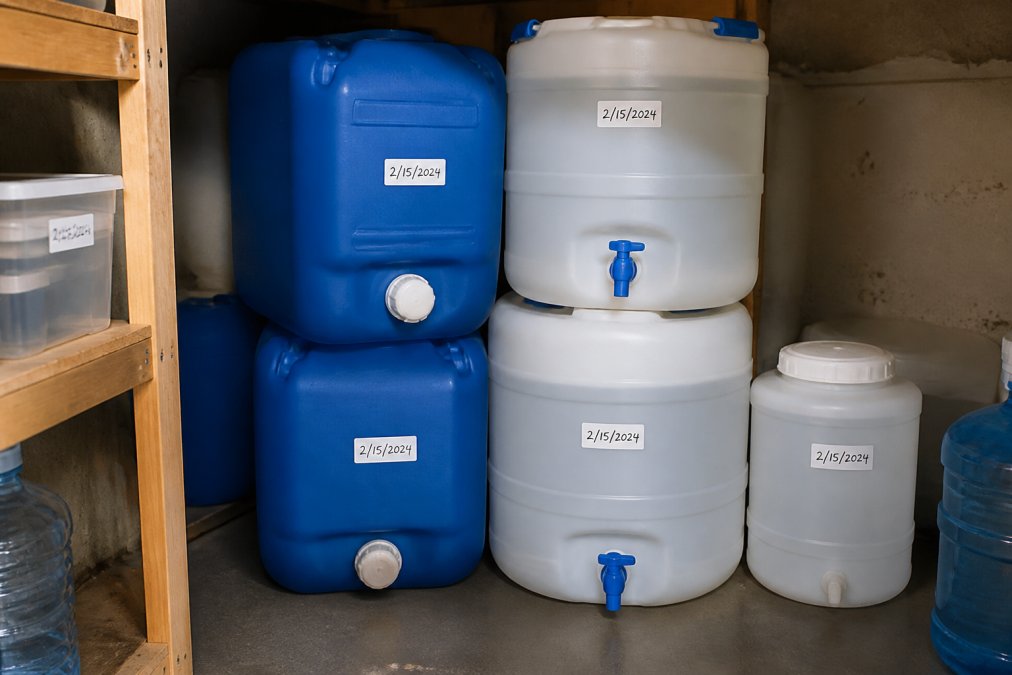
Look for containers specifically labeled "food-grade" rather than generic plastic jugs. Glass containers work well for shorter-term storage but become impractical for bulk emergency supplies due to weight and breakage risk. Avoid containers that previously held chemicals, pesticides, or non-food products. Five-gallon water cooler bottles represent a practical middle ground for many households, large enough to store meaningful quantities but small enough to handle and rotate.
Plastic Type Selection and Chemical Leaching Risk
Not all food-grade plastics are equal for long-term water storage. The resin identification code (the number inside the recycling triangle on the container bottom) tells you exactly what material you're using and how vulnerable it is to chemical migration.
PET (Polyethylene Terephthalate, #1) and HDPE (High-Density Polyethylene, #2) are the safest choices for water storage lasting six months or longer. Both resist chemical leaching under normal storage conditions and are widely available in food-grade water containers.
Polycarbonate (#7) can leach bisphenol A (BPA) into stored water, particularly when exposed to heat or sunlight. Avoid polycarbonate containers for emergency water storage.
Polyvinyl Chloride (PVC, #3) and Polypropylene (PP, #5) are less ideal for long-term water storage. PVC may release vinyl chloride over extended periods, especially above 70°F. Polypropylene is more permeable to oxygen and allows faster water degradation than HDPE or PET.
Temperature dramatically accelerates chemical leaching. A container safe at 60°F may begin leaching measurable chemicals at 80°F or higher. A PET container storing water for three months at 50°F poses minimal risk, but the same container at 85°F for six months significantly increases chemical migration. This is why cool, dark storage locations extend both water safety and container integrity.
Identifying and Preparing Containers
When purchasing containers, check the bottom for the resin code and the label "food-grade" or "food contact." If you're repurposing containers you already own, inspect them carefully. Containers that previously held juice, milk, or other beverages can be used if thoroughly cleaned, but those that held non-food items should be discarded.
Before filling containers with water for storage, rinse them thoroughly with clean water and allow them to air-dry completely. Do not use soap, as residual soap can promote bacterial growth in stored water.
How to Purify Water for Storage
Treating tap water before storage extends shelf life significantly and eliminates pathogens that might otherwise multiply during months of storage. Untreated municipal water contains residual chlorine that dissipates over weeks, leaving it vulnerable to bacterial contamination. Properly treated water can remain safe for six months or longer; untreated water typically becomes questionable within four to eight weeks.
Bleach Treatment Method
The most practical method involves adding unscented household bleach to your water before sealing containers. Use regular bleach containing 5-6% sodium hypochlorite. Add one-eighth teaspoon (approximately 0.6 milliliters) per gallon of water, or one-half teaspoon per five gallons. Mix thoroughly and let the water stand for 30 minutes before sealing. The chlorine residual will maintain disinfection throughout storage while remaining safe for drinking.
This dosage produces a residual chlorine level of approximately 2-3 parts per million (ppm), high enough to prevent bacterial growth but low enough to remain palatable. The treated water will have a slight chlorine smell, which is normal and indicates active disinfection.
For those preferring alternatives, boiling water for one minute kills most pathogens but doesn't provide ongoing protection during storage. Boiled water requires rotation every few weeks because it lacks residual disinfectant. Water purification tablets offer portable options but work best as supplementary treatments rather than primary storage solutions.
Testing Stored Water for Safety
Simple water testing kits allow you to measure residual chlorine levels before consuming stored water, giving you objective confidence that disinfection is still active.
Chlorine test strips are the most accessible option. You dip the strip into water, wait 15-30 seconds, and compare the color to a chart. A reading of 0.5-2 ppm indicates adequate residual disinfection. Kits cost $10-$25 and typically include 50-100 test strips.
If stored water shows no detectable chlorine residual (0 ppm on the test strip), it has lost its disinfectant protection and should be rotated out or re-treated before consumption. For households storing large quantities, testing every 3-6 months provides early warning if storage conditions are degrading water quality faster than expected.
Understanding Water Degradation and Taste Issues
Even properly treated water develops a flat, stale taste after several weeks of storage because dissolved oxygen is gradually consumed. The water remains safe but tastes unpleasant.
Re-aeration can restore palatability. Pour stored water back and forth between two clean containers several times, or use an aquarium air pump to bubble air through the water for a few minutes. This reintroduces dissolved oxygen and significantly improves taste without affecting safety.
Temperature affects both taste degradation and chemical safety. Water stored at 50-60°F maintains better taste and chlorine residual than water stored at 75°F or higher. If your storage area is warm, plan to rotate supply every 3-4 months rather than relying on the full six-month window.
Storage Location and Environmental Factors
Temperature stability matters more than most people realize. Water stored in cool environments (50-70°F) maintains quality significantly longer than water exposed to heat. Basements, interior closets, and climate-controlled storage areas provide ideal conditions. Avoid garages, attics, and outdoor sheds where temperature fluctuations accelerate degradation.
Direct sunlight accelerates algae growth and chemical breakdown even in properly sealed containers. Store water away from windows and fluorescent lighting. Keep water storage away from chemicals, pesticides, gasoline, and other contaminants, as vapors can penetrate plastic containers over time.
Water Rotation Schedule to Maintain Quality
Establishing a rotation schedule transforms water storage from a "set it and forget it" task into a manageable system. Most households benefit from rotating stored water every six months, replacing older containers with fresh water before quality concerns emerge.
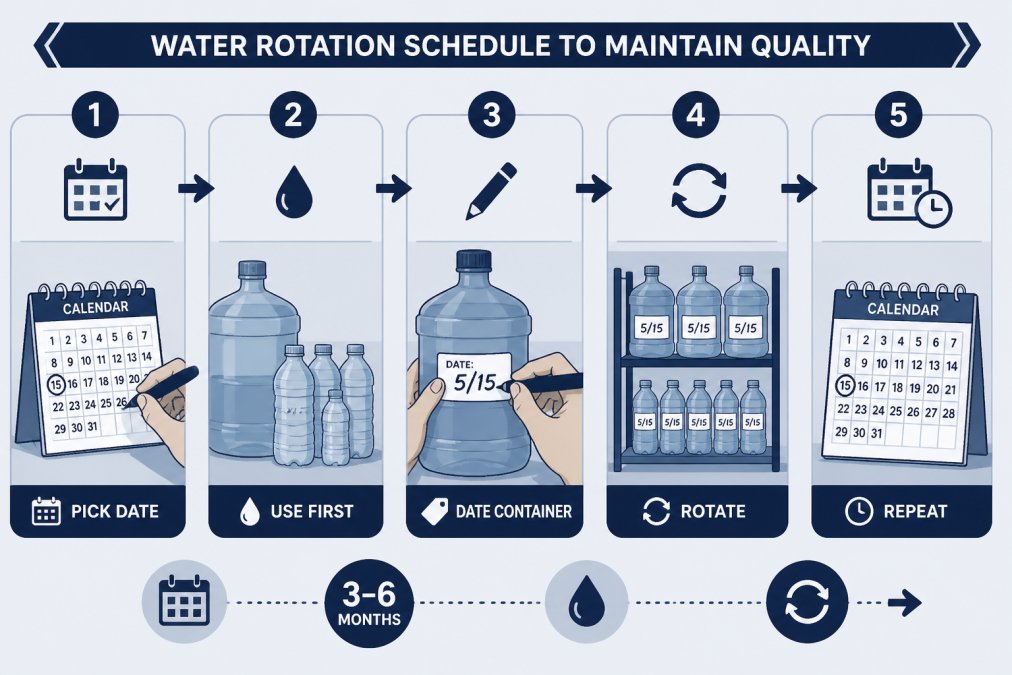
Label each container with the storage date when you fill it using a permanent marker. Create a reminder in your calendar for six months after your initial storage date. When the reminder arrives, use the oldest water for routine tasks like watering plants or washing vehicles, then refill containers with fresh water.
For households with limited space, a quarterly rotation (every three months) provides extra assurance without requiring excessive storage capacity. Some families implement a "first in, first out" system by stacking containers and always using from the oldest stack first.
Signs Your Stored Water Has Gone Bad
Water doesn't need to look cloudy to be unsafe. The most reliable indicators of degradation are taste, smell, and visible changes. Water that develops a stale or flat taste has lost dissolved oxygen and may have begun developing microbial populations. Off-odors, musty, sulfurous, or chemical smells, indicate contamination or chemical leaching.
Visible cloudiness, discoloration, or particles suggest bacterial growth or container degradation. Algae growth produces a greenish tint and musty smell, occurring primarily in containers exposed to light. If you notice any green discoloration, discard the water and examine your storage conditions for light exposure.
If stored water develops any unusual appearance, odor, or taste, err on the side of caution and replace it. The cost of replacing questionable water is negligible compared to the risk of consuming contaminated water during an emergency.
Conclusion
How long does stored tap water stay safe depends fundamentally on three factors: container quality, storage conditions, and whether you've treated the water before storage. Properly stored, treated water can remain safe for six months or longer. Without proper treatment and storage, the same water may become questionable within weeks.
SHTF Prepper Club helps families build water storage systems that actually work when needed. Our expert-vetted approach emphasizes food-grade containers, cool dark storage, and simple treatment methods that extend shelf life without complex equipment. Start with the CDC's three-day minimum supply, then expand your storage as space and budget allow. Label your containers, establish a rotation schedule, and inspect periodically. This straightforward system ensures your household maintains safe drinking water for any emergency scenario.
Frequently Asked Questions
How long can you store tap water before it goes bad?
Properly stored tap water in a sealed, food-grade container away from direct sunlight can remain safe for 6 months to 1 year under standard conditions. If you treat it with unscented chlorine bleach (2-8 drops per gallon, depending on water clarity) or use a water purification method, it can last longer. The key factors are container type, storage temperature, and whether the water has been disinfected. For extended storage beyond 1 year, consider using commercially bottled water or investing in a water testing kit to verify safety before consumption.
What is the best type of container for long-term water storage?
Food-grade plastic containers (typically marked HDPE or polyethylene) are ideal for water storage because they resist chemical leaching better than standard plastic milk jugs. Glass containers work well but are fragile. Avoid metal containers unless they are specifically designed for potable water, as they can rust and contaminate your supply. Ensure containers have an airtight seal to prevent bacterial contamination and algae growth. Five-gallon food-grade buckets with tight-fitting lids are popular for emergency preparedness, while smaller bottles (1-2 gallons) are easier to rotate and distribute.
How often should you rotate your emergency water supply?
If your stored water is untreated, rotate it every 6 months to maintain freshness and palatability. If you've treated it with chlorine or another disinfection method, you can extend rotation to 12 months. Mark containers with the storage date so you know when water was stored. Rotation prevents the 'flat' taste that develops in long-term storage and ensures your supply remains safe for consumption. Keep detailed records of your water rotation schedule so family members understand the system and can maintain it during an actual emergency.
Can you store water in plastic milk jugs for emergencies?
While plastic milk jugs are accessible, they are not ideal for long-term storage. Standard milk jugs are not food-grade and can allow chemical leaching over time, affecting water quality and safety. If you use milk jugs, ensure they are thoroughly cleaned and sanitized before filling, and rotate the water every 3-4 months rather than longer periods. For reliable emergency preparedness, food-grade containers specifically designed for potable water storage are a better choice. They provide better protection against contamination and allow for longer storage intervals between rotations.
This article was written using GrandRanker