
Table of Contents
- How Long Does Emergency Food Last: Key Timelines
- Factors Affecting Emergency Food Shelf Life
- Best Long-Term Food Storage Methods
- Signs of Spoiled Emergency Food
- How to Rotate Food Storage Effectively
- Post-Expiration Safety: What You Need to Know
- Building a Practical Emergency Food Plan for Your Family
- Conclusion
Last Updated: August 8, 2026
How Long Does Emergency Food Last: Key Timelines
Understanding how long emergency food lasts is critical for building an effective preparedness plan. Shelf life varies dramatically by type: freeze-dried foods last 25-30 years, dehydrated foods 5-10 years, MREs 3-5 years, and canned goods 1-5 years (though many remain safe well beyond their best-by dates if stored correctly). The differences stem from moisture content, oxygen exposure, and preservation method. Most households underestimate shelf life and discard perfectly good supplies by confusing best-by dates with expiration dates, a distinction that separates households that waste money from those maintaining truly reliable reserves.
Freeze-Dried Food Shelf Life
Freeze-dried emergency food maintains nutritional content and flavor for 25-30 years when stored in sealed containers with oxygen absorbers in cool, dark conditions. The freeze-drying process removes 98% of moisture while preserving food structure and nutrients. With moisture eliminated, bacteria and mold cannot grow. Oxygen absorbers further protect against oxidation, creating an oxygen-free environment that halts aging. Most freeze-dried kits remain palatable and safe well into their third decade, making them the gold standard for multi-generational preparedness planning.
Dehydrated Food Shelf Life
Dehydrated foods typically last 5-10 years in optimal storage conditions. While dehydration removes significant moisture, it doesn't eliminate it as completely as freeze-drying. Residual moisture makes dehydrated foods more susceptible to oxidation and moisture reabsorption if storage conditions fluctuate. Properly stored dehydrated foods in airtight containers with oxygen absorbers stay safe and reasonably tasty for a decade. Beyond that, quality declines noticeably. Dehydrated foods are lighter and more compact than canned alternatives, making them practical for families with limited storage space.
MRE and Canned Goods Shelf Life
MREs last 3-5 years under standard storage, but temperature is critical. For every 10-degree Fahrenheit increase above 70°F, shelf life drops roughly 50%. An MRE stored at 90°F might last only 18 months, while one kept at 50°F could remain safe for 7-10 years.
Canned goods are often misunderstood. The printed date is typically a best-by date, not an expiration date. Properly canned goods in undamaged containers remain microbiologically safe indefinitely if stored in cool, dry conditions. The USDA confirms canned foods are safe years past their printed dates. What changes is texture, flavor, and nutrient content, not safety. High-acid foods like tomatoes degrade faster (12-18 months), while low-acid foods like vegetables and meat stay good for 3-5 years or longer. Always inspect cans for swelling, rust, or leaks before consuming.
Factors Affecting Emergency Food Shelf Life
Temperature, humidity, light, and packaging determine whether emergency food remains safe and palatable. Missing even one factor can cut shelf life in half.
Temperature Stability and Fluctuations
Temperature is the single most important factor affecting shelf life. Heat accelerates chemical reactions that degrade food quality. The ideal storage temperature is 50-70°F. Above 70°F, degradation accelerates. Fluctuating temperatures are worse than consistently warm temperatures because expansion and contraction damage packaging seals and introduce moisture. A freeze-dried food stored at constant 60°F might last 30 years, while the same food in a garage reaching 90°F could degrade noticeably within 10-15 years.
Humidity Levels and Moisture Control
Humidity is the second critical factor. Moisture reabsorption causes mold growth, nutrient loss, and texture changes. Target humidity levels below 15%. Basements in humid climates often exceed 60% humidity, accelerating spoilage. Dehumidifiers or moisture-absorbing materials like silica gel help maintain dry conditions. Oxygen absorbers in sealed containers prevent moisture from entering, but they cannot remove moisture already present when sealed. Coastal areas and humid climates require extra attention to packaging and storage environment selection.
Light Exposure and Oxidation
Light triggers oxidation, breaking down nutrients and altering flavor. Emergency food is packaged in opaque containers, usually dark Mylar bags or cans, to prevent this. Store food in dark closets, pantries, or basements. Transparent containers on sunny shelves degrade food faster. Ultraviolet light is particularly damaging. Oxygen absorbers are essential because oxidation also occurs in the absence of light if oxygen is present, essentially putting food into suspended preservation.
Best Long-Term Food Storage Methods
Professional-grade storage techniques can triple or quadruple shelf life compared to standard pantry storage.
Mylar Bags and Oxygen Absorbers
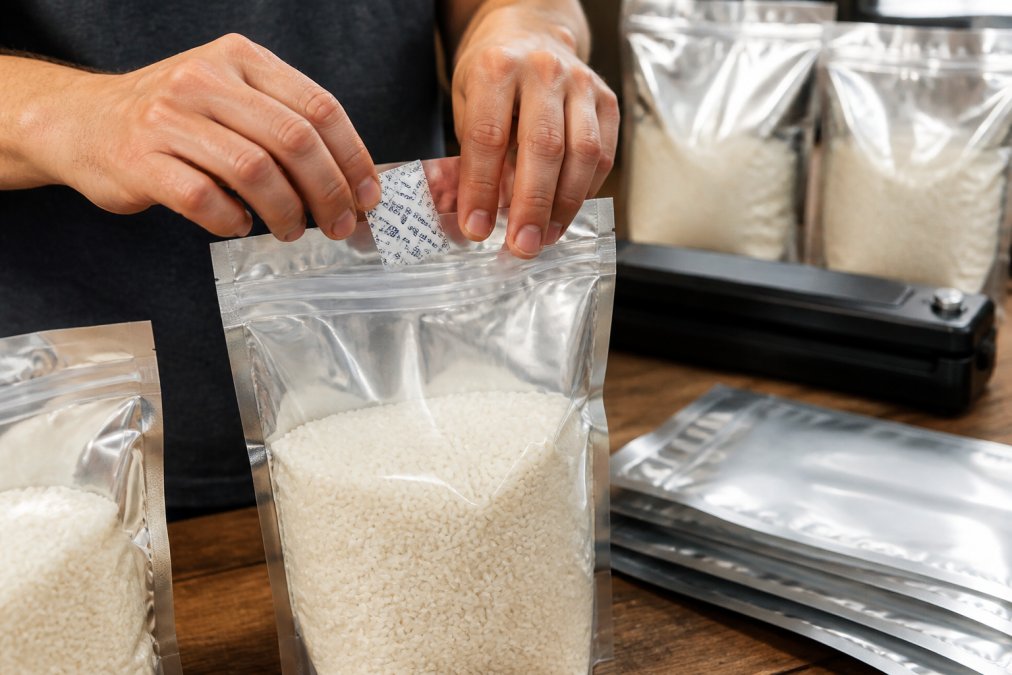
Mylar bags are the standard for serious emergency food storage. Made from metallized plastic that blocks light and oxygen, they create an oxygen-free environment preserving food for decades when combined with oxygen absorbers. Absorbers come in various sizes (100cc, 500cc, 2000cc) and remove oxygen from sealed packages, creating a low-oxygen environment where bacteria and oxidation cannot occur. After sealing, the package should feel slightly hard, indicating the absorber has worked.
Sealed Containers and Vacuum Sealing
Food-grade plastic buckets with tight-sealing lids offer another option. Five-gallon buckets work well for bulk grains and beans. The seal isn't as complete as Mylar bags, but it's adequate for foods stored in cool, dry conditions. Vacuum sealing removes air from bags, reducing oxidation and working well for smaller quantities and shorter timelines (3-5 years). Combination approaches work too: fill a Mylar bag with food, seal it with oxygen absorbers, then place the sealed bag inside a five-gallon bucket for redundant protection and stackability.
Ideal Storage Environment Setup
The best storage method fails without the right environment. A dedicated storage space, cool, dry, dark, and away from temperature fluctuations, is ideal. Basements work well if humidity is controlled. Closets in interior rooms stay more temperature-stable than exterior walls. Avoid garages, attics, and sheds unless climate-controlled. Keep food away from furnaces, water heaters, pipes that could leak, chemicals, pesticides, and strong odors. Seal entry points to prevent rodents and insects.
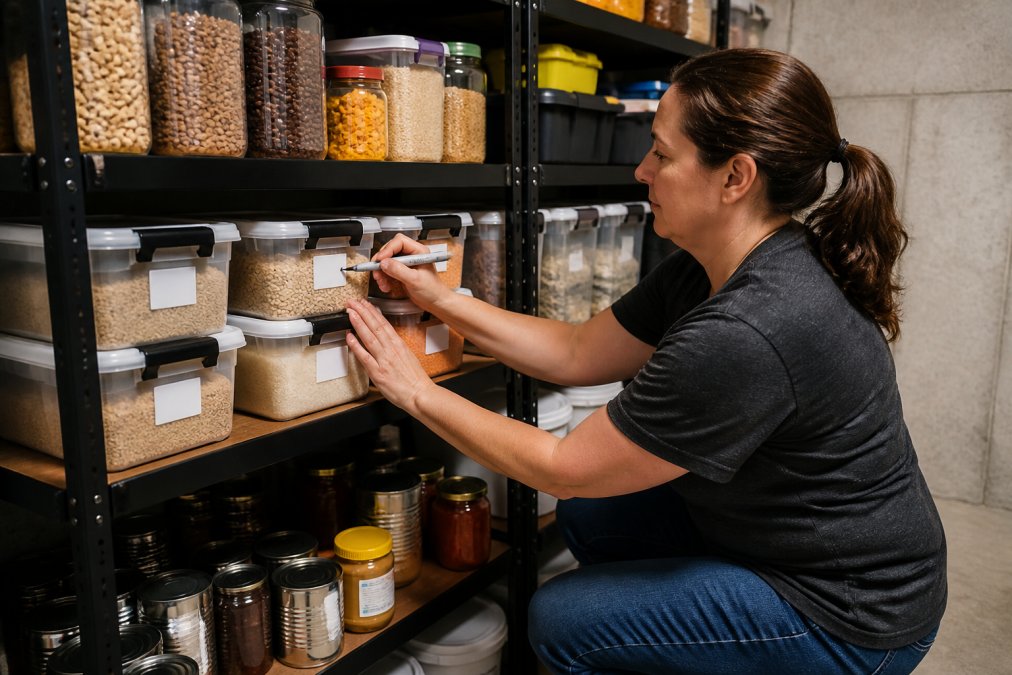
Organize food by type and date. Label everything clearly with contents and packing date. Store frequently-used items in front, less-used items in back. This setup makes rotation easier and prevents accidentally using old stock while newer supplies remain untouched.
Signs of Spoiled Emergency Food
Visual signs, odor, and packaging integrity are your primary indicators of spoilage.
Visual and Odor Indicators
Discoloration, mold, or unusual texture changes signal spoilage. Freeze-dried food that's absorbed moisture will clump or feel damp. Dehydrated foods that smell off or taste strange should be discarded. Canned goods with bulging, dents, or rust should never be consumed. Open sealed packages slowly, if you hear a hiss of air entering, the seal was compromised. If you smell anything sour, rotten, or unusual, don't eat it. Trust your senses.
Safety Concerns: Botulism Risk and Food-Borne Illness
Low-acid foods stored improperly can develop botulism. Botulism develops in anaerobic environments with moisture present. Commercial canned goods are safe because they're processed at high temperatures killing botulism spores. Home-canned foods require proper pressure-canning technique. If canning foods yourself, follow USDA guidelines exactly. Mold indicates bacterial growth and should trigger immediate disposal, don't try salvaging by removing affected portions. Discard it entirely.
How to Rotate Food Storage Effectively
Rotation prevents waste and ensures supplies stay fresh.
FIFO Method and Labeling Systems
FIFO (First In, First Out) is simple: oldest food gets used first. When adding new supplies, place them behind existing stock. Label everything with the date packed using a permanent marker. Include contents and relevant information. Create a simple spreadsheet or notebook tracking what you have, where it's stored, and when it was packed. This prevents buying duplicates and ensures nothing gets forgotten.
Budget-Friendly Rotation Schedules
Use emergency food in regular cooking. Incorporate freeze-dried vegetables into soups and stews. Use canned goods in everyday meals. This keeps supplies fresh while reducing grocery costs. A simple monthly rotation works well: first Sunday of each month, check expiration dates and plan a meal using items nearing their best-by date.
For tight budgets, buy one extra can or package of shelf-stable food with each grocery trip. Over a year, you'll accumulate a month's worth of supplies without noticing the expense.
Post-Expiration Safety: What You Need to Know
Best-by dates indicate peak quality, flavor, texture, and nutrient content. After that date, quality declines but safety doesn't automatically change. Properly stored freeze-dried food remains safe decades past its best-by date. Canned goods can be safe indefinitely if undamaged. The USDA confirms many canned foods are safe years past printed dates. Manufacturers set best-by dates based on quality, not safety.
Use your senses. Open the package and check for mold, unusual odors, or discoloration. If the food looks and smells fine, it's almost certainly safe. Temperature history matters more than calendar date. Food stored at 50°F for ten years is safer than food stored at 90°F for two years. Consistent cool storage extends safety windows dramatically.
Building a Practical Emergency Food Plan for Your Family
A realistic emergency food plan matches your family's actual needs, preferences, and circumstances. Start by calculating daily calorie needs. An average adult needs roughly 2,000 calories per day. Multiply by the number of days you want to prepare for. A family of four preparing for 30 days needs roughly 240,000 calories total.
Include foods your family actually eats. If nobody likes beans, don't buy 50 pounds. If your kids won't eat freeze-dried vegetables, buy foods they'll consume. In a real emergency, morale matters. Familiar, palatable food keeps people calm and ensures they eat enough. Mix food types: combine freeze-dried meals with canned goods, pasta, rice, and comfort foods. Include foods requiring no preparation and foods needing cooking for power-loss scenarios.
Store water separately. One gallon per person per day is standard. For a family of four preparing for two weeks, store 56 gallons. Water takes significant space but is non-negotiable.
Test your supplies. Open a package of freeze-dried food and prepare it according to instructions. Does it taste acceptable? Does rehydration take longer than expected? Do you have the right equipment? Testing reveals gaps before an actual emergency.
Building reliable emergency food storage isn't about buying expensive kits or accumulating supplies you'll never use. It's about understanding how long emergency food lasts under your specific storage conditions, choosing appropriate foods your family will eat, and maintaining a rotation schedule that keeps supplies fresh. Start with basics: freeze-dried or dehydrated foods in sealed containers with oxygen absorbers, stored in a cool, dry place. Add canned goods you actually use. Rotate regularly. Test your supplies. The result is genuine peace of mind, knowing your family has reliable nutrition available when external systems fail. SHTF Prepper Club's curated emergency food solutions eliminate guesswork by providing expert-vetted options designed for long-term storage and family-friendly nutrition, so you can focus on building a plan that actually works for your household.
Frequently Asked Questions
How long can emergency food last if stored properly?
Properly stored emergency food can last 5-30 years depending on type. Freeze-dried foods typically last 20-30 years in sealed Mylar bags with oxygen absorbers. Dehydrated foods last 10-20 years. Canned goods last 3-5 years on average, though some last much longer. MREs last 5-10 years. The key is controlling temperature, humidity, light exposure, and using quality sealed containers to prevent oxidation and nutrient degradation.
What are the best long-term food storage solutions for my home?
The best long-term food storage combines proper containers with environmental control. Use Mylar bags with oxygen absorbers for bulk grains and dehydrated items, or vacuum-sealed containers for added protection. Store everything in a cool, dry location with stable temperatures below 70°F and humidity below 15%. Avoid basements prone to moisture or attics with temperature fluctuations. Label everything with purchase dates and rotation dates to track shelf life and ensure you use older stock first.
What are signs of spoiled emergency food I should watch for?
Signs of spoiled emergency food include discoloration, mold or unusual odors, unusual texture or clumping, and pest damage to packaging. For canned goods, look for bulging, dents, or rust. Never consume food with visible contamination or off-smells. Be especially cautious with low-acid foods like meats and vegetables stored in cans, as botulism risk increases with age. When in doubt, discard the food, the cost of replacement is far less than the risk of food-borne illness during an emergency.
How should I rotate my emergency food storage to keep it fresh?
Use the FIFO (First In, First Out) method: place new purchases behind older stock so older items get used first. Label every container with the purchase date and best-by date. Create a simple inventory spreadsheet or use a rotation schedule that reminds you to check stock quarterly. For budget-friendly rotation, incorporate long-shelf-life pantry staples into your regular meals, bulk grains, canned vegetables, and freeze-dried items work in everyday cooking. This keeps your emergency supply fresh while reducing waste and cost.
This article was written using GrandRanker