
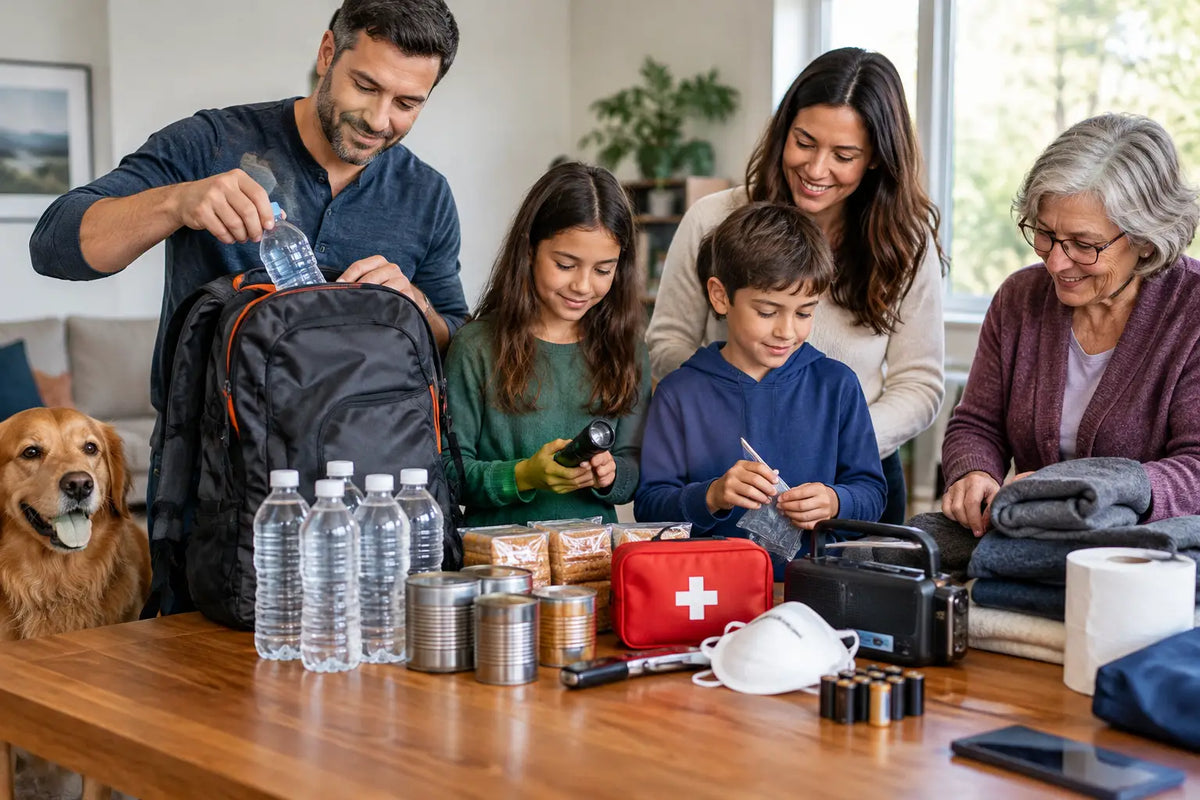
The first night of a power outage is usually manageable. By the second day, the questions get more practical: Is there enough water? What will the kids eat if the refrigerator warms up? Can Grandpa use his medical equipment? Where are the batteries? A home emergency kit is not about expecting the worst. It is about making a hard week less chaotic for the people who count on you.
You do not need to buy everything at once. A useful kit starts with the disruptions most likely where you live, then grows as your budget and confidence do. For many families, that means planning for at least three days without normal services, with a longer-term goal of one to two weeks of essential supplies at home.
Start With the Emergencies You Actually Face
A family in coastal Florida should think first about hurricanes, flooding, and evacuation. A household in Texas may prioritize summer outages and severe storms. In California, wildfire smoke, evacuation routes, and water storage deserve extra attention. Winter storms, tornadoes, earthquakes, and regional supply shortages each change the details.
The basic needs do not change: safe water, food, light, communication, medical care, warmth or cooling, sanitation, and a way to leave if staying home becomes unsafe. What changes is how much of each item your family needs and whether it belongs in a closet, garage, vehicle, or ready-to-grab evacuation bag.
Start by walking through a realistic scenario. Picture the power going out on a Tuesday evening and not returning for 72 hours. Write down what your household would use from dinner through the next three mornings. That exercise reveals more than any generic checklist. You may find that you have canned food but no manual can opener, flashlights but no spare batteries, or water but no way to keep it clean after the first few gallons.
Build Your Home Emergency Kit in Layers
Trying to create a fully stocked preparedness room in one shopping trip can be expensive and discouraging. Build in layers instead. Cover immediate safety first, then add comfort, redundancy, and longer-term storage.
Layer One: Water Comes Before Everything Else
Store at least one gallon of water per person per day for drinking and basic sanitation. Three days is a sensible starting point. A family of four needs 12 gallons just to meet that minimum, and that does not include pets, cooking, or extra needs during hot weather.
Bottled water is convenient for a starter supply, but larger containers make more sense as your plan expands. Choose food-safe water containers your family can lift and pour safely. A mix works well: smaller containers for everyday use and larger storage containers for depth.
Water filtration and purification are valuable backups, not excuses to skip stored water. A reliable filter can help when you have access to rainwater or another untreated source, while purification treatments provide another layer of protection. Follow the product instructions carefully. Not every filter removes viruses, chemicals, or sediment, and not every treatment works quickly in cold or cloudy water.
Layer Two: Food Your Family Will Eat
Emergency food should be familiar enough that your family will actually use it. Build around shelf-stable meals that require little water and little fuel: ready-to-eat meals, canned proteins, soups, nut butters, crackers, rice, beans, fruit cups, and comfort foods for children.
Freeze-dried food storage can add variety, long shelf life, and efficient use of pantry space. It is especially useful for households building beyond a short outage. The trade-off is water. Many freeze-dried meals need rehydration, so make sure your water plan can support the food you store.
Plan for dietary realities, not an imaginary household. Include formula or baby food for infants, low-sodium options where needed, familiar snacks for young children, and foods that work for allergies or medical restrictions. If a family member has diabetes, keep fast-acting glucose sources available and discuss emergency planning with their care team.
Rotate what you store. Put dates on containers, use older items in normal meals, and replace them. A kit that gets checked twice a year is far more dependable than a forgotten shelf of mystery cans.
Layer Three: Light, Power, and Communication
Every household needs multiple ways to see after dark. Keep flashlights or headlamps where people can find them without searching, including bedrooms. Headlamps are especially helpful because they leave both hands free for cooking, first aid, or helping a child.
Add extra batteries in the correct sizes, but do not rely only on disposable power. Rechargeable lanterns, battery banks, and portable power stations can keep phones, lights, and certain small devices running. The right power station depends on what you need it to do. Charging phones and powering lights requires far less capacity than running a refrigerator, a CPAP machine, or a medical device.
For longer outages, a portable solar panel can recharge compatible battery banks and power stations. If you use a fuel-powered generator, operate it outside and well away from doors, windows, and vents. Carbon monoxide is a serious danger, even when the weather is miserable and bringing the generator closer feels convenient.
Keep a battery or hand-crank weather radio in your home emergency kit. Cell networks can be congested or unavailable during a major event, and local emergency instructions may change quickly.
Layer Four: First Aid and Essential Medicine
A basic first aid kit is a good start, but it may not be enough for a household dealing with a cut, burn, sprain, or delayed access to care. Add supplies that match your family: bandages in several sizes, wound-cleaning supplies, gloves, medications for pain or fever, a thermometer, and any items your doctor recommends.
Prescription medication deserves its own plan. Ask your pharmacist or clinician about keeping an emergency supply when possible. Keep an updated list of medications, doses, allergies, doctors, pharmacy numbers, and insurance information in a waterproof pouch. If someone relies on refrigerated medicine, oxygen, mobility equipment, or electrically powered medical devices, prioritize backup power and evacuation planning early.
Do not forget vision and hearing needs. Spare glasses, contact lens supplies, hearing-aid batteries, and chargers can be difficult to replace during a regional disruption.
Do Not Overlook Warmth, Sanitation, and Pets
A safe home can become uncomfortable fast when utilities fail. Keep blankets, sleeping bags, warm layers, and rain gear available for each person. In hot climates, think about shade, battery-powered fans, cooling towels, and a plan to relocate if indoor temperatures become unsafe.
For cooking, choose equipment you understand and can use safely. A simple camp stove, fuel stored according to local rules, cookware, matches, and a manual can opener cover many short-term needs. Never use outdoor cooking equipment indoors or in a closed garage.
Sanitation supplies protect both comfort and health. Store toilet paper, trash bags, wipes, soap, hand sanitizer, feminine products, and a basic backup toilet plan. This category is easy to postpone until water service is interrupted. Then it becomes one of the most useful parts of the kit.
Pets belong in the plan. Keep several days of food, water, medications, waste bags or litter, a leash or carrier, vaccination records, and a current photo. During an evacuation, a carrier that is already labeled and accessible saves precious minutes.
Organize Supplies So They Work Under Stress
The best supplies in the world do little good if they are scattered across closets. Choose one accessible location for your core home emergency kit, such as a hall closet, pantry shelf, or clearly labeled storage totes. Avoid places likely to flood, overheat, or become blocked by a vehicle during a storm.
Organize by function. Keep water together, medical supplies together, lighting and batteries together, and cooking equipment together. Label bins in large print so another adult, a teenager, or a visiting grandparent can find what they need. A simple printed inventory inside the main container helps you see what is missing before an emergency.
Keep evacuation supplies separate but nearby. Each family member should have sturdy shoes, weather-appropriate clothes, copies of key documents, medications, water, snacks, a flashlight, and comfort items for children. Your home kit supports sheltering in place. Your evacuation bags help when officials tell you it is time to leave.
Set a calendar reminder every six months to check dates, test lights and power equipment, refresh water as needed, and update documents. Use the occasion to practice a short family conversation: how you will communicate, where you will meet, and who is responsible for pets or older relatives.
Preparedness does not have to look dramatic to be meaningful. Start with the next useful item, store it where you can reach it, and build from there. When the lights go out or the weather turns, your family will feel the difference between having supplies and having a plan.