
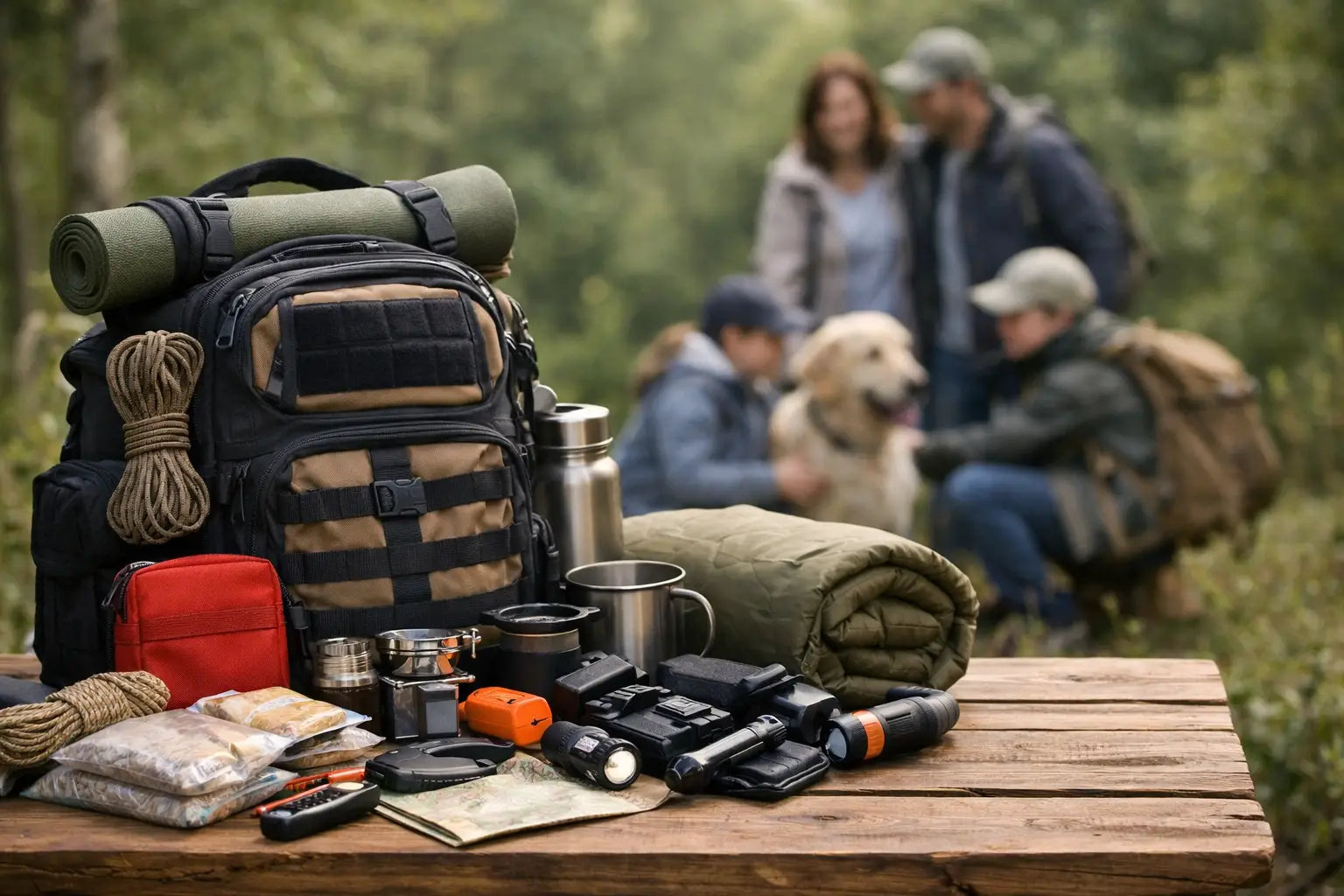
A knock at the door. A wildfire evacuation alert. Floodwater rising at the end of the street. In that moment, nobody wants to be deciding which medicines, chargers, shoes, and family records to grab. If you have searched for a bug out bag for my family, you are already asking the right question: how can we leave safely without turning a stressful emergency into a scavenger hunt?
For most households, an evacuation bag is not about disappearing into the woods. It is a practical, portable supply system that helps your family get through the first 24 to 72 hours after leaving home. It should support a hotel stay, a shelter, a relative's house, a roadside delay, or a local emergency where stores and power are unavailable.
What a Family Evacuation Bag Needs to Do
Your bag has one job: help your family stay safe, warm, hydrated, informed, and reasonably comfortable while you get to a safer place. That sounds simple, but it requires a different mindset than stocking supplies at home.
Home emergency supplies can be larger and heavier. Cases of water, shelf-stable food, backup power, blankets, and cooking gear belong in your home plan. An evacuation bag must be light enough to carry and organized enough to use in a hurry.
Think in layers. Your home should have stored water and food for several days or longer. Your vehicle should have basic roadside and seasonal supplies. Your family's evacuation bags bridge the gap when you need to leave now and do not know exactly where you will sleep tonight.
Build a Bug Out Bag for My Family Around Real Needs
Start with the people in your household, not a generic online checklist. A family with a toddler, a diabetic parent, two large dogs, and a grandparent needs a different setup than two healthy adults with teenagers. The best plan is the one you can carry, maintain, and use.
Before buying gear, decide where you would go. Identify at least two destinations, preferably in different directions: a nearby friend or relative and a location outside your immediate area. Know how you will contact each other if school, work, or cell service complicates the day. Put a printed contact card in every adult's bag and teach children who they can call.
Then build your bags around six practical categories.
Water: Carry Some, Filter More
Water is heavy. A full gallon weighs more than eight pounds, so carrying three days of water for every person is unrealistic for many families. Pack one or two durable water bottles per person, then add a dependable water filter or purification method that can handle local water sources.
For a car evacuation, keep additional sealed water in the vehicle when temperatures allow. At home, maintain a larger stored-water supply. This combination gives you drinking water immediately and options if the disruption lasts longer than expected.
Do not forget baby formula needs, electrolyte packets, and pet water. A dog or cat is part of the evacuation plan, not an afterthought in the driveway.
Food: Familiar, Ready to Eat, and Easy to Rotate
Pack foods your family will actually eat under stress. Choose shelf-stable items that require little or no water and no cooking: ready-to-eat meals, protein bars, nut butter, crackers, jerky, fruit pouches, and shelf-stable milk if it fits your household.
A small camp stove can be useful, but it should not be your only way to eat. Storm conditions, shelter rules, fire restrictions, and a simple lack of time can make cooking impossible. Keep at least a day's worth of truly ready-to-eat food in each bag, then add simple meals and a compact cooking option if your family can carry them.
Children often eat less when they are anxious. A few familiar snacks can do more than provide calories. They can help restore a little normalcy when the day feels anything but normal.
Medical and Personal Care: Pack for Your Actual Household
A basic first-aid kit is a starting point, not the full answer. Add a written list of medications, allergies, medical conditions, and doctors' contact information. Keep prescription medication in its original labeled container when possible, and ask your pharmacist or physician about maintaining an emergency supply if your medications are time-sensitive.
Include spare glasses, hearing-aid batteries, inhalers, menstrual supplies, diapers, wipes, and any mobility items your family relies on. A compact first-aid kit should handle cuts, blisters, fever, and minor injuries, but it should also be easy to find. Put it near the top of the bag, not buried under food.
Clothing, Shelter, and Warmth: Plan for the Night You Did Not Expect
Every person needs a change of weather-appropriate clothing, sturdy shoes, extra socks, rain protection, and a warm layer. Shoes matter more than most people expect. Flood debris, broken glass, cold pavement, and long walks become much harder in sandals or slippers.
Add emergency blankets or sleeping bags, work gloves, and simple rain ponchos. In colder regions, upgrade the warmth layer substantially. In hot regions, prioritize sun protection, cooling towels, and extra water capacity. The right gear depends on where you live and the season, which is why a bag packed once and forgotten is rarely enough.
Light, Power, and Communication
Pack headlamps instead of relying only on handheld flashlights. They keep both hands free for a child, a pet leash, a map, or a car repair. Include spare batteries or rechargeable battery packs, a vehicle charging cable, and a compact power bank for each adult's phone.
A battery-powered weather radio can be worthwhile in hurricane, tornado, and wildfire areas, especially when local information changes quickly. Keep a paper map of your county and surrounding routes, too. Phone navigation is useful until the battery dies, the network slows, or a road closure sends you somewhere unfamiliar.
Documents, Cash, and the Small Things That Matter
Place copies of insurance cards, identification, home and auto policies, medical information, school contacts, and pet vaccination records in a waterproof pouch. Keep digital copies in a secure location as well, but do not depend entirely on cloud access during an emergency.
Add some small bills, spare keys, a pen, and a paper notebook. Cash still works during a power outage when card readers do not. A notebook is useful for recording addresses, fuel stops, medications given, or messages left for family members.
One Big Bag or Several Smaller Bags?
For most families, several bags work better. Each capable adult should carry a backpack with personal essentials, while children can carry a small, age-appropriate bag with a light layer, snacks, comfort item, water, and identification. Do not load a young child with critical supplies they may set down.
Keep shared equipment distributed across adult bags. One adult might carry the medical kit and documents; another carries water treatment, food, and shelter items. This prevents one overloaded bag from becoming the single point of failure.
A rolling tote can help if you expect to evacuate by car, but it is not a replacement for backpacks. Wheels are great in a hotel parking lot and nearly useless on stairs, mud, debris, or a crowded shelter entrance. Pack the items you cannot do without in bags you can wear.
Test the Family Plan Before an Emergency
A good evacuation bag should feel boring when you use it. Test it on a normal weekend. Put on the bags, walk around the block, load the car, and see what happens when everyone needs shoes, water, and a bathroom break at the same time.
This is where the trade-offs become clear. A bag may be too heavy. Your child may hate the food. The power bank may not charge the phone you use now. You may realize the dog needs a harness, or that your spouse does not know where the document pouch is stored. These are useful discoveries, not failures.
As a general rule, an adult should be able to carry their bag comfortably for at least 20 minutes. If they cannot, remove duplicates, shift shared gear, or move heavier supplies to the vehicle. Comfort and mobility beat an impressive-looking pack that stays in the closet.
Customize for the Emergencies You Actually Face
A wildfire bag should prioritize smoke masks appropriate for particulate protection, goggles, long sleeves, and fast access to documents. Hurricane-prone households may need more water, rain gear, battery power, and supplies for long traffic delays. Winter storm plans need serious insulation, hand warmers, blankets, and cold-weather vehicle gear.
If earthquakes are a concern, add sturdy shoes, gloves, dust masks, and a wrench only if you know when and how to shut off utilities safely. For every region, keep evacuation routes current. The most capable gear cannot solve a plan that sends you toward a closed road or into a more dangerous area.
Keep the Bags Ready Without Overthinking It
Set a reminder twice a year, ideally when clocks change, to check food dates, replace medications, test power banks, update clothing sizes, and review contact information. Rotate snacks into lunchboxes or road trips before they expire. Let children help refresh their own bags as they grow.
Start with what you can manage. A well-organized $200 setup is far more useful than a perfect plan that never makes it past a shopping cart. Build one category at a time, keep the bags near your exit route, and give your family the quiet confidence that comes from knowing what to do when leaving home cannot wait.