
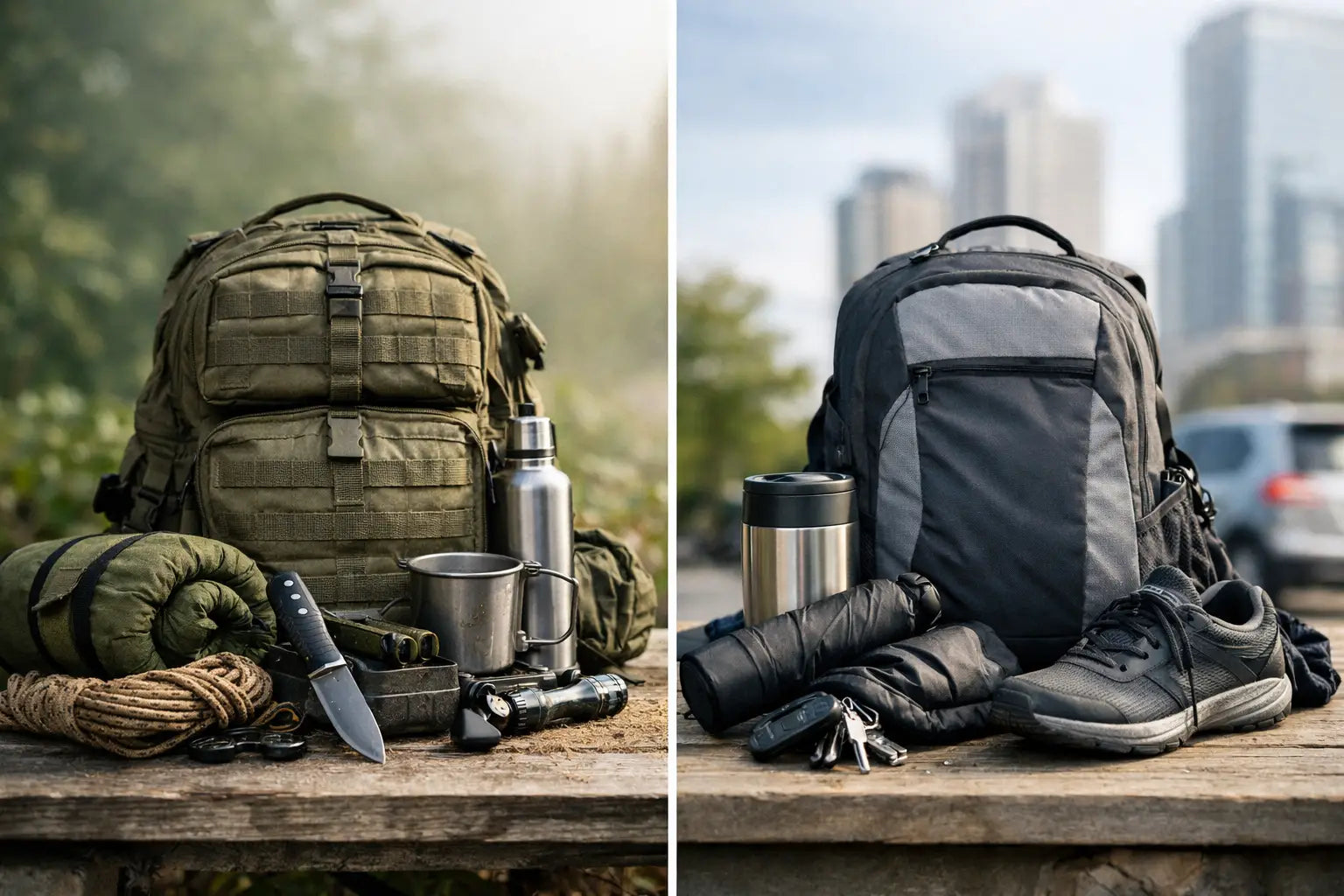
A school pickup is delayed by a sudden storm. A wildfire closes the road home. A power outage leaves you at work with no way to charge your phone. The bug out bag versus get home bag question matters because these situations call for different plans - and carrying the wrong bag can leave you short on the basics that matter most.
For most families, a get-home bag is the better place to start. It is smaller, less expensive, and built around a realistic goal: getting from where you are back to your household safely. An evacuation bag has a different job. It supports your family if you must leave home and live elsewhere for several days.
Neither bag is about expecting the worst. They are practical tools for the disruptions Americans already experience every year.
Bug Out Bag Versus Get Home Bag: The Core Difference
A get-home bag stays with you or in your vehicle. Its purpose is to help one person travel home after an emergency interrupts normal transportation or communications. Think of a stalled highway during a winter storm, a regional outage that shuts down fuel pumps, or an earthquake that makes your usual route impassable.
An evacuation bag, often called a bug-out bag, is packed at home and ready to grab when officials advise evacuation or your house is no longer safe. It should cover the needs of each family member for roughly 72 hours while you travel, stay in a hotel, shelter with relatives, or use a community shelter.
The distinction is simple: a get-home bag gets you to your supplies. An evacuation bag takes essential supplies with you because you may not be able to return home soon.
That difference changes almost everything: bag size, weight, food, water capacity, clothing, and who carries it. Trying to turn one bag into both can work in a pinch, but it usually produces a heavy, cluttered bag that is inconvenient for daily use and incomplete for an evacuation.
Start With the Most Likely Problem
Your local risks should set your priorities. A commuter in suburban Atlanta may need water, comfortable walking shoes, rain protection, and a backup phone battery during a major traffic disruption. A California family in a wildfire zone needs evacuation bags that can be loaded quickly, including copies of records, medications, pet supplies, and smoke-ready clothing. A household in the Upper Midwest should place more emphasis on warmth and vehicle recovery basics.
Distance is also a deciding factor. If you work 8 miles from home and could walk it in a few hours, your get-home bag can stay compact. If you regularly drive 45 miles, pass through rural areas, or have a medical condition that limits walking, your plan may need a larger vehicle kit, a printed list of people to call, and an agreed-upon pickup plan.
Do not build around an imagined wilderness trek. Build around your real commute, your weather, your family members, and the routes you use every week.
What Belongs in a Get-Home Bag
A good get-home bag is light enough that you will actually keep it nearby. A modest daypack or compact vehicle bag works well. It should support one adult for a long walk or an unplanned overnight, not replace the supplies stored at home.
Start with water. Carry a filled water bottle and a compact water filter or purification option for longer delays. Add calorie-dense snacks that tolerate heat and cold reasonably well. A few familiar bars, jerky, nuts, or shelf-stable snacks are more useful than specialty food you have never tried.
Then cover movement and communication. Keep a small flashlight or headlamp, spare batteries or a power bank, a charging cable, paper maps for your usual area, a permanent marker, and a small amount of cash in small bills. A basic first-aid kit should include personal medications where practical, blister care, bandages, pain reliever, and any items you know you use often.
Weather protection matters more than many people expect. Include a rain poncho, work gloves, a warm layer appropriate to your region, a knit cap in cold months, and a compact emergency blanket. Good walking shoes may be the most valuable item in the entire kit. If your daily footwear would not get you safely across several miles of broken pavement or wet ground, keep a pair in your vehicle.
For a vehicle-based kit, add a reflective vest, roadside triangles or a visible signaling item, jumper cables or a jump starter, and seasonal supplies. Your car is not guaranteed to get you all the way home, but it can carry the equipment that gives you better options.
What an Evacuation Bag Needs
An evacuation bag must account for more people and more time. Pack one bag per capable adult or older teen when possible. Young children should have a small comfort pack or lightweight bag, but adults should carry the essentials. A single oversized bag is difficult to load, difficult to lift, and a poor fit if family members get separated.
Plan for at least three days of water and food, while recognizing the weight trade-off. Water is heavy - about 8 pounds per gallon. Carrying several gallons per person is often unrealistic, so a balanced approach is best: bring drinking water, containers, and reliable ways to filter or purify additional water if your destination or route allows it.
Food should be shelf-stable, familiar, and easy to prepare with little fuel or cleanup. Ready-to-eat meals and simple snacks are useful during the first day of travel. For longer support, include meals that only require hot water if you have a safe way to heat it. Rotate food at least once or twice a year, and replace anything crushed, swollen, melted, or nearing its date.
Clothing should be practical rather than excessive. Pack a weather-appropriate change of clothes, sturdy shoes, socks, underwear, rain protection, and layers. Add basic hygiene supplies, toilet paper in a protected bag, hand sanitizer, and feminine hygiene products as needed. Families with infants need diapers, wipes, formula or feeding supplies, and familiar comfort items.
Medical needs deserve their own pouch. Keep a first-aid kit, copies of prescriptions, several days of essential medication when possible, spare glasses, and a written list of diagnoses, allergies, medications, and emergency contacts. This paperwork can be more valuable than another gadget when you arrive at an unfamiliar clinic or shelter.
Keep critical documents in a waterproof folder: identification copies, insurance details, home and vehicle information, medical records, and key phone numbers. Secure original documents appropriately, but do not rely only on your phone. Networks fail, batteries run down, and a printed contact list works without a signal.
Do Not Forget Pets and Everyday Comfort
A family evacuation plan is incomplete if it assumes pets will somehow work themselves out. Keep a pet carrier, leash, food, water bowl, waste bags, vaccination records, and any medication near your evacuation supplies. Confirm in advance which hotels, relatives, and shelters will accept animals. During fast-moving evacuations, that one detail can determine where your family can go.
Also make room for morale. A deck of cards, a small book, a child’s stuffed animal, or headphones may seem secondary, but long waits are easier when children feel secure. Preparedness is not only about staying alive. It is about helping your family stay steady during a stressful few days.
Build the Two-Bag System Without Overspending
You do not need to buy everything at once. Start with a get-home bag for the adult who commutes farthest, then create evacuation bags from items you already own. A backpack, refillable bottles, a flashlight, spare clothing, snacks, and a basic first-aid kit are a solid beginning.
Next, strengthen the items that are hard to improvise during an emergency: water treatment, dependable lighting, backup power, medical supplies, and shelf-stable food. Store evacuation bags near an exit, but not where heat, moisture, or a garage full of exhaust fumes can damage food, batteries, and medication.
Review both bags every six months. Change clothing sizes for growing children, rotate food and water, update documents, test lights and power banks, and adjust for the season. Put the review on the calendar around daylight saving time, a birthday, or the start of hurricane season so it becomes a household routine.
Finally, make the plan visible. Decide where family members will meet, identify two routes home, and choose an out-of-area contact who can relay messages if local phone service is overloaded. Bags are useful, but a calm plan gives those supplies direction.
The best bag is the one that matches the emergency you are most likely to face and the people who depend on you. Start with one practical kit, learn from it, and add capability over time. That is how everyday families become genuinely ready.