
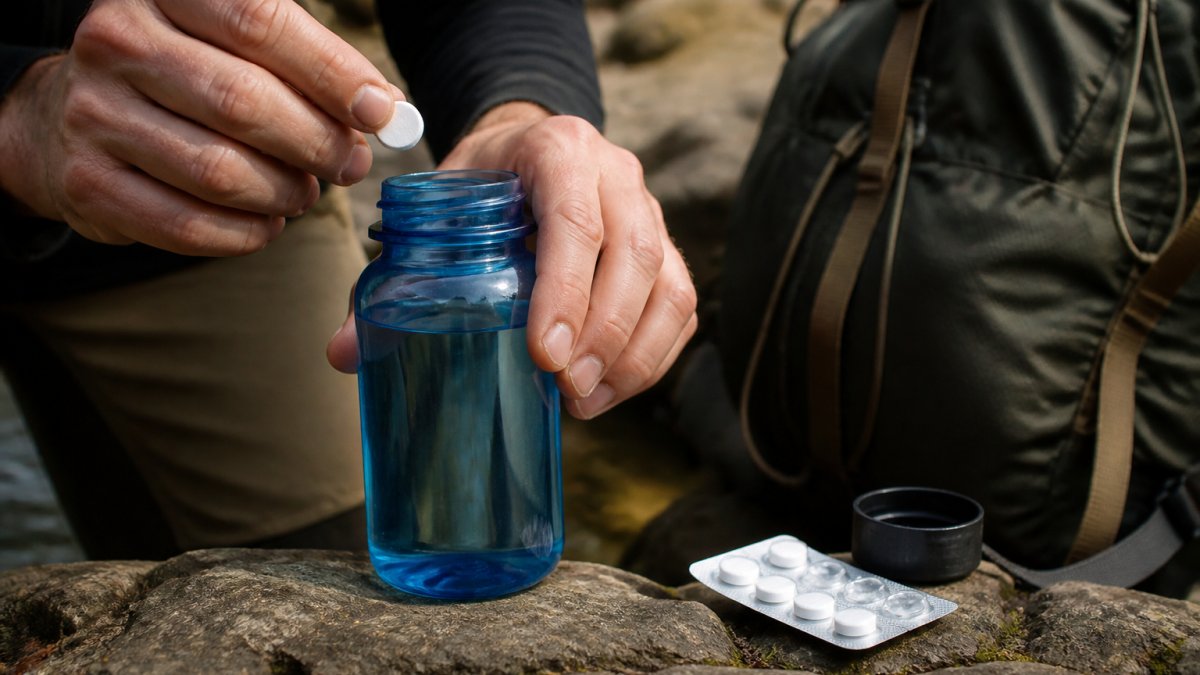
Last Updated: October 31, 2026
Quick Summary
The best water purification tablets for international travel combine broad organism coverage, a manageable contact time, and a small pack size. Match the tablet to your water source: chlorine tablets suit urban tap water, while chlorine dioxide tablets are better for protozoa risk in rural or backcountry water. Carry both a tablet and a filter when the source is uncertain.
- Chlorine-based tablets handle bacteria and viruses well but struggle against Cryptosporidium.
- Chlorine dioxide tablets generally do better against protozoa, but contact time climbs.
- Cold water below roughly 10°C and cloudy water both stretch the required contact time.
- Pre-filter cloudy or turbid water through a cloth or filter before you treat it.
- Use the filter first to clear turbidity, then treat with tablets for viral coverage.
Table of Contents
- What to Look for in Water Purification Tablets for International Travel
- Water Purification Tablets vs Water Filters for Travel
- Aquatabs Water Purification Tablets Review
- Katadyn Micropur Tablets: The Remote-Expedition Pick
- Potable Aqua Water Purification Tablets: Batch Treatment for Larger Volumes
- Water Purification Tablets Treatment Time: Dosage and Contact Time by Product
- How to Use Water Purification Tablets Correctly
- Choosing Your Water Treatment Kit at SHTF Prepper Club
- Frequently Asked Questions
What to Look for in Water Purification Tablets for International Travel
Water purification tablets are compact chemical treatments that disinfect suspect water by releasing chlorine, chlorine dioxide, or iodine to kill bacteria, viruses, and protozoa.
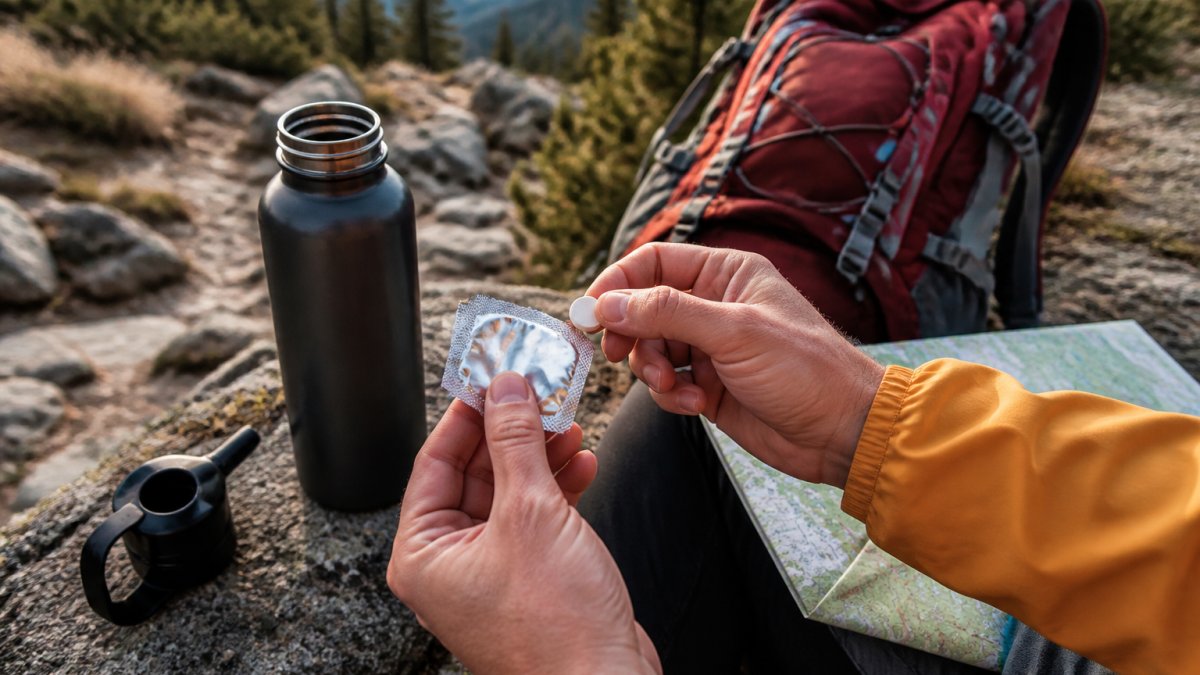
Start with the water source, not the tablet
Most buying guides list tablet features in a vacuum. A more useful approach for international travel is to work backward from where the water comes from. Use this decision matrix before you pack.
| Travel scenario | Typical water source | Primary risk | Best tablet approach | Supplement with |
|---|---|---|---|---|
| Urban hotel in a region with unreliable municipal treatment | Hotel tap, refilled bottles | Bacteria and viruses; occasional protozoa | Chlorine or chlorine dioxide tablet dosed per liter | Bottled water when sealed and reputable; filter if water is cloudy |
| Rural guesthouse or homestay | Well, tank, or stored tap water | Bacteria, viruses, Giardia | Chlorine dioxide tablet with full contact time | Pre-filter for sediment; boil when available |
| Backcountry or remote excursion | Stream, lake, spring | Giardia, Cryptosporidium, bacteria | Chlorine dioxide tablet plus mechanical filter | Filter first for protozoa and turbidity, then treat |
| Emergency or infrastructure failure | Any available source | Unknown; possibly all three | Chlorine dioxide tablet plus filter plus boil backup | Follow local public health advisories |
| Air travel and transit | Airport and onboard water | Bacteria; viral risk lower | Chlorine tablet for a single bottle | Sealed bottled water where available |
The five specifications that actually decide the purchase
- Active ingredient and organism coverage. Chlorine-based tablets handle bacteria and viruses well but struggle against Cryptosporidium, a tough protozoan common in backcountry and untreated surface water. Chlorine dioxide products generally do better against protozoa, but contact time climbs. Iodine tablets are effective against bacteria and viruses and are sometimes used for Giardia, but they are not reliable against Cryptosporidium and carry use cautions.
- Contact time. Some tablets need 30 minutes, others need four hours. If you are thirsty at a rest stop, that gap matters. Cold water below roughly 10°C and cloudy water both stretch the required contact time.
- Water clarity. Cloudy or turbid water blunts chemical disinfection. Pre-filter through a cloth or a filter before you treat.
Match the tablet to the destination, not the marketing
A common mistake is buying tablets for the wrong water. Tap water in a city and a stream in the backcountry are different problems. If your itinerary mixes urban hotels and rural excursions, carry a chlorine dioxide product for protozoa risk and a fast chlorine tablet for quick bottle treatment, and pre-filter any water you cannot see through.
A tablet is only as good as the water you put it in: clear water, correct dose, full contact time, and a backup method when the source is uncertain.
Water Purification Tablets vs Water Filters for Travel
Filters physically strain out organisms; tablets chemically kill them. That single difference drives most of the decision.
A water filter removes bacteria and protozoa, including Giardia and Cryptosporidium, by pushing water through a fine membrane, but most filters do not remove viruses.
For international travel, that trade-off matters. Where tap water carries viral risk, tablets earn their place; on a backcountry trip where the main worry is Giardia and sediment, a filter does more work with less waiting.
Our practical guidance: carry both when the trip is long or the water source is uncertain. If you are weighing the two for a specific trip, our guide to the best water filter for emergency preparedness walks through gravity, pump, and squeeze options. You can also browse the full water filters collection to compare models side by side.
Aquatabs Water Purification Tablets Review
That versatility is the appeal: one strip covers a weekend hike and a household backup drawer.
The 49 mg dose is designed for a set volume of water, so read the packet before you treat anything.
For a deeper side-by-side of tablet brands, our water purification tablets comparison guide covers dosage, effectiveness, and shelf life.
Best for: travelers who want one multipurpose tablet pack for hiking, camping, and home backup. Skip if: your destination water is likely to carry protozoa and you cannot wait out a long contact time.
Katadyn Micropur Tablets: The Remote-Expedition Pick
Katadyn Micropur is a chemical tablet option that travelers often consider for remote trips.
The supplied results do not specify treatment time, tablet count, or target contaminants, so read the label carefully before you rely on it in the field.
Best for: travelers heading to remote destinations or expeditions who want a tablet-based backup. Skip if: you need a product with clearly published contact times and you have not verified the label.
Potable Aqua Water Purification Tablets: Batch Treatment for Larger Volumes
Instead of treating one bottle at a time, you treat a batch in the evening and have treated water ready for the next day.
That batch approach suits travelers who stay in one place for a few days, or families filling a jug rather than a single bottle.
Best for: travelers who want treated water waiting for them rather than treating bottle by bottle. Skip if: you are moving constantly and need water within the hour.
Water Purification Tablets Treatment Time: Dosage and Contact Time by Product
Treatment time is where most travel water plans fail: the tablet works only if you give it the full contact window, which varies by chemical and product. The table below compares the tablet types most travelers encounter. Where a manufacturer's label is the authority, verify the exact numbers on the package you buy, labels and formulations change.
| Product type | Active ingredient | Organisms covered | Typical dose | Typical contact time | Water volume | Taste and odor | Notes |
|---|---|---|---|---|---|---|---|
| Aquatabs 49 mg | Chlorine-based (sodium dichloroisocyanurate) | Bacteria, viruses; limited protozoa | 1 tablet | Often around 30 minutes for clear water; longer if cold or cloudy | 1 liter (verify label) | Noticeable chlorine note | Sold in foil strips; versatile for hiking, camping, and home backup |
| Katadyn Micropur | Chlorine dioxide (verify exact variant on label) | Bacteria, viruses, Giardia, Cryptosporidium | Per label | Longer contact time than chlorine; verify on label | Per label | Lower chlorine taste than chlorine tablets | Popular for remote and expedition use; confirm tablet count and target organisms on the package |
| Potable Aqua | Iodine-based (verify variant) | Bacteria, viruses, Giardia; not reliable against Cryptosporidium | Per label | Per label | Per label | Iodine taste and color; taste-neutralizing tablets often sold separately | Batch treatment for larger volumes; iodine sensitivity and thyroid concerns are cautions |
| Aquamira | Chlorine dioxide (verify product form) | Bacteria, viruses, Giardia, Cryptosporidium | Per label | Per label | Per label | Lower taste than chlorine | Often reviewed as a strong overall pick; confirm which product form the review covered |
Why protozoa coverage is the dividing line
The single biggest difference between tablet types is how they handle protozoa. Giardia and Cryptosporidium are the organisms most likely to ruin a backcountry trip, and the ones chemical tablets handle least consistently.
- Chlorine tablets are fast and effective against bacteria and viruses, but they are not reliable against Cryptosporidium. If your water source is a stream, lake, or shallow well in a rural area, chlorine alone may not be enough.
- Chlorine dioxide tablets generally do better against both Giardia and Cryptosporidium, but they need a longer contact time. That trade-off is worth it when protozoa risk is real.
- Iodine tablets are effective against bacteria, viruses, and Giardia, but they are not reliable against Cryptosporidium, and they carry use cautions for people with iodine sensitivity or thyroid concerns.
How temperature, clarity, and organism risk change the clock
Cold water and cloudy water both stretch contact time. If the water is below roughly 10°C or visibly turbid, add waiting time or pre-filter first. Under-dosing is the other common error: a half tablet in a full liter leaves microbes alive. When in doubt, follow the label's worst-case guidance rather than the best-case number.
A label-led treatment routine that works across products
If you want a deeper side-by-side of tablet brands before committing, our water purification tablets comparison guide covers dosage, effectiveness, and shelf life. For a broader look at storage, boiling, and filtering as backup methods, our guide to water purification for emergencies covers family-ready approaches.
How to Use Water Purification Tablets Correctly
- Read the label for your specific tablet. Dose, contact time, and target organisms differ by product.
- Clear the water first. Filter through a cloth or a filter to remove sediment; turbidity shields microbes from the chemical.
- Measure the volume. Use the exact water volume the tablet is dosed for.
- Add the tablet and wait the full contact time. Do not shorten it because you are thirsty.
- Vent the container. Loosen the cap slightly so gas can escape, then tighten and shake.
- Store treated water covered. Treat in batches for later use rather than leaving it open.
Watch out: dropping a tablet into a full hydration bladder and drinking 10 minutes later defeats the purpose. The chemical needs the full window to work, and a partially treated bottle is not safe water.
For a broader look at storage, boiling, and filtering as backup methods, our guide to water purification for emergencies covers family-ready approaches.
Choosing Your Water Treatment Kit at SHTF Prepper Club
The right kit depends on where you are going and what you will drink from: city tap water needs less than a backcountry stream, and a family trip needs more redundancy than a solo hike.
We built our water treatment collection around that reality: vetted water purification and storage solutions, plus guidance so you are not guessing at dosage in the field.
If you are comparing tablet brands, start with the label, not the marketing. Contact time, organism coverage, and dose per liter tell you more than any badge on the package.
Frequently Asked Questions
How long do water purification tablets take to work?
Contact time depends on the active ingredient and the water temperature. Chlorine and iodine tablets typically need about 30 minutes in clear, warm water and up to 4 hours in cold or cloudy water. Always follow the label's stated contact time for the specific product and water conditions you're treating.
Do water purification tablets remove viruses and parasites?
Most chemical tablets are effective against bacteria and viruses, which is a real advantage over many basic filters. The weak spot is protozoa, particularly Cryptosporidium. Chlorine and iodine tablets struggle against Cryptosporidium cysts, while chlorine dioxide products generally offer better protozoa coverage, though contact time is longer. For water sources with heavy protozoa risk, pair tablets with a filter or choose a chlorine dioxide product.
Can you use water purification tablets to treat cloudy water?
Cloudy or turbid water reduces tablet effectiveness because organic matter consumes the active chemical before it can kill microbes. Let the water settle, then pour it through a clean cloth or coffee filter to remove sediment before adding tablets. If the water stays visibly cloudy, double the contact time or use a filter first. Clear water is the ideal condition for water purification tablets, so pre-filtering is worth the extra minute.
Are Aquatabs safe for international travel?
Follow the label dosage and contact time precisely, and avoid treating water you plan to drink immediately. Pregnant travelers, people with thyroid conditions, and anyone on iodine-restricted diets should check with a doctor before relying on iodine-based tablets, though chlorine dioxide products are generally the preferred choice for those groups.
How do water purification tablets compare with portable water filters for travel?
Tablets are lighter, cheaper per liter, and kill viruses that most filters miss. Filters remove protozoa and sediment and improve taste without chemicals, but they add weight and can clog. For international travel, many experienced travelers carry both: a filter for sediment and protozoa plus tablets as a backup. If you're only carrying one, tablets win on portability and virus coverage, while filters win on taste and repeated use from the same source.
Travel water safety comes down to matching the treatment to the water you will actually meet, and carrying a backup when the plan changes. SHTF Prepper Club curates expert-vetted water filtration and purification gear, publishes step-by-step preparedness guides, and offers long-term storage solutions so your household stays ready without guesswork. Get started with SHTF Prepper Club and build a water plan your family can actually follow.
